Jun 8, 2019 | Multimedia items, News, Publications, Reports, Thematic reports, Video clips
The Indian Government must give effect to recent rulings of the Supreme Court and end discrimination and other human rights violations and abuses based on real or perceived sexual orientation, gender identity and expression, the ICJ said today at the Delhi launch of its new report on the conditions of LGBTQ people in India.
The ICJ’s 152-page report Living with Dignity: Sexual Orientation and Gender Identity-Based Human Rights Violations in Housing, Work, and Public Spaces in India details human rights violations suffered by LGBTQ persons in their family homes, workplaces, and public spaces including streets, public toilets, public transport and shopping centres.
Following on the Supreme Court’s decisions in NALSA and Navtej, which strongly affirmed the human rights of LGBTQ persons, the report identifies legal and policy challenges, as well as structural barriers that prevent them from enjoying the full range of human rights.
”Despite the promise of recent jurisprudence, the Indian government has not consistently met its constitutional and international obligations to guarantee the rights of LGBTQ persons,” said Frederick Rawski, ICJ Asia Director.
“The ICJ encourages the Indian State to build on existing efforts to protect these rights to ensure full compliance with the right to live with dignity in terms of the Indian Constitution and international human rights law,” he added.
The Living with Dignity report identifies a wide range of violations and abuses of rights in the context of housing, work and public spaces.
Human rights violations associated with housing included discrimination in accessing rental accommodation, harassment and violence by landlords and by families, and arbitrary evictions.
The report sets out instances of discrimination in the workplace, at all stages of employment, and throughout the formal and informal sectors.
It also documents obstacles faced by LGBTQ persons seeking access to public spaces, including discriminatory policing, gendered toilets and transport, harassment and abuse by State officials, and discriminatory targeting through the application of public nuisance, sex work and anti-beggary laws.
The report offers a set of recommendations meant to make existing law and policy more protective of LGBTQ persons’ rights and calls for the amendment or repeal of certain existing laws.
“There is no single law or policy solution to ending long-standing and systemic discrimination. But legal and policy reforms are essential to addressing the abuses suffered by LGBTQ persons and these must include the effective, inclusive and meaningful participation of a diverse range of LGBTQ individuals and advocacy groups,” Rawski said.
The report also recommends the convening of a nationwide consultation geared towards the enactment of a comprehensive anti-discrimination law prohibiting discrimination on the grounds of sexual orientation and gender identity as is required by international human rights law.
In a preface to the report, ICJ Commissioner and former Chief Justice of the Delhi High Court, Justice Ajit Prakash Shah, indicates his hope that the report will “be used as a tool by lawyers, human rights defenders and policymakers” and “contribute to enhancing public discourse on LGBTQ rights, as well as broader issues of discrimination and the rule of law in India”.
Download
Report: Living with Dignity: Sexual Orientation and Gender Identity-Based Human Rights Violations in Housing, Work, and Public Spaces in India (English)
Executive Summary (English)
Infographics
SOGIE-based Human Rights violations in Housing
SOGIE-based Human Rights violations at Work
Barriers experiences by LGBTQ people in accessing Public Spaces
Contact
Maitreyi Gupta (Delhi), ICJ International Legal Adviser for India, e: maitreyi.gupta(a)icj.org, t: +91 7756028369
Frederick Rawski, ICJ Asia Pacific Region Director, e: frederick.rawski(a)icj.org, t: +66 644781121
Read also
Briefing Paper on Navtej Singh Johar et al. v. Union of India and Others, July 2018.
Unnatural Offences”: Obstacles to Justice in India Based on Sexual Orientation and Gender Identity, February 2017.
ICJ Briefing Paper on Implementation of NALSA Judgment, 2016.
Watch the video
May 30, 2019 | News
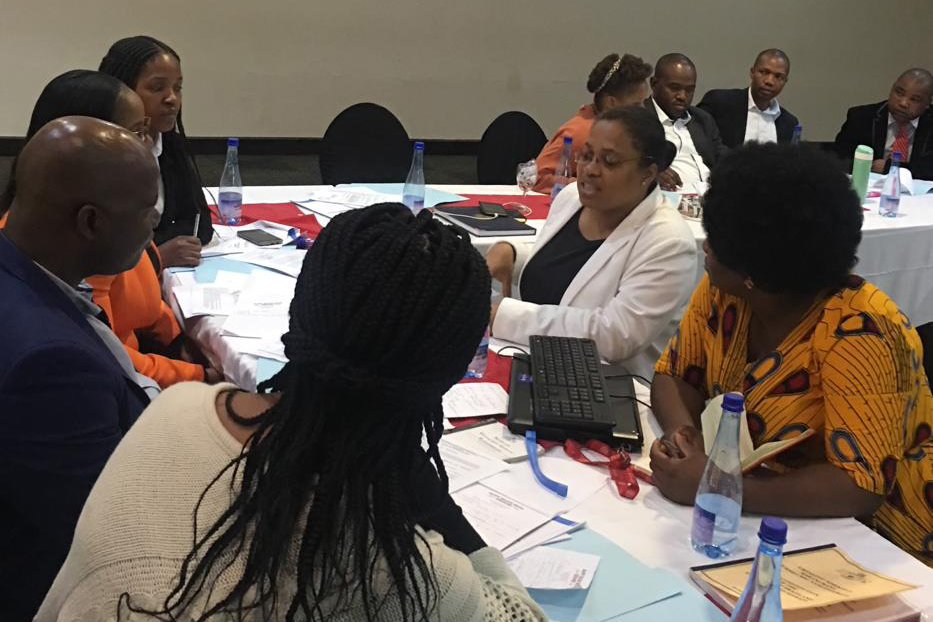
On May 29 2019, the ICJ facilitated a workshop with a number of justice sector officials and stakeholders who are active in the implementation of the Sexual Offenses and Domestic Violence Act (SODVA).
Building on previous engagements in 2018 and 2019, the participants decided on a clear plan of action for further coordination towards the eradication of sexual and gender based violence (SGBV) in Eswatini.
Participants in the meeting included representatives from the Office of the Director of Public Prosecutions, the Office of the Deputy Prime Minister, the police, correctional services, the judiciary and the Medical and Dental Association of Eswatini.
The meeting, was opened by ICJ Commissioner and Principal Judge of the High Court of Eswatini, Justice Qinisile Mabuza.
“For too many years, the clamour for this law has been loud; now that we have it, we have to interrogate how efficiently we are using it and check for the gaps that we need to address. Its implementation is in our hands, and we cannot allow ourselves to fail those that need our protection; we cannot fall foul of failing in our duty,” said Judge Mabuza.
A draft report, commissioned by the ICJ, was presented by Nonhlanhla Dlamini, the Director of Swaziland Action Group Against Abuse (SWAGAA).
The report, provided participants with a contextual analysis of challenges faced by survivors of SGBV in accessing the justice system in Eswatini.
ICJ Legal Adviser Timothy Fish Hodgson discussed key provisions of the SODV Act and the need for their interpretation and application consistently with the Convention on the Elimination of Discrimination Against Women.
SWAGAA’s draft report revealed that despite the enactment of the SODV Act significant barriers to access to justice for survivors of SGBV remain.
These include:
- Underreporting of SGBV;
- Stereotyping and discrimination faced by survivors when reporting;
- Partial application of SODV Act due to lack of knowledge on the part of key justice sector actors;
- Under-resourcing, lack of infrastructure and services presupposed by SODV Act which prevents full implementation;
- Continued stereotype-driven assumptions made by courts despite the outlawing of such approaches in the SODV Act;
- Lack of due diligence in the collection of medical evidence;
- A perception on the part of survivors that perpetrators are better taken care of in the prosecution process than survivors; and
- A growing and inaccurate perception of the SODV Act and its purposes, which has been facilitated by misleading media reports.
Participants made practical recommendations of how challenges could be addressed in their particular environments. Stressing the need to ensure continued collaboration and momentum in the implementation of the SODV Act, ICJ Africa Director Arnold Tsunga observed that: “Whether this process actually builds towards better protection from SGBV for the marginalized in Eswatini and the SODV Act’s impact is dependent on how participants in this platform and other officials are able to adopt practical measures and implement them effectively.”
Mar 23, 2019 | News
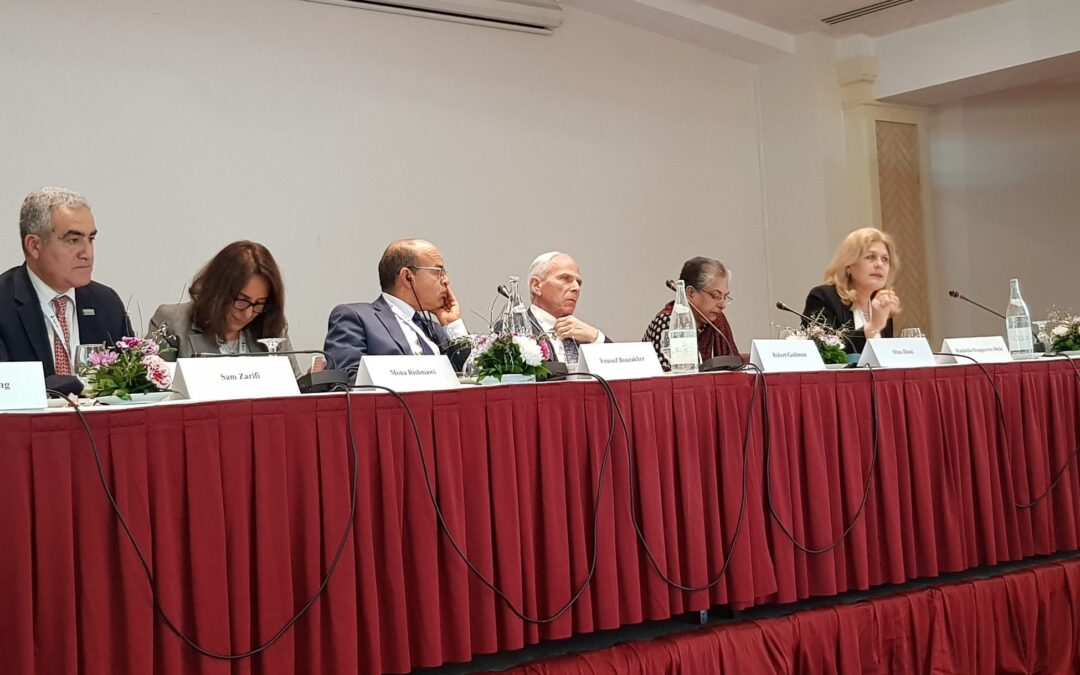
Some 100 distinguished judges and lawyers from around the world commit to expanding the reach of human rights and rule of law principles, in the face of a global backlash against human rights values. The Tunis Congress is the ICJ’s 18th Global Congress since 1952.
The ICJ World Congress, consisting primarily of jurists serving as Commissioners, ICJ National Section and affiliates, and the ICJ Secretariat, is discussing strategy for concerted action and issue a final Declaration reflecting the outcome.
“Since its founding 1952 the ICJ has been steadfast in its belief in the primacy of human rights grounded in rule of law principles as indispensable for well being of all people, as well as for peaceful and just international order,” said Sam Zarifi, ICJ Secretary General.
“Cynical manipulation by authoritarian populists positions the rule of law and human rights as obstacles to the popular will. But as the ICJ’s experience over the past six decades has shown, the rule of law is inextricably bound with the proper functioning of democracy and to the protection and promotion of human rights,” he added.
The ICJ Congress will focus on five key areas of concern: the independence of judges and lawyers and administration of justice; access to justice and accountability for human rights violations; global security and counter-terrorism; equality and non-discrimination; and fundamental freedoms and civil society space.
“The international human rights legal framework has allowed for huge improvements in the lives of people around the world since the Universal Declaration of Human Rights 70 years ago, and the ICJ has played an important role in the development of this legal framework,” Zarifi said.
“But we are now witnessing a resurgence of some of the dangerous, insidious ideas and practices that have led the world to carnage and chaos in the past: the scapegoating of groups such minorities, refugees and migrants; the undermining of multilateral institutions; and the silencing of civil society and those who are giving voice to those who are marginalized on the basis of their gender, religion, ethnicity, physical capacity or sexual orientation,” he added.
“Global powers such as the United States, Russia, and China are actively attacking the rule of law and respect for human rights around the world, while the European Union is distracted by the politics of xenophobia and fearmongering,” he further said.
“It is now crucial for other States, and for people around the world, to show that respect for the rule of law and human rights are universal values and global demands, and the ICJ is proud to pull together the community of jurists from all regions of the world to support these values and demands,” he added.
In the face of these threats and challenges, the Congress will consider means to defend and strengthen the rule of law and legal protection of human rights globally, regionally and in individual countries.
The ICJ is made up of around 60 distinguished judges and legal practitioners from all parts of the world and diverse, works on all five continents and addresses human rights protection in dozens of countries.
Feb 13, 2019 | Advocacy
Entitled “Developing principles to address the detrimental impact on health, equality and human rights of criminalization with a focus on select conduct in the areas of sexuality, reproduction, drug use and HIV”, the ICJ statement was delivered today at the UN.
The ICJ statement, delivered during the Consultation on Human Rights in the HIV response organized by the UN High Commissioner for Human Rights in collaboration with UNAIDS, focused on the need to engage jurists in addressing the detrimental impact on equality, health and human rights, of criminalization of sexual and reproductive healthcare services, including abortion; of consensual sexual conduct, including consensual sex work, consensual sex outside marriage, consensual same-sex relations, and consensual adolescent sexual activity; of drug use, of possession of drugs for personal use; and of HIV non-disclosure, exposure and transmission.
Download the full statement:
Universal-ICJ statement HIV-Advocacy-2019-ENG
Dec 19, 2018 | News
The Transgender Persons (Protection of Rights) Bill, 2018 fails to protect the human rights of transgender people as guaranteed under the Indian constitution and international law and standards and must not be passed in its present form by the Rajya Sabha.
The Bill was passed by the Lok Sabha (Lower House of Indian Parliament) on 17 December, 2018. The next step in order for the Bill to progress is for the Rajya Sabha (Upper House of Indian Parliament) to pass it.
The ICJ considers this Bill to be a missed opportunity to address the serious problem of discrimination against transgender people in India. The ICJ calls for the rejection of its problematic parts by the Rajya Sabha and for the elaboration of a revised Bill in line with rights upheld by the Indian Supreme Court and India’s obligations under international law.
The 2018 Bill, if adopted, would effectively deny to most transgender people their right to self-identification, by providing an overly complex bureaucratic procedure requiring an individual’s application for a transgender certificate to be approved by two different sets of authorities, despite earlier widespread condemnation of this process by the transgender community.
“As the ICJ reported in 2017, the transgender community is continually harassed, stigmatized, and abused by the police, judges, their family and society. This Bill, if it becomes law would further serve to facilitate and compound human rights violations against people from a marginalized community”, said Ian Seiderman, Legal and Policy Director at the ICJ.
The Bill has also introduced mandatory sex reassignment surgery for those transgender people who seek to identify their gender within the binary (male/female) framework. This requirement would be in contravention of the Supreme Court’s judgment in NALSA v. UOI, which guarantees the right to self-identification without the need for medical intervention.
Further, the Bill would collapse all offences against transgender people into one provision which includes offences ranging from “sexual abuse” and “physical abuse”, to “compel[ing] or entice[ing] a transgender person to indulge in the act of begging” among others. These crimes have not been defined in the Bill.
It also would provide for the same six-month to two-year sentence for all offences against transgender people. In some cases, this could be a significantly lighter sentence than when the same crime is committed against others, including discriminated groups such as cis-gendered women, under the general criminal law. In addition, the identification of “beggary” as an offence under the Bill is problematic since for many transgender people in the country, it remains one of the limited livelihood opportunities.
Further, the Bill does not address the question of reservations in employment and education despite specific directions by the Supreme Court in NALSA v. UOI.
Lastly, while the proposed law guarantees the right to non-discrimination to transgender people against persons, state and private sector bodies, it does not provide a definition of discrimination, nor does it provide an enforcement mechanism for ensuring transgender people’s right to non-discrimination.
The ICJ calls on the Rajya Sabha to substantially revise the problematic provisions of the Bill before resubmitting it for parliamentary consideration.
Background
The provisions identified above do not accord with protection of the rights of transgender people to equality, non-discrimination, equal protection of the law, enshrined in the Constitution and international law, including the International Covenant on Civil and Political Rights, which India ratified in 1979. Further, they are incompatible with international standards such as the Yogyakarta Principles on the application of international human rights law in relation to sexual orientation and gender identity.
The ICJ, as part of SAATHII Vistaara Coalition, earlier this year drafted a Briefing Paper on India: Legal and Jurisprudential Developments on Transgender Rights, SAATHII Vistaara Coalition. The paper analyses in detail the domestic judicial developments on transgender rights as well as the legislative process undertaken until the Transgender Persons (Protection of Rights) Bill, 2018 was passed on 17 December 2018.
Additional Reading Material
- ICJ Briefing Paper on The Transgender Persons (Protection of Rights) Bill, 2016, analyzes the 2016 Bill, its shortcomings, and India’s international obligations, as it is the basis of the 2018 Bill.
- ICJ Briefing Paper on Implementation of NALSA Judgment discusses the 2014 April NALSA decision that affirmed that transgender people have the right to decide their self-identified gender. The paper analyses the responsibilities placed on Indian authorities, gaps in implementation, and India’s relevant international law obligations.
Contact
Maitreyi Gupta (Delhi), ICJ International Legal Advisor for India
e: maitreyi.gupta(a)icj.org, t: +91 7756028369