Mar 9, 2021 | Advocacy, Non-legal submissions
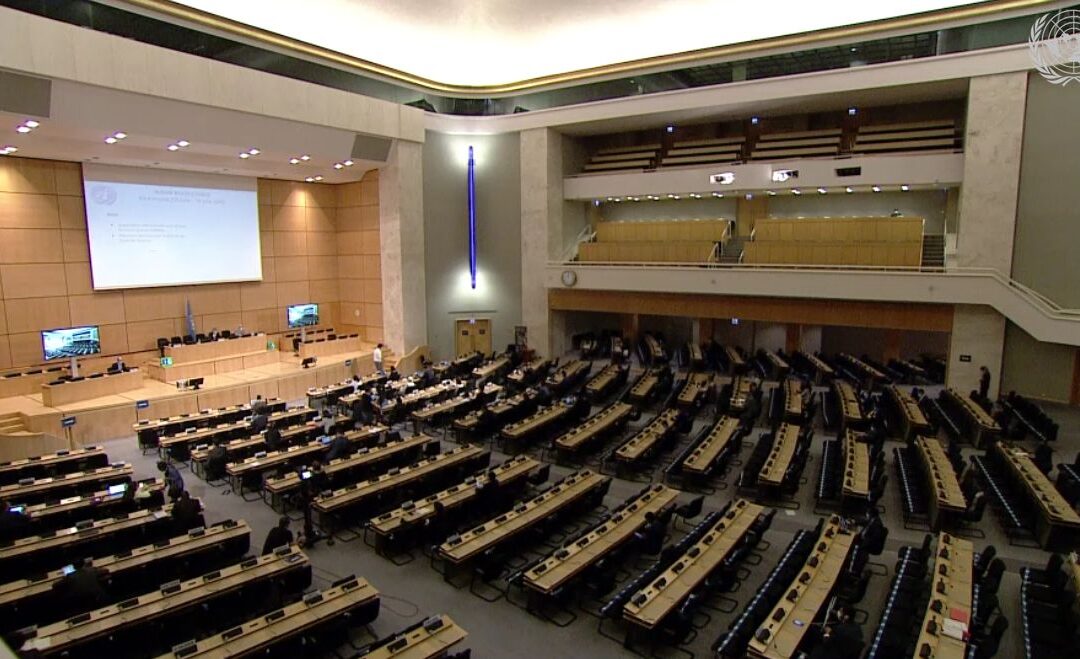
Today, the ICJ joined an oral statement at the UN Human Rights Council denouncing attacks on lawyers occurring in Iran.
The statement was delivered by IBAHRI on behalf also of ICJ, Lawyers for Lawyers, Lawyers’ Rights Watch Canada and The Law Society, during the interactive dialogue with the UN Special Rapporteur on the ISlamic Republic of Iran.
The statement reads as follows:
“The International Bar Association’s Human Rights Institute (the IBAHRI), the International Commission of Jurists (the ICJ), Lawyers for Lawyers, Lawyers’ Rights Watch Canada, and The Law Society express deep concerns at the arbitrary arrests and detention of lawyers and others sentenced to exorbitant prison terms for legitimately carrying out their professional activities. We draw special attention to the cases of lawyers Nasrin Sotoudeh and Amirsalar Davoodi, who remain imprisoned and were excluded from Covid-19 prisoner release programmes.
Their imprisonment means that access to justice for citizens in Iran is restricted. We are alarmed by the widespread violation of fair trial guarantees, including the denial of access to a lawyer of one’s own choosing, as well as the recent application of the death penalty in Iran. We also condemn Iran’s non-compliance with international standards on conditions of detention and reports of torture of those critical of the regime.
We urge the Iranian authorities to:
- Immediately and unconditionally release Nasrin Sotoudeh, Amirsalar Davoodi and other lawyers who remain in prison after conviction in an unfair trial;
- Pending release, ensure compliance with international standards on conditions of detention;
- Ensure that lawyers and others can carry out their profession free from undue interference, including judicial harassment;
- Establish an immediate moratorium on the death penalty, pending abolishment; and
- Comply with its international legal obligations in respecting, guaranteeing, and protecting human rights.”
Find the statement here: Iran-UN-JointStatement-Lawyers-Advocacy-NonLegal-HRC46-2021-ENG
Contact:
Massimo Frigo, ICJ UN Representative, e: massimo.frigo(a)icj.org, t: +41797499949
Mar 5, 2021 | Advocacy, Non-legal submissions
The ICJ issued a statement today on the occasion of an interactive dialogue with the UN Special Rapporteur on situation of human rights defenders calling for measures of protection for lawyers who defend human rights and human rights defenders.
The ICJ was not able to read the statement during the interactive dialogue due to the limited time provided for NGO statements.
The statement was as follows:
“Madame President,
The International Commission of Jurists (ICJ) welcomes the Special Rapporteur’s report and agrees with her observation on the absence of political will in some States to protect Human Rights Defenders (HRDs).
As noted by the previous Special Rapporteur (A/HRC/37/51/Add.1), lawyers are HRDs when they act in their professional capacity to promote or protect human rights. Lawyers, like other defenders, are often targeted for harassment including through death threats and killings. The ICJ has recently documented such cases in Zimbabwe, Egypt and Ukraine.
The ICJ recalls that under the UN Basic Principles on the Role of Lawyers, States have special protective responsibilities, namely that “[w]here the security of lawyers is threatened as a result of discharging their functions, they shall be adequately safeguarded by the authorities.”
The ICJ welcomes the Special Rapporteur’s recommendation that the international community, particularly States through Foreign Embassies and the OHCHR must react faster in addressing threats issued against HRDs. This should include situations where lawyers are threatened for doing their work.
The ICJ further welcomes the recommendation to maintain adequately resourced protection mechanisms for HRDs. In this regard, we consider strong and independent Bar Associations to be essential in helping protect the security of lawyers.
Madam Special Rapporteur, are there particular measures you would recommend for protecting lawyers when acting as HRDs?
Thank you.”
Contact:
Massimo Frigo, ICJ UN Representative, e: massimo.frigo(a)icj.org, t: +41797499949
Mar 5, 2021 | Advocacy, Non-legal submissions
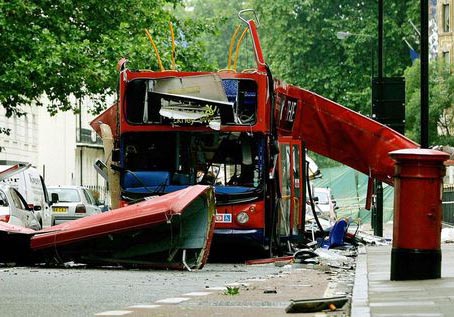
The ICJ issued a statement today on the occasion of an interactive dialogue with the UN Special Rapporteur on the promotion and protection of human rights while countering terrorism on the need for a human rights-based approach for countering terrorism.
The ICJ was not able to read the statement during the interactive dialogue due to the limited time provided for NGO statements.
The statement was as follows:
“Madam President,
The ICJ welcomes the attention given by the Special Rapporteur to the human rights impact of counterterrorism policies on the rights of women and girls and the need to incorporate a gender perspective into counter-terrorism policy and law in all areas (See, para. 39b, UN Doc. A/HRC/46/36).
We share the Special Rapporteur’s concern that the critical State obligation to promote economic, social and cultural rights should not be absorbed into a new, generalized, non-rights based category of “economic effects of terrorism (para. 37.) The emphasis must remain squarely on preventing and redressing violations and abuses against victims (para. 36).
We agree with the Special Rapporteur that human rights obligations and counterterrorism are directed at the State and that care must be taken to avoid the blurring of lines between counterterrorism and international humanitarian law (para. 39e). We concur that States must address the rule of law and human rights effects of misuse of sanctions and listing processes to target civil society and persons exercising rights protected by international law.
The ICJ therefore calls on the Council to maintain in this matter a human rights-based approach to victims of terrorism, as stressed by the Special Rapporteur.
Thank you.”
Contact:
Massimo Frigo, ICJ UN Representative, e: massimo.frigo(a)icj.org, t: +41797499949
Mar 1, 2021 | Advocacy, Non-legal submissions
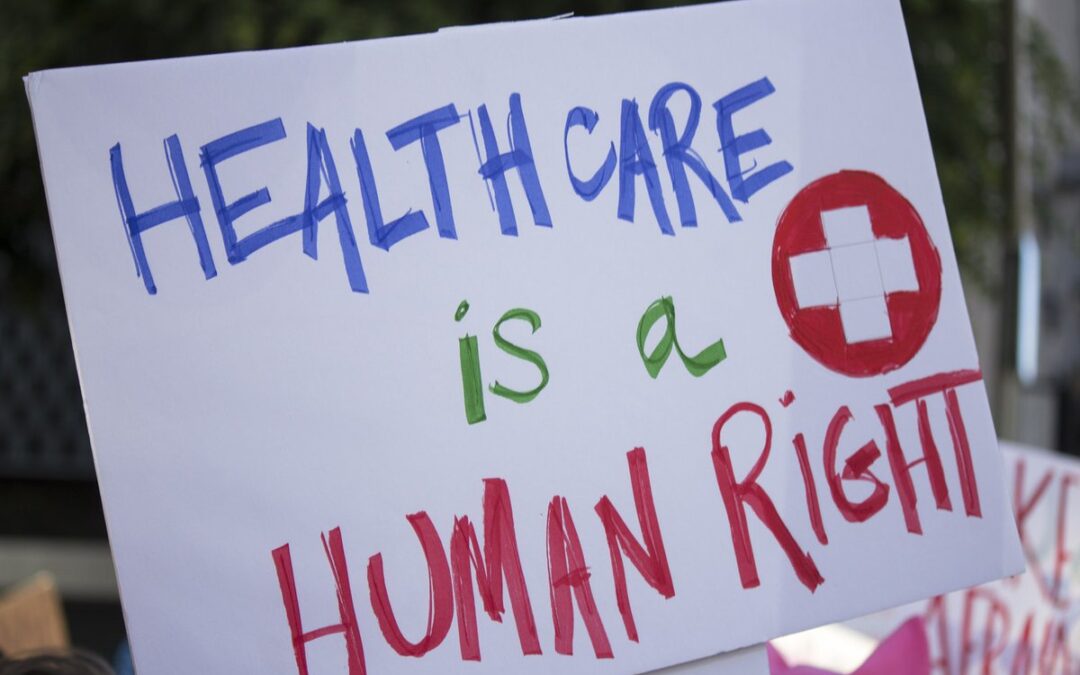
The ICJ today addressed the UN Human Rights Council in the General Debate on the Report of the Office of the High Commissioner for Human Rights on the impact of the coronavirus disease (COVID-19) pandemic on the enjoyment of human rights around the world, including good practices and areas of concern.
The statement reads as follows:
Madam High Commissioner,
The ICJ welcomes your important report on the impact of COVID-19 on human rights.
We consider that an additional critical issue is the importance of access to justice in the realization of all rights, and, particularly, State failures in ensuring human rights compliant access to COVID-19 vaccines.
For instance, Tanzania, Burundi, Eritrea and Madagascar have failed even to attempt to acquire vaccines, and South Africa not yet begun to roll them out to the general population. Zimbabwe has failed to communicate vaccine acquisition and roll out plans.
In Colombia there is an alarming increase of killings and death threats against human rights defenders in some municipalities which could create barriers in accessing the COVID-19 vaccine.
The ICJ is concerned that Guatemala, El Salvador and Costa Rica reportedly intend to inhibit access to vaccines to undocumented non-citizens, in violation of their obligation of non-discrimination.
Finally, many States continue to fall short of their international cooperation and assistance obligations by not endorsing the WHO’s COVID-19 Technology Access Pool, and South Africa and India’s waiver proposal to the WTO’s Trade Related Aspects of Intellectual Property Rights Council.
The ICJ calls on the Human Rights Council to remind States of their duty to ensure effective access to justice for violations of human rights, including the right to health.
I thank you”
Contact:
Massimo Frigo, ICJ UN Representative, e: massimo.frigo(a)icj.org, t: +41797499949
Feb 25, 2021 | Advocacy, Non-legal submissions
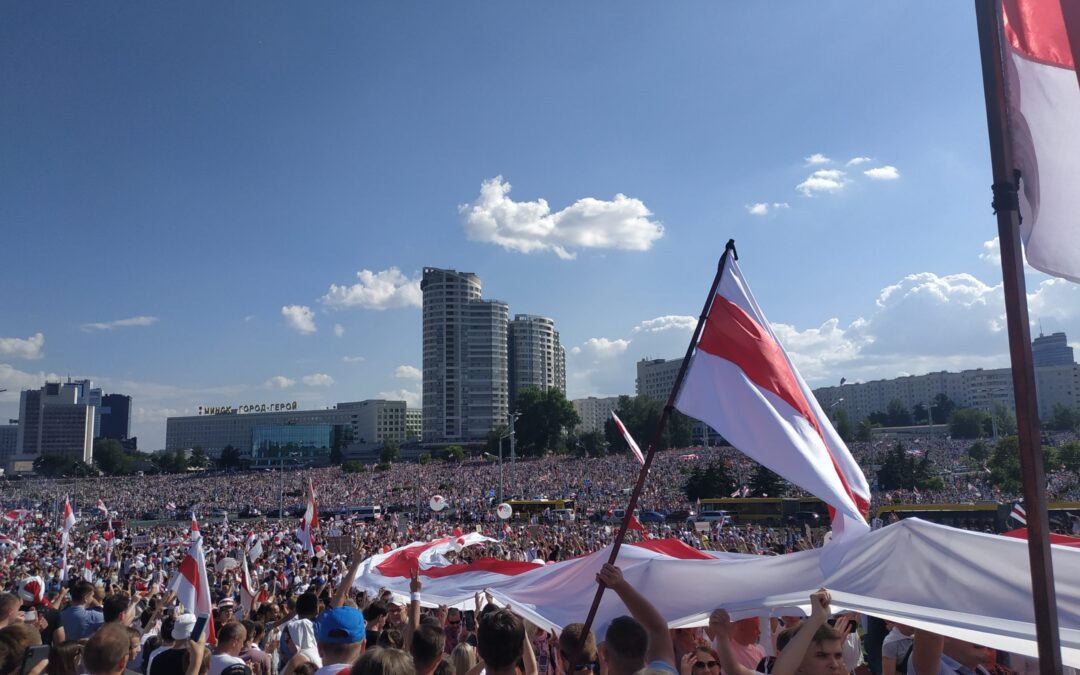
The ICJ today addressed the UN Human Rights Council in the Enhanced Interactive Dialogue on the Report of the Office of the High Commissioner for Human Rights on the situation of human rights in Belarus in the context of the 2020 presidential election.
The statement reads as follows:
“Madam President,
The International Commission of Jurists welcomes the High Commissioner’s report on the situation of human rights in Belarus (A/HRC/46/4).
The ICJ stresses the need to address the systemic issues underlying unfair trial, arbitrary detention, torture, other ill-treatment and enforced disappearance in Belarus. In particular, it is crucial to ensure an independent judiciary and bar association.
Without comprehensive reforms to these institutions, there is little prospect of fair trial, or of effective remedies or accountability for the widespread human rights violations occurring after the 2020 election.
The ICJ is alarmed at recent arrests and disbarments of lawyers in connection with the protests. Disbarred lawyers include Aleksandr Pylchenko as well as Liudmila Kazak, the fourth lawyer of Maria Kolesnikova, a detained opposition figure, to have suffered consequences as a result of their professional activities. Furthermore, criminal cases have been initiated against lawyers Ilya Saley and Maxim Znak.
We call on the Human Rights Council to establish a mechanism to collect and preserve evidence, identify perpetrators, and support accountability for gross human rights violations in Belarus.
The Council should further call on Belarus to
- promptly and fully implement the High Commissioner’s recommendations;
- co-operate with and facilitate access of the Special Rapporteur to the country;
- uphold the independence of judges and lawyers, in accordance with international law and standards.
I thank you.”
Contact:
Massimo Frigo, ICJ UN Representative, e: massimo.frigo(a)icj.org, t: +41797499949