Feb 25, 2021 | Advocacy, Non-legal submissions
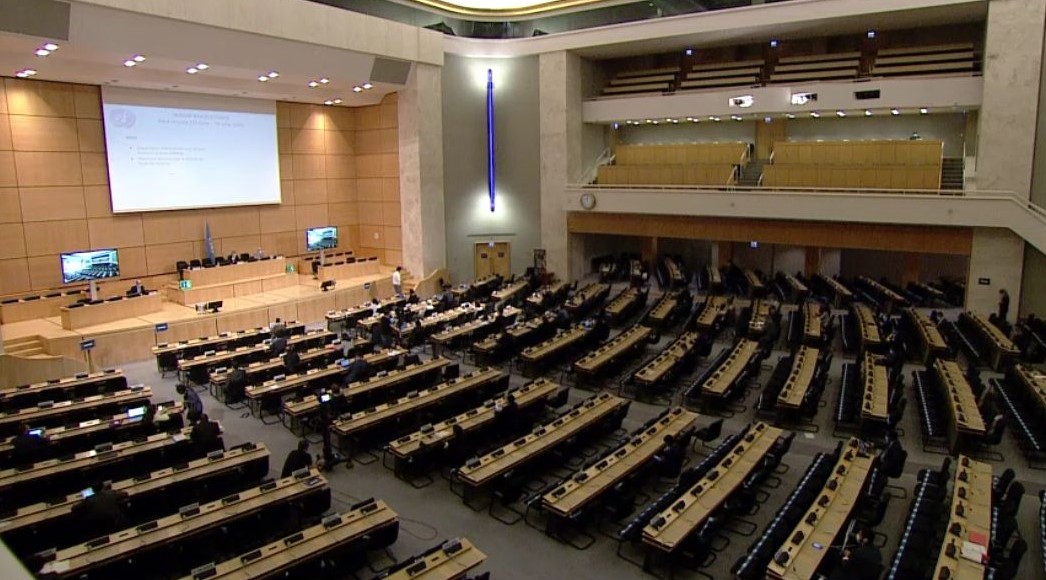
The ICJ today addressed the UN Human Rights Council in the Interactive Dialogue on the Report of the Office of the High Commissioner for Human Rights on Promoting reconciliation, accountability and human rights in Sri Lanka.
The statement reads as follows:
“Madam President,
The ICJ welcomes the comprehensive OHCHR report on Sri Lanka.
We share OHCHR’s observation that domestic initiatives for accountability have repeatedly failed to produce results, ‘more deeply entrenching impunity, and exacerbating victims’ distrust in the system.’ [A/HRC/46/20, pp. 52]
The ICJ has continuously observed that Sri Lanka’s incapacity and unwillingness to pursue accountability for crimes under international law is deep-rooted and longstanding.
The extensive militarization of civilian functions, the reversal of constitutional safeguards, the obstruction of the rare cases of domestic criminal accountability and the deteriorating human rights situation all point to a systemic culture of impunity that will only worsen in the years to come.
Sri Lanka’s failure to establish a hybrid accountability mechanism in the five years since the adoption of Resolution 30/1 demonstrates a complete lack of political will to hold perpetrators accountable. The rights of the victims of human rights violations cannot be ignored any longer.
The ICJ endorses all of OHCHR’s recommendations, particularly the call for international and external accountability processes, whether before the ICC or through the exercise of universal jurisdiction by other States.
We further call for enhanced monitoring and reporting on the ground situation and for the establishment of a mechanism for the collection and preservation of evidence for future prosecution.
Madam High Commissioner, how can OHCHR ensure that the victims’ call for accountability is effectively fulfilled?
I thank you.”
Contact:
Massimo Frigo, ICJ UN Representative, e: massimo.frigo(a)icj.org, t: +41797499949
Feb 17, 2021 | Advocacy, Non-legal submissions
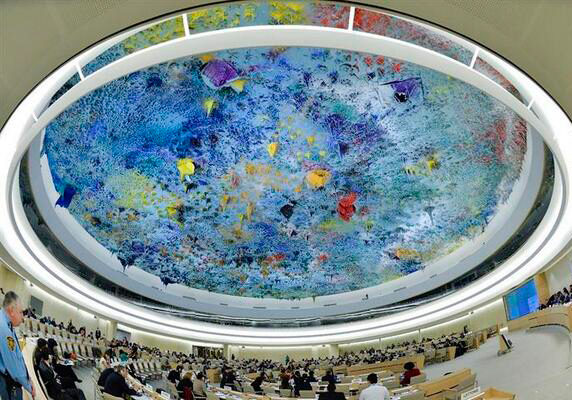
The ICJ, together with ARTICLE 19, today addressed the Advisory Committee of the UN Human Rights Council on its work on “negative effects of terrorism on the enjoyment of human rights”. They called on the Committee as it finalizes its report to resist attempts to deviate from the human rights focus at the core of its mandate.
The joint statement read as follows:
“The International Commission of Jurists (ICJ) and ARTICLE 19 welcome the opportunity to engage in this discussion of the draft report on the negative effects of terrorism on human rights.
Given that we have not been able to review the current draft report, we must reiterate our call previously stated during the 24th session to consider the broader context into which this report will be delivered.
We ask the Committee to maintain its focus on the primary objectives of preventing and addressing human rights violations resulting from counter-terrorism measures, and promoting and ensuring protection of the human rights of victims of terrorism. This has been the longstanding focus of the Human Rights Council, despite the efforts of a few states to divert its attention away from core human rights concerns.
Any report addressing the “negative effects of terrorism” should maintain this focus, consolidating the extensive work already done in this regard by successive Special Rapporteurs and other UN and regional entities, as collected in the compilation published by the ICJ in 2019.
The report must not enable the diversion of precious attention and resources to more diffuse questions of impacts of a macro-economic or similar character, in respect of which a human rights-based approach has little to add in terms of concrete recommendations or guidance to States.
The ICJ and ARTICLE 19 share and endorse the positions set out in the recent report of the Special Rapporteur to the UN Human Rights Council as they relate to the effects of terrorism on the promotion and protection of human rights (UN Doc. A/HRC/46/36).
We agree with the Special Rapporteur’s observation that “reflection on the enjoyment of economic, social and cultural rights in the terrorism and counter-terrorism arenas has been understated” (para. 32).
As the Special Rapporteur has stated, however, “there is no legal basis to view the State as primary victim of terrorism through the economic costs that may be experienced from acts of terrorism”.
Two principles, in this respect, should be reinforced: individuals and peoples are the primary rights holders under human rights law, and States have to carry out the legal obligations prescribed by international human rights law. Any confusion or suggestions otherwise may serve to undermine human rights law.
We agree with the Special Rapporteur that the lack of precise definition in terrorism and counter-terrorism and the blurring of lines between counter-terrorism and international humanitarian law will have a pernicious effect and will seriously tarnish human rights protection.
As highlighted before, we also concur that any work on effects of terrorism must be centred on the human rights of victims of terrorism, on the duty under international human rights law of all States to prevent, protect, investigate and redress any abuse to human rights.
We urge the Advisory Committee to include a clear recommendation to the Council that the exclusive focus of the Council’s work remain on violations in countering terrorism and a human-rights based approach to victims of terrorism.
We call on the Committee to recommend against the Council entering into more diffuse macroeconomic issues.
We urge you to affirm that the existing and longstanding normative and institutional framework on counter-terrorism and human rights is already sufficient to address relevant impacts of terrorism from a human rights perspective.
Thank you.”
For further information contact:
Massimo Frigo, ICJ UN Representative, massimo.frigo@icj.org – +41797499949
Anna Oosterlinck, Head of UN, ARTICLE 19, annaoosterlinck@article19.org
Feb 12, 2021 | Advocacy, Non-legal submissions
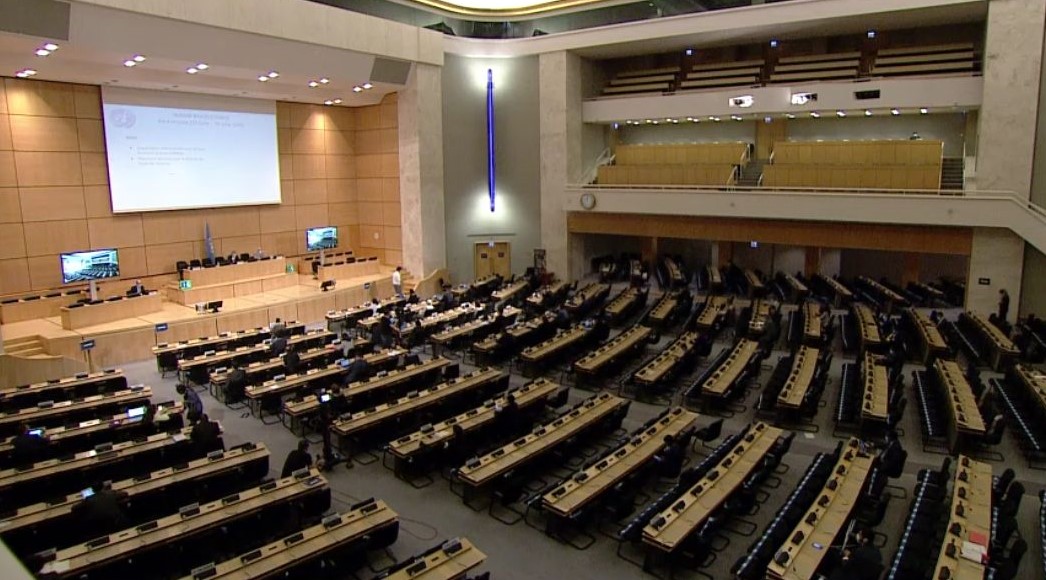
The ICJ today addressed an emergency Special Session of the UN Human Rights Council on Myanmar, outlining violations to human rights and the rule of law occurring in the country since the coup d’état of 1 February.
The Special Session is expected to adopt a resolution to address “The human rights implications of the crisis in Myanmar.”
The ICJ statement read as follows:
“Madame President,
The International Commission of Jurists condemns the Myanmar military’s unlawful seizure of authority and the unconstitutional declaration of a state of emergency on 1 February.
These actions defy core rule of law principles and provide an illegitimate basis for the suspension and erosion of human rights.
Nearly 200 people, including human rights defenders, have been arbitrarily detained, some in unknown locations. Security forces have used excessive force against peaceful protesters, causing serious injuries.
Regulations imposed pursuant to the state of emergency grant military forces nearly complete impunity. Furthermore, these regulations suspend crucial judicial remedies for violations of rights, such as the writ of habeas corpus.
Judges, including from the Supreme Court, have been illegally removed and replaced, undermining the independence of an already embattled judiciary.
The military takeover further endangers the already grave situation of the Rohingya community.
The ICJ calls on the Human Rights Council to urge the military to immediately return authority to the civilian government and allow immediate access to the Special Rapporteur on Myanmar and other special procedures, the OHCHR, and the Independent Investigative Mechanism for Myanmar, whose mandate includes investigating all serious human rights violations.
Member States should take necessary measures to ensure truth, justice and accountability for crimes under international law, including by supporting all relevant accountability mechanisms.
Thank you.”
Feb 5, 2021 | Advocacy, Non-legal submissions
Today, the ICJ and other human rights NGOs have written to UN Member States to call for a renewal of the mandate of the UN Commission on Human Rights in South Sudan.
The joint letter highlights the existing remaining concern on the human rights situaion in South Sudan and provide with key recommendation for its functioning.
Find the joint letter here: SouthSudan-UN-JointLetter-Advocacy-NonLegal-2021-ENG
Contact:
Massimo Frigo, ICJ UN Representative, e: massimo.frigo(a)icj.org, t: +41797499949
Feb 5, 2021 | Advocacy, Non-legal submissions
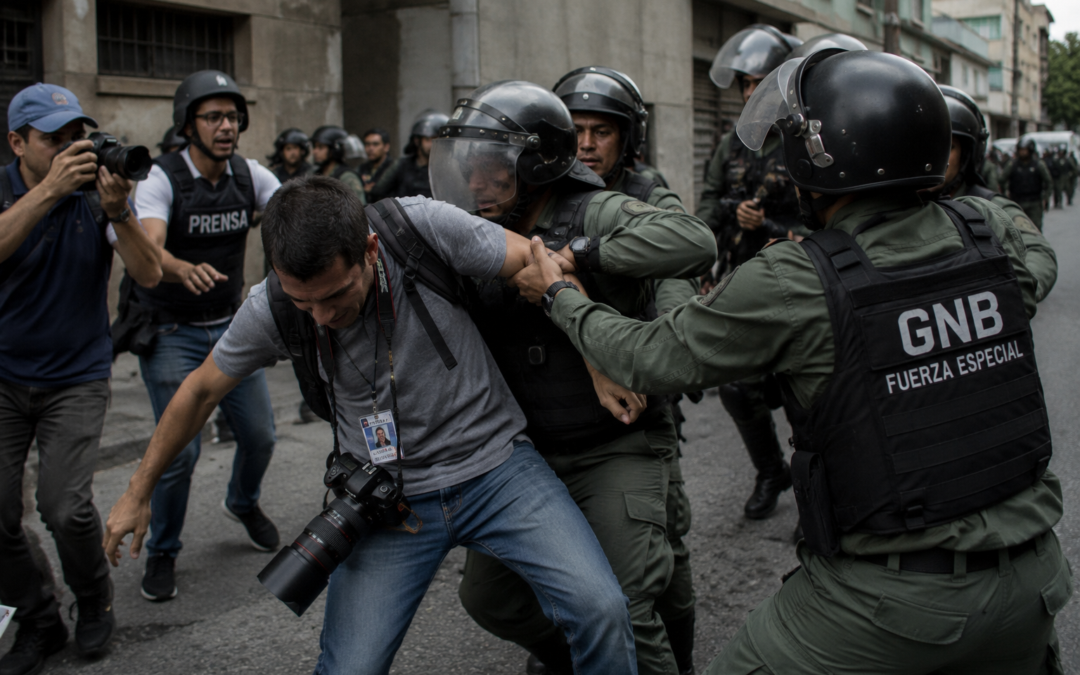
Today, the ICJ joined several human rights NGOs to stand in solidarity with Venezuelan NGOs subject to threats, harassment, attacks, restrictions, reprisals and criminal proceedings by State authorities.
The joint statement reads as follows:
The recent, ongoing and unwarranted detention of five members of the Venezuelan NGO ‘Azul Positivo’ is one more event in a series of threats, harassment, attacks, restrictions, reprisals and criminal proceedings against Venezuelan civil society organizations and human rights defenders, which has been intensifying since November 2020.
In recent months and weeks, state agents have forcibly entered the offices of civil society organizations; public threats have been made against defenders who have been engaging with human rights mechanisms, NGO bank accounts have been frozen and arrest warrants issued for aid workers.
Venezuelan civil society operate in a context of serious legal and administrative obstacles with domestic laws used to target human rights defenders, such as the ‘Law Against Hate’, or having the effect of limiting the operations of NGOs and restricting their access to funding, essentially blocking the work of many organizations vital for Venezuelans in need.
In a public statement, a number of UN independent human rights experts and regional experts have described threats and measures taken against Venezuelan civil society since November 2020 as amounting to ‘systematic persecution and stigmatization.’
It is essential that humanitarian and human rights organizations responding to the grave humanitarian and human rights crises in the country, pushing for accountability for violations and abuses and the return of guarantees provided by democratic institutions and processes are able to do their work without fear or hindrance.
Human rights defenders are critical, constructive and essential to democracies and the functioning of the rule of law. Attempts to silence and cow them are counterproductive and shameful.
We urge the Venezuelan authorities to ensure that harassment and threats against Venezuelan defenders stop and for all international legal guarantees to be respected.
We call on all states and UN bodies and agencies to actively support civil society organizations, defenders and activists and to speak up loudly and consistently for the right to defend human rights in Venezuela and globally.
We are inspired by the daily commitment and courage of Venezuelan human rights defenders and humanitarian workers and stand in solidary with our Venezuelan partners and friends.
Signatories:
- Amnesty International
- Center for Justice and International Law (CEJIL)
- CIVICUS
- Civil Rights Defenders
- Conectas Diretos Humanos
- Freedom House
- Global Centre for the Responsibility to Protect
- Human Rights Watch
- International Commission of Jurists
- International Service for Human Rights
- People in Need
- Washington Office on Latin America (WOLA)