Jun 23, 2020 | News
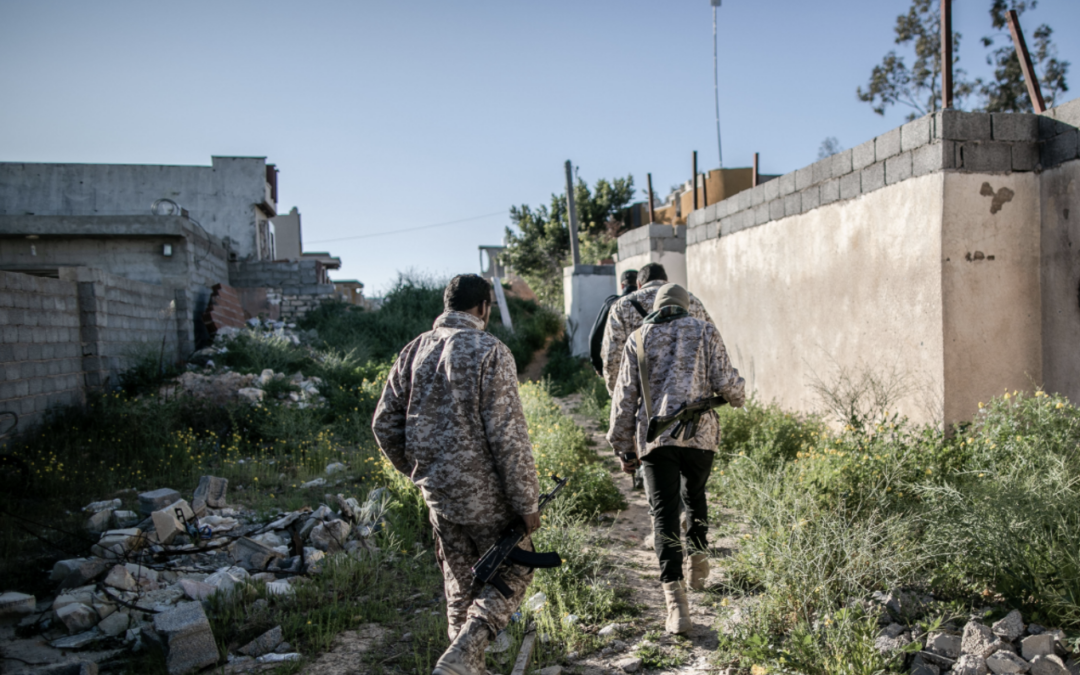
The ICJ welcomes the establishment of a Fact-Finding Mission (FFM) for Libya by the UN Human Rights Council (HRC) at its 43rd session yesterday.
The resolution, titled “Technical assistance and capacity-building to improve human rights in Libya,” mandates the FFM to investigate and preserve evidence of violations of international human rights law and international humanitarian law committed by all parties in Libya since the beginning of 2016, with a view to ensuring that perpetrators be held to account.
“This is a long overdue step in the pursuit of accountability in Libya,” said Said Benarbia, the ICJ’s MENA Programme Director.
“While parties to the conflict have escalated hostilities in recent years and Libyans have been increasingly subject to egregious violations of their rights, States have continued to prioritize politics over justice. The establishment of the FFM is a sign that international actors finally recognize accountability is necessary to end the scourge of violence in the country.”
The FFM is required to submit its written report to the HRC at the 46th session in February-March 2021, giving the FFM only nine months to carry out its work despite the ongoing imposition of COVID-19 measures that will impact its operations.
Given the FFM’s short operational period, the UN High Commissioner for Human Rights will have to move rapidly to appoint FFM experts and staff, allocate adequate resources and dispatch the mission. Staff appointed to the FFM should include experts in the investigation of sexual and gender-based violence crimes and the collection of evidence to a criminal standard.
“It’s imperative that the High Commissioner move quickly to dispatch this mission if it is to have any prospect of examining the full range of violations and abuses being committed across Libya,” said Kate Vigneswaran, the ICJ’s MENA Programme Senior Legal Adviser.
“The OHCHR should ensure the FFM has the full complement of skills and expertise to most effectively investigate crimes being committed in Libya, particularly the widespread sexual violence being perpetrated on women, girls, men and boys.”
The Government of National Accord, the Libyan Arab Armed Forces and all other parties to the conflict should fully cooperate with the FFM, including by granting access to the territories and population over which they have control, where possible in the context of COVID-19.
Other States, in particular those supporting Libyan actors in the ongoing conflict, should also provide full cooperation.
“The cooperation of both national and international actors is necessary for the FFM to engage with victims and preserve evidence, key components of its mandate,” Kate Vigneswaran added.
“While other international investigative mechanisms have shown it’s possible to carry out effective investigations without access to the affected territory, if Libyan actors are truly committed to the populations they assert they serve, they should be facilitating access to all forms of justice, whether national or international.”
The FFM will complement the work of the International Criminal Court in Libya, which has outstanding arrest warrants against Saif Al-Islam Gaddafi, Al-Tuhamy Mohamed Khaled and Mahmoud Mustafa Busayf Al-Werfalli.
The evidence preserved by the FFM may be used by the ICC, as well as States exercising universal jurisdiction, in their investigations and prosecutions.
Contact
Said Benarbia, Director of the ICJ Middle East and North Africa Programme, t: +41 22 979 3817; e: said.benarbia(a)icj.org
Kate Vigneswaran, ICJ Senior Legal Adviser, t: +31 62 489 4664, e: kate.vigneswaran(a)icj.org, twitter: @KateVigneswaran
Background
Violations and abuses of international law, including unlawful killings and attacks on civilian objects, have continued unabated in the last few months. Most recently, on 11 June 2020, the UN Support Mission to Libya reported the discovery of at least eight mass graves, mainly in Tarhuna, in which the bodies of women and children were found. Reports further indicate that the Libyan Arab Armed Forces (LAAF), and their foreign allies, have laid anti-personnel landmines and other booby-traps in buildings as they withdrew from Tripoli, leading to causalities including among civilians returning to their homes after long periods of displacement. Reports of incidents involving “retributive crimes”, including the parading of corpses and looting of perceived opponents’ houses and public property, by GNA-affiliated armed groups have also surfaced.
The ICJ has repeatedly called on States to support the establishment of an international investigative mechanism for Libya, including in the interactive dialogue on the oral update by the High Commissioner for Human Rights on the Situation in Libya.
The draft of the resolution adopted yesterday was numbered A/HRC/43/L.40. The official adopted version will be published by the UN in the coming weeks.
Jun 19, 2020 | Advocacy, Non-legal submissions
The ICJ has responded to a call for input by UN human rights experts, for their upcoming reports on COVID-19 and human rights.
The written submission, in response the joint call for submissions questionnaire issued by a number of UN Special Procedures, highlights key issues in relation to access to justice and the operation of courts, the right to food and the right to housing, and impacts on LGBTi persons and persons living in poverty, in a number of countries where the ICJ is active.
The submission can be downloaded in PDF format here: ICJ-UN-SP-COVID19SUBMISSION-2020-EN
Jun 18, 2020 | Advocacy, Non-legal submissions
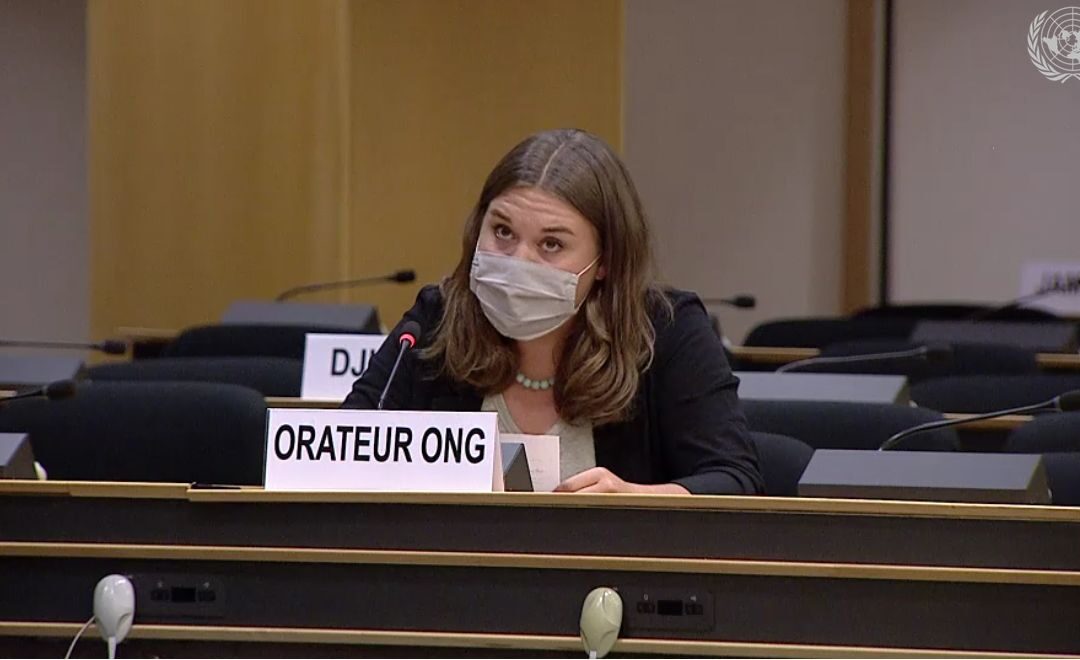
At the UN Human Rights Council, the ICJ today welcomed a pending resolution that would create an international Fact-Finding Mission on Libya.
The statement read as follows:
“The International Commission of Jurists welcomes the oral update by the High Commissioner for Human Rights on the situation in Libya.
The ICJ is seriously concerned by the escalation of conflict in Libya and the increasing number of violations and abuses of international law including unlawful killings and attacks on civilian objects committed since this session was suspended in March. Just last week, at least eight mass graves were found, mainly in Tarhuna, in which the bodies of women and children were found.
The ICJ welcomes the High Commissioner’s recommendation that the Human Rights Council establish an international investigative body and calls on the Council to adopt the resolution tabled by Libya establishing a Fact-Finding Mission to investigate and preserve evidence of violations of international human rights law and international humanitarian law committed by all parties in Libya.[1] The ICJ calls on States to ensure the Fact-Finding Mission has at least one full year to complete its work.
As the Berlin Conference conclusions stressed,[2] accountability for gross human rights violations must be a key component of the political process in Libya. States must increase efforts to guarantee accountability remains front and centre in all negotiations on the future of Libya and provide full support including cooperation and resources to the Fact-Finding Mission for Libya once established.”
[1] A/HRC/43/L.40.
[2] https://www.bundesregierung.de/breg-de/aktuelles/the-berlin-conference-on-libya-1713868.
Jun 18, 2020 | Advocacy, Non-legal submissions
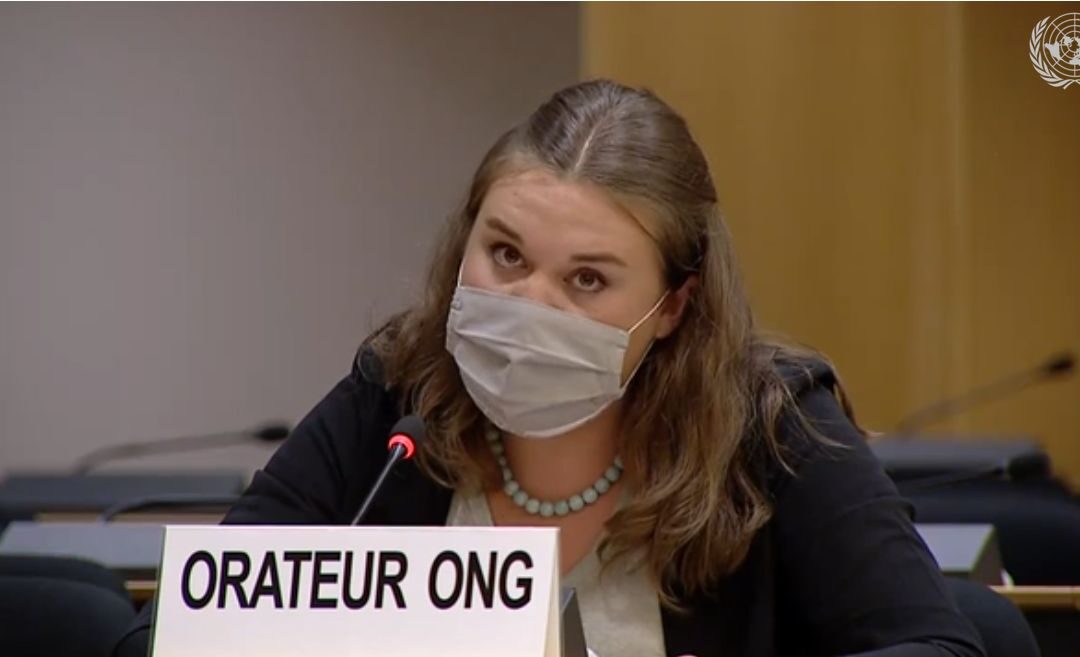
Speaking at the UN Human Rights Council in Geneva today, the ICJ urged action on excessive use of force, including unlawful killings, disproportionately targeting people of African descent and other minorities, by police throughout the United States of America, as well as in other countries.
The statement, delivered during an urgent debate on “current racially inspired human rights violations, systemic racism, police brutality and the violence against peaceful protest” that was requested by African countries, read as follows:
“Black lives matter.
The International Commission of Jurists (ICJ) condemns widespread incidents of unlawful and unnecessary use of force, including lethal force, by police throughout the United States of America, disproportionately targeting people of African descent and other minorities.
Many jurisdictions in the United States disregard, in law and in practice, universal standards including under the International Covenant on Civil and Political Rights and the UN Basic Principles on the Use of Force and Firearms by Law Enforcement Officials. These incorporate the requirements of proportionality and necessity and affirm that lethal force may only be used when strictly unavoidable to protect life. The ICJ is also concerned that doctrines of “qualified immunity” in practice result in impunity for extrajudicial killings and other serious human rights violations by police. The UN Human Rights Committee and the Committee against Torture, among others, have already called on the US to address these deficiencies in meeting their international legal obligations.
The United States is not alone in such abusive and racially discriminatory practices, which plague countries on every continent. While the Council is rightly giving long overdue attention to the United States, this must not serve as an excuse for any other State to fail to acknowledge and address similar violations within their own jurisdictions.
The ICJ supports calls for an independent international mechanism to address systematic racism in law enforcement in the United States and elsewhere.”
Jun 15, 2020 | News
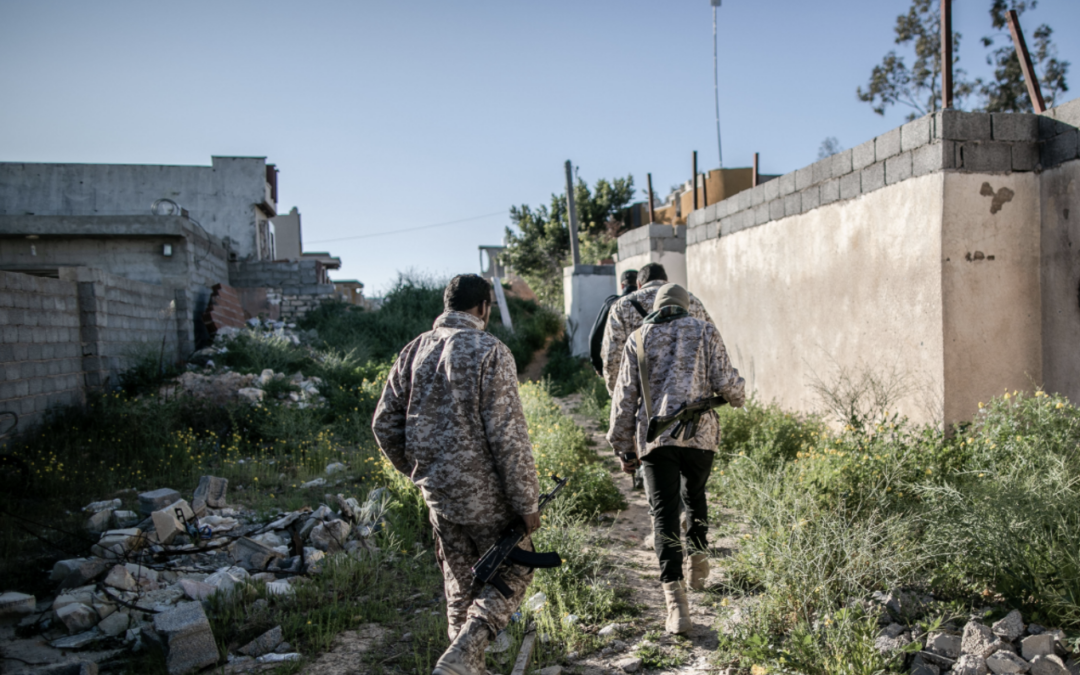
Member States convening today for the resumption of the 43rd session of the UN Human Rights Council should support the establishment of an international investigative mechanism to document and preserve evidence of violations of international human rights law and international humanitarian law (IHL) committed in Libya, said the ICJ and Lawyers for Justice in Libya.
The escalation in armed conflict in recent months and ongoing impunity for an increasing number of violations and abuses being committed in Libya lend particular urgency to the establishment of a mechanism for a period of at least one year to investigate all gross human rights violations and abuses and serious violations of IHL, with a view to preserving evidence and holding perpetrators accountable.
“Horrific reports documenting the discovery of mass graves are the latest addition to a long line of well-established atrocities perpetrated across Libya,” said Kate Vigneswaran, Senior Legal Adviser at the ICJ’s Middle East and North Africa Programme. “Impunity for these crimes has proven only to prompt further violence and prolong the conflict.”
On 11 June 2020, the United National Support Mission to Libya reported the discovery of at least eight mass graves, located predominantly in Tarhuna, a town located southeast of Tripoli.
Though exhumations have only just commenced, initial reports by the Government of National Accord (GNA) indicate that they could contain hundreds of bodies, including of women and children.
Reports further indicate that the Libyan Arab Armed Forces (LAAF), and their foreign allies, have laid anti-personnel landmines and other booby-traps in buildings as they withdrew from Tripoli, leading to causalities including among civilians returning to their homes after long periods of displacement.
Reports of incidents involving “retributive crimes”, including the parading of corpses and looting of perceived opponents’ houses and public property, by GNA-affiliated armed groups have also surfaced.
“The systematic and ubiquitous nature of these violations reinforces the need for States to urgently push for mechanisms designed to address accountability and fight prevailing impunity. The establishment of an international investigative mechanism would not only pave the way towards obtaining justice for the victims and preserving evidence necessary for doing so, but also send a strong and unequivocal message that those who commit crimes will be held accountable,” said Marwa Mohamed, Head of Advocacy and Outreach at Lawyers for Justice in Libya.
An international investigative mechanism would bolster accountability efforts in the country, which have, thus far, been impeded by cycles of violence, weak and ineffective law enforcement agencies, the arbitrary exercise of policing and detention powers by armed groups and an inadequate legal framework for holding perpetrators of crimes under international law accountable.
States will vote on the resolution on Libya (UN Doc A/HRC/43/L.40) following the interactive dialogue on the High Commissioner for Human Rights’ Report on Libya on 18 June 2020.
The 43rd session of the Human Rights Council commenced in February 2020, but was suspended due to the COVID-19 pandemic.
Contact
Kate Vigneswaran, Senior Legal Adviser, ICJ Middle East and North Africa Programme, t: +31624894664 ; e: kate.vigneswaran(a)icj.org;
Background
A variety of armed groups have been engaged in recurrent waves of armed conflict since the 2011 uprising. These include the forces of the GNA, established in 2016, which is the internationally recognized State governing authority and is supported by armed groups acting either under their control or in alignment or alliance with it, and the LAAF, which is headed by Khalifa Haftar, who was endorsed by the House of Representatives after launching his military campaign in 2014, and is composed of a mixture of military units and armed groups.
The GNA generally has control over territory in the west, and the LAAF exercises a significant degree of control over territories in the east and parts of the south. In April 2019, the LAAF marched on Tripoli gaining further territorial control in parts of the west, but such gains have been reduced over recent weeks following the escalation in hostilities with the GNA and the LAAF’s consequent retreat.
Reports by UNSMIL and other international bodies and non-government organizations document the gross human rights violations and abuses and serious violations of IHL being committed by all parties to the conflicts in Libya. These include unlawful killings resulting from direct, indiscriminate and disproportionate attacks against persons not engaged in hostilities; attacks on civilian objects including medical facilities and equipment; torture and ill-treatment, including acts of sexual violence and the crime of rape; arbitrary arrests and detention; forced displacement; enforced disappearances; and extrajudicial killings. These violations and abuses have led to mass internal displacement, including of over 200,000 people since April 2019 from Tripoli and its outskirts.
Libya-Atrocities need investigation-News-2020-ARA (story in Arabic, PDF)