Dec 10, 2019 | News
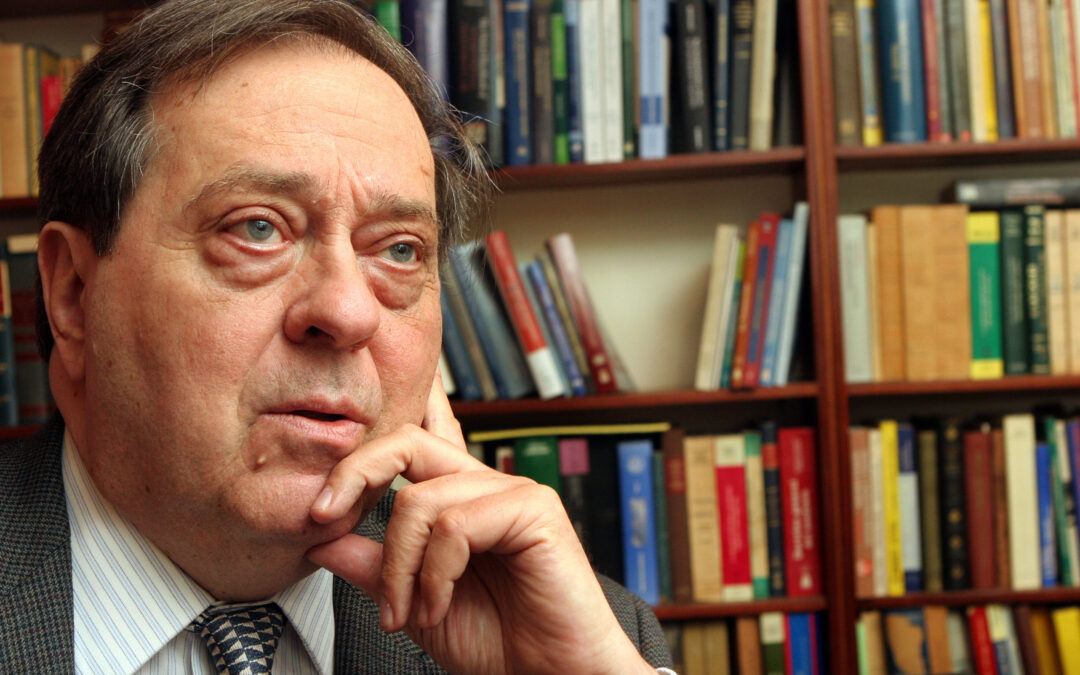
The ICJ mourns the loss of Professor Pedro Nikken, former President and Commissioner of the ICJ. Prof Nikken was elected ICJ President in January 2011, succeeding Mary Robinson (2008-2010) and followed by Nigel Rodley (2012-2017).
“Pedro Nikken left a tremendous legacy of respect for the rule of law and defense of human rights in his homeland of Venezuela, across Latin America and around the world,” said Prof Robert Goldman, the ICJ’s President.
“ Like so many others, I have lost a cherished friend and mentor whose company I will greatly miss,” he added.
Prof Nikken was a former Judge (1979-1989) and President (1983-1985) of the Inter-American Court of Human Rights. He served as UN Independent Expert on El Salvador from 1992 to 1995 and from 1990-1992 he served as Legal Adviser to the UN Secretary-General on El Salvador’s peace process.
In 1995 he served as Special Envoy of the UN Secretary-General to Burundi. He is former Dean and Professor (emeritus) at the Law School of the Universidad Central de Venezuela.
He was also former President and Permanent Counselor of the InterAmerican Institute of Human Rights. He was a Member (Chair N° 9) of the Venezuelan National Academy of Political and Social Sciences.
“Prof Nikken helped drive the ICJ’s work in pursuit of justice and accountability, particularly through regional human rights systems such as the Inter American Court of Human Rights, even as various governments tried to weaken the process and evade responsibility,” said Sam Zarifi, ICJ Secretary General.
“Pedro was indefatigable as a human rights defender and unsurpassed in the quality of his legal analysis, a rare combination of qualities that made him a role model for several generations of human rights lawyers around the world,” he added.
Pedro Nikken was born in Caracas, Venezuela in 1945. He graduated in 1968 from the Andres Bello Catholic University and obtained a diploma of higher studies in law at the Pentheon-Assas University (Paris II) and a doctorate in law from the University of Carabobo.

Dec 10, 2019 | Multimedia items, News, Video clips
Today, the ICJ launched the animated video titled “UN Committee Recommends Socio-Economic Rights Protections in South Africa” in commemoration of International Human Rights Day, at an event sponsored in collaboration with local partner Lawyers for Human Rights (LHR).
With support from the European Union (EU), the ICJ and LHR have been jointly implementing a project promoting the protection of Economic, Social and Cultural Rights (ESCR) over the last three years.
The project included workshops co-ordinated by the ICJ and LHR on the protection of ESCR with magistrates, lawyers, paralegals and civil society organizations. As part of the project published a detailed Guide for the Legal Enforcement and Adjudication of Economic, Social and Cultural Rights in South Africa to assist legal practitioners, including magistrates, lawyers, paralegals and civil society, in understanding and applying international and domestic legal standards relating to ESCR. The ICJ also joined other local and international organizations in making submissions to the UN Committee on ESCR, which ultimately informed the Committee’s recommendations to South Africa.
During the event 10 December event in Pretoria, the LHR launched the documentary “Everyone Lies to Popo Molefe”, which tells the true story of the community’s struggle to basic services. Members of the Popo Molefe community were guests of honour at the event, which was also attended by a representative of the South African Human Rights Commission.
“If we can have roads, water and electricity… We are struggling without electricity. This situation we are living in is not good. I wish the President could see this documentary,” Popo Molefe Community Leader Kgomotso Susan Nkolisa said.
The ICJ’s animation explains in simple terms the recommendations made by the UN Committee on Economic, Social and Cultural to the government on South Africa.
These recommendations are based on the international standards and protection of the rights contained within the International Covenant on ESCR ratified by South Africa in 2015.
The animation uses illustrative examples of South Africa’s obligations under the Covenant relating to housing, education and just and equitable wages, urging viewers to hold government accountable for the implementation of the UN Committee’s recommendations.
Watch the animation
Dec 5, 2019 | Advocacy, Analysis briefs
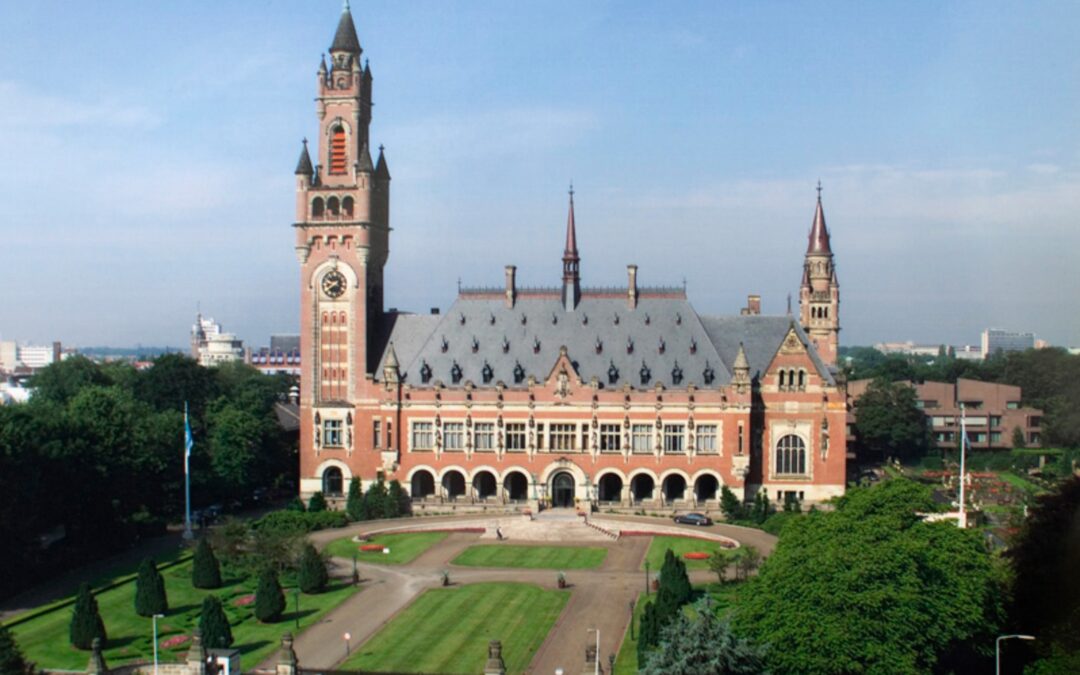
Today, the International Commission of Jurists published a legal briefing on the hearing on provisional measures to be held at the International Court of Justice between 10-12 December 2019 in the case of The Gambia v Myanmar.
Questions answered include:
- What allegations does The Gambia make against Myanmar?
- What provisional measures has The Gambia requested?
- What are provisional measures?
- What is the process for requesting provisional measures?
- What factors are taken into account on a request for provisional measures?
- If the Court indicates provisional measures, are they binding on the parties?
- What is Daw Aung San Suu Kyi’s role in the proceedings?
Download:
Myanmar-Provisional Measures Briefing-Advocacy-Analysis Brief-2019-ENG (English)
Myanmar-Provisional Measures Briefing-Advocacy-Analysis Brief-2019-BUR (Burmese)
Contact:
Kingsley Abbott, Senior Legal Adviser and Coordinator of the ICJ’s Global Accountability Initiative, kingsley.abbott(a)icj.org
Dec 4, 2019 | News
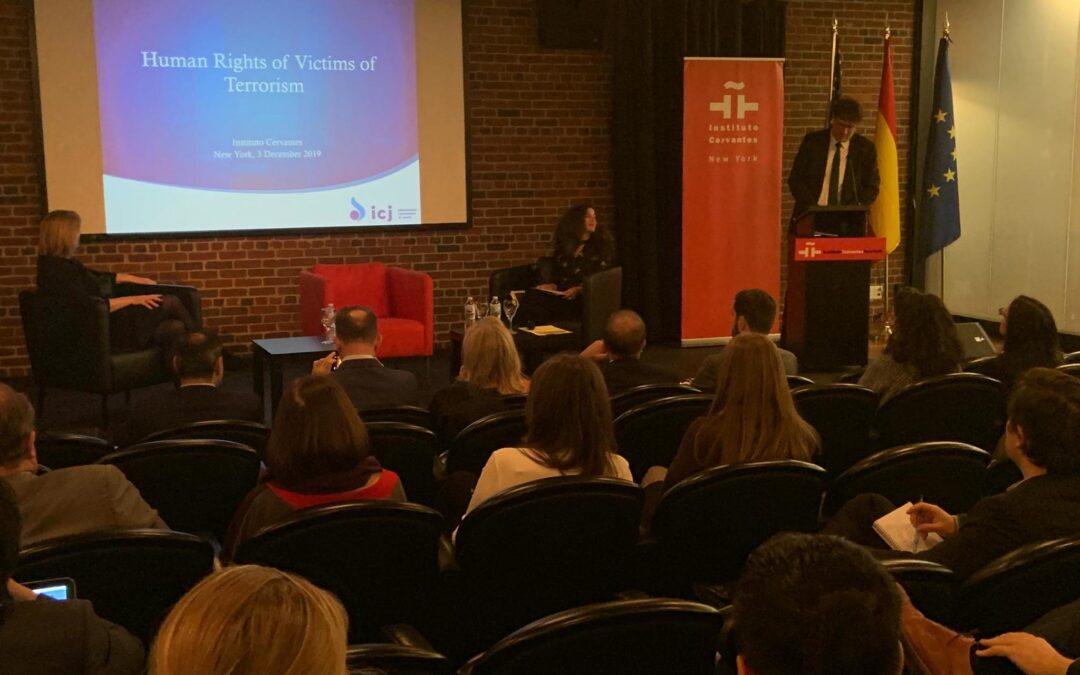
The ICJ has highlighted the human rights of victims of terrorism in a presentation to States’ delegations to the UN in New York.
On 3 December 2019, ICJ Senior Legal Adviser Matt Pollard presented ICJ’s compilation, Human Rights of Victims of Terrorism, at an event organized by the Permanent Missions of Spain and Afghanistan and the UN Office on Counter-Terrorism (UNOCT), with participation by the UN Special Rapporteur on the promotion and protection of human rights and fundamental freedoms while countering terrorism.
In the presentation, the ICJ recognised the achievements of Spain and Afghanistan in establishing a Group of Friends of Victims of Terrorism, and in achieving consensus for a ground-breaking General Assembly resolution in June, and UNOCT’s ongoing work including the UN victims of terrorism support portal.
The ICJ also emphasised key elements such as: the essential role of victims’ associations and other civil society actors; the need to move beyond expressions of solidary to implement concrete measures of assistance; and the need for a human-rights based approach to victims of terrorism.
Among key issues, the ICJ highlighted: effective, rapid and simple access to assistance; access to justice and the truth; recognition and remembrance; avoiding exploitation and re-traumatization; preventing further attacks or violence, while respecting the rule of law and human rights; ensuring involvement of victims’ representatives in designing, implementing and assessing measures for victims; and the importance of international cooperation.
The presentation also looked forward to next steps towards concrete realization of the human rights of victims of terrorism, including through State’s responses to the call in the General Assembly resolution to develop and implement National Action Plans.
For more information contact matt.pollard(a)icj.org
Oct 16, 2019 | Multimedia items, News, Video clips
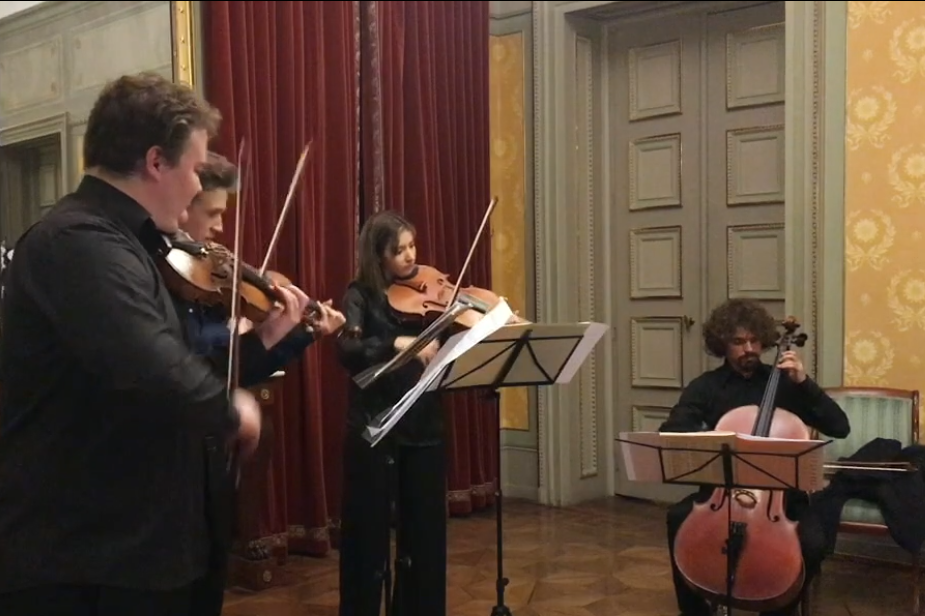
ICJ’s first ever fundraising gala took place on 14 October at the iconic setting of the Palais Eynard in Geneva.
Sami Kanaan, Counselor and former Mayor of the City of Geneva, which provided its generous support, opened the event by speaking of the importance of the ICJ cooperation with the local legal community.
Next, several speakers offered a few answers to the theme of the evening: ‘Geneva, the defense of the Rule of Law: what can I do?’.
Pierre de Preux, former Bâtonnier, explained the great value that can be brought to defending rule of law in the world by supporting the ICJ through missions, as he himself did in Tunisia in the 80s.
He was followed by ICJ Commissioners Sir Nicolas Bratza (former President of the European Court of Human Rights), who discussed backsliding on human rights in contemporary Europe; lawyer Reed Brody, who discussed his work in bringing powerful dictators to account for human rights atrocities; and Justice Martine Comte of France, who described her experience in leading ICJ missions in Central Asia.
The ICJ President Prof. Robert Goldman and ICJ Secretary General Sam Zarifi also addressed the attendees.
The exchange was then followed by an inspiring concert by the young virtuosi of the Menuhin Academy and a delicious Buffet cocktail provided by refugee Chefs Jena Hamza (Syrian Kurd) and Sritharan Tambithurai (Sri Lanka). All in all, a wonderful evening combining substance, beauty and friendship.
Watch the video here: