Aug 30, 2019 | Advocacy, Non-legal submissions
The ICJ has presented information to the UN Human Rights Committee in preparation for the Committee’s examination of the eighth periodic report of Ukraine under the International Covenant on Civil and Political Rights (ICCPR).
In this submission, the ICJ draws the Committee’s attention to the situation with the security and independence of the legal profession and Ukraine’s compliance with and implementation of its obligations under Articles 2, 6 and 14 of the ICCPR, as well as the UN Basic Principles on the Role of Lawyers.
The ICJ stresses that attacks on lawyers are likely to lead not only to violations the rights of the individual lawyers concerned, but also to violations of the rights of the clients they represent, including the right to a fair trial (Article 14 ICCPR), the right to liberty (Article 9 ICCPR), the right to freedom from torture or other ill-treatment (Article 7 ICCPR), and the right to an effective remedy (Article 2.3 ICCPR) as attacks on lawyers may, in turn, hinder the provision of effective legal representation.
Ukraine-List of Issues-Advocacy-non legal submission-2019-ENG (full submission, in PDF)
Aug 22, 2019 | Advocacy, News
Today, the ICJ joined 10 other international and Venezuelan human rights organizations to call the United Nations Human Rights Council to establish a Commission of Inquiry (COI) on human rights in Venezuela in its upcoming session in September.
The ICJ considers that an independent COI is necessary given the Venezuelan authorities have been unable or unwilling to pursue effective domestic accountability and the judicial and prosecutorial mechanisms lack independence and impartiality.
In recent years, the ICJ has documented in several reports the lack of judicial independence, the lack of accountability for those allegedly responsible for gross human rights violations, the abuse and misuse of the military jurisdiction, and wide ranging breakdown in the functioning of the rule of law.
The United Nations High Commissioner for Human Rights in her 2019 report has similarly stressed that wide ranging human rights violations had occurred in Venezuela evidenced by the excessive use of force by security forces, attacks on freedom of expression, arbitrary detention and extrajudicial killings, dismantling of checks and balances, and deprivations constituting violations of the right to food and health. In addition, a panel of independent international experts mandated by the Secretary General of the Organization of American States (OAS), mentioned in 2018 “that reasonable grounds exist to believe that crimes against humanity have been committed in Venezuela”.
Commissions of Inquiry have been effectively established by the UN Human Rights Council to assess serious situations of human rights in several countries where there is a need to ensure proper human rights fact finding and ultimately accountability for widespread or systematic human rights violations. These include COIs for Syria, North Korea, Burundi, Yemen, Libya and Eritrea.
The ICJ and the other organizations have emphasized that the Commission of Inquiry that could be established for Venezuela “should be mandated to investigate reports of violations of international human rights law in Venezuela, including but not limited to violations associated with torture and inhuman treatment, arbitrary detention, discrimination, violations of freedom of expression, violations of the right to life and enforced disappearances, as well as violations of the rights to health and food. It should be tasked with establishing the facts and circumstances of violations committed since at least 2014, mapping out patterns of violations and identifying those responsible and, where possible, the chain of command, with a view to contributing to full accountability for all violations including those that constitute crimes under international law (…)”.
Download:
Venezuela-COI final-Advocacy-2019-ENG (full Q&A document prepared by all 11 organizations in PDF)
Jul 31, 2019 | News, Publications, Reports, Thematic reports
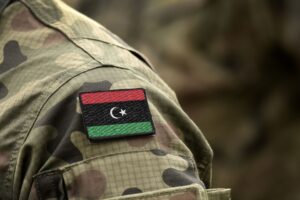
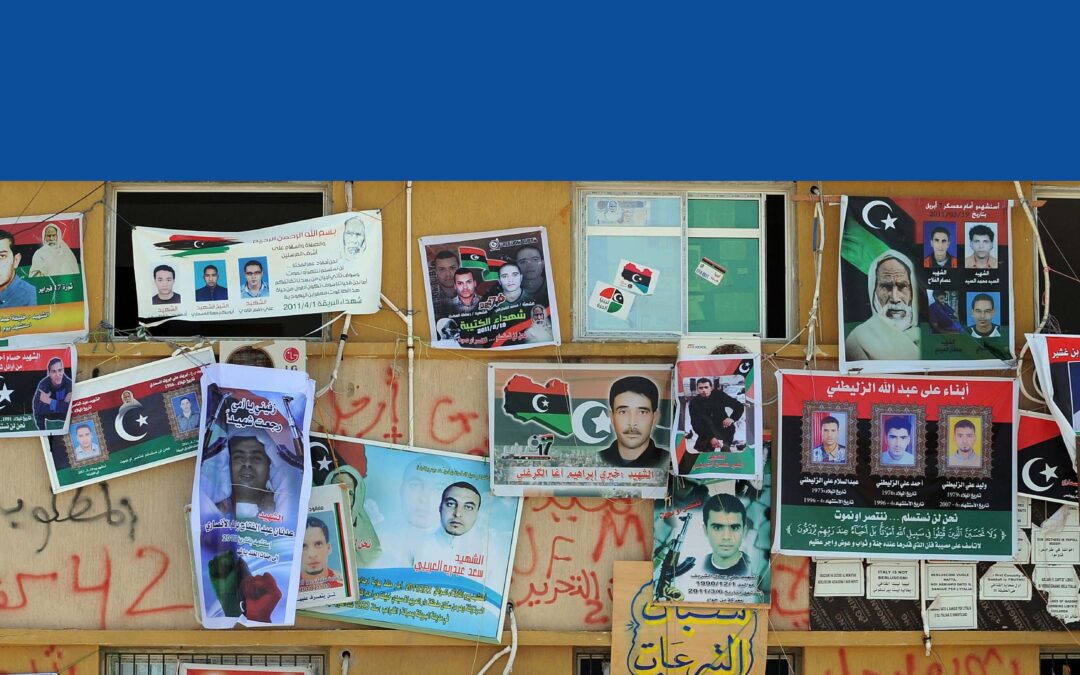
In a report released today on Libya’s criminal justice system, the ICJ said the United Nations, international actors and States must prioritize accountability for crimes under international law in their engagement with Libya.
This includes the establishment of a Commission of Inquiry or similar mechanism to document and report on gross human rights violations and to collect and preserve evidence of crimes for future criminal proceedings.
“The Libyan criminal justice system needs comprehensive reform to dismantle the structural impunity that prevails in the country,” said Said Benarbia, the ICJ’s MENA Programme Director.
“Rather than assuming the system is capable of ensuring justice for the egregious human rights violations and abuses still being perpetrated in Libya, international actors should establish a mechanism to monitor, report on and address these violations and prioritize human rights in any agreement with Libyan authorities,” he added.
The report Accountability for Serious Crimes under International Law in Libya: an Assessment of the Criminal Justice System finds that investigations and prosecutions of crimes under international law have been limited to a handful of cases and that future cases are unlikely meet international standards necessary to ensure fair and effective justice, in particular the rights to liberty and a fair trial and the prohibition on torture and ill-treatment.
Fragmentation in Libyan executive and legislative bodies, with the internationally recognized government unable to control significant parts of the territory, has weakened political structures and led to a precarious security situation that impedes the effective functioning of the judiciary, which has remained largely unified.
“Accountability efforts in Libya are hindered by cycles of violence, weak and ineffective law enforcement agencies, the arbitrary exercise of policing and detention powers by armed groups, and a web of amnesties, immunities and defences that shield perpetrators from justice,” said Kate Vigneswaran, the ICJ’s MENA Programme Senior Legal Adviser.
“Victims should not have to wait any longer for these obstacles to be removed and justice delivered. Peace and justice in Libya can only be achieved if the rule of law is fully established,” she added.
Since 2011, crimes under international law and other gross human rights violations, including torture and ill-treatment, enforced disappearance, enslavement and rape, have been committed by State and non-State actors on a widespread scale, including against thousands of migrants, refugees and asylum seekers arbitrarily detained.
“The recent upsurge in conflict and related commission of direct and indiscriminate attacks against civilians and mass displacement of the population makes tackling the climate of impunity vital for combating the commission of crimes,” said Benarbia.
To this end, States should fully support International Criminal Court efforts to conduct Libya-related investigations and prosecutions, including with a view to enforcing arrest warrants and bringing alleged perpetrators before the court for trial.
In her address to the Human Rights Council on 24 June, High Commissioner for Human Rights Michelle Bachelet stated that “Libya is not a port of safe return” and that “[t]he international community must come together to support pathways to sustainable peace in the country.”
Key recommendations for international actors, including UN bodies and States, include:
- The United Nations Human Rights Council should establish a Commission of Inquiry or similar mechanism, with a mandate to monitor, document, establish the facts and report on gross human rights violations in Libya, including with a view to collecting and preserving evidence of crimes under international law for future criminal proceedings before national or international courts;
- States should exercise universal jurisdiction to investigate and prosecute crimes under international law committed in Libya, including when the perpetrator is within their territory or otherwise under their jurisdiction;
- States should fully cooperate with and adequately resource the ICC to enhance its capacity to conduct its investigations and prosecutions, enforce related arrest warrants, and bring alleged perpetrators to account; and
- States and UN actors should refrain from entering into or implementing agreements with Libyan authorities, including in relation to the detention of migrants, refugees and asylum seekers and the provision of arms, where it is reasonably foreseeable that violations of rights under international law might occur.
Contact:
Said Benarbia, Director, ICJ Middle East and North Africa Programme, t: +41-22-979-3817; e: said.benarbia(a)icj.org
Kate Vigneswaran, Senior Legal Adviser, ICJ Middle East and North Africa Programme, t: +31-62-489-4664; e: kate.vigneswaran(a)icj.org
Libya-Accountability report launch-News-Press releases-2019-ENG (full story, in English, PDF)
Libya-Accountability serious crimes-Publications-Reports-Thematic reports-2019-ENG (full report in English, PDF)
Libya-Accountability report launch-News-Press releases-2019-ARA (full story in Arabic, in PDF)
Libya-Accountability serious crimes-Publications-Reports-Thematic reports-2019-ARA (full report in Arabic, PDF)
Jul 19, 2019 | News, Op-eds
An opinion piece by Emerlynne Gil, Senior Legal Adviser, ICJ Asia-Pacific Programme.
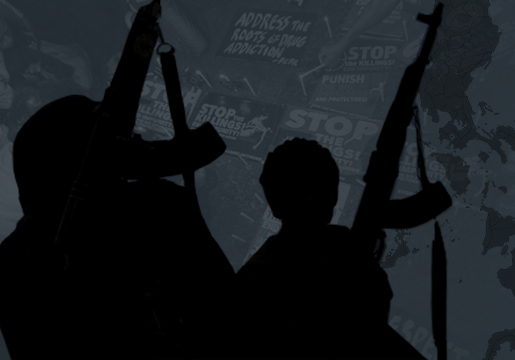
Last week, the UN Human Rights Council adopted a resolution expressing concern over the human rights situation in the Philippines. It specifically expressed grave concern over the killings and disappearances arising from the drug war of the current administration.
Since 2016, when the government began its campaign against illegal drugs, there have been reports of thousands of killings of people who were allegedly involved in the drug trade and drug use.
Furthermore, in the recent report of Lawyers Rights Watch Canada (LRWC), there have been more than 40 lawyers killed under the current administration.
The resolution was, in fact, restrained in tone and content. Human rights groups like the ICJ had hoped that it would establish an international mechanism to investigate the killings and other human rights violations.
However, the Council held back and merely urged the Philippine government to “take all necessary measures to prevent extrajudicial killings and enforced disappearances”.
It also asked the Philippine government “to cooperate with the Office of the High Commissioner on Human Rights” and other international human rights mechanisms, and requested the UN High Commissioner for Human Rights to present a report to the Council for discussion in June 2020.
The Philippine government sent a big delegation to Geneva to lobby against the adoption of any resolution. During the informal consultations among States on this resolution, there were theatrics from the delegation, which walked out during the first consultation.
At the second consultation, nobody from the delegation attended, but former Ambassador Rosario Manalo, who also previously represented the Philippines in the ASEAN Intergovernmental Commission on Human Rights (AICHR), and is now a member of the UN Committee on the Elimination of Discrimination against Women, was present.
Purporting to speak as a ‘human rights defender’, she launched an angry tirade against Iceland as the sponsor of the resolution and the other States who supported it.
She also called the Filipino human rights defenders in the room who were seated right next to her as ‘treacherous’, and accused them of peddling lies about the country.
The theatrics in Geneva did not serve the Philippine government well. In the end, the Council voted to adopt the resolution.
Now that it has been adopted, what does this mean for Filipinos? The UN Human Rights Council, like any international human rights body, has significantly limited ability to directly protect human rights on the ground.
Thus, while it has adopted this resolution, the Council will not have the power to actually stop the unlawful killings and other human rights violations being committed. The Council will be unable to compel the implementation of the recommendations in any resolution it adopts, where a State is unwilling to cooperate.
Hence, the Philippine government still holds the discretion on whether or not to implement the recommendations made by the Council.
This is where ordinary Filipinos come in. The people – as the eyes and ears on the ground – are indispensable to the work of international human rights bodies like the Human Rights Council.
The effectiveness of the Council in protecting human rights on the ground greatly relies upon the extent to which the people on the ground – including human rights defenders – are able to engage and work with them.
The information provided by the general public regarding the situation on the ground is very important to the work of international human rights mechanisms like the Council. This information gives these mechanisms a clearer and more accurate picture of the human rights situation in the country.
We should thus not be silent. We should continue pressing the government to implement the recommendations in this resolution. The key recommendation is that the government should investigate extrajudicial killings and enforced disappearances and hold the perpetrators accountable.
In its formal statement to the Council after adoption of the resolution a few days ago, the representative of the Philippine government at the Council vigorously claimed that the country has ‘fully functioning domestic accountability mechanisms’, ignoring the fact that authorities have been unwilling or unable to conduct effective investigation or prosecutions for any of the numerous allegations of unlawful killings.
Hence, we should press the government to demonstrate that its claim that domestic accountability mechanisms are functioning is true, and that it should then use these mechanisms by investigating the killings and disappearances and punishing the perpetrators.
It is a welcome development that the Human Rights Council passed this resolution on the human rights situation in the Philippines.
But the work does not end there. There is a symbiotic relationship between the actions of the people on the ground and the work of international human rights mechanisms like the Council.
It is now left to us to press our government for the implementation of the recommendations in the resolution.
Jul 18, 2019 | News
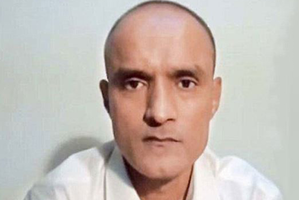
The International Commission of Jurists (ICJ) today welcomed the decision of the International Court of Justice (ICJ-CIJ for its acronym) upholding the right of consular access and notification for Indian national Kulbhushan Jadhav.
The Court determined that Pakistan had unlawfully denied Jadhav consular access before and after his summary trial by a military court.
It emphasized that any “potential prejudice and the implications for the evidence and the right of defence of the accused should receive close scrutiny during the review and reconsideration.”
The Court categorically held that Article 36 of the Vienna Convention on Consular Relations (VCCR) “does not exclude from its scope certain categories of persons, such as those suspected of espionage,” as argued by Pakistan.
“The decision by the International Court today is a resounding affirmation that there can be no curtailment of the right to consular access by foreign nationals by States that are Party to the VCCR,” said Ian Seiderman, Legal and Policy Director of the ICJ.
“Consular access is essential to ensure a fair trial for foreign nationals and this human right must not in any way be made contingent upon the offence foreign nationals are charged with.”
The International Court called on Pakistan to give effect to the Court’s ruling by providing effective review and reconsideration of both his conviction and sentence, including by taking account of the principles of the right to a fair trial.
The ICJ has pointed out that Pakistan’s military justice system and procedures are incompatible with the right to a fair trial. Under international standards, military tribunals are never permissible in prosecutions against civilians for offences carrying the death penalty.
Since 3 March 2016, Kulbhushan Jadhav has been in custody of the Pakistani authorities. The circumstances of his arrest remain in dispute between the Parties.
India was informed of the arrest on 25 March 2016. On 10 April 2017, Pakistan’s military announced Kulbhushan Jadhav had been convicted and sentenced to death by a military court for “espionage and sabotage activities against Pakistan.”
India had brought the case against Pakistan before the International Court of Justice, alleging “egregious violations” of the VCCR by Pakistan because of the denial of consular access to Jadhav.
In response, Pakistan had primarily argued that Jadhav is a an Indian spy involved in acts of terrorism in Pakistan, and the VCCR is not applicable to spies or “terrorists” due to the inherent nature of the offences of espionage and terrorism.
“States around the world continue to use counter terrorism and national security as a justification to curtail human rights – the International Court of Justice’s affirmation that the protections under the VCCR are not conditional is hugely significant in this context,” said Ian Seiderman.
The International Court also held that it considered a continued stay of Jadhav’s execution as constituting “an indispensable condition for the effective review and reconsideration of the conviction and sentence.”
In May 2017, the Court had asked Pakistan to take all measures at its disposal to ensure that Jadhav is not executed pending the final decision in the proceedings.
The ICJ considers the death penalty a violation of the right to life and cruel, inhuman or degrading punishment and notes that a large majority of States, in repeated UN resolutions, have called on retentionist states to declare a moratorium on the practice with a view to abolition.
Background
In addition to the arguments regarding espionage and terrorism, Pakistan also relied on a bilateral agreement on consular access, signed by India and Pakistan in 2008, arguing that the agreement overrides the obligations under the VCCR. The International Court of Justice, however, rejected this argument, on the ground that, among other things, obligations under the VCCR may be enhanced or clarified by bilateral treaties, but cannot be diluted or undermined.
India had requested a number of other measures of relief from the Court, including the annulment of Kulbhushan Jadhav’s death sentence; a declaration that Kulbhushan Jadhav’s military trial was in violation of the VCCR and international human rights law, including the International Covenant on Civil and Political Rights (ICCPR); a directive restraining Pakistan from giving effect to the death sentence; and a directive to release Kulbhushan Jadhav and ensure his safe passage to India.
However, in accordance with its jurisdictional competencies and prior precedents, the Court denied these remedies to India. As “appropriate reparation” in this case, the Court directed Pakistan to effectively review and reconsider Jadhav’s conviction and sentence “to ensure that full weight is given to the effect of the violation of the rights set forth in Article 36 of the Vienna Convention.”
Contact
Ian Seiderman: ICJ Legal and Policy Director, e: ian.seiderman(a)icj.org
Frederick Rawski: ICJ’s Asia Pacific Region, e: frederick.rawski(a)icj.org