Jun 16, 2017 | Advocacy, Non-legal submissions
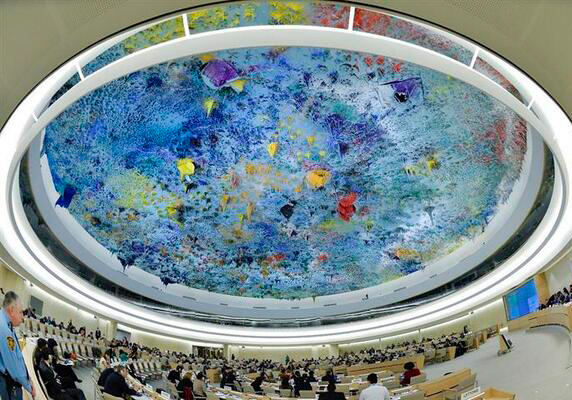
The International Commission of Jurists today drew to the attention of the Human Rights Council the failure of responsible States to ensure accountability for renditions and secret detention in several countries across the world.
The issue was highlighted by an oral statement in the General Debate on human rights situations that require the Council’s attention.
The ICJ statement continued as follows:
The US-administered rendition and secret detention programme of the last decade led to the commission of egregious violations of human rights and crimes under international law on a global scale with the complicity of several States, including in Europe.
Similar practices have been adopted in the Russian Federation where abductions of “terrorism” or “extremism” suspects and transfer to Central Asian States continue, in disregard of the principle of non-refoulement.
None of the States involved in the US-led renditions programme, or in abduction and transfer practices occurring in the Russian Federation, have ensured full accountability of those responsible and full redress for victims.
The ICJ calls on this Council to issue a strong call to all UN Member States to provide full accountability and redress for victims for the human rights violations that occurred during these operations.
Jun 13, 2017 | Advocacy, Non-legal submissions
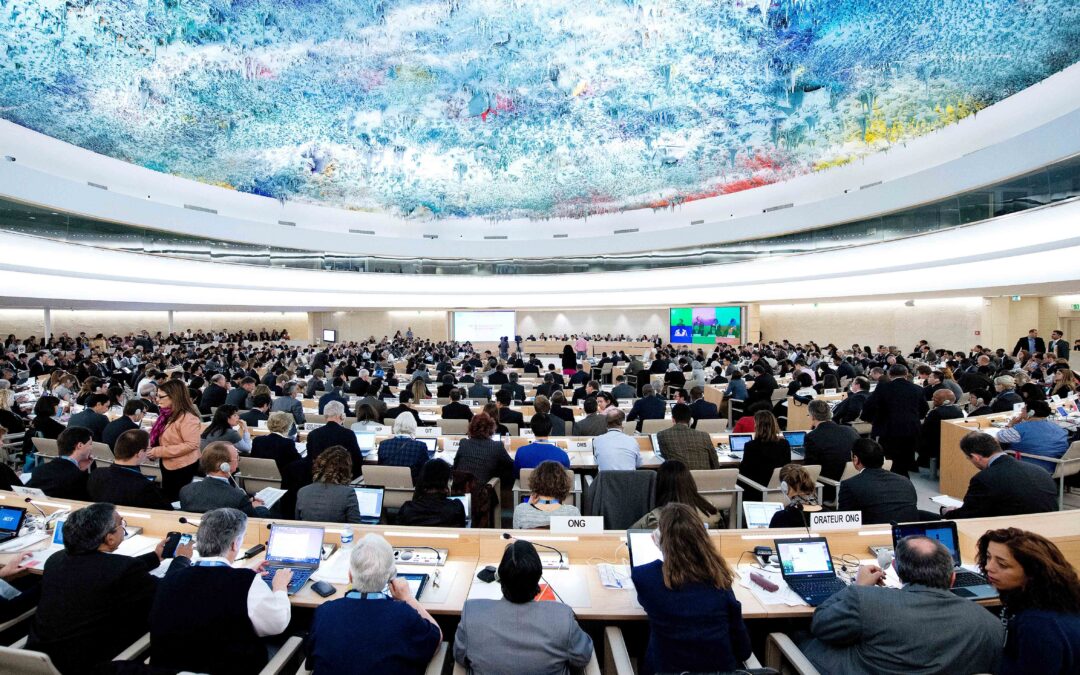
The ICJ today spoke on behalf of a number of NGOs, drawing the attention of the Human Rights Council to the fact that the Council is permitting civil society space to shrink within its own chamber.
The statement was as follows:
Mr President,
We thank States for their commitment to address the shrinking space for civil society.
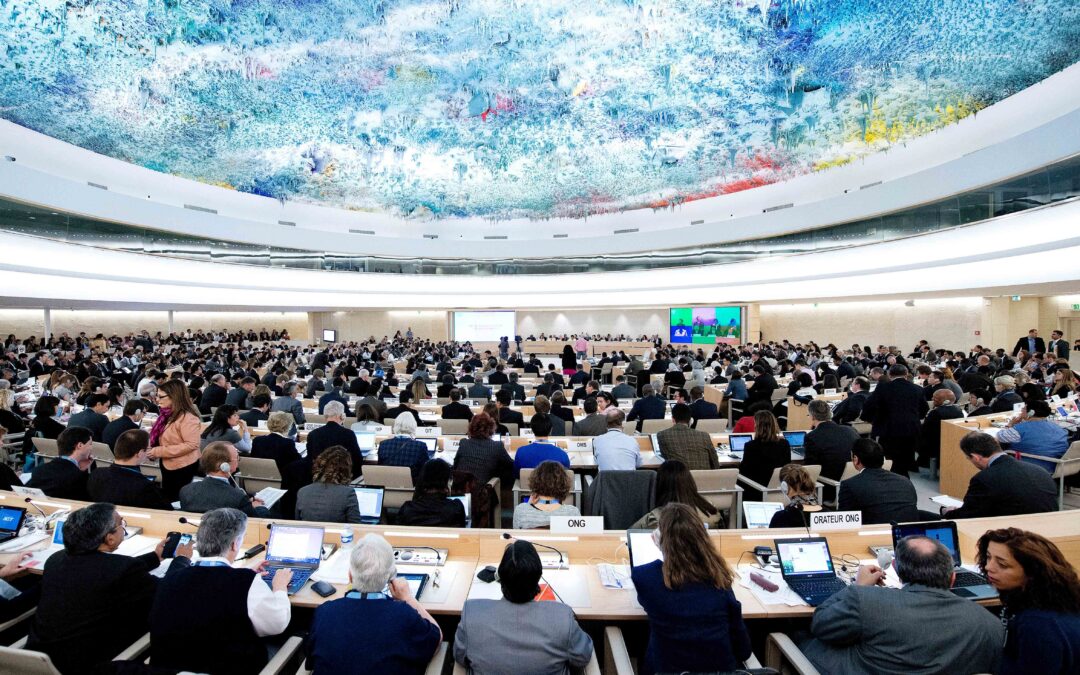
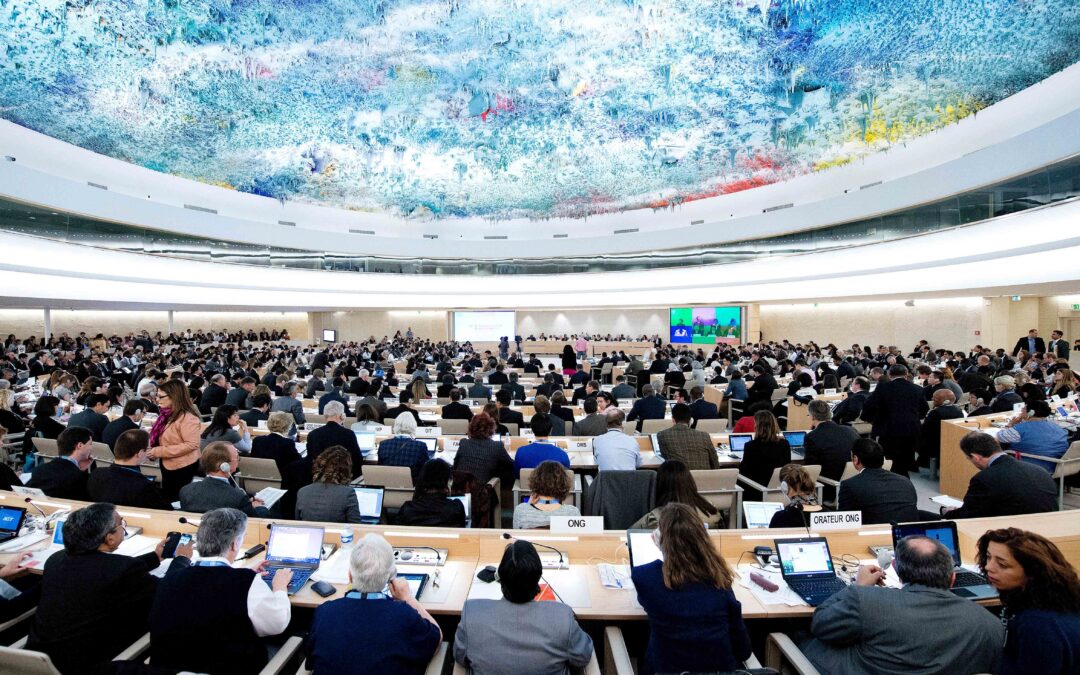
We draw the Council’s attention to the fact that since 2013, the number of desks reserved for NGOs in room XX for Human Rights Council sessions has been reduced from 24 to 2, leaving only the two speaking seats we are now sitting in.
This has been drawn to the attention of successive Presidents of the Council but the space has continued to shrink.
We invite all delegations to reflect on the impression this gives to civil society, not to mention States and other international actors, about the Council’s commitment to addressing shrinking civil society space.
I thank you Mr President.
The statement was delivered by the ICJ on behalf of the following NGOs:
- Article 19
- Asian Forum for Human Rights and Development (Forum-Asia)
- Bahá’í International Community
- CIVICUS – World Alliance for Citizen Participation
- DefendDefenders (the East and Horn of Africa Human Rights Defenders Project)
- FIAN International
- Franciscans International
- International Bar Association
- International Commission of Jurists (ICJ)
- International Federation for Human Rights Leagues (FIDH)
- International Lesbian and Gay Association (ILGA)
- the International Movement against All forms of Discrimination and Racism (IMADR)
- International Platform Against Impunity
- International Service for Human Rights (ISHR)
- Minority Rights Group International
- Peace Brigades International (PBI)
- Universal Rights Group (URG)
- Women’s International League for Peace and Freedom (WILPF).
The statement can be downloaded in PDF format here: HRC35-OralStatement-GDItem3-CivilSocietySpace-2017
Jun 13, 2017 | News
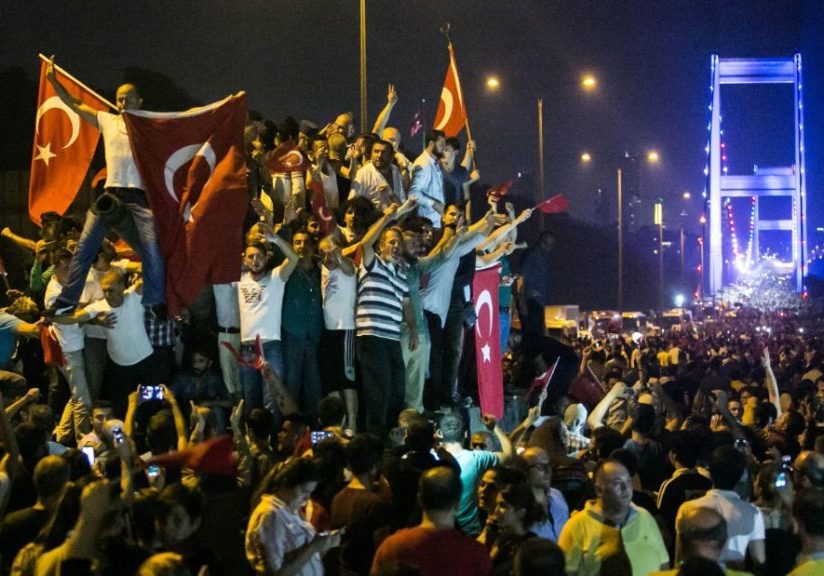
The ICJ welcomed today the Special Rapporteur’s report on Turkey and his preliminary findings on his visit to the country last November.
The ICJ welcomes and concurs with the finding that the “situation of the judiciary is undermining freedom of opinion and expression”.
Mass dismissals of judges have had a devastating effect on the judiciary’s independence, already weakened by the current state of emergency. Furthermore, we are concerned at the claim by the President that the state of emergency will remain in place until Turkey reaches “peace and prosperity”. Whatever other questions there may be about their validity, maintaining emergency derogations to human rights law instruments for such an open-ended period would clearly not be in line with international law.
The ICJ is also concerned at the constitutional amendments approved on the 16th of April by a referendum. Among other things, the amendments have given powers to the President and the Parliament to appoint all the members of the High Council of Judges and Prosecutors, the body tasked with protecting the independence of these professions.
The judiciary has had in the past an important role in implementing legislation that has severely limited the freedom of journalists to carry out their job.
The independence of the judiciary has now been eroded to its core in Turkey. Without it, there is no effective remedy in the country to protect freedom of opinion and expression.
Further reading: ICJ’s briefing paper Turkey: the Judicial System in Peril
Jun 13, 2017 | Advocacy, Non-legal submissions
During a panel discussion at the UN Human Rights Council, the ICJ delivered an oral statement on the role of men and boys in eliminating violence against women by ensuring women’s access to justice for gender based violence.
The statement was delivered during the first panel of the Council’s annual full-day discussion on the human rights of women. The panel focused on accelerating efforts to eliminate violence against women by engaging men and boys in preventing and responding to violence against women.
The ICJ’s statement was as follows:
Violence against women is a widespread human rights abuse rooted in patriarchal societies and gender stereotypes that are harmful to everyone. As the panel have recognised, the international community cannot address the issue as though it is only a problem for women and we welcome the positive focus on the role of men and boys as beneficiaries and agents of change.
The ICJ remains concerned about women’s access to justice for gender based violence. Strong domestic laws, grounded in an international human rights framework, that are upheld by a robust and independent judiciary, are essential components of tackling the problem.
However, the ICJ has worked with lawyers, judges and civil society to assess the obstacles that continue to face women seeking justice for gender based violence and we know that laws alone are not enough. It must also be acknowledged that many laws are based on patriarchal norms and stereotypes that are intrinsically discriminatory against women seeking justice through the legal system.
Behavioural change is required in not only preventing violence against women but also in ensuring that justice is available to those that have been subject to this violence. Men have a pivotal role to play in working with women to ensure that a gender based perspective is applied to the way laws are accessed and implemented.
We applaud the panellists’ focus on engaging with men and boys to prevent harmful behaviours of violence against women from taking root.
However, we would like to ask what role panellists suggest men and boys have in:
a) ensuring that perpetrators are held accountable for their actions, and
b) in supporting the justice system in rehabilitating offenders to prevent further acts of violence, without compromising justice and services available to women?
In response to the ICJ’s statement the Special Rapporteur on Violence Against Women commented that structural problems impact on the effectiveness of laws.
Mr Abhijit Das noted that prosecution was only one means of addressing gender inequality and that engagement with men and boys needed to go beyond this to include the widest number of stakeholders possible, including those men and boys that do not perpetrate violence against women.
Mr Anthony Keedi noted that rehabilitation was a key component of addressing violence against women and must be at the heart of change to prevent cycles of violence from continuing.
The participants in the panel and discussion were:
- Chair: H.E. Mr Joaquin Alexander Maza Martelli, President of the Human Rights Council.
- Opening statement: Ms Kate Gilmore, UN Deputy High Commissioner of Human Rights provided an opening statement
- Keynote speaker: H.E. Ms Karen Ellemann, Minister for Equal Opportunities and Nordic Cooperation, Denmark
- Moderator: Ms. Lana Wells, Brenda Stafford Chair in the Prevention of Domestic Violence, University of Calgary, Canada
- Panellist: Ms Dubravka Simonovic, Special Rapporteur on violence against women, its causes and consequences
- Panellist: Mr Anthony Keedi, Masculinities Technical Adviser, ABAAD Resource Centre for Gender Equality, Lebanon
- Panellist: Mr Francis Oko Armah, Youth Activist, curious Minds, Ghana
- Panelist: Mr Abhijit Das, Co-Chair of MenEngage Alliance and Founder of Men’s Action for Stopping Violence against Women, India
Jun 12, 2017 | Advocacy, Non-legal submissions
Speaking at the UN Human Rights Council, the ICJ today highlighted judicial corruption and threats to judges and lawyers in Turkey and Azerbaijan, as well as regressive steps on violence against women in the United States of America and Russian Federation.
The statement, delivered during the interactive dialogue with the UN Special Rapporteur on Independence of Judges and Lawyers and the UN Special Rapporteur on Violence against Women, was as follows:
“The ICJ warmly welcomes the new Special Rapporteur on Independence of Judges and Lawyers. As he has highlighted, ensuring judges are accountable for corruption and human rights violations, while respecting judicial independence, should be a global priority. Our Practitioners’ Guide on Judicial Accountability, published last year, should be of particular use to the Rapporteur and other actors in this regard.
Several situations serve as stark examples of other issues raised in his report. In Turkey, recent constitutional amendments give the President and Parliament control over the judiciary’s governing body. This has undermined the judiciary’s independence, already threatened by the mass dismissal of judges and the state of emergency. Lawyers and legal scholars, among others, are routinely dismissed or threatened by the authorities.
In Azerbaijan, the Bar Association is not independent and does not protect its members against undue interference with the exercise of their professional duties. Rather, it often serves as a tool of retaliation against independent human rights lawyers, including through disbarment proceedings that contravene international standards.
We would ask the Special Rapporteur for his views on the role his mandate can play in these and similar situations.
The ICJ also welcomes the report of the Special Rapporteur on violence against women.
Despite increasing global acknowledgement of the grave and systemic nature of violence against women, some States continue to introduce regressive legislation undermining protections for women. For example, the Russian Federation’s decriminalization of certain forms of domestic violence, and attempts in some parts of the United States of America to restrict availability of sexual and reproductive healthcare, particularly impact on victims of sexual violence. The Philippines’ President’s public statements disregarding the gravity of sexual violence are another example. The ICJ would ask the Special Rapporteur what can be done to prevent such backsliding?”