Mar 4, 2016 | Advocacy, Non-legal submissions
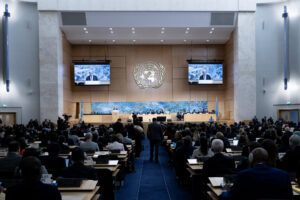
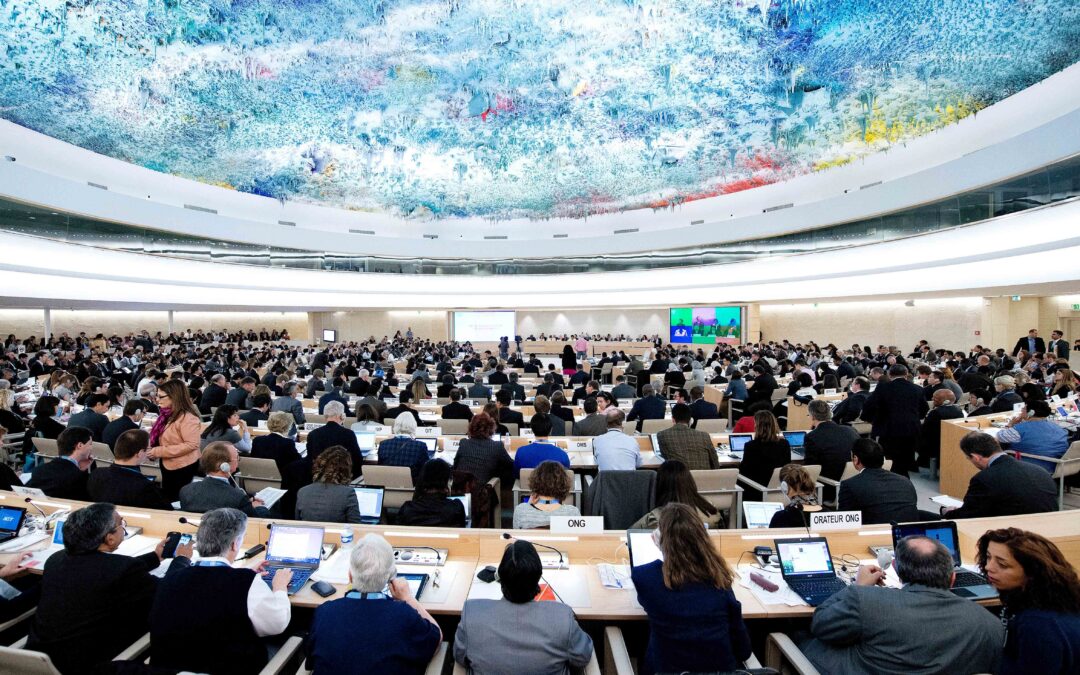
The ICJ prepared an oral statement on the situation of human rights defenders in Malaysia, for today’s interactive dialogue at the Human Rights Council with the UN Special Rapporteur on the situation of human rights defenders.
The statement could not be delivered in the limited time available for civil society statements; its text is set out below:
ICJ Oral Statement in the Interactive Dialogue with the Special Rapporteur on the situation of human rights defenders, Mr. Michel Forst
SITUATION OF HUMAN RIGHTS DEFENDERS IN MALAYSIA
3 March 2016
“The International Commission of Jurists (ICJ) welcomes the report of the Special Rapporteur on the situation of human rights defenders.
The work of human rights defenders is particularly under challenge in States where governments have conferred on themselves sweeping powers to restrict human rights on grounds of national security. One example, as reflected in the Special Rapporteur’s “Observations on communications” (UN Doc A/HRC/31/55/Add.1), is the situation of human rights defenders in Malaysia.
The ICJ welcomes the Attorney General’s decision to drop sedition charges against law lecturer Dr. Azmi Sharom; however, the Sedition Act and the Peaceful Assembly Act are still being abused to harass human rights defenders and others. Most recently, the High Court of Malaysia sentenced activist Hishamuddin Rais to nine months in jail for sedition, for calling for peaceful protest against the results of the 2013 general election on the basis that it was not transparent. Maria Chin Abdullah and Jannie Lasimbang, organizers of the Bersih 4.0 peaceful assembly calling for good governance, were charged under the Peaceful Assembly Act for allegedly omitting to inform the police about the assembly. There have reportedly been at least 91 cases of arrests, charges or investigations for sedition during 2015, and more than 30 cases of arrests under the Peaceful Assembly Act since 2013. Most, if not all, of these people are human rights defenders, including Eric Paulsen, the Director of Lawyers for Liberty, Adam Adli, a human rights activist, and Mandeep Singh, the Secretariat Manager of Bersih.
Unless repealed or drastically revised, these laws will continue to facilitate sweeping and arbitrary repression of freedoms of expression, assembly and association of human rights defenders, under the flag of national security. This contravenes the UN Declaration on Human Rights Defenders and numerous other resolutions of the Human Rights Council and General Assembly, including General Assembly resolution 70/161, adopted by the General Assembly in December with Malaysia voting in favor. Among other things, resolution 70/161 urged States ensure that human rights defenders are able to exercise the rights to freedom of opinion, expression, peaceful assembly and association, which are essential for the promotion and protection of human rights; and it emphasized that national security measures must not hinder the work and safety of individuals engaged in promoting and defending human rights.
In this context, the ICJ would like to ask the Special Rapporteur to comment on the obligations of governments to repeal or amend legislation that allows for abusive arrest or prosecution of human rights defenders on grounds such as “national security”, “sedition” or for not giving prior notice of assemblies.”
Mar 1, 2016 | Events
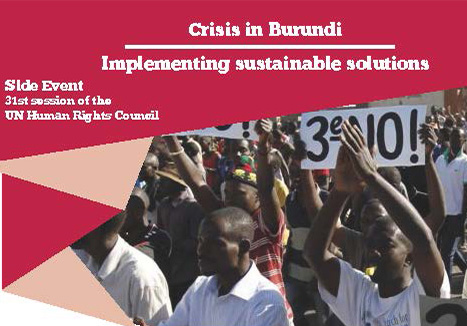
The ICJ is co-sponsoring a panel discussion on the situation for human rights in Burundi, as a side-event to the UN Human Rights Council, 4 March 2016.Details are available in the flyer available to download here: HRC31-sideeventflyer-burundi-2016
Feb 26, 2016 | Advocacy, Open letters
The open letter, which includes additional recommendations for a resolution on South Sudan to be adopted at the 31st ordinary session of the Human Rights Council (29 Feb – 24 Mar) is available here: Open Letter South Sudan
Feb 5, 2016 | News
The ICJ today called on the Royal Thai Government to immediately drop criminal proceedings against human rights lawyer Sirikan Charoensiri.
On 2 February 2016, Sirikan Charoensiri received two summons to appear at the Chanasongkram Police Station on 9 February 2016 to be charged with two offences under the Criminal Code of Thailand: “giving false information regarding a criminal offence” and “refusing to comply with the order of an official”.
Such charges could result in punishment of up to two years’ imprisonment.
“The charges against Sirikan Charoensiri apparently relate to her efforts to protect the legal and human rights of her clients, students who never should have faced arrest or criminal proceedings for peacefully exercising their freedoms of expression and assembly in the first place,” said Matt Pollard of the ICJ’s Centre for the Independence of Judges and Lawyers.
“Prosecuting Sirikan Charoensiri for her efforts to defend human rights is totally unacceptable and will only put Thailand further in violation of its international obligations,” he added.
The charges appear to relate to the circumstances surrounding Sirikan Charoensiri’s provision of legal aid to 14 students who were arrested on 26 June 2015 after carrying out peaceful protests calling for democracy and an end to military rule.
Although the precise basis for the changes is not set out in the summonses, the complainant is named as Pol. Col. Suriya Chamnongchok, a police officer involved in the investigation of the 14 students.
Sirikan Charoensiri, a lawyer with Thai Lawyers for Human Rights (TLHR), has provided legal aid to many individuals, including activists and human rights defenders, since military rule was imposed in May 2014.
The ICJ first expressed concern about the Government’s targeting of Sirikan Charoensiri on 2 July 2015, after the Royal Thai Police threatened Sirikan Charoensiri with legal action, publically announced they were considering charging her with a crime, and visited her home and questioned her family.
These threats and harassment, like the currently pending charges, appeared to be in retaliation for her having refused consent for police to search her car after the students’ court hearing, and for having filed a complaint with the police when they proceeded to impound it.
The ICJ has brought the case to the attention of the United Nations Special Rapporteurs on the Independence of Judges and Lawyers, and on the Situation of Human Rights Defenders.
The situation of human rights in Thailand will be examined by the UN Human Rights Council in May 2016, as part of the Council’s Universal Periodic Review of all States.
“Ahead of Thailand’s human rights review by the United Nations in May, and against the background of the tabled ‘roadmap’ towards democratic rule, the need for the Royal Thai Government to restore respect for human rights only grows more urgent by the day,” said Pollard.
Contact
In Bangkok: Kingsley Abbott, International Legal Adviser for Southeast Asia, t +66 94 470 1345 ; e: kingsley.abbott(a)icj.org
In Geneva: Matt Pollard, ICJ Senior Legal Adviser, t: +41 22 979 38 12 ; e: matt.pollard(a)icj.org
Background
The International Covenant on Civil and Political Rights (ICCPR), to which Thailand is a Party, guarantees the right to peaceful assembly; the right to freedom of expression; the prohibition of arbitrary arrest or detention; the right to a fair and public hearing by a competent, independent and impartial tribunal established by law (including the right of prompt access to a lawyer and precluding jurisdiction of military courts over civilians in circumstances such as these); and the prohibition of arbitrary or unlawful interference with privacy, family, home and correspondence (which includes arbitrary searches or seizures).
The UN Declaration on Human Rights Defenders affirms the right of everyone peacefully to oppose human rights violations. It prohibits retaliation, threats and other harassment against anyone who takes peaceful action against human rights violations, both within and beyond the exercise of their professional duties. It protects the right of persons to file formal complaints about alleged violations of rights. The UN Basic Principles on the Role of Lawyers provide that governments are to ensure that lawyers are able to perform their professional functions without intimidation, hindrance, harassment or improper interference.
Thailand-Sirikan Charoensiri-News-Press releases-2016-THA (full text in PDF, Thai)
Dec 16, 2015 | Advocacy, Events
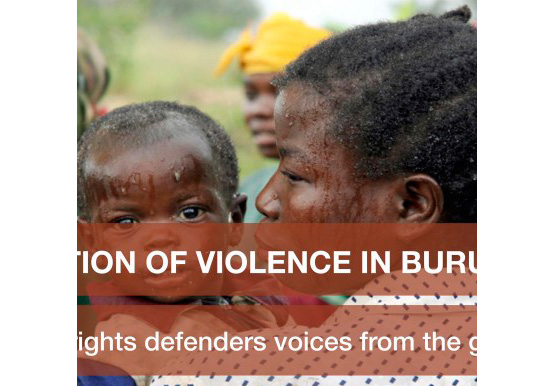
The ICJ joins other non-governmental organisations in co-sponsoring “Escalation of Violence in Burundi: Human rights defenders voices from the ground”, a side event to the Human Rights Council’s special session on Burundi, 17 December 2015.
The event will take place Thursday 17 December – 9.00-10.00 am in Room XII, Palais des Nations, Geneva
Panelists:
Mr Pierre Claver Mbonimpa, Association for the Protection of Human Rights and Incarcerated Persons (APRODH)
Ms Margaret Barankitse, Maison Shalom
Mr Anschaire Nikoyagize, Ligue ITEKA
Ms Carina Tertsakian, Human Rights Watch
The event will be moderated by Nicolas Agostini of FIDH.
The event will be webcast live by the International Service for Human Rights (ISHR).
Follow on twitter using the hash-tag #BurundiHRDs
A flyer for the event is available here: Burundi-UNHRC-Advocacy-SideEvent-2015