Dec 18, 2017 | Multimedia items, News, Video clips
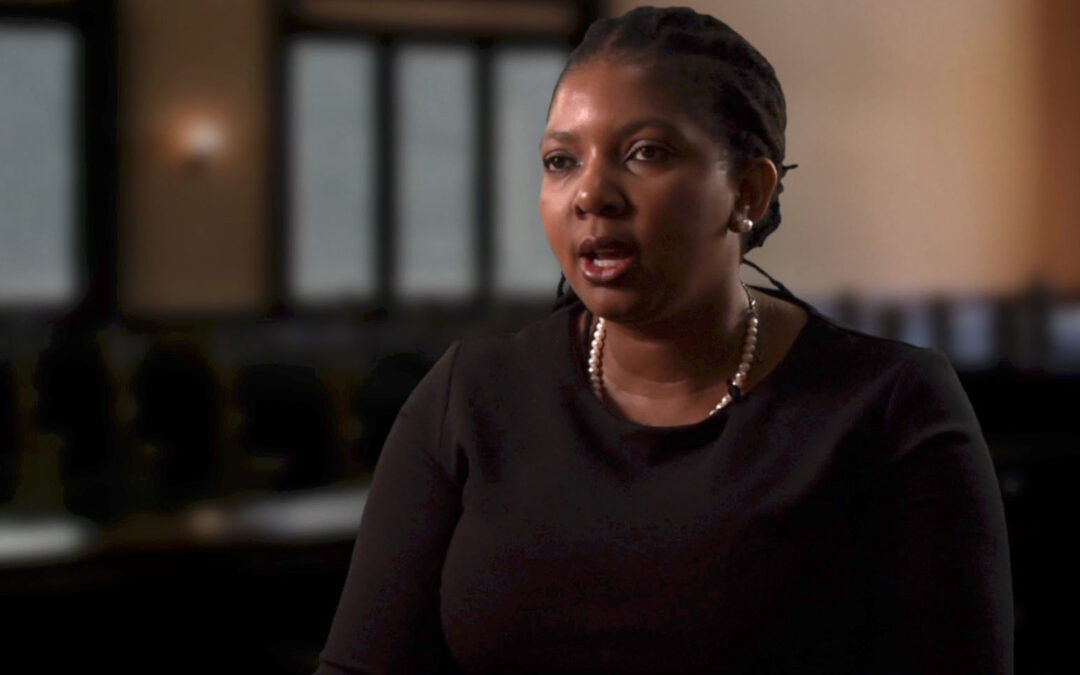
Raquel Yrigoyen Fajardo, Karabo Ozah and Charles Dinda talk about traditional justice systems in video interviews recorded at the 2017 ICJ Geneva Forum.
Dr. Raquel Yrigoyen Fajardo, Lawyer and Professor at the Law Faculty of the Pontifical Catholic University of Peru, and founding member of the International Institute on Law and Society (IIDS), describes the survival and contemporary recognition of justice systems of indigenous peoples in the Americas, despite the history of colonial domination.
She argues that indigenous justice systems often already reflect many international human rights standards, and where there may be discrepancies change should be sought through respectful engagement and consultation rather than coercive imposition.
In contrast, Ms Karabo Ozah, Deputy Director of the Centre for Child Law at the University of Pretoria in South Africa, argues that it is crucially important to ensure that customary and traditional courts respect domestic legislation and international standards on human rights.
Otherwise she warns, based on her experience, customary courts too frequently fail to protect the rights of marginalized groups, children, LGBTI, and women.
Charles Dinda, Senior Legal Adviser with the Danish Institute for Human Rights in Zambia, points out that while traditional and customary justice institutions are the most easily accessible and in many respects most credible institutions for some populations, their decisions are too often inconsistent or unfair.
To avoid this, he insists on the importance of understanding and studying the way these systems operate and on the need to engage with them to learn about their practices and to build their capacities so that they have better knowledge of international human rights standards and indeed of the national laws in the countries where they operate.
Watch the interview with Dr. Raquel Yrigoyen Fajardo
Watch the interview with Karabo Ozah
Watch the interview with Charles Dinda
NOTE:
The views expressed by the participants do not necessarily reflect those of the ICJ.
For more information about the 2017 Geneva Forum on Customary and Traditional Justice Systems, click here or contact matt.pollard(a)icj.org .
Nov 25, 2017 | Multimedia items, News, Video clips
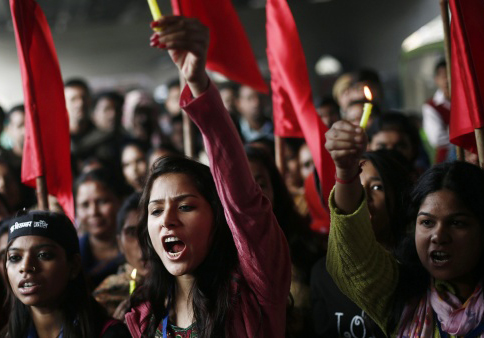
Over the last year, since 25 November 2016, the ICJ has published a series of (video) profiles introducing the remarkable work of ICJ women Commissioners and Honorary Members.
“The ICJ has a strong focus on the struggle to eliminate violence against women. It is supporting the judiciary, independent civil society organizations and women’s rights defenders, in their work to promote international standards, ensure that victims are made visible and that States understand their responsibilities and obligations. At the same time, the ICJ provides much-needed judicial education on gender-based violence,” said Justice Radmila Dragicevic-Dicic, ICJ Commissioner, member of ICJ’s Executive Committee, and Justice of the Supreme Court of Serbia, on the occasion of 25 November, International Day for the Elimination of Violence against Women.
ICJ Commissioners have been at the forefront of the work to reform justice systems to make it easier for women to take cases of domestic violence to the courts, to punish perpetrators of rape and sexual assault as a war crime, to challenge discriminatory religious and family laws and to support victims of human trafficking and forced prostitution.
The ICJ has also supported judicial training programmes on access to justice for women. In 2016, the ICJ, in collaboration with UN Women, hosted a workshop for representatives from the judiciaries of Indonesia, Philippines, Timor Leste, and Thailand.
The participants of the workshop developed and adopted the Bangkok General Guidance for Judges in Applying a Gender Perspective.
In follow up, for example, the Supreme Court of Indonesia has now issued a Regulation based on the General Guidance, requiring judges to apply a gender perspective as they consider cases before them that involve women’s human rights.
Working in partnership with other organizations and the UN, the ICJ and its Commissioners will continue to work to ensure justice for women and to end gender-based violence.
The video interviews of ICJ women Commissioners and Honorary Members can be accessed here:
Justice Radmila Dragicevic-Dicic has worked on issues of organized crime and human trafficking. In the Serbian Constitution, human trafficking is now categorized as a crime against humanity and is taken very seriously. Radmila highlights the importance of ensuring the non-punishment, safety and protection of victims as well as their right to access compensation.
Prof Jenny Goldschmidt is a former President of the Equal Treatment Commission of the Netherlands and has combined academic research with practical work, with a particular focus on non-discrimination and the concepts of equality. She considers it is vital to take cases to the Treaty Bodies and courts everywhere to establish severe measures against discrimination and domestic violence.
Asma Jahangir is an Honorary Member of the ICJ, and the co-founder of Pakistan’s first all female law firm. She worked on a number of landmark cases including on issues such as whether women could get married without their father’s permission, be entitled to family maintenance or whether women should be judged according to religious law.
Imrana Jalal is a human rights lawyer and gender specialist in the Asian Development Bank in Manila. Imrana helped draft and negotiate the passage of the ground-breaking Fiji Family Law Act, which took twelve years to pass. She considers that in the area of family law, some progress has been made but it is hard because it is based on the premise that women have an equal right to property and this directly confronts social norms.
Hina Jilani is an advocate of the Supreme Court of Pakistan and served as the first UN Special Representative on Human Rights Defenders. She considers domestic violence in Pakistan as a major problem. Although the Pakistani judiciary is traditionally very conservative, Ms Jilani considers there has been progress because women’s rights advocates present cases in such a way as to make the social inequalities and injustices apparent.
Justice Sanji Monageng is a member of the International Criminal Court. She considers that the ICC has not done very well in prosecuting sexual and gender-based violence so far. The new Chief Prosecutor, Fatou Bensouda, has created a policy on sexual violence and gender issues, establishing a dedicated unit. She says is it evident in the cases that now come before her, there is a lot more attention being paid to sexual violence.
Karinna Moskalenko is a Russian lawyer and a founder of the International Protection Centre in the 1990s after Russia had ratified the Optional Protocol to the ICCPR. She explains her work to support women who are much more vulnerable than men, particularly because of the problem of domestic violence.
The former ICJ Vice-President Michèle Rivet was the first President of the Quebec Human Rights Tribunal from 1990 and until 2010. For Michèle, those who work in the field of human rights form a global village and have a duty to help women victims of violence: “we must all walk together on the long march to equality.”
Prof. Leila Zerrougui is Algerian and has served at the Algerian Supreme Court. She worked in the DRC as part of the UN Stabilization Mission and was Special Representative of the Secretary General for Children and Armed Conflict. In the DRC, she established mobile criminal justice system, with an investigator, prosecutor and a mobile court and prison in every Province. In this context, she explained how rewarding it was to see a colonel taken to the village where he and his soldiers had raped women to face justice there.
Nov 23, 2017 | Events, News
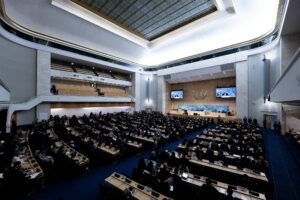
The 8th Geneva Forum brought together judges, lawyers, and other legal experts from around the world, and relevant UN representatives, to discuss the relationship between traditional and customary justice systems and international human rights, access to justice, and the rule of law.
The potential for improving access to justice
In many countries the majority of legal disputes, especially in rural areas, are resolved by traditional and customary justice systems that are not necessarily recognised by national law as a part of the official court system. The role of traditional and customary justice systems is therefore a key question for realization of “access to justice for all” and “effective, accountable and inclusive institutions” under Sustainable Development Goal 16.
Traditional and customary justice systems are often more practically and culturally accessible to local populations than is the official court system, and may be seen by local people as having greater legitimacy as well. Indeed, official recognition of the existence of traditional and customary courts in a country can be a positive reflection of the international human rights of ethnic, religious or linguistic minorities, or the particular rights of indigenous peoples, or cultural rights more generally.
For marginalized and disadvantaged rural populations in developing countries, traditional and customary courts may in practical terms be the only form of access they have to any kind of justice. Development agencies have increased their engagement with informal justice systems, and are considering much greater investment in capacity-building of such systems, noting their potential to reach large portions of the population who face significant obstacles to realizing access to justice in the official justice system.
The risks for human rights, particularly of women and children
At the same time, the composition, procedures, and outcomes of traditional and customary justice system mechanisms and processes can conflict with the human rights protections contained in international law and standards on human rights and the rule of law.
One key concern is in relation to the rights of women and children. Traditional and customary justice systems may be rooted in patriarchal systems and, as such, can reinforce harmful gender stereotypes and cultural assumptions that are inherently likely to discriminate against women and children and therefore negatively impact upon their rights.
Other concerns include consistency with the right to a competent, independent and impartial tribunal established by law; respect for fundamental guarantees of fairness comprising the right to fair trial; accountability of judicial decision-makers in relation to corruption and other misconduct; and non-discrimination and equality before the law more generally.
Aims of the 2017 Geneva Forum
The discussions at the 2017 Geneva Forum (22-23 November 2017), together with ICJ’s broader global experience and expertise, will provide a foundation for the development by ICJ of legal, policy and practical guidance, including conclusions and recommendations on the role of traditional and customary courts in relation to access to justice, human rights and the rule of law.
The ICJ guidance will take into account the many variations and differences between different traditional and customary courts that exist around the world, while seeking to articulate conclusions and recommendations sufficiently universal to be applicable across the widest possible range of contexts. The focus of the Geneva Forum and the ICJ guidance is intended to be on traditional and customary courts of an informal character and, as such, the ICJ does not intend directly to address formal religious courts or the application of customary law by ordinary formal courts.
Available for download in PDF format:
Compilation of selected international sources on indigenous and other traditional or customary justice sytems, available here.
Final report of the 2017 Geneva Forum on traditional and customary justice systems, available here:
Universal-Trad Custom Justice Gva Forum-Publications-Thematic reports-2018-ENG
Several video interviews with participants are available to view by clicking here.
Information about the subsequent 2018 Geneva Forum on indigenous and other traditional or customary justice systems in Asia, is available here.
For more information, please contact matt.pollard(a)icj.org.
The 2017 Geneva Forum of Judges & Lawyers was made possible with the support of the Republic and Canton of Geneva, Switzerland.
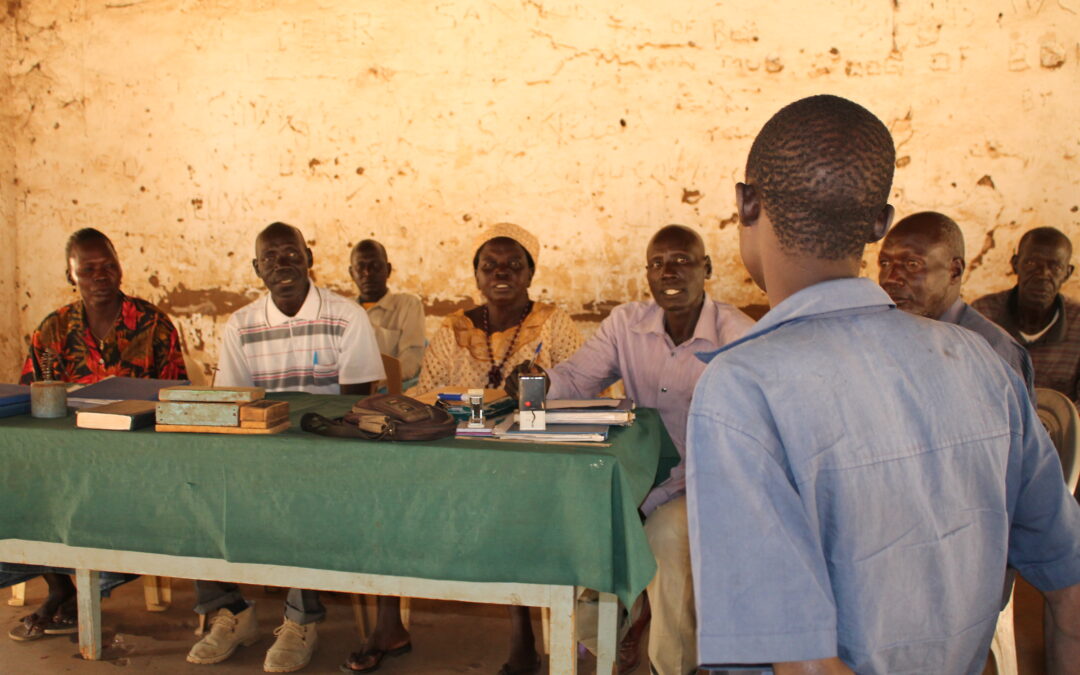
- Photo: “Traditional leaders preside over a case in B-Court, Nyang Payam, Torit County, South Sudan”
- Photo Credit: UNDP South Sudan2016Angelique Reid ©2016 United Nations
Nov 2, 2017 | Multimedia items, News, Video clips
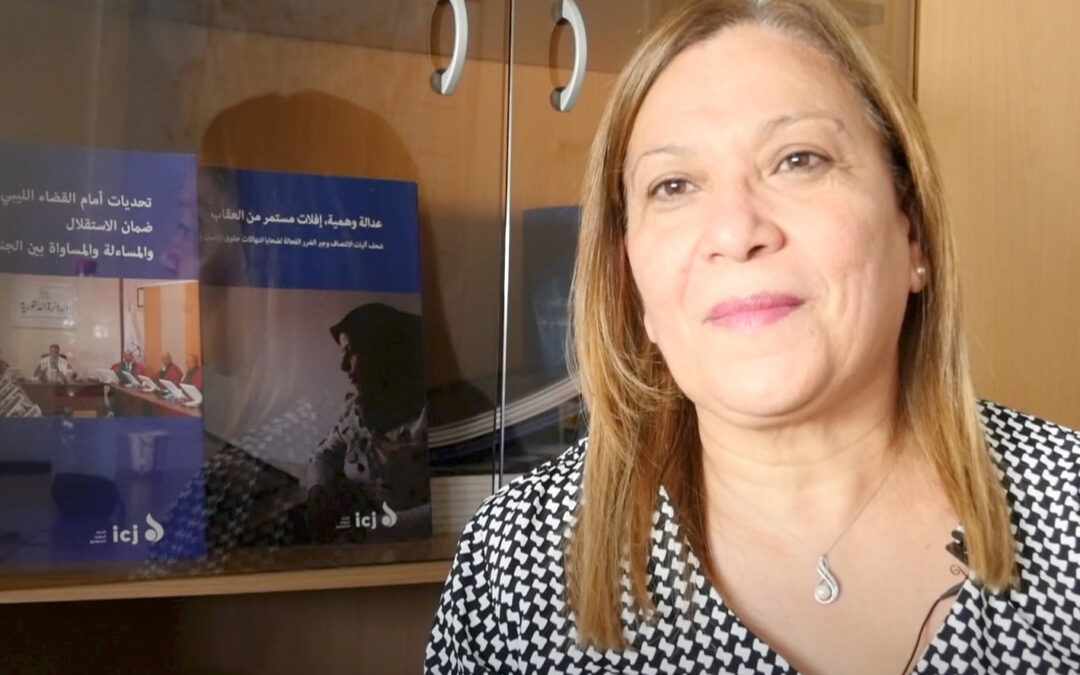
The ICJ ends its series of profiles of its women Commissioners with an interview with Judge Kalthoum Kennou is currently serving her second term as ICJ Commissioner.
Kalthoum Kennou is a Judge of the Tunisian Cassation Court.
She previously served as an investigating Judge at the Tribunal of Tozeur in Tunisia (2010 – 2012), an investigating Judge at the Tribunal of Kairouan (2005 – 2010) and a Judge at the Court of Appeal of Tunis (2001-2005).
She is a strong advocate of the rule of law and the independence of the judiciary in Tunisia, and for women’s rights.
She was active in opposition to the dictatorship of President Zine el-Abidine Ben Ali.
As a consequence of her work, she was subjected to politically motivated personal attacks including arbitrary transfers to remote parts of the country.
After the political revolution in January 2011, she became President of the Association of Tunisian Judges.
She has worked on the new Tunisian Constitution and was the first female candidate in the November 2014 Presidential elections.
In this interview, Judge Kennou speaks about the reasons that prompted her to take up a legal career.
Her father was wrongly accused of high treason and imprisoned and she wanted to show people that there could be fair judges who worked independently.
On his release, her father also supported her decision to study the law.
She was appointed a judge in 1989 but said that other women had been appointed before her so it was not that difficult.
The main problems were that male judges were reluctant to discuss certain issues in front of her and she had to stand up for herself.
“However what was a bit troublesome was with the police when I gave them instructions and I think they would have preferred it was a man and not a woman. But I stood up for myself and I became an investigating judge and I was there to give orders to the police, to the clerk of court, as a judge and as a woman judge.”
Under the dictatorship of Ben Ali, she explains in the interview that there were a quite an important number of judges who resisted and defended the independence of the judiciary.
“… I think our resistance had some results. The proof was that just after the revolution, the question of the independence of the judiciary became a demand of the people, not just the judiciary.”
She explains in the interview that now 43% of the judiciary in Tunisia are women.
This is because there are more women studying law, more women than men, and because the government is promoting women’s equality.
However, many women may take up a legal career without wishing to become a judge.
This is because of family reasons, as they don’t wish to be appointed to a court away from home and in some families, parents might feel that women should be protected from some of the real problems of society.
“But actually I think this kind of thinking is less common now and will disappear bit by bit. Judges have shown that they can have an impact and society accepts female judges more than male judges. They consider that female judges are less corrupt, that they are more serious and are making more efforts to deliver justice.”
The main problems for women in accessing justice in Tunisia are related to pressure from the family not to file complaint in cases of domestic violence.
Also there is a problem with the attitudes of the police who do not take physical aggression against a woman seriously.
The third issue is the mentality of some judges, including some women judges, who are not really convinced that a husband does not have the right to beat his wife.
“The law exists but we should also work on people’s mentalities so that the law is correctly applied.”
Judge Kennou concludes the interview with some advice for young women considering a legal career. She said that a young woman must learn to “stand up for herself and for her rights at home because you cannot be free, you cannot give to others, if your own rights are not realized… I think that a woman who wants to be a judge should be really convinced and well trained about human rights so she can apply the law in a correct manner. “
Watch the interview:
The series of profiles introducing the work of ICJ Commissioners and Honorary Members on women’s rights was launched on 25 November 2016 to coincide with the International Day to Eliminate Violence against Women and the first day of the 16 Days of Activism Against Gender-Based Violence Campaign.
Oct 16, 2017 | Advocacy
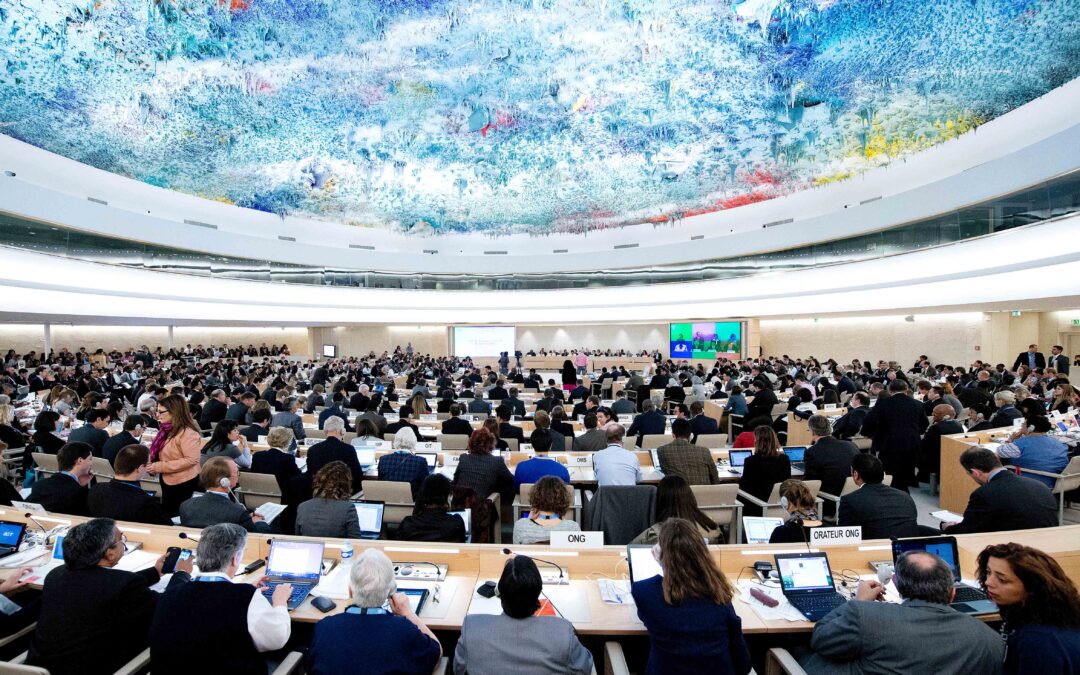
The ICJ, Amnesty International and Human Rights Watch are urging Pakistan to take immediate steps towards meeting “the highest standards in the promotion and protection of human rights,” following the country’s election to the Human Rights Council.
Today, the UN General Assembly selected 15 states to serve as members of the UN Human Rights Council from January 2018 to December 2020.
From the Asia-Pacific region, Nepal, Qatar, Afghanistan and Pakistan were selected out of five candidates.
To secure the UN Human Rights Council membership, Pakistan pledged its commitment to the promotion and protection of human rights.
However, the pledge failed to address directly many of the most serious human rights issues facing Pakistan, including enforced disappearances, the use of the death penalty, blasphemy laws, the country’s use of military courts, women’s rights including the right to education, and threats to the work of human rights defenders, lawyers and journalists.
According to UN General Assembly Resolution 60/251, “members elected to the Council shall uphold the highest standards in the promotion and protection of human rights.” The Resolution also provides that, “when electing members of the Council, Member States shall take into account the contribution of candidates to the promotion and protection of human rights and their voluntary pledges and commitments made thereto.”
Pakistan’s abuses have been highlighted by various national and international human rights organizations, UN treaty-monitoring bodies, and special procedures of the UN Human Rights Council.
Pakistan has affirmed in its election pledge that it is “firmly resolved to uphold, promote and safeguard universal human rights and fundamental freedoms for all.”
Given the pressing human rights issues in the country, the ICJ, Amnesty International, and Human Rights Watch urge Pakistan to take the necessary action to fulfill these responsibilities.
Contact
Frederick Rawski (Bangkok), ICJ Asia Pacific Regional Director, e: frederick.rawski(a)icj.org
Reema Omer (London), ICJ International Legal Adviser, South Asia t: +447889565691; e: reema.omer(a)icj.org
Download
The full statement with additional information: Pakistan-ElectiontoHRC-Advocacy-2017-ENG (in PDF)