Dec 11, 2015 | Events, News
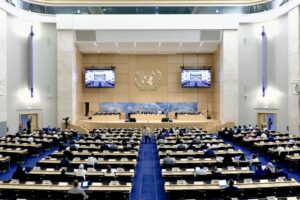
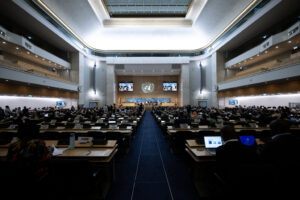
On 10-11 December, the ICJ gathered leading jurists and human rights defenders in Harare, Zimbabwe to discuss measures needed to implement legal reform and change attitudes to eliminate sexual and gender based violence.
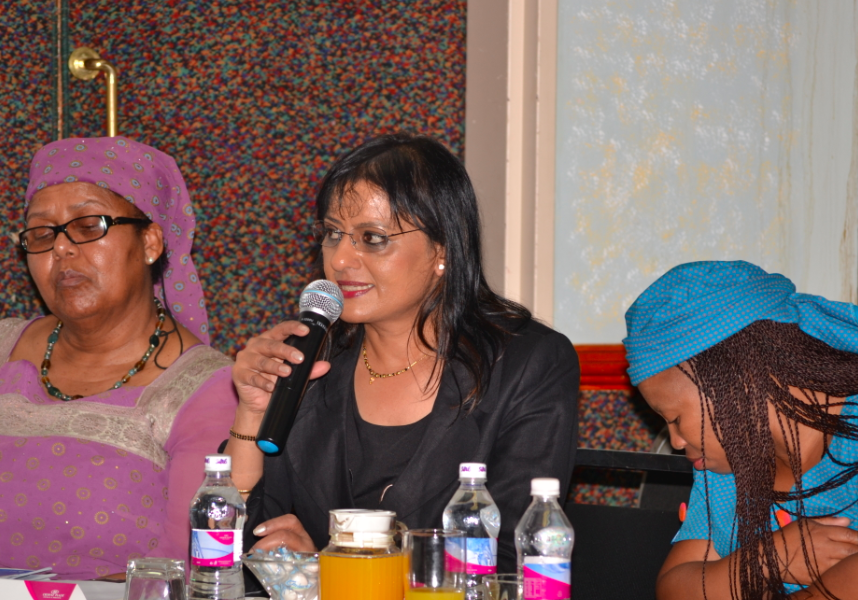
For International Human Rights Day (10 December), the ICJ organized high level panel discussions, chaired by ICJ Commissioner Justice Qinisile Mabuza.
Justice Mabuza, who is also a judge for the High Court of Swaziland and for the Common Market for Eastern and Southern Africa (COMESA) Court of Justice, set the tone for the discussions that followed in setting out the extent of the problem of sexual and gender based violence not only within Africa but also on a global scale.
One panel consisted of Judge Lillian Tiabtemwa-Ekrikubinza, Supreme Court Judge of Uganda; Magistrate Asha Ramlal of South Africa; Judge Lavender Makoni, High Court Judge of Zimbabwe; and Magistrate Polo Banyane from Lesotho.
This panel provided a judicial perspective from magistrates and judges from across the region, sharing their experiences and common problems encountered in tackling sexual and gender based violence in their jurisdictions.
The judges spoke about the need to adopt a gender analysis in judicial decision-making and to be conscious of the way in which pervasive gender stereotypes can influence even seemingly gender neutral decisions.
They also spoke of the practicalities in implementing domestic violence and sexual offences legislation as well as the challenges involved when this legislation does not exist.
Welekazi Stifole from Tshwaranang Legal Advocacy Centre; Kelvin Hazangwi from Padare (Men’s Forum on Gender) and Lisa Gormley, ICJ Consultant on women’s rights participated in a second panel.
The participants shared their perspectives and insights concerning reviewing legislation, identifying problems with evidence gathering, analyzing the international and regional frameworks covering gender based violence and in working with perpetrators and within communities to change cultural attitudes.
The second day of the gathering featured a consultative meeting on the ICJ’s forthcoming Practitioner’s Guide on Women’s Access to Justice for Gender-Based Violence.
ICJ expert consultant Lisa Gormley presented the Guide and participants shared their experiences in relation to its content, as well as developing strategies for its future implementation.
Representatives of civil society, judges, lawyers and law students participated in both events, contributing to a broader understanding of sexual and gender based violence issues and strengthening national and international networks of defenders of women’s rights.
Oct 6, 2015 | News
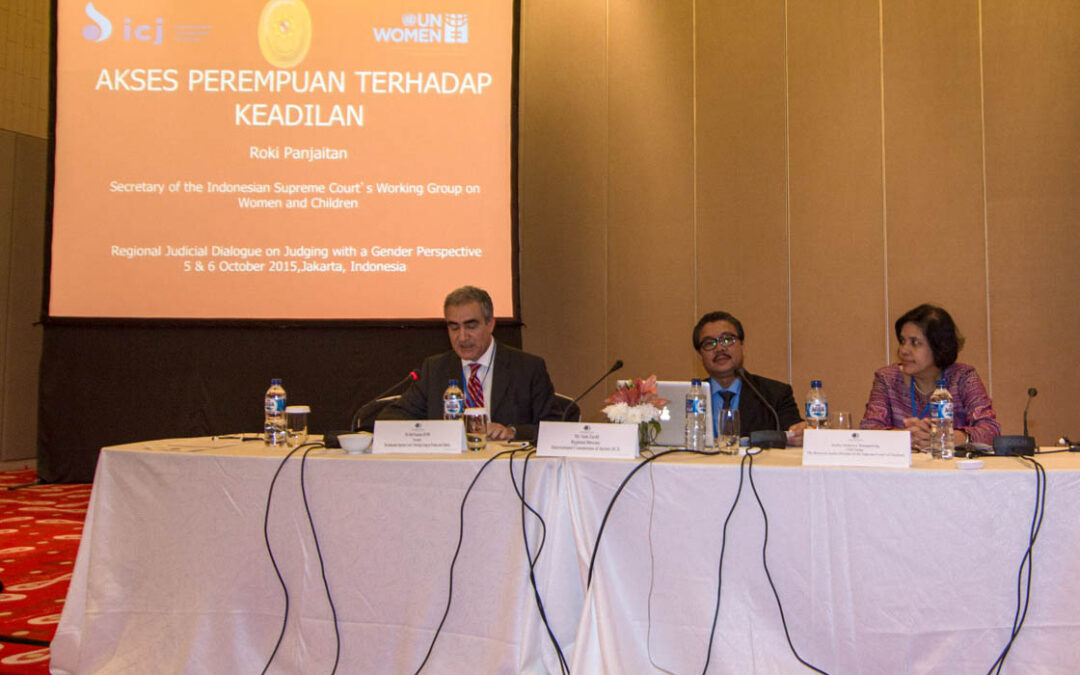
Judges and representatives of judicial training institutions from 9 countries across Southeast Asia gathered in Jakarta, Indonesia, to discuss how judicial decision-making can be further strengthened from a gender perspective.
A two-day event (5-6 October 2015), this judicial dialogue, entitled Regional Judicial Dialogue on Judging with a Gender Perspective, was organized by the ICJ, in collaboration with the Supreme Court of Indonesia and UN Women.
Participants discussed key topics such as initiatives of various courts in Southeast Asia that promote and protect women’s human rights, what are gender stereotypes and how gender stereotyping could be avoided in judicial decisions.
Speakers from the Supreme Court of Mexico were invited to speak about the initiative taken by the judiciary in the country to establish a protocol on judging with a gender perspective.
Senior judges from courts in Southeast Asian countries attended the event: Justice Dr. Takdir Rahmadi of the Supreme Court of Indonesia, Justice Suntariya Muanpawong, Chief Judge of the Research Division of the Supreme Court of Thailand; Justice Teresita De Castro of the Supreme Court of the Philippines, Justice Maria Natercia Gusmao Pereira of the Court of Appeal of Timor Leste; and Ms. Natalia Calero Sanches and Ms. Macarena Saez of the Mexican Supreme Court.
This dialogue is aimed at strengthening the participants’ ability to make decisions based on the rights to equality and freedom from discrimination.
UN Women also launched an online interactive platform that seeks to enhance dialogue among judges, prosecutors, court personnel, judicial training institutions, women’s machineries, scholars and other experts in the region.
The platform called, “Equality for All: community of change makers”, will enable users to access tools such as e-discussion forums, blogs and quick fact sheets that offer tailored learning solutions.
Sep 1, 2015 | News
Nepal’s Constituent Assembly must ensure that the new Constitution Bill contains strong and effective protections for all human rights in accordance with Nepal’s international legal obligations, said the ICJ today.
The Constituent Assembly endorsed a Constitutional Bill last week.
As per the CA Rules of Procedure, CA members have until 5 September to submit proposals for amendments.
“This draft includes some improvements from earlier versions, but it needs serious revisions to meet international standards regarding human rights protections,” said Nikhil Narayan, ICJ Senior Legal Adviser for South Asia.
“As an immediate matter, the Constituent Assembly must extend the 5 September deadline, and provide adequate time for public consultation and discussion of this essential legal text,” he added.
The ICJ released a detailed briefing paper in July 2015 analyzing provisions of the Draft Constitution on citizenship, fundamental rights and judicial independence, in light of Nepal’s international human rights obligations.
The ICJ also highlighted the non-inclusive and non-representative nature of the constitution-making process.
Many of those concerns still remain and must be addressed urgently, including:
- Non-citizens are excluded from key rights and protections. For example, Articles 18 (right to equality), 25 (right to property), 27 (right to information), 31 (right to education), 33 (right to employment), 35 (right to health), 36 (right to food), 37 (right to housing), and 43 (right to social security) are all restricted to citizens. These protections must be extended to all persons under Nepal’s jurisdiction, not only citizens, in accordance with Nepal’s international obligations;
- The right to gender equality under women’s rights (particularly in article 38) is not adequately protected. For example, the Constitution should include explicit guarantees for equal pay for work of equal value, and prohibit multiple, intersecting grounds of discrimination on basis of gender and sexual orientation, caste, religion, etc;
- Key economic, social and cultural rights – including in articles 33 and 34 (employment and labour), 35 (health), 37 (housing), and 43 (social security) – are not adequately protected;
- Restrictions and limitations on the rights to freedom of expression, association, assembly, movement, information and press freedom, are broad and vague and do not conform with international human rights standards (including articles 17 and 19 and 27);
- Provisions on remedy for human rights violations (articles 46 and 47) are inadequate;
- Provisions regarding the impeachment of judges (articles 101, 130 and 131) and composition of the Judicial Council (as in article 153, responsible for the appointment, disciplining and dismissal of judges) fail to safeguard judicial independence;
- Provisions on emergencies and consequent restriction of rights are overbroad (as in article 268(10)).
The ICJ noted some improvements in the current draft, such as:
- Making any person whose father or mother is a Nepali citizen eligible for citizenship through descent. Previous drafts required both parents to be Nepali citizens;
- Guaranteeing a broader range of women’s rights, including the right to reproductive health;
- Revising the understanding of victim’s rights to ensure that victims of crime are entitled to “justice including compensation and restitution”;
- Adding more rights to the list of those designated as non-derogable rights during emergencies – including the right to social justice (as contained in article 42 of the Constitution Bill, which amongst other things, guarantees the rights of marginalized groups to participate “in the state structure and public service on the basis of principle of proportional inclusion”), and the rights of dalits (as contained in article 40 of the Constitution Bill, which contains guarantees of equality and non-discrimination).
“While these amendments are welcome, more revisions are necessary,” said Narayan. “The CA must ensure that the constitution-making process is participatory and inclusive. It should provide enough time and opportunities to make necessary amendments and produce a Constitution that fully ensures human rights protections and judicial independence.”
Nepal’s major political parties have stated publicly that they hope to have the Constitution finalized and enacted in mid-September.
However, many political parities and communities have been protesting against the Constitution since the introduction of the new Bill.
On 9 August, three protestors were killed when police fired at protestors violating curfew in Birendranagar, Surkhet.
One protestor was killed and five others were injured when police opened fire during a strike on 18 August.
On 24 August, eight police officers were killed during protests in Kailali district, and over 40 members of the security forces were badly injured.
“The deadly violence that has accompanied escalating protests across Nepal against this Draft is a warning about the high stakes for the drafters of the Constitution,” said Narayan. “The new Constitution should be the platform for bringing the country together after years of conflict, not serve as a new cause for discontent and insecurity.”
The ICJ called on the government of Nepal to conduct prompt, impartial and thorough investigations into all protest-related deaths and injuries.
Where unlawful conduct is established, including by members of the security forces, those responsible must be brought to justice.
Contact:
Nikhil Narayan, Nepal Head of Office and ICJ Senior Legal Adviser, t: +977 9813187821, e: nikhil.narayan(a)icj.org
Jul 31, 2015 | News
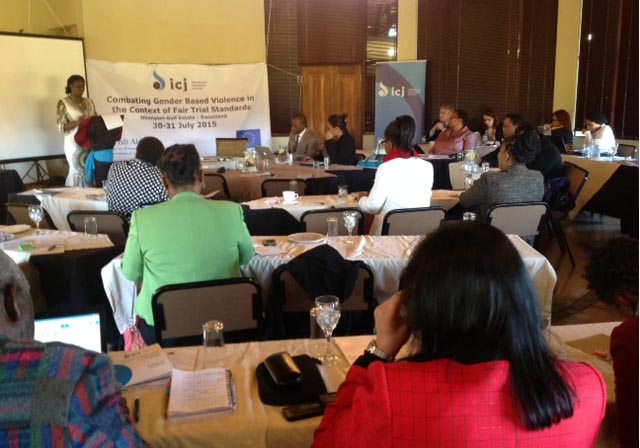
The ICJ held a colloquium on this issue on 30-31 July. Judges, magistrates, lawyers, members of academia, and civil society leaders from SADC, ECOWAS and the East African Community attended the event.
The Acting Chief Justice of the Kingdom of Swaziland, MCB Maphalala and the Secretary General of ICJ, Wilder Tayler, officially opened the colloquium.
The participants discussed the concept of gender-based violence; the efforts to combat impunity in sexual offences and gender based violence at the national, regional and international level and made recommendations to eliminate the scourge.
One of the key objectives of the workshop was to contribute to the process of enacting sexual offences and domestic violence legislation in Swaziland.
The Sexual Offences and Domestic Violence Bill of Swaziland is before the house of assembly, which has asked stakeholders to submit their views, on what should be included in the law.
The judges, lawyers and civil society leaders had robust and honest discussions touching on effective innovative strategies to combat sexual and gender based violence.
Some of the recommendations included the training of judicial officers to be gender sensitive, changing societal attitudes and prejudices, raising awareness amongst parliamentarians, creative interpretation and application of regional and international standards when adjudicating cases of sexual offences and gender based violence as well as observance of fair trial standards at the national, regional and international level.
The colloquium was made possible with funding from IrishAid.
Jul 14, 2015 | Advocacy, Non-legal submissions
Today, the ICJ delivered an oral statement before the Human Rights Committee during a half a day of general discussion in view of the Committee’s ongoing elaboration of a new General Comment on Article 6 (Right to Life) of the International Covenant on Civil and Political Rights.
The ICJ’s oral statement focussed on the following:
- the principles of equality before the law, equal protection of the law and non-discrimination, as well as non-refoulment;
- State Parties’ duty to protect the right to life in respect of conduct of private actors;
- State Parties’ duty to take measures to protect and ensure the right to life in connection with acts of gender-based violence against women and violence against individuals based on their real or imputed sexual orientation and/or gender identity or expression;
- the relationship between the right to life and certain economic, social and cultural rights;
- the extraterritorial reach of the Covenant; and
- the application of Article 6 during situations of armed conflict.
Universal-ICJ oral statement HALF DAY GENERAL DISCUSSION ON GC-Advocacy-2015-ENG (full text in PDF)