Oct 15, 2014 | News
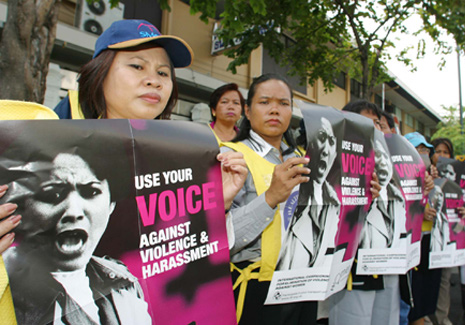
Judges and representatives from judicial institutes from across Southeast Asia are attending a regional workshop to discuss how they can help counter gender-based violence and gender stereotypes.
The workshop, organized by the UN Women Regional Office for Asia and the Pacific, in collaboration with the Office of the Thai Judiciary and the ICJ is held in Bangkok on 15 and 16 October 2014.
This Regional Workshop for Judicial Training Institutions on Good Practices in Promoting Women’s Human Rights Compliant Justice Delivery will focus on using the CEDAW Convention and on eradicating gender stereotypes, especially in cases related to violence against women.
It also aims to improve the progress of the implementation of the CEDAW Convention and strengthen the regional network of judicial training institutions in eight Southeast Asian countries, namely Cambodia, Indonesia, Lao PDR, Myanmar, the Philippines, Thailand, Timor-Leste and Vietnam.
Speakers at the opening session include Hon. Justice Pattarasak Vannasaeng, Secretary-General of the Office of the Thai Judiciary; H.E. Mr. Philip Calvert, Ambassador of Canada for Thailand; Ms. Roberta Clarke, Regional Director of the UN Women Regional Office for Asia and the Pacific; and Sam Zarifi, ICJ’s Regional Director for Asia and the Pacific.
Thailand-Women Judicial training-News-web story-2014-ENG (full text in PDF)

Sep 15, 2014 | Advocacy, Non-legal submissions
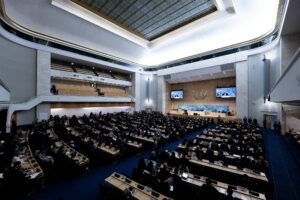
The ICJ supports a joint oral statement, delivered by ARC International, in relation to the Panel on “Protection of the Family”, at the UN Human Rights Council today.
The oral statement emphasised the importance of recognising the diversity of forms of families around the world.
It also noted that familes can be sites for transmissions of values, and that this can on the one hand include the promotion of human rights values, or on the other hand values incompatible with respect for human rights.
Finally, the statement highlighted that a human rights-based approach to family policies must recognise that individuals within families have human rights that require protection. Indeed, while families have the potential to help protect the human rights of their members from violations, families also have the potential to conceal abuses of human rights within the family.
The full statement in PDF format may be downloaded here: Universal-ProtectionofFamily-Advocacy-nonlegalsubmission-2014.EN
Aug 2, 2014 | Multimedia items, News, Video clips
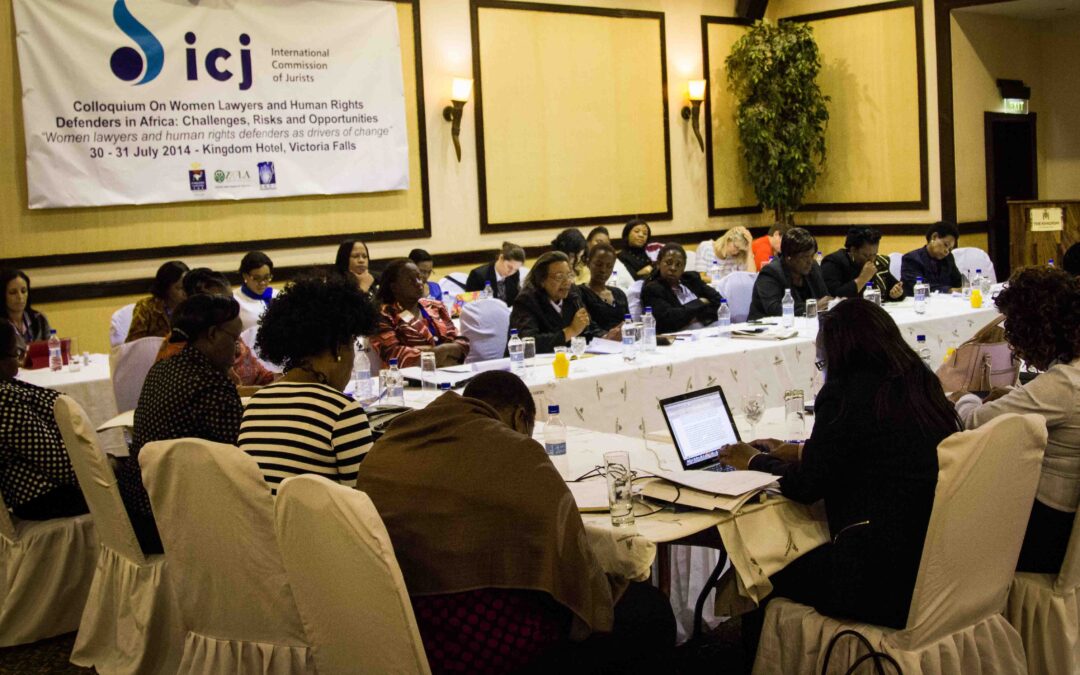
Women judges, lawyers and human rights defenders from across Africa participated in ICJ Colloquia on “Women Lawyers and Human Rights Defenders: Challenges and Opportunities” on 30 and 31 July in Victoria Falls, Zimbabwe.
The colloquia were hosted in collaboration and partnership with the Gender Committee of the SADC Lawyers Association, the Zimbabwe Women Lawyers Association and Zimbabwe Lawyers for Human Rights.
It enabled over 40 women lawyers, human rights defenders and judges to come together to identify the challenges faced by women lawyers and human rights defenders and elaborate action steps.
Discussions also addressed the role of the judiciary in advancing gender equality, women’s access to justice and protection of women human rights defenders.
The Colloquia are part of an ICJ multi-year initiative on women judges, lawyers and human rights defenders as agents of change.
Interviews:
Justice Martha Koome (Kenya)
Justice Lillian Tibatemwa-Ekirikubinza (Uganda)
Doo Aphane (Swaziland)
Jane Serwanga (Kenya)
Jul 2, 2014 | Advocacy, Position papers
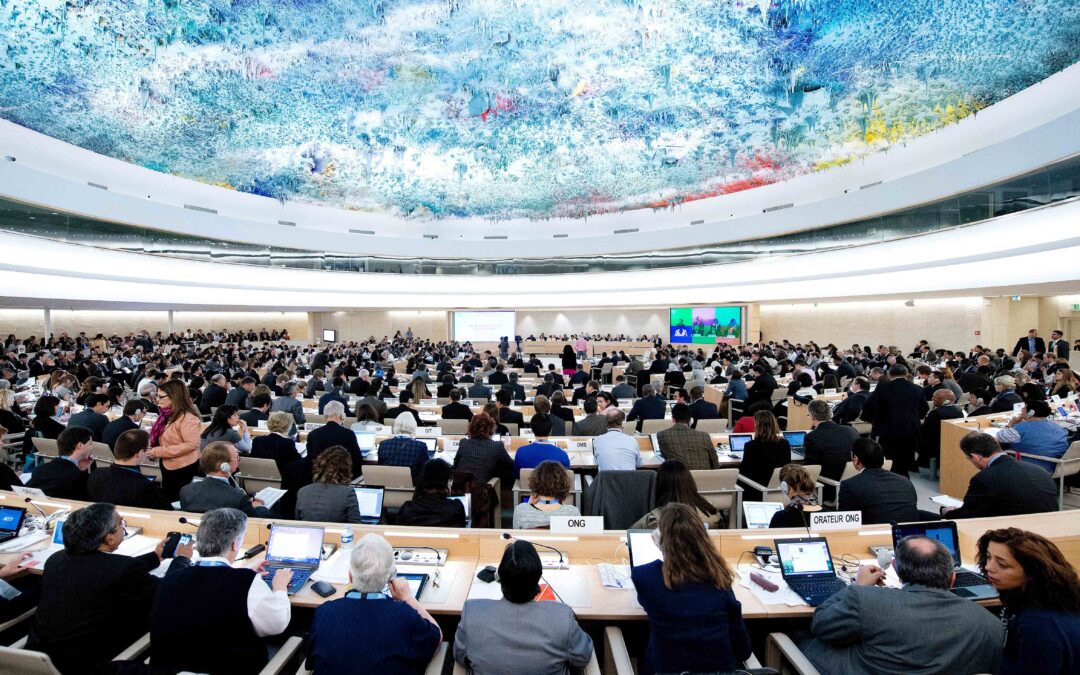
The ICJ and other NGOs have issued a joint statement urging the UN Human Rights Council to ensure that a discussion of “protection of the family” in September will reflect diversity and focus on human rights.
The ICJ is concerned, due to the way the resolution to establish the Panel discussion has been pursued, that some States will seek to exploit it as a vehicle for promoting a narrow, exclusionary and patriarchal concept of “the family” that denies equal protection to the human rights of individuals who belong to the various and diverse forms of family that exist across the globe.
Previous UN resolutions on the family include language, agreed by all States, that recognized that “various forms of the family exist”. The authors of the resolution deliberately omitted this language, despite this issue being consistently raised by other States throughout the negotiations.
A wholly inappropriate procedural tactic was used by some states to block discussion of a proposed amendment that would have restored the “various forms” language.
Efforts to ensure that the resolution clearly acknowledged and addressed the fact that the family is also a setting in which human rights abuses sometimes take place were partially successful.
The Panel topic will be “on the protection of the family and its members to address the implementation of States’ obligations under relevant provisions of international human rights law and to discuss challenges and best practices in this regard” (emphasis added).
The resolution reaffirms “that States have the primary responsibility to promote and protect the human rights and fundamental freedoms of all human beings, including women, children and older persons”. Unfortunately, however, the text of the resolution still does not give enough emphasis to this important aspect.
The organizations affirm that they will continue to insist on recognition that various forms of the family exist, and that individuals should not be discriminated against as a result of the form of family to which they happen to belong.
States should not fail to promote and protect the rights of persons because they belong to particular forms of family.
The organizations will continue to insist that the promotion and protection of the human rights of individuals within all families must be of the paramount importance to the UN Human Rights Council.
The joint statement may be downloaded in PDF here: HRC26-Joint statement family resolution-Advocacy-Position paper-2014
Jun 27, 2014 | Advocacy, Non-legal submissions
The ICJ and other civil society organizations highlighted progress in relation to accountability in the field of business and human rights, together with some continuing concerns, and unacceptable procedural tactics including in relation to a resolution on “protection of the family”.