Dec 12, 2018 | News
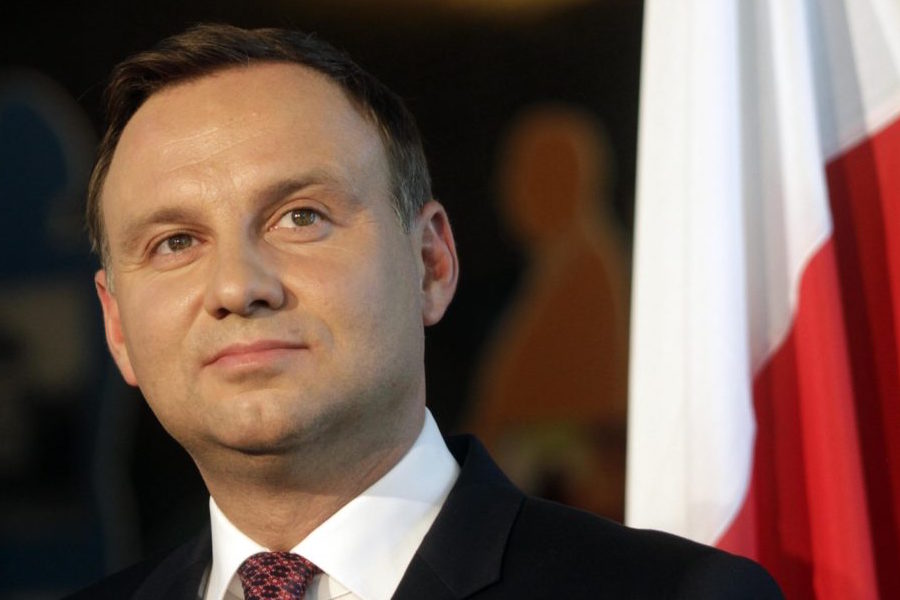
The ICJ today called on President Andrzej Duda to sign legislation that would require the reinstatement of the Supreme Court justices that were forcibly “retired” in July 2018.
On 21 November 2018, the lower house of the Polish Parliament (Sejm) approved Draft Law no. 3013, which would amend the Law on the Supreme Court. This amendment would ensure that the Supreme Court and Supreme Administrative Court justices who “retired … return in office on the day of entry into force of this Law” (Article 2.1).
The Minister of Justice has stated that the Law is being adopted to implement the EU Court of Justice interim measures issued in the infringement proceedings against Poland for the failure to respect the tenure of its Supreme Court justices.
“The draft law is a step in the right direction to implement the interim measures by the Court of Justice of the EU,” said Massimo Frigo, Senior Legal Adviser for the ICJ Europe and Central Asia Programme.
“It is important that President Duda signs this law promptly to ensure the independence of the judiciary in Poland as well as respect for its obligations under EU law,” he added.
The ICJ however is concerned that this law still refers to the Supreme Court justices to be reinstated as “retired.”
The forced “retirement” of one-third of the Supreme Court Justices constituted effectively a disguised dismissal in breach of international law and EU law standards on the rule of law and the independence of the judiciary.
Any reference to the “retirement” of the Supreme Court Justices should therefore be deleted.
“The Government’s intention that these measures be issued to implement the Court of Justice’s interim measures suggests that these measures are not intended to be permanent,” said Massimo Frigo.
“The Court of Justice and the European institutions should pursue the Article 7 procedure and the infringement proceedings until the forced judicial “retirements” are fully rescinded and no further similar attempts are made to undermine judicial independence and function.”
Background
A law on the Supreme Court, which entered into effect in July 2018, attempted to force the “retirement” of 27 of the 72 Supreme Court judges, including the First President, by lowering the mandatory retirement age for its judges from 70 to 65 years.
The ICJ has condemned the “forced retirement” of the 27 Supreme Court Justices as violating the security of tenure of judges in direct contravention of the principle of judicial independence, as expressed in international law and standards.
These include the UN Basic Principles on the Independence of the Judiciary, Council of Europe standards, the European Court of Human Rights’ jurisprudence and the rule of law principles enshrined in article 2 of the Treaty on European Union.
An ICJ letter of 11 July 2018, signed by 22 senior judges from all regions of the world, urged the Polish government to act immediately to reinstate the forcibly retired judges in office.
The European Commission has recognized the current situation as undermining “the principle of judicial independence, including the irremovability of judges” and has triggered a procedure under Article 7 of the Treaty of the European Union that could ultimately lead to suspension of Poland’s EU voting rights.
The Commission has also launched infringement proceedings against Poland in respect of the law on the Supreme Court.
Dec 12, 2018 | Events, News
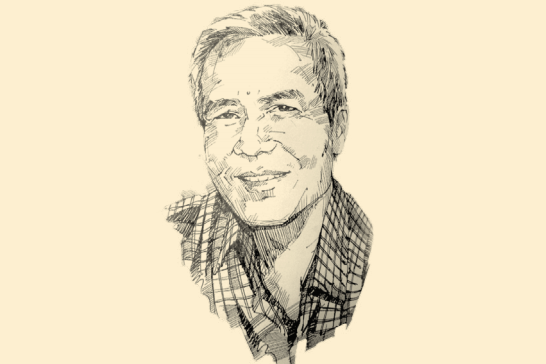
On 12 December 2018, the ICJ co-organized a panel discussion at Bangkok Art and Culture Center (BACC) in Thailand marking the 6th anniversary of the evident enforced disappearance of prominent Lao civil society leader Sombath Somphone.
The panel discussion was co-organized with the International Federation for Human Rights (FIDH), ASEAN Parliamentarians for Human Rights (APHR) and Forum Asia.
On 15 December 2012, Closed Circuit Television (CCTV) footage taken by police cameras near a police checkpoint in Vientiane, Lao PDR, appeared to show that Sombath Somphone was abducted at the checkpoint by, or with the consent or acquiescence of, agents of the State. He has not been seen since.
Six years after his abduction, Laotian authorities have repeatedly failed to provide meaningful information as to his fate or whereabouts, or conduct an independent, impartial and effective investigation towards determining his fate. The last police report on his case was issued on 8 June 2013.
In light of the 6th anniversary, the panel discussion considered what further steps could be taken to continue advocacy on his case and spoke about regional implications and responses.
The panelists were:
- Ng Shui-Meng, Wife of Sombath Somphone;
- Edmund Bon, Lawyer, Malaysia’s Representative to the ASEAN Intergovernmental Commission on Human Rights;
- Premrudee Daoroung, Project SEVANA’s South-East Asia Coordinator;
- Charles Santiago, Malaysian Member of Parliament.
The panel was moderated by the Andrea Giorgetta from the International Federation for Human Rights (FIDH).
Nov 25, 2018 | News
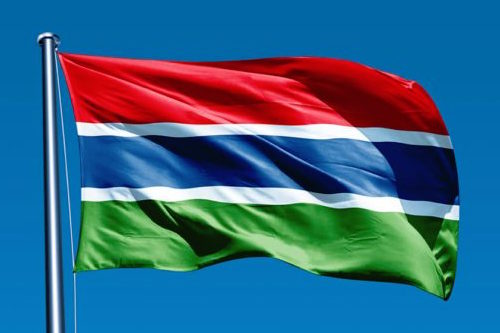
The International Commission of Jurists (ICJ) welcomes the formal declaration of the Gambia to allow individuals and certain non-governmental organizations with observer status access to complain of human rights violations against the Gambian State at the African Court on Human and Peoples Rights.
Gambia became the ninth African State to make the declaration to allow individual access the African Court on Human and Peoples Rights. The ICJ called on other States to follow suit rapidly.
“The Gambian government should be applauded, but more African States need to step up to reinforce their international human rights obligations by allowing victims of violations direct access to the Court and to empower the African Human Rights Court to do the work for which it was set up.” said Arnold Tsunga, Director of the ICJ African Regional Progamme. “It is only through extensive depositing of article 34(6) by the majority of African states that the court can be truly an African Court”.
In addition to granting access to individuals, the Declaration made under article 34(6) of the Protocol to the African Charter on Human and Peoples’ Rights triggers the courts jurisdictional competency under article 5(3) to allow for a limited number of NGOS access.
“The promise of human rights protection under the African human rights system can only be realized when political leaders match rhetoric with such action as allowing individuals to seek an effective remedy by direct access to regional human rights mechanisms like the African Court,” added Arnold Tsunga.
The ICJ emphasized that despite the significant human and material resources invested in the Court since its establishment in 2006, the African Court has been unavailable to great majority of Africans, since very few States had so far entered the declaration recognizing its competency.
Other States that have previously made declarations include Benin, Burkina Faso, Côte d´Ivoire, Ghana, Malawi, Mali, Tanzania and Tunisia.
Although, complaints of human rights violation can only be brought directly before the Court against the nine States that have made the declaration, victims of human rights violation of almost all African States can already bring claims against other states through the non-judicial communication procedure available at the African Commission on Human and Peoples´ Rights.
The ICJ stressed while access to the Commission’s procedures is important, it was not an adequate substitute for the kind of binding legal remedy that can be only ordered by a Court. The ICJ noted poor rate of compliance with decisions of the African Commission.
Contacts:
Arnold Tsunga, Director of the Africa Regional Programme, International Commission of Jurists C: +263 77 728 3248, E: arnold.tsunga(a)icj.org
Solomon Ebobrah, Senior Legal Advisor, Africa Regional Programme, International Commission of Jurists.C: +234 803492 7549, E: solomon.ebobrah(a)icj.org
Nov 22, 2018
Under its Global Redress and Accountability Initiative, the ICJ has launched its 2018 update to Practitioners’ Guide No 2, outlining the international legal principles governing the right to a remedy and reparation for victims of gross human rights violations and abuses by compiling international jurisprudence on the issues of reparations.
The Guide is aimed at practitioners who may find it useful to have international sources at hand for their legal, advocacy, social or other work.
Amongst revisions to the Guide, the 2018 update includes new sections on terminology and on non-discrimination;updated sections on the notions of ‘collective victims’, ‘collective rights’, the rights of ‘groups of individuals’; additional references to the work of the Committeeon the Elimination of Discrimination against Women and the Committee on the Rights of the Child; an updated section on remedies for unlawful detention, including references to the 2015 UN Basic Principles and Guidelines on Habeas Corpus; and updates on gender-based violence and on violations occurring in the context of business activities.
The Guide first recalls the States’ general duty to respect, protect, ensure and promote human rights, particularly the general duty of the State and the general consequences flowing from gross human rights violations (Chapter 1).
It then defines who is entitled to reparation: victims are, of course, the first beneficiaries of reparations, but other persons also have a right to reparation under certain circumstances (Chapter 2).
The Guide goes on to address the right to an effective remedy, the right to a prompt, thorough, independent and impartial investigation and the right to truth (Chapters 3-4).
It then addresses the consequences of gross human rights violations, i.e. the duty of the State to cease the violation if it is ongoing and to guarantee that no further violations will be committed (Chapter 6). It continues by describing the different aspects of the right to reparation, i.e. the right to restitution, compensation, rehabilitation and satisfaction (Chapter 7).
While the duty to prosecute and punish perpetrators of human rights violations is not necessarily part of the reparation as such, it is so closely linked to the victim’s right to redress and justice that it must be addressed in this Guide (Chapter 8).
Frequent factors of impunity, such as trials in military tribunals, amnesties or comparable measures and statutes of limitations for crimes under international law are also discussed (Chapter 9).
The guide is now also available in Turkish.
Download
Universal-Right to a Remedy-Publications-Reports-Practitioners’ Guides-2018-ENG (full text in English, PDF)
Universal-Right-to-a-Remedy-Publications-Reports-Practitioners-Guides-2018-TR [1] (full text in Turkish, PDF)
Universal-Right-to-a-Remedy-Publications-Reports-Practitioners-Guides-2018-THA (full text in Thai, PDF)
Nov 20, 2018
The ICJ said today that the Nepal Army’s petition before the Supreme Court seeking to overturn convictions of soldiers for the 2004 killing of 14-year-old Maina Sunuwar was riddled with legal flaws. Its success would be a blow to the fight against impunity in Nepal.
On the 12th Anniversary of the signing of the Comprehensive Peace Agreement (CPA), the ICJ released an analysis of the Nepal Army’s legal arguments in the petition to upend the convictions issued by the Kavrepalanchowk District Court for the killing Maina Sunuwar while in Army custody.
“The Nepal Army has sought to overturn the convictions of Maina’s killers by putting forth specious legal arguments that do not hold up under Nepali or international law, or in light of the past decisions of the Supreme Court,” said Frederick Rawski, ICJ Asia Pacific Director.
In the legal briefing, the ICJ sets out (i) Nepal’s obligations under international law and the Nepal Supreme Court’s jurisprudence to investigate and prosecute perpetrators of human rights violations; (ii) the impropriety of jurisdiction by a military court-martial in cases of serious human rights violations; and (iii) refutes the argument that the convictions violated principles of ‘double jeopardy’.
The briefing sets out international law and jurisprudence establishing the Government’s duty to prosecute serious human rights violations as distinct and separate from its obligation to establish the truth, including as part of a transitional justice process.
The briefing comes at a moment when the future of justice for conflict era crimes and human rights violations in Nepal is uncertain.
In July, a draft bill amending the existing legislative framework governing the transitional justice process was criticized by civil society, victim groups and human rights organizations – including in a joint analysis by the ICJ, Amnesty International and Trial International.
While a government panel elicited comments at consultations with victims and civil society, the government never produced a revised draft or conducted follow-up.
“How can the people of Nepal, and particularly conflict victims, have faith in government proposals to press forward on transitional justice when the Nepal Army continues to fight even minimal accountability with disingenuous legal arguments, such as in the case of Maina Sunuwar?” said Rawski.
“The foundation for any process moving forward must be the best interests of victims, a commitment to accountability, and respect for international human rights obligations. This has been affirmed many times over by the Supreme Court,” he added.
Contact
Frederick Rawski, ICJ Asia Pacific Director, t: +66 64 478 1121 ; e: frederick.rawski@icj.org
Background
Maina Sunuwar was subjected to enforced disappearance, torture and unlawful killing after a covert military operation, which included the involvement of then captain Niranjan Basnet on 17 February 2004.
The military refused to acknowledge Maina’s detention for many months.
After overcoming a number of procedural and political hurdles stretching over years, on 16 April 2017, the Kavre District Court sentenced three retired army officers to life imprisonment for Maina Sunuwar’s murder.
In September 2017, the Nepal Army filed a writ petition in the Supreme Court challenging the decision of the Kavre Court on several grounds, including that military courts had proper jurisdiction over the original case, that the District Court convictions violated the principle of ‘double jeopardy’ because the defendants had already been tried by a court-martial, and that the court system no longer had jurisdiction over conflict-related cases following the establishment of transitional justice institutions.
Nepal-Petition to overturn convictions for Maina Sunuwar killing-Advocacy-Analysis brief-2018-ENG (Full Analysis brief, in PDF)