Israel/Occupied Palestinian Territory: immediately end attacks on civilians

Israel/Occupied Palestinian Territory: immediately end attacks on civilians


The International Commission of Jurists (ICJ) condemns the direct attacks against civilians in Israel, including deliberate killings of hundreds of civilians, the taking of hostages and the launching of indiscriminate rockets against civilians and civilian objects, perpetrated by Palestinian armed groups since 7 October 2023.

“I abhor the deliberate targeting of civilians and hostage-taking, and condemn the horrific escalation of violence in Israel and the Occupied Palestinian Territory,” said Santiago Canton, ICJ Secretary General. “These atrocities are crimes under international law and must stop immediately. Civilians held hostages should be released.”

The ICJ also condemns Israel’s retaliatory airstrikes against buildings in densely populated areas in Gaza, which have killed hundreds of Palestinian civilians, and the measures of collective punishment taken against civilians in Gaza, including a total siege on food, water, electricity and fuel.

“I urge the Israeli authorities to refrain from engaging in indiscriminate retaliations or any form of collective punishment against civilians and from using starvation as a method of warfare,” said Canton.

The ICJ calls on all parties to the conflict to respect their obligations under international humanitarian law to protect civilians caught up in the hostilities and for accountability for the crimes under international law that have been perpetrated.

The attack led by Palestinian armed groups began on 7 October 2023, with thousands of indiscriminate rockets fired on Israel as well as incursions in Israel of armed combatants shooting civilians en masse and taking hostages to Gaza.

Israel retaliated with attacks against the Gaza strip through waves of airstrikes targeting several residential buildings and a mosque.

The death toll reported as of this morning, 10 October, was of at least 900 Israelis and at least 700 Palestinians, with more than 2,600 Israelis and 3,700 Palestinians injured.

While Israel has already cut off electricity and fuel supplies to Gaza, on 9 October the Israeli Defence Minister announced a complete siege of Gaza, including food and water, adding “we are fighting human animals and we are acting accordingly.” On the same day, Hamas threatened to execute an Israeli captive for every Israeli bombing of a civilian building without warning.

Background

Israel has imposed an air, land and sea blockade on the Gaza Strip since 2007.

The ICJ has documented Israel’s systematic human rights violations against the Palestinians in the Occupied Palestinian territory, such as forced evictions and displacement, restrictions on freedom of movement and arbitrary deprivations of life and liberty.

The ICJ has further documented attacks by Israeli forces and Palestinian armed groups in the Gaza strip in violation of the prohibition against deliberate or indiscriminate attacks against civilians, including as a result of the launch by Palestinian armed groups of thousands of indiscriminate rockets into Israel.

In February 2023, the ICJ called on the Israeli authorities to stop all actions amounting to the war crime of collective punishment of the Palestinian people in the West Bank and East Jerusalem, including house and property demolitions, arbitrary revocation of residency and citizenship rights and forcible deportation of Palestinians from the Occupied Palestinian Territory.

The ICJ recalls that willful killing, willfully causing great suffering or serious injury to body or health, unlawful deportation and taking of hostages committed against civilians and members of armed forces placed hors de combat, as well as extensive destruction of property not justified by military necessity and carried out unlawfully and wantonly, are grave breaches of the Fourth Geneva Convention and Additional Protocol I to the Geneva Conventions and amount to war crimes under the Rome Statute and customary international law. Intentionally directing attacks against the civilian population and civilian objects and intentionally using starvation of civilians as a method of warfare by depriving them of objects indispensable to their survival, including willfully impeding relief supplies as provided for under the Geneva Conventions, as well as measures of collective punishment against protected persons, also amount to war crimes.

Contact:

Said Benarbia, Director of the ICJ’s Middle East and North Africa Programme, email: said.benarbia(at)icj(dot)org

Egypt: Torture so Widespread and Systematic as to Constitute a Crime Against Humanity

Egypt: Torture so Widespread and Systematic as to Constitute a Crime Against Humanity

Today, a coalition of international and Egyptian NGOs has submitted a detailed legal analysis to the UN Committee against Torture concluding that the Egyptian authorities’ use of torture is so widespread and systematic as to amount to a crime against humanity under customary international law.

The legal analysis forms the basis of the report, “Torture in Egypt: A Crime Against Humanity”, written by REDRESS in collaboration with the Egyptian Initiative for Personal Rights (EIPR), the Egyptian Commission for Rights and Freedoms (ECRF), Dignity, the Committee for Justice (CFJ) and the International Commission of Jurists (ICJ). It was submitted to the Committee against Torture ahead of its review of Egypt’s record under the UN Convention against Torture that will take place on 14 and 15 November.

The legal analysis concludes that the nature of torture in Egypt qualifies as a crime against humanity under customary international law, by which Egypt is bound, due to:

  • A pattern in the methods of torture used by the Egyptian authorities, including beatings, electrical shocks, sexual violence, such as forced anal examinations and “virginity tests”, the denial of access to medical care and treatment, lack of family contact, and other acts that cause severe pain and suffering.
  • The methodical use of torture, both physical and psychological, as a political tool to stifle dissent and for discriminatory purposes by the Egyptian authorities.
  • Widely available documentation of the prevalence of torture in Egypt, including decisions from regional and UN human rights bodies, NGOs and media reports, that establish that the highest spheres of State power know or should know that torture is being used widely against dissenters and others in Egypt. The report shows that State officials must have taken measures knowing that they were being committed as part of an attack against civilian dissenters, to advance a State policy.

The report documents how members of the National Security Agency and the National Police are directly responsible as perpetrators of systematic torture. Also implicated in torture are members of the Military Intelligence and General Intelligence Agencies. In addition, the judiciary and State prosecution services, including the Supreme State Security Prosecution directly contribute to these crimes by enabling an environment that facilitates the commission of torture and other ill-treatment.

The report argues that acts of torture in Egypt are part of a State policy enabled by Egypt’s emergency laws, “counter-terrorism” laws and policies, and the rampant impunity for the violations committed by State security and law enforcement officers.

Egypt’s history of torture stretches back four decades, going back to former President Hosni Mubarak’s 30-year authoritarian regime, which normalised the use of torture and arbitrary detention under the guise of fighting terrorism. However, when he was deposed by a popular uprising in 2011, and replaced by Egypt’s first democratically elected president, President Mohammad Morsi, Morsi and his party, the Muslim Brotherhood, continued the use of torture against protestors. Military commander Abdel Fattah el-Sisi then carried on using systematic torture as a tool of repression against political dissidents and activists after coming to power through a coup in 2013.

The report notes that, in the last few years, there has been a spike in the targeting of activists and human rights defenders, who are tortured by police officers and security forces while in incommunicado detention before official charges are filed against them. Some minorities, such as lesbian, gay, bisexual and transgender individuals, are also subject to torture because of their real or perceived sexual orientation, gender identity or gender expression.

The report cites many cases, such as that of the lawyer Ibrahim Metwally, who was arrested in 2017 at Cairo International Airport when he was travelling to Geneva to speak about the enforced disappearance of his son before the UN Working Group on Enforced or Involuntary Disappearances. He was then himself subjected to enforced disappearance, as well as torture and other ill-treatment, by NSA officers. Another case is the case of detained activist Alaa Abdel Fattah, whose lawyer Mohamed Al-Baker was arrested in 2019 while representing him before the Supreme State Security Prosecution. Al-Baker was subjected to ill-treatment and sentenced to four years in prison for “spreading false news using a social networking site,” before being released under a presidential pardon in July 2023.

Egypt is the only country to have been the subject of two inquiries by the Committee against Torture following receipt by the Committee of reliable information indicating that torture was being systematically practiced in the country. Both concluded, in 1996 and 2017, that the practice of torture was widespread and systematic in Egypt. In an unprecedented move in 2021, 31 States at the UN Human Rights Council expressed deep concern about Egypt’s application of “counter-terrorism” legislation against human rights defenders and others. In April 2023, the UN Human Rights Committee reiterated its concern on this same issue.

As the brutal crackdown on civil society continues to intensify in Egypt, the report calls on the Egyptian government to urgently act to end the systematic use of torture, to hold those responsible to account, and to repair the harm inflicted on victims, including by enacting law and policy reforms. In addition, the report urges the UN Human Rights Council to establish an investigative body, such as a Commission of Inquiry or a Fact-Finding Mission, or a Special Rapporteur on the human rights situation in Egypt, tasked with monitoring, investigating and establishing the facts and circumstances of torture as a crime against humanity in Egypt, as well as other violations of human rights. The evidence collected by such a body would facilitate accountability efforts.  All States should also ensure that perpetrators of torture in Egypt are held to account, including through universal jurisdiction cases, civil claims, sanctions, and other available avenues for accountability.

Rupert Skilbeck, Director of REDRESS, said:

“For decades, the Egyptian authorities have been given free rein to abuse their citizens through arbitrary detention, enforced disappearances and torture. Torture is dismissed as merely isolated acts of misconduct instead of being seen for what it really is: a deliberate attack on Egypt’s citizens that is a crime against humanity. It is time to hold accountable those who perpetrate, tolerate, and cover up torture, including those in authority who turn a blind eye.”

Mohamed Lofty, Executive Director of ECRF, said:

“Through successive regimes, the Egyptian government has employed torture as a political tool to curtail dissent. Human rights defenders, minorities, journalists, academics, and opposition politicians have been disproportionately targeted as threats to the regime. State policy and laws, and rampant impunity, have perpetuated this cycle of torture.”

Thailand: Justice in the case of slain Karen activist “Billy” is again deferred as park officials are acquitted of responsibility for his killing

Thailand: Justice in the case of slain Karen activist “Billy” is again deferred as park officials are acquitted of responsibility for his killing

The ICJ is concerned at Thailand’s continued failure to bring justice to the loved ones of Karen activist Pholachi ‘Billy’ Rakchongcharoen, who was the victim of an apparent enforced disappearance in 2014, and apparent subsequent killing.

The ICJ calls on the responsible authorities to ensure that there is continuous effective investigation to determine definitively the fate of Billy and deliver justice to his family.

Today, Thailand’s Criminal Courts for Corruption and Misconduct Cases acquitted four Kaeng Krachan National Park officials, the last individuals seen with Billy, of murder-related charges, including premeditated murder and concealing the victim’s body. Only one of the accused, Chaiwat Limlikit-aksorn, former chief of Kaeng Krachan National Park, was convicted of charges and sentenced to three years in prison related to “malfeasance in office” for failing to hand Billy over to the responsible authorities after his arrest.

The Court, constituted of a panel of two judges, indicated that it did not believe that Billy had been released as claimed by the accused. Nevertheless, the Court concluded that there was not sufficient evidence to prove that the park officials orchestrated the killing.

“More than nine years of delays, including by inaction by the government until recently, and still no justice, is a blow to the victims. This constitutes yet another marker of Thailand’s consistent failure to hold accountable perpetrators of serious human rights crimes, potentially committed by State authorities,” said Sanhawan Srisod, ICJ Legal Adviser.

Billy was the victim of an apparent enforced disappearance, as he was last seen on 17 April 2014 in the custody of Kaeng Krachan National Park officials. The officials claimed they detained Billy for illegal possession of honey, but that they released him later the same day.

On 12 September 2019, the DSI located bone fragments, along with an oil tank submerged in water, which they identified as likely belonging to Billy. The subsequent DNA test indicated a maternal relation between the fragment and Billy’s mother, suggesting a blood relationship through the maternal line. However, the Court ruled today that there was insufficient evidence to establish that they belong to Billy, as opposed to other relatives who may have passed away during the same period.

This decision was made despite testimony from State forensic experts affirming the validity of the DNA test used in this case, which needed to be considered alongside other supporting facts. This includes testimonies given by the relatives and cultural expert about the absence of known blood relatives who had passed away without knowledge, and the Karen practice of not scattering the remains of the deceased in the river. Such testimony also aligns with the opinions of international forensic experts, specifically the Independent Forensic Expert Group established by the International Rehabilitation Council for Torture Victims, who were consulted by the prosecutors’ lawyers.

Enforced disappearance was recently made a specific crime under Thai law, following the adoption of the long-delayed Act on Prevention and Suppression of Torture and Enforced Disappearance, which came into effect in February this year. Under the Act, and international law, enforced disappearance is a continuous crime, which is not completed until the fate or whereabouts of the victim becomes known. Therefore, to the extent that there is any doubt that the discovered remains belonged to Billy, the crime must be considered to be ongoing and the law is applicable to Billy, even if it was not in force when he first “disappeared.”

Nevertheless, the Prosecution did not attempt to charge the accused with enforced disappearance, and the Court consistently rejected any reference to the crime made by the prosecution during the proceedings. This includes the rejection of expert witnesses proposed by the prosecutor’s lawyers who intended to testify about international law and standards governing enforced disappearance, following the rejections made by the accused.

“It is also unfortunate that the Thai court did not take into consideration the specific nature of the crime of enforced disappearance, often accompanied by very limited circumstantial evidence, which may be the only available means of establishing the crime. Such a crime also normally includes the powerlessness of the victim in the hands of the authorities, the use of state power to destroy direct evidence in an attempt at total impunity or to create the illusion of a perfect crime, all factors that have been taken into consideration in many cases in various jurisdictions worldwide when assessing the possible involvement of the suspects in crimes of this nature,” added Srisod.

During the trial, pursuant to the Act on Establishment of the Criminal Court for Corruption Cases B.E. 2559 (2016), the Court also used the so-called inquisitorial system, which is new to both lawyers and public prosecutors accustomed to the accusatorial style of the usual Thai court system. In this regard, lawyers voiced complaints that the judge on several occasions cut short the follow-up questions that the lawyers had planned to ask, citing that these issues had already been covered during their own examinations and other written submissions.

Background

Chaiwat Limlikit-aksorn was convicted under section 157 of the Criminal Code and section 123 of the Organic Act on Counter Corruption B.E. 2542 (1999).

Thailand has signed but not yet ratified the International Convention for the Protection of All Persons from Enforced Disappearance (ICPPED) and is a State Party to the International Covenant on Civil and Political Rights (ICCPR) and the Convention against Torture and other Cruel, Inhuman or Degrading Treatment or Punishment (CAT). The latter two treaties prohibit conduct making up enforced disappearance, and the crime is recognized as violation of both treaties.

The National Human Rights Commission of Thailand and local Thai Civil Society Organizations continue to receive complaints of alleged human rights violations at the hands of security forces constituting serious criminal conduct, including extraterritorial killings, torture and other ill-treatment, and enforced disappearances.

Between 1980 and August 2023, the UN Working Group on Enforced or Involuntary Disappearances also recorded and transmitted 93 cases of alleged enforced disappearance to Thailand. Currently, 77 of these cases remain unresolved.

Unfortunately, the number of cases in which these allegations have been investigated, let alone perpetrators prosecuted, remains low, as are instances where there has been access to effective remedies and provision of reparations for victims. In several instances, alleged victims of torture and other ill-treatment or the families of those who died as a result of these abuses have received some monetary payments falling short of full reparation, but the perpetrators have not yet been brought to justice.

This case also follows the acquittal of five police officers charged with the robbery and coercion of the “disappeared” human rights lawyer Somchai Neelapaijit in December 2015 due to a lack of evidence.

Further reading

Thailand: Indictment of park officials for killing of “Billy” is a significant step towards justice

Thailand: discovery of “Billy’s” remains should reinvigorate efforts to identify perpetrator(s)

Thailand: special investigation into apparent enforced disappearance of “Billy” welcome, but much more is needed

Thailand: ICJ submits recommendations on draft law on torture and enforced disappearance amendments

Justice for Billy: Time for Thailand to Account for Activist’s Disappearance

Contact

Sanhawan Srisod, Associate International Legal Adviser, ICJ, e: sanhawan.srisod@icj.org

Vietnam: Arbitrary execution of Lê Văn Mạnh violates the right to life and freedom from torture and cruel, inhuman or degrading punishment

Vietnam: Arbitrary execution of Lê Văn Mạnh violates the right to life and freedom from torture and cruel, inhuman or degrading punishment

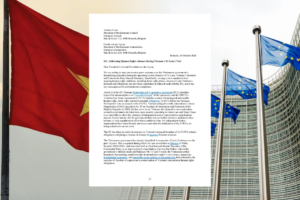
The International Commission of Jurists (ICJ) and four other organizations condemn in the strongest possible terms the arbitrary execution of Mr. Lê Văn Mạnh in violation of his right to life and freedom from torture and cruel, inhuman or degrading punishment. He was executed despite credible allegations that Mr. Lê Văn Mạnh had been subjected to severe beatings amounting to torture by the police in order to extract a “confession,” which was relied on at trial to convict him. 

Despite the public outcry and the persistent calls within the international community for an impartial, independent and effective review of his case, the authorities proceeded with the execution of Mr. Lê Văn Mạnh on 22 September 2023, in defiance of international law and contrary to the global trend towards establishing a moratorium on the use of the death penalty and abolition of the death penalty. 

According to the death certificate issued by Thu Phong village, Cao Phong district, Hòa Bình province that Mr. Lê Văn Mạnh’s family received on 23 September 2023, he was executed at 7am on 22 September 2023. His execution was carried out only four days after his mother had received the notification from the People’s Court of Thanh Hóa, informing her that as Mạnh’s relative, she could apply in writing to receive her son’s ashes or corpse. 

The execution notice issued by Thanh Hóa province police indicates that the responsible authorities had exchanged two official letters in August 2023 to uphold the decision to carry out Mạnh’s execution. This means they had waited for more than one month before notifying Mạnh’s family about his impending execution, hindering any efforts by his family and the public to call for an immediate halt of the execution. Additionally, the notification letter shared with the family did not include the date of the set execution and the family was not given the opportunity of a last visit – a cruel, inhuman and degrading treatment that international human rights bodies have repeatedly condemned.

Allegations of violations of due process and procedural irregularities

Lê Văn Mạnh had been convicted of robbery, rape, and murder of a 14-year-old girl – Hoàng Thị Loan – in July 2005.

According to the case’s official records, the victim, Hoàng Thị Loan, was raped and murdered in Yên Thịnh Ward, Yên Định District, Thanh Hóa Province, in March 2005. On 20 April 2005, Lê Văn Mạnh, who was 23-year old at the time, was arrested pursuant to a temporary arrest warrant issued by the investigative police unit of Đồng Nai Province for an entirely different matter earlier that month.

However, according to the criminal complaint, just three days later, by 23 April 2005, a “confession” letter, claimed to be written by Mạnh while in police detention addressed to his father, had surfaced, admitting guilt to the rape and murder of Hoàng Thị Loan. The police confiscated this letter and used it to prove Mạnh’s guilt. The criminal complaint further showed that the investigation relied on the testimony of a 9-year-old child – who was interviewed by the police without parental permission – for leads.

Between 2005 and 2008, Mạnh underwent a total of seven court hearings, including three trials, three appeals, and one cassation trial. In all of his court hearings, Mạnh vehemently denied all of the charges and retracted his earlier “confession”, alleging that he had to provide it after being beaten by both the police officers investigating his case and his cellmates who were acting under police’s instructions.

There was no physical evidence to tie Mạnh to the alleged rape and murder. The only evidence presented by the prosecution was Mạnh’s “confession” letter, which he had already retracted because it was allegedly obtained under duress and torture. Nevertheless, Lê Văn Mạnh was convicted of the rape and murder of Hoàng Thị Loan and sentenced to death.

Recommendations

The execution was arbitrary, as it took place as a consequence of a denial of the right to fair trial among other rights. The execution also is contrary to repeated resolutions of the UN General Assembly and the overall global trend towards establishing a moratorium on the use of the death penalty with a view to abolition. We strongly urge the authorities to:

  • Immediately halt all pending executions and establish a moratorium on executions with a view to abolishing the death penalty in Việt Nam; 
  • Initiate prompt, impartial and effective investigations into the allegations of torture or other cruel, degrading or inhuman treatment with a view to gaining a “confession” from Mr. Lê Văn Mạnh, noting that his was not the only case where there had been allegations of torture being used to extract a “confession” later used as evidence at trial, which resulted in the imposition of the death penalty; and
  • Ensure that there is full transparency in the use of the death penalty, including through ensuring that essential information relevant to a specific planned execution is promptly provided to the prisoner and their family, and making publicly available information regarding death sentences, pardons, number of people on death row, notifications of any set executions and executions carried out. 

Background

The UN General Assembly, in repeated resolutions and by overwhelming majorities, most recently in General Assembly Resolution 77/222 of 15 December 2022, has called on all States that retain the death penalty to impose an immediate moratorium on executions, with a view to abolition.

In line with opinions shared by many governments and the United Nations, we emphasize that the death penalty constitutes a denial of the right to life protected by Article 6 of the International Covenant on Civil and Political Rights (ICCPR) to which Việt Nam is a State party; and that it constitutes a form of cruel, inhuman or degrading punishment, prohibited under Article 7 of the ICCPR and the UN Convention against Torture and Other Cruel, Inhuman or Degrading Treatment or Punishment (UNCAT). Countries like Việt Nam where the death penalty is imposed, must ensure, at a minimum, that it is only used in cases of “the most serious crimes” (i.e. intentional killing) following a trial that meets the highest level of compliance with international law and standards of fairness. 

As the UN Human Rights Committee noted: “Violation of the fair trial guarantees provided for in article 14 of the Covenant in proceedings resulting in the imposition of the death penalty would render the sentence arbitrary in nature, and in violation of article 6 of the [ICCPR]” (General Comment No. 36 – Article 6: right to life, UN Doc. CCPR/C/GC/36, para. 41). Mạnh’s trial was clearly neither fair nor compliant with international human rights law.

Furthermore, as a State party to the UNCAT and the ICCPR, Việt Nam has an obligation to respect the prohibition of torture and other forms of ill-treatment at all times.

Article 15 of the UNCAT obliges State parties to “ensure that any statement which is established to have been made as a result of torture shall not be invoked as evidence in any proceedings.” International law prescribes that State parties must conduct prompt, impartial and thorough investigations when complaints of torture or other ill-treatment are made (Articles 12 and 13, UNCAT; and Articles 7 and 2(3), ICCPR). In addition, State parties must provide prompt and effective access to effective remedies and full reparations for victims of torture and other ill-treatment (Article 14, UNCAT, and Article 7 in connection with Article 2(3), ICCPR).

Signatories

Amnesty International

International Commission of Jurists

Legal Initiatives for Vietnam 

People in Need

Vietnamese Advocates for Change

ICJ and IBAHRI call for accountability for mercenary predatory recruitment and serious human rights abuses

ICJ and IBAHRI call for accountability for mercenary predatory recruitment and serious human rights abuses

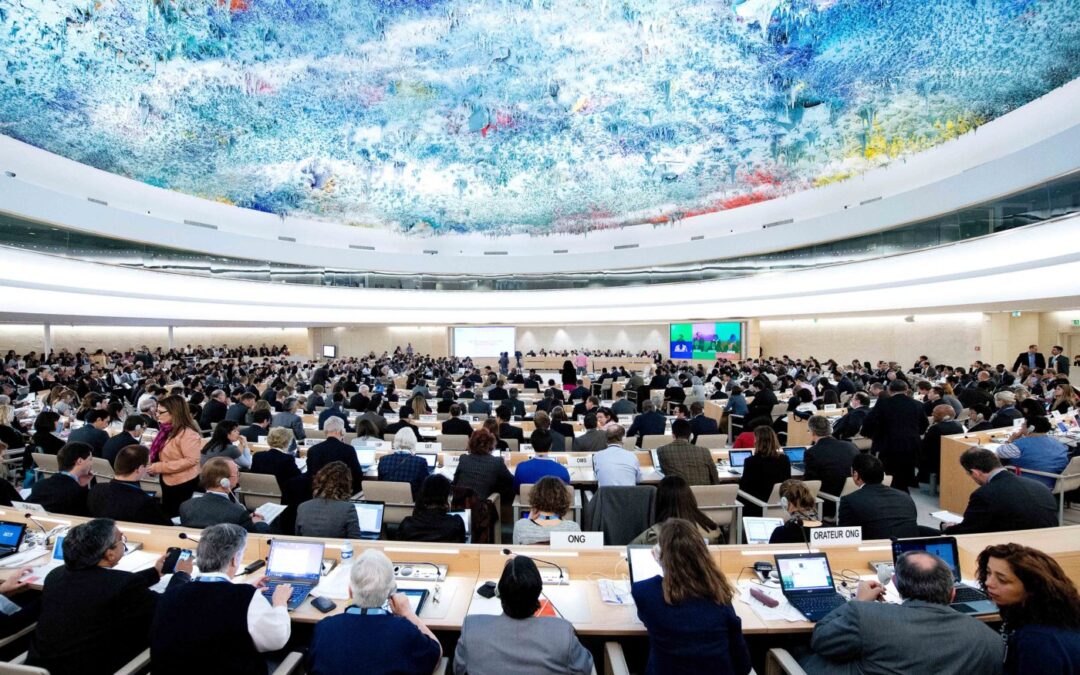
The International Commission of Jurists (ICJ) and International Bar Association Human Rights Institute (IBAHRI) called the Human Rights Council’s attention to the serious abuses amounting to crimes under international law linked to mercenary activities in the Sahel region of Africa, including allegations of unlawful killings, torture and ill-treatment, rape and other sexual violence, and enforced disappearances. Read the full statement below.

Oral Statement of the ICJ and the IBAHRI on the recruitment and activities of mercenaries and private military and security companies

“Mr President,

The International Commission of Jurists (ICJ) and the International Bar Association Human Rights Institute (IBAHRI) deplore the practices of predatory recruitment of people usually in vulnerable situations, such as detainees, and the harsh and risky conditions of service they endure as described in the report of the Working Group on the Use of Mercenaries (A/HRC/54/29).

The report describes opaque and deceitful contract terms, and orders to take direct part in hostilities in foreign countries without their prior consent. These practices sometimes amount to forced labour and debt bondage, in addition to human trafficking.

We remind the States with jurisdiction over persons and practices of their obligation to protect the human rights of persons in such vulnerable situations. ICJ and IBAHRI especially calls this Council’s attention to the serious abuses amounting to crimes under international law linked to mercenary activities in the Sahel region of Africa, including allegations of unlawful killings, torture and ill-treatment, rape and other sexual violence, and enforced disappearances.

We are deeply concerned at repeated allegations that some of these serious human rights abuses are committed by the so-called Wagner Group and call States concerned to promptly, thoroughly and impartially investigate these allegations and bring the perpetrators to justice.

ICJ and IBAHRI support the Working Group’s recommendations for renewal of the mandate of the Intergovernmental Working Group on an international regulatory framework on private military and security companies and call all States to constructively participate in its work (para. 42 g).

Thank you.”

For more information, contact:

Carlos Lopez Hurtado, ICJ Senior Legal Adviser, e: carlos.lopez@icj.org

Translate »