Nov 20, 2020 | News
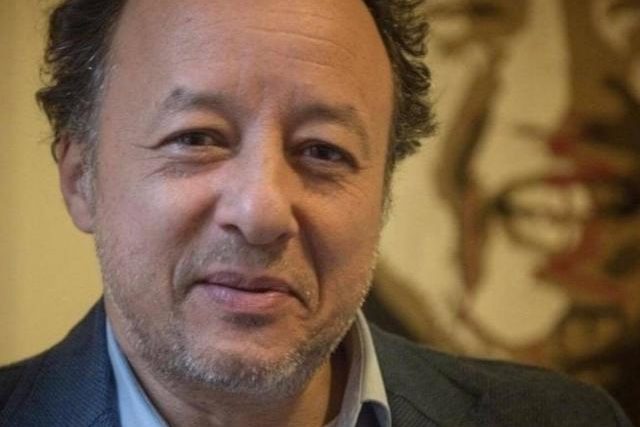
The ICJ today called on the Egyptian authorities to immediately and unconditionally release human rights defenders Gasser Abdel-Razek, Mohamed Bashseer and Karim Ennarah.
The detainees, senior staffers of the Egyptian Initiative for Personal Rights (EIPR), a leading human rights organization, were targeted in connection with their human rights work.
The arrests are part of a broader, relentless campaign by the military and government to intimidate and silence civil society organizations, including through such means as trumped-up “terrorism” charges and sham judicial proceedings.
“By arresting Mohamed Bashseer, Karim Ennarah and Gasser Abdel-Razek, and charging them with terrorism-related offences, the Egyptian government led by President Al-Sisi are writing a new, terrifying chapter in their repression playbook,” said Said Benarbia, Director of ICJ’s Middle East and North Africa Programme.
“Their crackdown on independent civil society must end.”
On 19 November 2020, Gasser Abdel-Razek, EIPR’s Executive Director, was arrested by security forces from his home in Maadi, Cairo. He appeared before the Supreme State Security Prosecution (SSSP) and charged in case No. 855/2020 with, among other charges, “joining a terrorist group” and “spreading false news.”
On 15 November 2020, EIPR’s Administrative Manager Mohamed Bashseer, was arrested at his house in Cairo. On 17 November 2020, Karim Ennarah, EIPR’s director of the criminal justice programme, was also arrested.
They both face similar charges in the same case No. 855/2020, together with other numerous lawyers and human rights defenders, including Mohamed El-Baqer and Mahienour al-Massry.
Over the past seven years, EIPR has been subjected to a pattern of harassment and persecution by the military and government.
In 2016, the assets of EIPR’s founder and former executive director, Hossam Bahgat, were frozen and he was subjected to a travel ban since then.
On February 2020, Patrick George Zaki, an EIPR researcher, was arrested at Cairo Airport by National Security Agency officers who reportedly subjected him to torture, including with electric shocks. He was charged by a public prosecutor with, among other charges, “spreading false news” and “inciting protest without authorization”. He remains in custody
The recent arrests of the three senior EIPR officials follow a visit by a number of European ambassadors and other diplomats to the EIPR Cairo offices on 3 November 2020, during which the human rights situation in Egypt was discussed.
“The international community and in particular States engaging in political and security cooperation with Al-Sisi’s regime must not overlook the serious violations against human rights defenders taking place in the country,” added Benarbia.
“They should demand an end to these violations and ensure that individuals and independent human rights groups are able to do their legitimate and critical human rights work freely and without intimidation.”
Contact
Said Benarbia, Director, ICJ Middle East and North Africa Programme, t: +41-22-979-3817; e: said.benarbia(a)icj.org
Download the Arabic version
Egypt-EIPR crackdown-News-2020-ARA
Nov 17, 2020
The ICJ has published Judicial Accountability: An Adaptation of Practitioners Guide No. 13 for Zimbabwe, which analyzes the Zimbabwean legal framework in light of international and regional standards on accountability mechanisms for judicial corruption and judicial involvement in human rights violations.
The Guide reproduces the text of the ICJ’s 2016 global publication, Judicial Accountability: Practitioners’ Guide No.13, supplementing it with detailed information, analysis and recommendations specific to the context of Zimbabwe.
The Guides focus on international and regional standards and best practices on not only the accountability of individual judges, but also the accountability of the judiciary as an institution and State responsibility under international law, particularly in relation to the harm caused to victims of violations by judges.
The adaptation of this Guide to the Zimbabwean context specifically, is meant to assist practitioners in Zimbabwe, including judicial officers and lawyers, to engage with the domestic legal framework from a position informed by international standards and best practices.
This publication should be a particularly useful and relevant resource for the Zimbabwean judiciary whose theme for this calendar year is “Judicial Transparency and Accountability”.
Speaking on this publication and its relevance to the Zimbabwean context, ICJ Senior Legal Adviser, Blessing Gorejena highlighted how topical the issue of judicial independence in Zimbabwe has been:
“Judicial accountability is at the core of a functional and independent judiciary. The independence of a judiciary cannot just be assumed, it must be evidenced by functional and effective accountability mechanisms, systems and processes which leave little to no room for doubts about the judiciary’s ability to dispense justice without fear or favor. As such, like justice, judicial independence must not only be said to exist but must be seen to exist. Accountability is how judicial independence is seen to exist.”
This Guide considers a multitude of topics relating to judicial accountability, including but not limited to an appraisal of Zimbabwe’s duties to ensure an independent, impartial and accountable judiciary under international law and an analysis of the relevant accountability bodies in Zimbabwe.
Recommendations are consequently made in an effort to tackle inconsistencies between the adopted practices in Zimbabwe and its duties under international law.
Contact
Blessing Gorejena, Senior Legal Adviser and Team Leader of ICJ Zimbabwe Project, t: +263 77 215 1989, e: blessing.gorejena(a)icj.org
Elizabeth Mangenje, Legal Adviser, t: +263 77 474 2420, e: elizabeth.mangenje(a)icj.org
Download
Zimbabwe-PG No 13 Accountability adaptation-Publications-Reports-Thematic report-2020-ENG (full guide, in pdf)

Nov 3, 2020 | News
The government of Nepal should act without delay to carry out the National Human Rights Commission’s recommendations, particularly those concerning Nepal’s obligation to investigate and, where justified by the evidence, prosecute those accused of serious abuses, Human Rights Watch and the ICJ said today.
On October 15, 2020, the National Human Rights Commission (NHRC) published 20 years of data, naming 286 people, mostly police officials, military personnel, and former Maoist insurgents, as suspects in serious crimes. In particular, the information relates to cases where its investigators concluded there is evidence warranting investigation and prosecution for abuses including torture, enforced disappearance, and extrajudicial killing.
In addition to domestic use, the data should provide important guidance to the United Nations in vetting Nepali security forces for peacekeeping missions, and to other countries for efforts to ensure international justice, including in their obligations to prosecute or extradite individuals suspected of responsibility for crimes under international law. They will also be of use to the United States in carrying out vetting requirements under the “Leahy laws” that prohibit military assistance to military and security forces implicated in serious human rights abuses.
“The National Human Rights Commission has taken an important step in publishing this information, which will be an essential tool for the UN and foreign governments in their engagement with Nepali security forces,” said Meenakshi Ganguly, South Asia director at Human Rights Watch. “The report highlights just how little progress there has been to establish meaningful human rights protections to address conflict era violations and ongoing abuses.”
The culture of impunity in Nepal is contributing to ongoing serious human rights abuses, the groups said. There have been numerous credible allegations of extrajudicial executions, torture, and ill-treatment, sometimes resulting in custodial deaths, and deaths resulting from the unlawful and excessive use of force in policing demonstrations in recent years. In many such cases, the authorities have refused even to register complaints, much less carry out effective investigations or prosecutions.
International and foreign authorities, including prosecutors and judicial authorities, should be aware of the commission’s data when considering targeted sanctions for people accused of serious violations, or preparing criminal cases under the principal of universal jurisdiction against those allegedly responsible for crimes such as torture and enforced disappearances, Human Rights Watch and the International Commission of Jurists said.
Particularly serious violations and abuses were committed between 1996 and 2006 during an armed conflict between government security forces and Maoist rebel forces. The former Maoist party in now part of the government. Since the conflict ended, the former enemies have effectively joined ranks to successfully shield their supporters from accountability, fostering a culture of impunity that continues to protect those responsible for ongoing extrajudicial killings and deaths in custody allegedly resulting from torture.
The NHRC said in its report that the government had mostly failed to act against suspects, despite being informed of the commission’s findings. Human Rights Watch and the International Commission of Jurists have not independently investigated all the cases documented, but the Nepal government is under an obligation to thoroughly and impartially investigate the allegations in the report with a view to bringing those responsible for these crimes to justice. Altogether the NHRC has recommended action against 98 police officers, 85 soldiers, and 65 members of the former Communist Party of Nepal (Maoist).
The NHRC presented and analyzed its findings and recommendations spanning two decades, since its establishment in 2000. It has registered 12,825 complaints and reached conclusions in 6,617 cases, making 1,195 recommendations to the government. The recommendations have been carried out fully in only 13 percent of cases, partially carried out in 37 percent, and not carried out at all in the remaining 50 percent. The government has often carried out recommendations to make payments to victims or their families but has very rarely investigated or prosecuted abuses.
In a March 6, 2013 ruling, the Supreme Court decided that the NHRC has the authority to refer these cases to the attorney general and prosecutors for investigation and prosecution, yet the NHRC has been unwilling to use that authority. The NHRC has also chosen not to use its prerogative to name those allegedly responsible for the abuses until now, waiting until the last days of the outgoing commissioners’ terms to publish the report.
“While releasing this report is an important step toward addressing entrenched impunity in Nepal, it has exposed the fact that the commission has struggled with a lack of investigative capacity, failing in many cases to summon alleged perpetrators or demand documentation,” said Mandira Sharma, senior international legal advisor at the International Commission of Jurists. “Had the NHRC used its authority to request prosecution from the attorney general where it has gathered sufficient evidence, it would have made a real contribution in tackling impunity and in addressing police failures in investigating ongoing cases of rights violations.”
The NHRC has long been dogged by political interference in the appointment of commissioners, and a widely perceived reluctance to confront the government or other powerful institutions, such as the army and political parties, that oppose accountability for rights abuses. In 2019 the government proposed amendments to the 2012 National Human Rights Commission Act that would further undermine its independence.
To download the full statement with additional information, click here. (PDF)
Contact
For International Commission of Jurists, in Nepal, Mandira Sharma (Nepali, English): +977-9851048475 (mobile); or mandira.sharma@icj.org.
Oct 28, 2020 | News
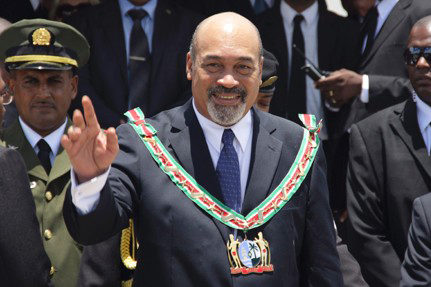
On Friday, 30 October 2020, the Military Court of Suriname (“Krijgsraad”) is expected to resume the appeal process against Suriname’s former president Desi Bouterse. The ICJ will maintain its longstanding monitoring of this trial, which began in 2012.
As of 2020, the trial monitoring exercise will be led by Godfrey Smith SC who is a Senior Counsel, former Attorney General of Belize, and a former High Court judge and acting Justice of Appeal of the Eastern Caribbean Supreme Court.
The Court has announced that the general public will not be permitted to attend the hearing due to the COVID-19 measures.
While Suriname has a general obligation to ensure that trials are public, some restriction on public attendance of a trial maybe appropriate and even necessary to protect public health.
However, the authorities retain a duty to make accommodation for public access to the proceedings, for example by making the proceedings available through video transmission. In this respect, it is critical that efforts be made to ensure transparency, both in the process and in the outcome of the hearing.
Background to the 2020 Hearing
Desi Bouterse was sentenced on 29 November 2019 to 20 years in prison while he was still president of the country. He was found guilty of planning and ordering the murder of 15 political prisoners on 8 December 1982 at the military barracks of Fort Zeelandia. No arrest warrant has ever been issued in relation to either the charge, the conviction or the sentence.
The appeals process started on 22 January 2020. However, after one of the judges fell ill, the case was postponed to 31 March 2020. The merits of the case have not yet been heard.
As with many pending matters in Suriname, the trial was postponed several times due to the COVID-19 pandemic.
The ICJ maintains that the judicial process should run its course with due impartiality, independence and fairness to all parties concerned, and insists that the principles of the rule of law be respected by all.
The ICJ reminds the authorities of the State’s obligation to ensure a fair trial by a competent, independent, and impartial tribunal as guaranteed under article 14 of the International Covenant on Civil and Political Rights, to which Suriname is a party. It also recalls the obligation to ensure accountability for gross human rights violations, including the extrajudicial killings of which Desi Bouterse is accused.
Contact:
Godfrey Smith SC, ICJ monitor of the trial of former President Bouterse, t: 501-610-3114, e: godfrey(a)byronsmithlaw.com
Oct 27, 2020 | Agendas, Events, News
The International Commission of Jurists and the Human Rights Joint Platform (IHOP) invite you to a conversation on the past and current situation of the fight against impunity in Turkey with eminent international and Turkish expert.
Registation is on a first come first served basis by writing to: ihop@ihop.org.tr
Join our speakers:
– Juan Mendez, former UN Special Rapporteur on Torture
– Wilder Taylor, Former Secretary-General of ICJ and chair of Uruguary NPM
– Luciano A. Hazan, Member of the UN Working Group on Enforced and Involuntary Disappearance
– Melis Gebeş, Lawyer, Truth Justice and Memory Center:
– Feray Salman, General Coordinator of Human Rights Joint Platform
IHOPICJ-ZoomConference-ImpunityTurkey-Agenda-2020-ENG (download the agenda in English)
IHOPICJ-ZoomConference-ImpunityTurkey-Agenda-2020-TUR (download the agenda in Turkish)
The event is part of the REACT project: implemented jointly by ICJ and IHOP, this project seeks to support the role of civil society actors in turkey in ensuring effective access to justice for the protection of human rights. This project is funded by the European Union. The views expressed in the event do not necessarily reflect the opinion of the EU.