Oct 26, 2020 | News
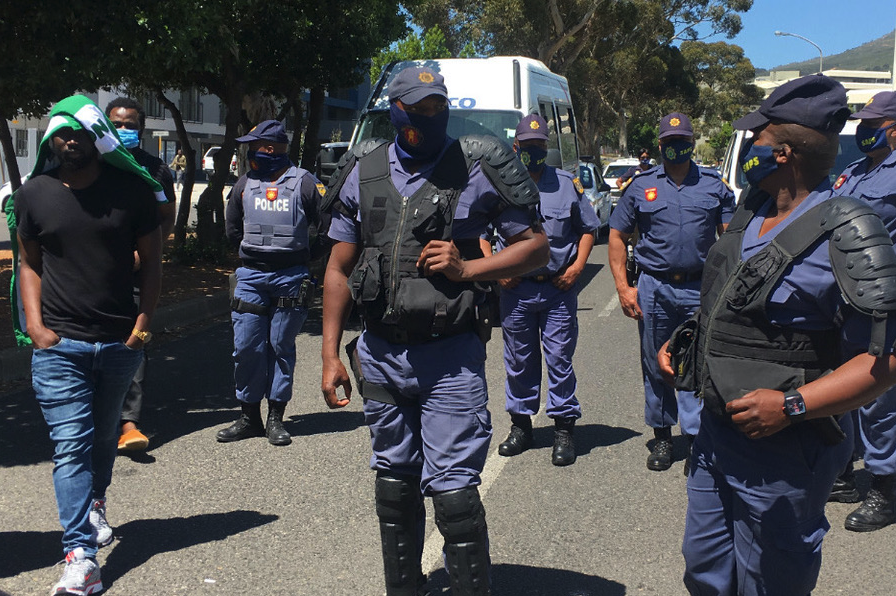
The ICJ and Lawyers Alert today called on the Nigerian authorities to undertake immediate independent and thorough investigations into credible allegations of extrajudicial killings by the military responding to mass protests against the SARS police unit.
Those responsible for criminal conduct must be brought to justice and held to account, the two organizations said.
The authorities must respect their international legal obligations under international law and cease the unlawful, unnecessary and disproportionate use of force in response to Nigerians’ lawful protest actions.
Protest actions have escalated over the last two weeks as Nigerians have staged a series of protests under the #EndSARS movement. Thousands of people joined the demonstrations, demanding an end to police brutality and corruption.
Reports confirm that more than 56 people have died over the two weeks of protest actions, including 38 protesters who were killed, on the 20 October alone, as a result of the Nigerian military opening fire on thousands of peaceful protesters.
“The right to peaceful assembly is guaranteed under international law, including the International Covenant of Civil and Political Rights (ICCPR) which Nigeria has acceded to. Nigeria’s brutal responses to the peaceful demonstrations, including the use of lethal force on force protestors, not only violates this right but also their right to life,” said Kaajal Ramjathan-Keogh, ICJ Africa Regional Programme Director.
Lawyers Alert Executive Director Rommy Mom said: “The Nigerian government’s responses to the protests have undermined the rule of law. Groups and persons should not be afraid to approach the Judicial Panels of Inquiry to lay their grievance towards identification of culpable SARS officers for appropriate sanctions and the compensation of victims.” The organizations recall that under international law, the use of lethal force by law enforcement officials is permissible only when strictly necessary to protect life.
Police in the SARS unit are credibly alleged to be responsible for a widespread practice of torture and other serious human rights violations.
In addition to ending these violent attacks on protestors, the ICJ and Lawyers Alert call on the Nigerian government to address the demands of protestors and embark on comprehensive reform of the police, with emphasis on oversight functions, tethering oversight to civil society groups, the National Human Rights Commission and the constitutional oversight body of the Nigeria police.
“These protests have gained momentum outside Nigeria and have extended beyond the local borders to Ghana, United Kingdom and South Africa. The world’s attention is currently on Nigeria, as the global support for protestors rise amidst further police brutality. The Nigerian government must ensure that it respects and protects the human rights of all in accordance with its obligations under international law,” added Ramjathan-Keogh.
Background
Founded in 1992, the Special Anti-Robbery Squad (SARS) was mandated to “investigate cases involving armed robbery and kidnapping”. However, since its inception, there have been widespread complaints by Nigerians about the conduct of SARS This year Amnesty International issued a report, documenting at least 82 cases of torture, ill treatment and extra-judicial execution by SARS during the period of January 2017 and May 2020
In addition to the ICCPR, Nigeria is party to the UN Convention against Torture and the African Charter on Human and Peoples’ Rights (African Charter), which guarantees the right to life under Article 4 and the right to assemble freely with others under Article 11. These rights are also respectively protected under sections 33(1) and 40 of the Nigerian Constitution.
Article 6 of the ICCPR prohibits the arbitrary deprivation of life.
Principle 9 of the UN Basic Principles on the Use of Force and Firearms by Law Enforcement Officials affirm that:
Law enforcement officials shall not use firearms against persons except in self-defence or defence of others against the imminent threat of death or serious injury, to prevent the perpetration of a particularly serious crime involving grave threat to life, to arrest a person presenting such a danger and resisting their authority, or to prevent his or her escape, and only when less extreme means are insufficient to achieve these objectives. In any event, intentional lethal use of firearms may only be made when strictly unavoidable in order to protect life.
Contact
Kaajal Ramjathan-Keogh, Director of ICJ’s Africa Regional Programme, c: +27845148039, e: kaajal.keogh(a)icj.org
Tanveer Jeewa, Communications Officer, tanveer.jeewa(a)icj.org
Homepage photo credit: Tshwanelo Mathwai
Oct 8, 2020
In a briefing paper published today, the ICJ called on the Tunisian authorities to comply with their international law obligations and undertake substantial legal and policy reforms, strengthening accountability and delivering justice to victims of gross human rights violations.
Reforms are particularly needed to enhance the effectiveness of the Specialized Criminal Chambers (SCC).
They are also required to ensure that Tunisia fulfills its obligations under international law to criminalize, investigate and prosecute gross human rights violations, and to ultimately guarantee the rights of victims to an effective remedy and reparation.
Organic Law No. 53 of 2013 established the SCC to adjudicate past gross human rights violations; they have been operating since May 2018 but are currently facing a number of hurdles. Urgent amendments to the Criminal Code, the Code of Criminal Procedure and other relevant domestic law, as well as institutional, judicial and policy reforms are required to overcome these obstacles.
“The conduct of SCC trials in the absence of these reforms risks to seriously impede their effective operation in the short term, and to hamper Tunisia’s accountability efforts in the long term,” said Said Benarbia, the ICJ’s MENA Programme Director.
“The success of the transitional justice process and the fight against impunity rests largely on the political will of the Tunisian authorities to introduce these reforms, and to ensure that the SCC are able to carry out their work without hindrance.”
Tunisia’s domestic law fails to adequately criminalize crimes under international law over which the SCC have jurisdiction. Further, the application of a special procedure under the transitional justice framework for the investigation and prosecution of gross human rights violations has resulted in the Office of Public Prosecutor and other investigative authorities playing little to no role in the prosecution of SCC cases. In addition, this special regime gives rise to concerns about the collection, admission, exclusion and assessment of evidence during the trial stages.
All these obstacles have the potential to adversely impact the fair trial rights of the accused, the victims’ right to an effective remedy and reparation, as well as the participation and protection of victims and witnesses at trial.
Additionally, Tunisia’s domestic law does not sufficiently guarantee the rights of the accused, nor does it fully ensure the rights of the victims and their families or adequate protective measures for victims and witnesses.
The briefing paper addresses these issues and makes key recommendations on three areas of outstanding concern, namely:
- Adequate criminalization of crimes under international law and applicability of the principle of legality and non-retroactivity;
- Investigation and prosecution of gross human rights violations; and
- Collection, admissibility and assessment of evidence in the investigation, prosecution and adjudication of gross human rights violations.
In addition, in light of the recent annual judicial rotation, which has resulted in many of the SCC not having quorums and on trials been delayed, the ICJ calls on the High Judicial Council to ensure that the SCC judges have security of tenure, and that annual rotations do not undermine the SCC’s ability to conduct their work and dispense justice and ensure accountability for decades of gross human rights violations in Tunisia.
“The High Judicial Council should rapidly fill the posts that are currently vacant in the SCC and ensure that newly appointed judges receive timely and adequate training in transitional justice, as required by Organic Law No. 53 of 2013,” said Kate Vigneswaran, the ICJ’s MENA Programme Senior Legal Adviser.
“Moreover, safeguards should be put in place to ensure that changes in the composition of the bench mid-way through trials do not prejudice the fairness of the proceedings, and to ensure that those judges who continue hearing cases have the appropriate understanding of the evidence and arguments.”
Contact:
Said Benarbia, Director, ICJ Middle East and North Africa Programme, t: +41-22-979-3817; e: said.benarbia(a)icj.org
Kate Vigneswaran, Senior Legal Adviser, ICJ Middle East and North Africa Programme, t: +31-62-489-4664; e: kate.vigneswaran(a)icj.org
Tunisia-Strengthening Accountability SCC-Advocacy-Analysis brief-2020-ENG (full paper in English, pdf)
Tunisia-Strengthen Accountability-News-2020-ARA (full story in Arabic, pdf)
Tunisia-Strengthening Accountability SCC-Advocacy-Analysis brief-2020-ARA (full paper in Arabic, pdf)
Oct 6, 2020 | News
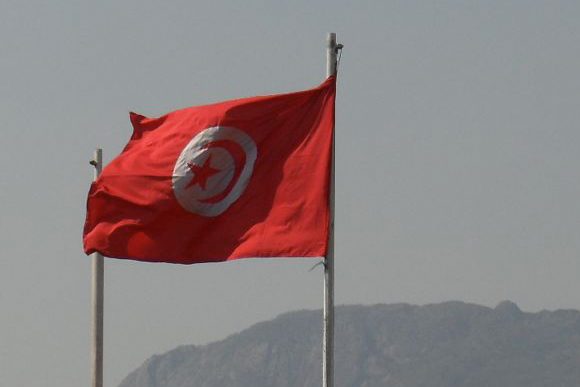
The Tunisian Parliament should amend or reject the revised Draft Organic Law No. 25-2015 on the protection of security forces scheduled for discussion in Parliament today, said the ICJ. The Law if adopted would reinforce impunity for violations committed by security forces and undermine the rule of law and human rights.
The revised Draft Law was approved by the Parliamentary Commission in July 2020, following unsuccessful attempts to adopt it in 2015 and 2017.
Article 7 of the Draft Law provides for the exoneration of security forces from criminal responsibility for using lethal force to repel attacks on a security building, when the force is necessary and proportional to the danger posed to the building. In 2017, the ICJ and other organizations urged Parliament to reject a prior draft which included the same provision.
“More than 10 years after the uprising, Tunisia’s security forces continue to enjoy impunity for decades of serious human rights violations,” said Said Benarbia, the ICJ’s MENA Programme Director.
“The Parliament should adopt all the effective measures at its disposal to end such impunity, not entrench it by allowing the use of lethal force when it’s not strictly necessary to protect lives.”
Article 7 of the Draft Law would preserve the operation of Law No. 69-04, which permits the use of firearms to defend property, “mitigate” a resistance, or stop a vehicle or other form of transport in the context of public meetings, processions, parades, public gatherings, and assemblies. It allows for the use of lethal force to disperse an unlawful gathering where other means of dispersal have failed.
Under international law, including the United Nations Basic Principles on the Use of Force, the intentional use of lethal force must be reasonable, necessary and proportional, and is only permissible if strictly necessary to protect life from an imminent threat to life, not a threat to property.
In the context of non-violent assemblies, the use of force should be avoided and, where unavoidable, restricted to the minimum extent necessary against only those individuals posing an imminent threat of death or serious injury.
The Draft Law appears to preserve an exemption under article 42 of the Criminal Code and Article 46 of Law No. 82-70 on the Statute of Internal Security Forces of 6 August 1982. Article 42 of the Criminal Code provides that a person is not liable for crimes under the Criminal Code, including homicide, if their acts were carried out pursuant to other laws or orders from a competent authority. Article 46 of Law No. 82-70 limits this immunity in relation to orders given to officers of the Internal Security Forces by requiring the orders be given “by their superior in the framework of legality.” Under international law, superior orders cannot serve as a ground of defence to a crime of unlawful killing by a State agent, such as a member of a security force.
“The Tunisian Parliament should reject the Draft Law and conduct a complete review of all laws regulating the conduct of the security forces to ensure they meet standards necessary to protect the population from the excesses demonstrated in the past,” said Kate Vigneswaran, the ICJ’s MENA Programme Senior Legal Adviser.
“Members of the Parliament should send a clear, unequivocal message that the impunity of the security forces can no longer be tolerated.”
Contact:
Said Benarbia, Director, ICJ Middle East and North Africa Programme, t: +41-22-979-3817; e: said.benarbia(a)icj.org
Kate Vigneswaran, Senior Legal Adviser, ICJ Middle East and North Africa Programme, t: +31-62-489-4664; e: kate.vigneswaran(a)icj.org
Tunisia-draft law security forces-News-2020-ARA (story in Arabic, PDF)
Sep 30, 2020 | Artículos, Eventos, Noticias
Durante décadas, las víctimas de desapariciones forzadas y ejecuciones extrajudiciales en América Latina han demando justicia, verdad y reparación. A pesar de estos esfuerzos, la impunidad en estos delitos es alta. En algunos casos, las víctimas han esperado por más de cuatro décadas para que se haga justicia.
Como parte de su estrategia para promover la rendición de cuentas en casos de graves violaciones a los derechos humanos alrededor del mundo, la CIJ, junto con sus socios, está implementando un proyecto regional para promover justicia en casos de ejecuciones extrajudiciales y desapariciones forzadas en Colombia, Guatemala y Perú.
El proyecto cuenta con el apoyo de la Unión Europea. Uno de los resultados del proyecto ha sido apoyar la elaboración de tres casos emblemáticos por parte de los socios locales de la CIJ.
En Colombia, para ilustrar uno de los patrones de ejecuciones extrajudiciales, la Asociación de Red Defensores y Defensoras de Derechos Humanos (dhColombia) produjo un documento sobre tres casos de ejecuciones extrajudiciales cometidos de 2005 a 2008. El documento Una práctica sistemática ejecuciones extrajudiciales en el eje cafetero (2006-2008) presenta las dificultades que las víctimas y sus abogados han enfrentado para demostrar la responsabilidad de demando en estos casos.
En Perú, el Instituto de Defensa Legal (IDL) documentó la desaparición forzada de estudiantes universitarios y profesores entre 1989 y 1993, en el momento más argüido del conflicto interno peruano. En el documento Los desaparecidos de la Universidad Nacional del Centro IDL describe el difícil camino jurídico que las víctimas han enfrentado, para llevar a la justicia a los agentes del Estado que estarían involucrados en estos crímenes.
En Guatemala, para subrayar la manera en como se cometieron desapariciones forzadas contra las comunidades rurales en el marco del conflicto armado guatemalteco, la Asociación de Familiares de Detenidos-Desaparecidos de Guatemala (Famdegua) escribió acerca de la desaparición de más de 500 personas en la región de las Veparaces. En el informe Las desapariciones forzadas en la región de las Verapaces se presenta la historia de cinco de estos casos.
Estos tres informes contribuyen a comprender la prevalencia de estas violaciones en América Latina y las opciones disponibles para hacer frente a la impunidad.
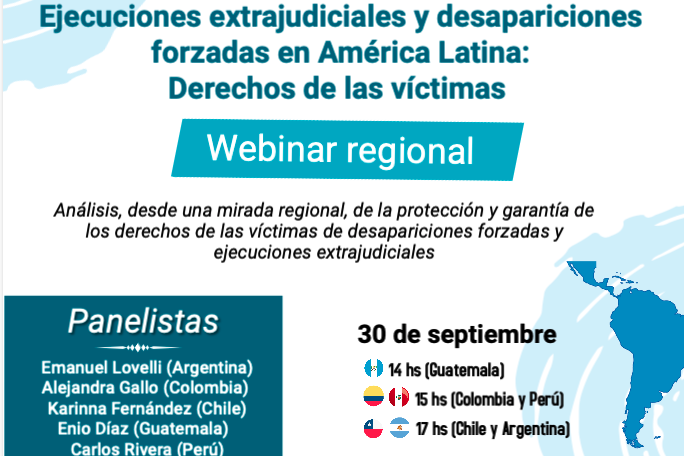
El 30 de septiembre de 2020, la CIJ organizará un webinar regional para discutir la protección y garantía de los derechos de las víctimas de desapariciones forzadas y ejecuciones extrajudiciales en Argentina, Colombia, Chile, Guatemala y Perú. El webinar será transmitido en vivo en la página de Facebook de la CIJ, a las 14 horas (hora de Guatemala) / 15 horas (hora de Colombia y Perú) / 17 horas (hora de Chile y Argentina).
Contactos:
Kingsley Abbott, Coordinador de la iniciativa global de rendición de cuentas de la CIJ. Correo electrónico: kingsley.abbott(a)icj.org
Carolina Villadiego, Asesora Legal, América Latina y coordinadora regional del proyecto. Correo Electrónico: carolina.villadiego(a)icj.org
Rocío Quintero M, Asesora Legal, América Latina. Correo electrónico: rocio.quintero(a)icj.org
Sep 30, 2020 | Events, News
For decades, victims of enforced disappearances and extrajudicial killings in Latin America have been demanding justice, truth, and reparations. Despite these efforts, impunity remains rampant. In some cases, victims have been waiting for justice for over four decades.
As a part of its strategy to promote accountability for serious human rights violations around the world, the ICJ, together with partners, is implementing a regional project to address justice for extrajudicial killings and enforced disappearances in Colombia, Guatemala, and Peru, supported by the European Union.
One of the results of the project has been to support the production of three case dossiers by the ICJ’s local partners.
In Colombia, to illustrate one of the patterns of extrajudicial killings, the Asociación de Red Defensores y Defensoras de Derechos Humanos (dhColombia) produced a document concerning three cases of extrajudicial killings committed during 2006 and 2008.
The report Una práctica sistemática ejecuciones extrajudiciales en el eje cafetero (2006-2008) presents the challenges the victims and their lawyers have faced when seeking responsibility for those crimes.
In Peru, the Instituto de Defensa Legal (IDL) documented the enforced disappearances of university students and professors between 1989 to 1993, at the height of the internal conflict. In the report Los desaparecidos de la Universidad Nacional del Centro IDL describes the difficult legal path victims have faced in order to bring state agents suspected of committing crimes to justice.
In Guatemala, to highlight the manner in which enforced disappearances were committed against rural communities during the internal armed conflict, the Asociación de Familiares de Detenidos-Desaparecidos de Guatemala (Famdegua) wrote about the enforced disappearance of more than 500 people in the region of the Veparaces. In the report Las desapariciones forzadas en la región de las Verapaces the story of five cases is presented.
These three reports contribute towards understanding the prevalence of these violations in Latin America, and the available options to tackle impunity.
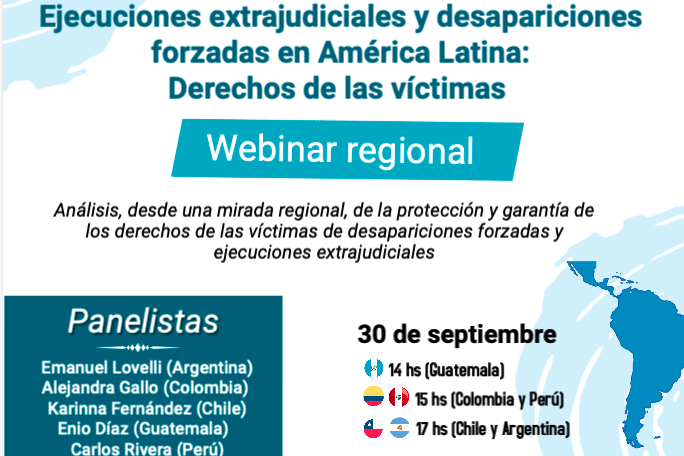
On 30 September 2020, the ICJ will host a regional webinar to discuss the protection and guarantee of the rights of victims of enforced disappearances and extrajudicial executions in Argentina, Colombia, Chile, Guatemala and Peru.
The webinar will be broadcast live on the ICJ’s Facebook page, at 14 hours (Guatemala time)/15 hours (Colombia and Peru time)/ 17 hours (Chile and Argentina time).
Contact
Kingsley Abbott, Coordinator of the Global Accountability Initiative, e: kingsley.abbott@icj.org
Carolina Villadiego Burbano, Legal and Policy Adviser, Latin America and Regional Coordinator of the Project, e: carolina.villadiego@icj.org
Rocío Quintero M, Legal Adviser, Latin America, e: rocio.quintero@icj.org