Oct 19, 2018 | Advocacy, Non-legal submissions
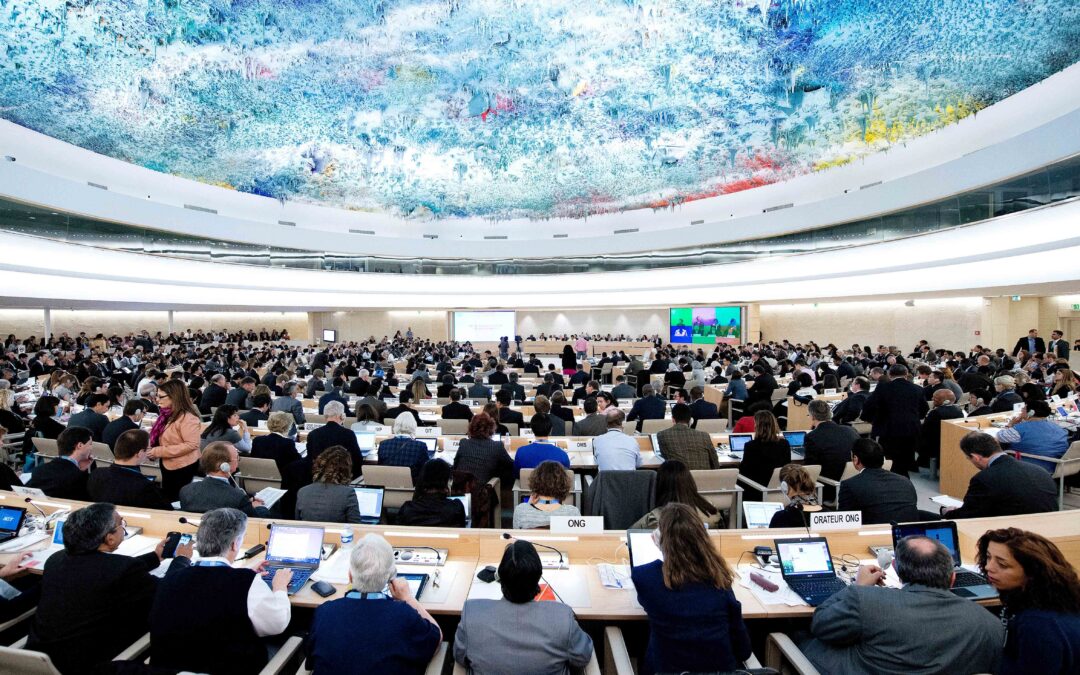
The International Commission of Jurists participated in the fourth session of the open-ended intergovernmental working group on transnational corporations and other business enterprises with respect to human rights that took place at the Palais de Nations from 15-18 October 2018. Below are the interventions the ICJ made at this session.
UN-ICJ statement IGWG4 general debate-Advocacy-ENG-2018
UN-ICJ statement IGWG4 prevention-Advocacy-ENG-2018
UN-ICJ statement IGWG4 legal liability-Advocacy-ENG-2018
Sep 19, 2018 | Eventos, Noticias
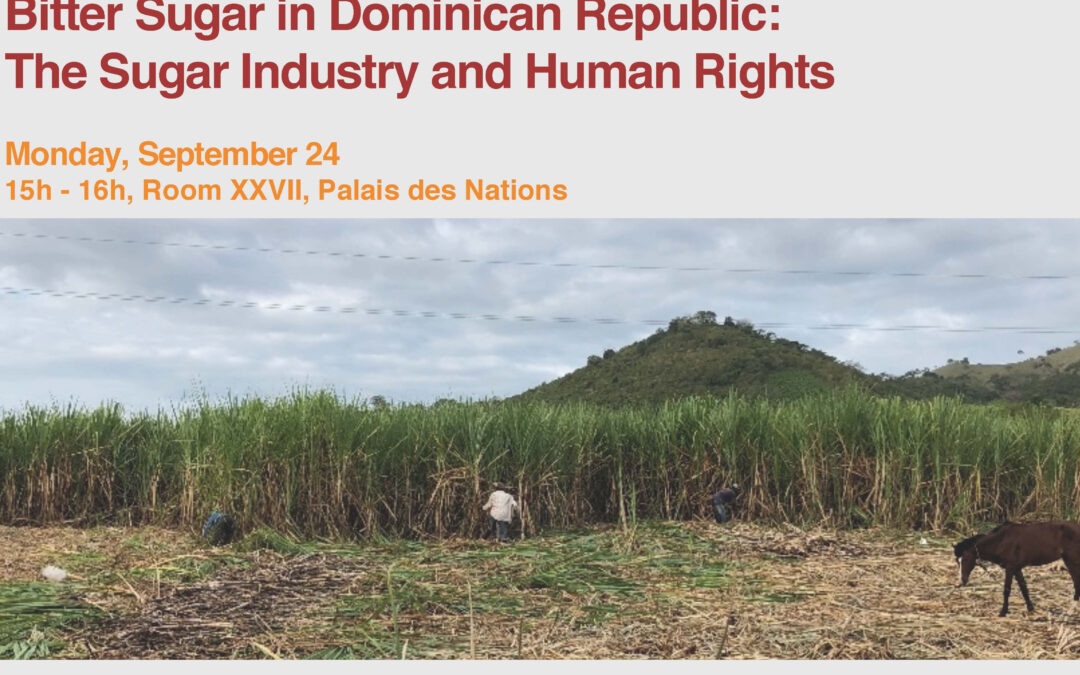
La CIJ acogerá el evento paralelo, “Azúcar amargo en la República Dominicana: la industria azucarera y los derechos humanos” el lunes, 24 septiembre 2018 de 15:00-16:00 habitación XXVII, en el Palais de Nations en Ginebra.
Junto con el turismo, la producción de azúcar es una de las principales industrias y una de las mayores fuentes de empleo en la República Dominicana.
Este pequeño estado caribeño sigue siendo uno de los principales proveedores mundiales de azúcar en los Estados Unidos.
Si bien la producción y exportación de azúcar en la República Dominicana son unas fuentes importantes de ingresos para el país, los impactos adversos de su producción son varios.
La destrucción del medio ambiente, el acceso reducido a la tierra para las comunidades locales, los desalojos forzosos y las condiciones laborales precarias en las plantaciones de caña de azúcar son lamentablemente una realidad en muchas regiones del estado caribeño.
Mientras que la República Dominicana ha demostrado en los últimos años estar preparada para cumplir y aplicar las normas internacionales sobre asuntos relacionados con las empresas y los derechos humanos, el país sigue enfrentando muchos desafíos y las evidencias de violaciones de derechos humanos proviniendo del terreno todavía pintan una realidad complicada.
Dos ejemplos recientes involucrando la industria de la caña de azúcar ilustran la preocupación constante por los abusos contra los derechos humanos en la República Dominicana.
En 2016, agentes armados de uno de los mayores productores de azúcar del país, Central Romana Corp., expulsaron por la fuerza de sus hogares a más de 60 familias durante la noche.
No se han proporcionado alojamiento alternativo o reparaciones a las víctimas para reparar la destrucción de sus hogares y el trauma causado por la violencia de los desalojos.
En 2017, el Grupo Vicini, la segunda principal empresa productora de azúcar del país, utilizó el pesticida glifosato de tal manera que muchas personas corrieron peligro de muerte y que destruyó los cultivos y el ganado de los campesinos. Hasta la fecha, las violaciones de los derechos humanos en ambos casos siguen impunes.
Existe una creciente preocupación internacional de que la industria de la caña de azúcar en la República Dominicana puede de alguna manera actuar con impunidad cuando se trata de violaciones de derechos humanos.
Teniendo en cuenta el próximo Examen Periódico Universal de la República Dominicana, en el cual todos los Estados Miembros de la ONU examinarán la situación de los derechos humanos en el país, este evento paralelo tiene como objetivo informar y arrojar luz sobre esta realidad poco conocida en la República Dominicana e informar a las delegaciones estatales sobre la importancia de abordar este tema en su revisión de la República Dominicana.
El evento también proporcionará un espacio para el diálogo constructivo entre varios actores, incluido el Gobierno de la República Dominicana.
Panelistas:
– Un experto sobre el tema de las empresas y los derechos humanos (Carlos Lopez, Comisión Internacional de Juristas)
– Un experto sobre el tema de la industria azucarera en la República Dominicana y sus impactos sobre los derechos humanos (Fr. Damián Calvo Martin OP, Centro de Teología Santo Domingo de Guzman)
– Una víctima de desalojos forzosos por parte de Central Romana Corp. (María Magdalena Álvarez Gálvez)
Moderador: Rory Gogarty, High Court of England and Wales
Interpretación: se proporcionará de inglés a español y de español a inglés
República Dominicana evento 24 septiembre (volante de evento en PDF)
Sep 19, 2018 | Events, News
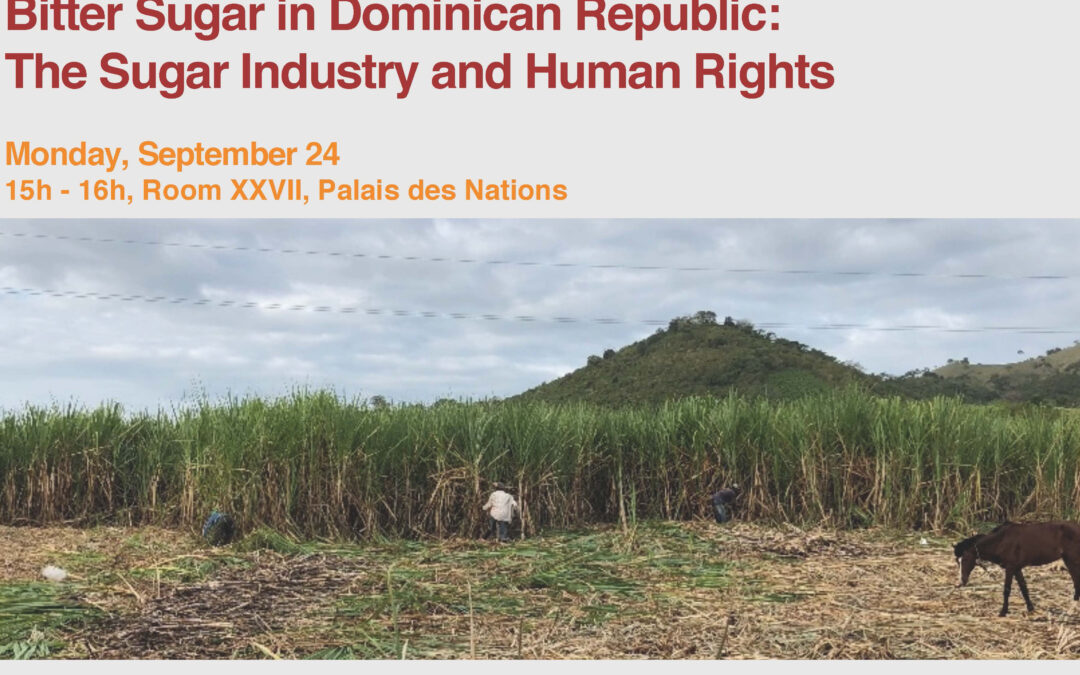
The ICJ will host the side event, “Bitter Sugar in Dominican Republic: The Sugar Industry and Human Rights” on Monday, 24 September 2018 from 15:00-16:00, Room XXVII, at the Palais de Nations in Geneva.
Together with tourism, sugar production is one of the major industries and one of the biggest sources of employment in the Dominican Republic.
This small Caribbean State remains one of the world’s top sugar suppliers to the USA.
While sugar production and export in the Dominican Republic is a major source of income for the country, the adverse impacts of its production are various.
Destruction of the environment, reduced access to land for local communities, forced evictions and precarious working conditions in sugarcane plantations are unfortunately a reality in many regions of this Caribbean State.
Whilst the Dominican Republic has shown in past years a preparedness to abide by and implement international standards on matters related to business and human rights, the country continues to face many challenges and evidence of human rights violations on the ground still portrays a complicated reality.
Two recent examples involving the sugar cane industry illustrate ongoing concern about human rights abuses in the Dominican Republic.
In 2016, armed agents of one of the largest sugar producers in the country, Central Romana Corporation, forcibly evicted from their homes more than 60 families during the night.
No alternative accommodation or reparations have been provided to the victims to redress the destruction of their homes and the trauma caused by the violence of the evictions.
In 2017, the Vicini Group, the second main sugar producing company in the country, used the pesticide Glyphosate in such a way that many were in danger of death and that it destroyed the crops of peasant farmers and workers.
To date, the human rights violations in both cases continue to be unpunished.
There is a growing international concern that the sugar cane industry in the Dominican Republic is somehow able to act with impunity when it comes to human rights violations.
Bearing in mind the upcoming Universal Periodic Review of Dominican Republic, in which all UN Member States will examine the human rights situation in the country, this side event is aimed at informing and shedding light on this little known reality in the Dominican Republic as well as to brief State delegations about the importance of addressing this issue in their review of the Dominican Republic.
The event will also provide a space for constructive dialogue among various actors, including the Government of the Dominican Republic.
Panelists:
– Carlos Lopez, Senior Legal Adviser, International Commission of Jurists
– Fr. Damián Calvo Martin OP, Director, Centro de Teología Santo Domingo de Guzman
– María Magdalena Álvarez Gálvez, victim of forced evictions by Central Romana Corp.
Moderator: Rory Gogarty, High Court of England and Wales
Interpretation: Will be provided from English to Spanish and Spanish to English
Dominican Republic Sugar Industry Side Event Flyer 24 Sept. (flyer of the event in pdf)
Aug 23, 2018 | News
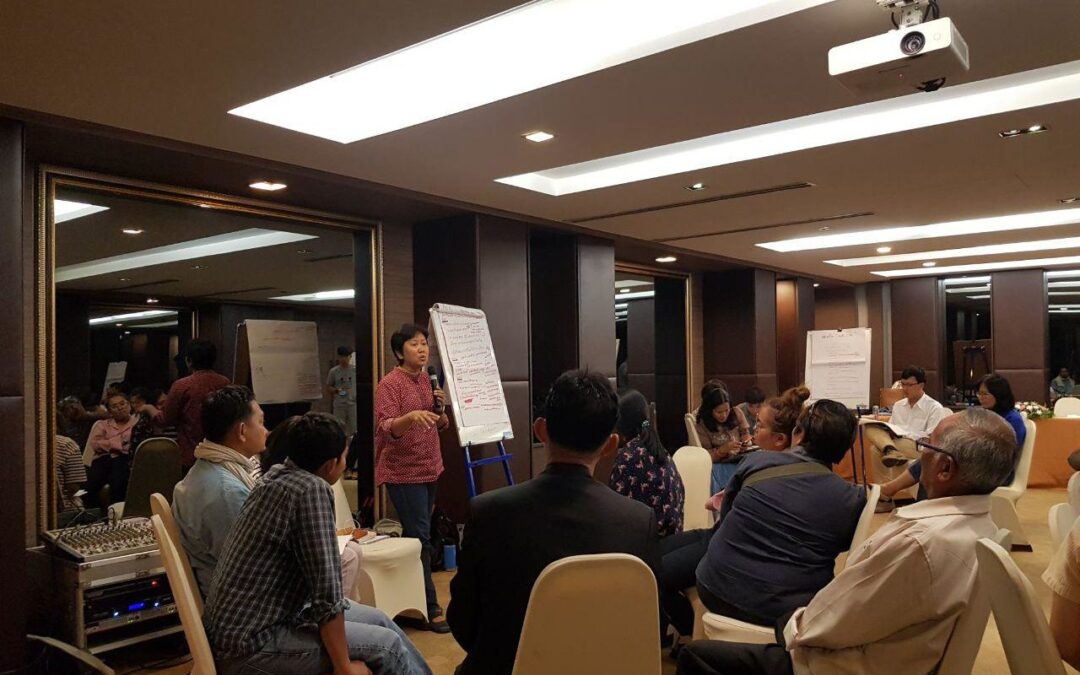
On 22 August, the ICJ co-organized a preparatory discussion in Bangkok for civil society organizations on Thailand’s National Action Plan on Business and Human Rights (NAP).
This event was organized one day in preparation for a formal NGO consultation event on the NAP held today.
The formal NGO consultation event was organized by the National Human Rights Commission of Thailand (NHRCT) to consider the draft NAP released by Thailand’s Ministry of Justice’s Rights and Liberties Protection Department (RLPD) in August 2018.
The ICJ hosted the preparatory discussion jointly with Community Resource Centre Foundation (CRC), Amnesty International Thailand (AI Thailand), Protection International (PI), Fortify Rights and the United Nations’ Office of the High Commissioner for Human Rights (OHCHR).
Thirty members of civil society organizations from all across Thailand attended the preparatory discussion.
Of these participants, four persons from the North of Thailand were supported by the ICJ to attend the discussion, including Ms. Arisara Lekkam, Lecturer of Law at Mae Fah Luang University in Chiang Rai, who was also a speaker at the event.
The event began with a presentation about the NAP and business and human rights issues in Thailand, during which Arisara Lekkam provided an overview of the business and human rights situation in Thailand.
Following the presentation, participants divided into groups to discuss four prioritized areas covered by the NAP: Labour, Land and Natural Resources, Human Rights Defenders and Cross-Border Investment.
At the end of the discussion, each group presented a set of recommendations on the draft NAP pertaining to each prioritized area. These recommendations will be provided to the Ministry of Justice’s RLPD.
This is the third event the ICJ has held on business and human rights in collaboration with partners from the North of Thailand.
On 22 November 2017, the ICJ, in collaboration with Chiang Mai University’s Faculty of Law, held a roundtable discussion on human rights litigation concerning special economic zones in Myanmar and Thailand.
Between 29 and 31 July 2017, the ICJ, in collaboration with Chiang Mai University’s Faculty of Law, held a workshop on ‘Introduction to Business and Human Rights & Basic Principles on Documenting Human Rights Violations” for 25 academics, NGO representatives and lawyers in Chiang Mai.
Background
During the second Universal Periodic Review of Thailand in May 2016, the Royal Thai Government accepted a recommendation to develop, enact and implement a national action plan on business and human rights in order to implement the UN Guiding Principles on Business and Human Rights.
In August 2018, Thailand’s Ministry of Justice’s RLPD, which is currently leading the development of the NAP, released a revised ‘zero draft’ of the NAP.
In line with the release of the revised ‘zero draft’, the NHRCT led the organization of a formal NGO consultation event on 23 August 2018, jointly with Thailand’s Ministry of Justice, Thailand’s Ministry of Foreign Affairs, United Nations Development Programme (UNDP) and OHCHR.
The Royal Thai Government reportedly plans to launch the NAP in September 2018.
Jul 4, 2018 | News
The ICJ held a workshop in Mawlamyine on 3 July attended by religious leaders and youth activists from southern Mon State in Myanmar’s southeast.
The workshop aimed to facilitate discussion on strategic litigation options for communities adversely affected by existing and proposed investment projects.
The ICJ and civil society organizations have extensively documented how human rights abuses continue to occur in the context of business activities in Myanmar.
Communities generally have limited understanding of their rights, while government actors and businesses regularly flout their legal obligations.
The ICJ’s international legal adviser Sean Bain first set out applicable international standards, with a focus on the UN Guiding Principles on Business and Human Rights.
He identified Myanmar’s nascent legal framework for environmental protection as a key area of law with potential to deter rights abuses. He noted that while in December 2015 the Government of Myanmar issued the Environmental Impact Assessment Procedure, its provisions are rarely followed or enforced in practice.
Workshop participants, from two different areas of Mon State, shared experiences of community mobilization and ideas on how to use law to protect human rights.
Presentation on Corporate Social Responsibility
Prior to this workshop, also in Mawlamyine, on 29 June the ICJ’s legal adviser presented on Corporate Social Responsibility (CSR) at invitation of the national assembly of MATA, the Myanmar Alliance for Transparency and Accountability.
Introduced to Myanmar only in recent years, CSR activities are increasingly invoked by foreign and local companies as evidence of responsible investment.
But in reality, many companies doing CSR have been and continue to be involved in unlawful business activities, sometimes constituting human rights abuses.
Participants from different areas of Myanmar shared stories of businesses using CSR activities in a non-transparent way without accountability.
Cases were described where CSR has allegedly been associated with corruption, undermining trust and cohesion in communities affected by large investment projects.
The presentation from ICJ pointed out that while CSR activities are voluntary and without a specific legal framework, all businesses are subject to national law and should respect human rights in accordance with international law and standards, including the UN Guiding Principles.
Lawful conduct that respects human rights lies at the core of any responsible business, and CSR activities do not change these obligations.
These activities in Mon State are part of the ICJ’s ongoing support to civil society actors in Myanmar, from community-level up to national level actors.