Sep 8, 2020 | Feature articles, News
Judges from six Latin American countries revealed that there were serious obstacles, but also possibilities for justice, facing regional judiciaries as they try to protect the human rights of those who have been adversely affected by the activity of business entities.
The judges gathered as part of the Regional Judicial Dialogue on Business and Human Rights organized by the ICJ of Jurists on September 7.
The Dialogue, moderated by ICJ Commissioner Professor Monica Pinto, brought together 17 judges from Central and South America to consider the role of judges in guaranteeing the right of access to justice and remedy and reparation. The judges also considered the need to guarantee the independence of the judiciary and the security of individual judges, lawyers, and human rights defenders in the context of business activities in the region.
The session featured presentations from a member of the UN Working Group on Business and Human Rights and the Office of the UN High Commissioner for Human Rights. The Dialogue took place in the context of the 5th Regional Forum on Business and Human Rights for Latin America and the Caribbean.
Discussing access to justice and remedy and reparation, the judges shared experiences and jurisprudence in cases related to serious crimes, including against humanity committed during the Argentine military regime, as well as cases of serious corruption and embezzlement in Guatemala.
In Argentina, in a case concerning the 1976 kidnapping and torture of 24 workers employed by the local Ford Motor company at their factory in Buenos Aires during the 1976-83 military dictatorship, a Federal Trial Tribunal sentenced three persons, a former military officer and two former Ford executives to prison of between 10 and 12 years, for their complicit involvement in the crimes.
Former Ford executives were accused of providing detailed information and logistical support to security agents that led to the abduction and torture of the victims, and also allowed a detention centre to be set up inside the premises of that factory.
The three judges of the Tribunal in this case attended the meeting to share the lessons learned and the significance of the criminal proceedings in the context of efforts to bring justice and reparations for the crimes of the past.
The process and the final sentence is a landmark in the fight against impunity in Argentina and an important message to all so that these crimes are not committed again. The case clarified the ways in which private individuals (the former company executives) participated in the commission of the crimes by State agents (military and security agents), elaborating upon modalities of attribution of the acts to the accessory perpetrators.
It is also an innovation in the ways it gathered and assessed the probatory value of the available evidence of crimes committed more than 30 years ago so that the crimes could still be attributed to the perpetrators.
The reparation ordered by the Tribunal in this case was “symbolic and historical”, consisting on an acknowledgment of the facts by the State and the private actors. The victims may demand now other forms of reparation from the State, but not from individuals.
The company as such was not part of the criminal proceedings nor was it sanctioned in the final sentence, since Argentinian law does not accept the criminal responsibility of legal entities such as corporations.
A participant judge from Guatemala shared a case concerning economic crimes of corruption, fraud, illicit association and assets laundering in a provincial town in Guatemala. Here, the experience and outcomes were somewhat different.
The case involved the town major and several of his relatives as well as some 20 companies out of which nearly 20 individuals and seven companies received penalties in the final sentence.
The case is of special significance in Guatemala as one of the few, large scale, corruption cases that has reached its final stage with convictions. In the investigation and collection of evidence considered during the trial, participated several public offices and the then International Commission Against Impunity in Guatemala (CICIG), which is no longer in operation.
Thanks to recent laws on corruption and money laundering, it is possible to impose sanctions on the company, as a legal entity. In the instant case, those sanctions consisted of monetary fines but not suspension or dissolution of the legal entity to allow other administrative proceedings against the same companies to continue.
In accordance with national laws and international standards, the judges ordered full reparation, including for damages, measures of satisfaction such as public statements of apologies and publications to be made by the convicted.
Citing a graphic statement contained in the final sentence, the judge Pablo Xitumul who presided the Tribunal said “corruption and impunity are even more lethal than a cancer or a pandemic, and should be combated without delay or excuses!”
Read the full story here: Americas-Judges and BHR-News-Feature article-2020-ENG

Aug 27, 2020 | Advocacy, News
The ICJ, in collaboration with the Zimbabwe Anti-Corruption Commission (ZACC), convened a virtual Asset Recovery Training Workshop from 18-26 August. The training was part of the ICJ efforts to advance the rule of law in Zimbabwe.
The training was held with investigators from ZACC. It was led by Dr Prosper Maguchu, a legal expert on human rights and financial crimes.
The objective of the training was to enhance the capacity of ZACC investigators to conduct financial investigations and apply asset tracing techniques in relation to corruption and money laundering cases.
Over the past 50 years, it is estimated that Africa has lost in excess of one trillion US dollars in illicit financial flows (IFFs) with claims that this is roughly equivalent to all of the official development assistance received by the continent during the same timeframe.
Zimbabwe is not immune to this challenge of IFFs.
ZACC chairperson Justice Loice Matanda-Moyo remarked that financial crimes and illicit financial flows had become a serious threat the Zimbabwe economy and beyond our borders. She pointed to the prevalence of tax evasion, smuggling, corruption, fraud, drug trafficking and money laundering and noted that ill-gotten proceeds involving money were moving across borders. In such instances it is a daunting task for investigators and asset recovery officers to follow the money trails and recover proceeds of crime. She noted that the virtual asset recovery workshop was an opportune moment time to enhance the capacity of investigators and asset recovery officers.
“This training was very timely and critical. It enhanced the capacity of ZACC in its pursuit to recover assets accumulated though corruption. The investigators were equipped with the requisite skills and techniques involved in asset recovery that include collecting evidence, issuing restraint and freezing orders and making mutual legal assistance requests. Recovering stolen assets is an important process in the fight against corruption as it deters corruption by turning it into a high-risk, low-reward activity. Additionally, asset recovery is a means to obtain resources for the development of the country, which resources can also be channelled towards strengthening the fight against corruption in Zimbabwe, thus contributing to the greater respect for the rule of law,” said ICJ Senior Legal Adviser Blessing Gorejena.
The training workshop provided a comprehensive overview on what asset recovery means, exploring approaches and tools in asset recovery and enhance the technical capacity of the investigators to trace, seize and confiscate and repatriate illicitly acquired assets.
Participants in this workshop included 18 investigative officers and two Commissioners. Overall there were 11 female and 9 male participants in attendance.
This workshop was supported by the European Union Delegation in Zimbabwe.
Contact:
Shaazia Ebrahim (ICJ media officer), c: +277 167 067 19 e: shaazia.ebrahim(a)icj.org
Vimbai Mutandwa (ICJ legal advisor), c: +263 77 351 7733 e: vimbai.mutandwa(a)icj.org
Aug 3, 2020
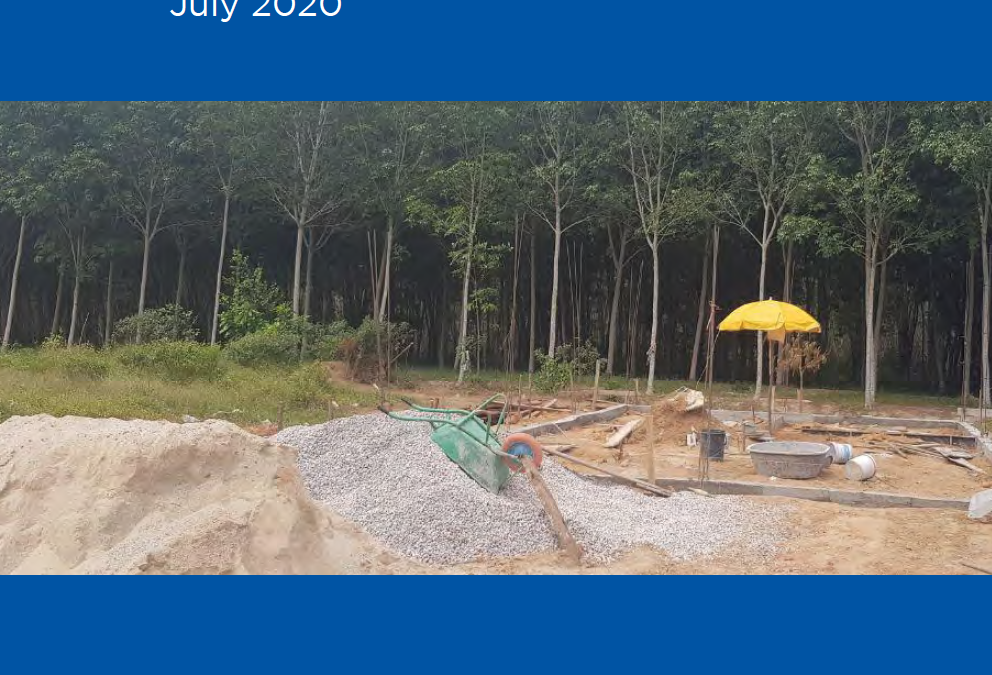
In a report published today, the ICJ called on the Thai government, legislature and regulatory agencies to take steps to address deficiencies in the legal and regulatory framework governing economic development in Special Economic Zones and the Eastern Economic Corridor to improve transparency, protect communities and labourers’ human rights, and implement safeguards to mitigate the adverse impact of such development on the environment and human rights.
The report, titled ‘The Human Rights Consequences of the Eastern Economic Corridor and Special Economic Zones in Thailand’ identifies gaps and weaknesses in the current law and policy governing investment in areas that have been designated for economic development in order to attract foreign investment. The report documents reported human rights violations and abuses of affected communities, as well as the adverse impact on the environment and working conditions for migrant labourers.
Drawing on international law and good practices, and the ICJ’s previous work in Myanmar, the report offers a detailed set of recommendations for how to improve the existing legal framework in order to prevent future human rights violations and abuses and provide reparation to victims of human rights violations perpetrated in and associated with SEZs.
“There is no reason for Thailand to repeat the mistakes made by governments elsewhere in the world that have rushed to dilute human rights and environmental legal protections in a misguided attempt to attract foreign investment,” said Frederick Rawski, ICJ Asia-Pacific Director.
“Safeguarding the well-being of local communities and the environment, ensuring decent conditions for migrant workers, and establishing transparent and inclusive decision-making processes are essential elements of a sustainable development that respects human rights,” he added.
As discussed in the report, the current laws and regulations governing SEZs do not contain adequate procedural safeguards and human rights protections, including for the rights to food, health, water, work and adequate housing.
While the law governing development of the EEC does contain a number of provisions that protect communities and the human rights of affected individuals, the report outlines concerns about the regulatory body governing the EEC’s broad discretionary powers and inadequate transparency in its work, as well as a lack of adequate preventive and remedial frameworks to ensure respect of human rights and environmental protections in areas designated for development under the law.
“The ICJ is encouraged by the fact that Thailand has adopted a stand-alone National Action Plan (NAP) on Business and Human Rights – the first country in Asia to do so. As part of the NAP, it has committed to reviewing and amending laws and regulations to ensure that they comply with human rights law and standards”, said Rawski.
“This report offers a set of concrete recommendations for law and policymakers to help them to fulfill this commitment as it pertains to the environmental and human rights consequences of SEZs, and the development of the EEC in particular,” he added.
The report was based on extensive legal research, as well as interviews with over 90 people, including individuals from affected communities in Chonburi, Chachong Sao, Rayong, Songkhla and Tak provinces, as well as human rights lawyers, academics and government officials at the provincial and central levels.
Key recommendations to the Government of Thailand
- Protect human rights by amending SEZ legal frameworks, EEC laws, laws governing land acquisition and environmental and labour protections, following meaningful public consultation in accordance with international standards, to ensure that:
- the government bodies responsible for developing and administering SEZs and the EEC be independent, and operate in a transparent and inclusive manner including by providing public participation in planning and decision-making processes;
- all persons have a minimum degree of security of tenure sufficient to protect them from forced eviction, harassment and other threats;
- standards be in place to protect the environment, and to mitigate the impact of environmental degradation on communities; and
- all workers enjoy equal rights protections based on the principles of non-discrimination and equality.
- Adopt an amended SEZ Act that contains provisions that are in compliance with Thailand’s international human rights obligations.
- Ensure that effective, prompt and accessible judicial and non-judicial remedies be provided to those affected by the implementation of SEZ and EEC policies; and
- Ensure that companies operating in SEZs and the EEC carry out business activities in line with the UN Guiding Principles on Business and Human Rights.
Download
The Human Rights Consequences of the Eastern Economic Corridor and Special Economic Zones in Thailand in English and Thai. (Updated in February 2021)
Story with additional background information in English and Thai.
Contact
Frederick Rawski, ICJ Asia Pacific Regional Director, e: frederick.rawski(a)icj.org
Further reading
Myanmar: amend Special Economic Zones Law to protect human rights – new ICJ report
Jun 2, 2020
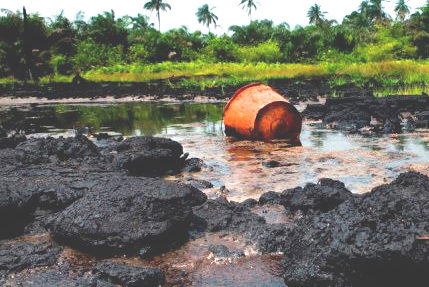
The CORE Coalition and the ICJ have jointly submitted evidence as interveners in a landmark case before the UK Supreme Court brought by some 40,000 people from the Ogale and Bille communities of the Niger Delta (Nigeria) against oil major Royal Dutch Shell (Okpabi et al vs Royal Dutch Shell et al) for serious harm to their human rights and well-being.
On 23 June, the Supreme Court will consider whether Shell can arguably be held liable for pollution caused by its Nigerian subsidiary, which destroyed farming land, wiped out fish stocks and poisoned drinking water. In 2018 the Court of Appeal ruled that Shell did not exercise enough control over the subsidiary to hold it responsible for the well-being of those affected by the oil spills.
This is the latest stage in a four-year legal action brought by communities seeking compensation for the catastrophic environmental damage caused by widespread oil spills.
The CORE and ICJ submission sets out the applicability of comparative law and standards regarding companies’ responsibilities in relation to human rights and environmental protection. These show that Royal Dutch Shell PLC (Shell) had a duty of care in relation to the communities affected by its Nigerian subsidiary’s activities.
In 2019, CORE and the ICJ made a similar submission to the UK Supreme Court in a case brought by Zambian communities against mining giant Vedanta.
In a groundbreaking decision allowing the case to proceed, the Court ruled that companies can be held to account for public commitments regarding their subsidiaries’ operating standards.
Both CORE and the ICJ have been lead participants in the elaboration processes of all major international instruments in the field of businesses’ human rights responsibilities in the last decade.
Nigeri-Okpabi-Advocacy-Legal submission-2020-ENG (full submission in PDF)
Mar 6, 2020 | Advocacy, Non-legal submissions
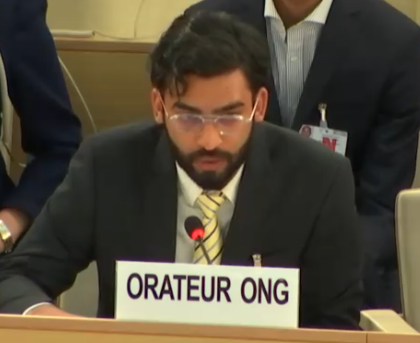
The ICJ, speaking in a general debate at the UN Human Rights Council in Geneva, urged all States to work together towards adoption of a treaty on business and human rights, and highlighted threats to the independence of the judiciary in Europe.
The statement, delivered in the general thematic debate at the Council, read as follows:
“The International Commission of Jurists (ICJ) welcomes the report of the 5th session of the Intergovernmental Working Group (A/HRC/43/55) in charge of the elaboration of a treaty on business and human rights and notes the consensual nature of its conclusions and recommendations. Abuses of human rights and environmental degradation caused with the involvement of business enterprises have so far been met with very limited action by businesses and States.
The ICJ considers that the revised draft treaty is a serious and advanced proposal that is suitable for negotiations and thanks the Chair-Rapporteur for its efforts and leadership in this process.
The ICJ urges States that are not yet actively involved in the negotiations to join the growing number of States that are active for a final push.
The ICJ also draws the attention of the Council to serious threats to independence of judges and lawyers in European countries.
In Poland, judges are being disciplined merely for applying EU law, under legislation curtailing their freedom of expression and independence.
In Turkey, independence of lawyers and judges continues to be seriously compromised, as demonstrated by the disciplinary proceedings against the Gezi trial judges launched after critical comments by the President of Turkey.
The ICJ urges the Council to give attention to these developments of extreme concern.”