
May 15, 2015 | News
The ICJ today condemned the conviction of six human rights defenders after an unfair trial lasting less than five minutes. The six were charged in connection with their participation in a peaceful demonstration against the fatal shooting of a protestor in Letpadaung.
They were sentenced to four years and four months in prison with hard labour.
“Under both international and Myanmar law, a fair trial means independent judges, the need for evidence of guilt beyond a reasonable doubt, and due process. All of these requirements were ignored in the case of these accused, who must be immediately and unconditionally released,” said Sam Zarifi, the ICJ’s Regional Director for Asia and the Pacific.
“Instead of prosecuting peaceful protestors, the Myanmar government must hold those responsible for the killing in Letpadaung accountable and provide justice,” he added.
The ICJ attended today’s hearing at the Yangon Dagon Township Court of Daw Naw Ohn Hla, Daw Sein Htwe, U Nay Myo Zin, Ko Tin Htut Paing, Daw Lay Lay @ Daw San San Win and U Than Swe, who were sentenced for violating Article 18 of the Peaceful Assembly and Peaceful Procession Law, as well as a series of offences under the Penal Code.
These offences include assaulting or preventing a public servant from the discharge of his duty (Section 353); rioting (Section 147); publishing or circulating information which may cause public fear or alarm and may incite persons to commit offences “against the State or against the public tranquility” (Section 505(b)).
It is unclear whether an appeal will be filed, but the ICJ understands that the accused’s appeal in this case would be highly unlikely to succeed.
The ICJ has observed and documented the case’s pre-trial and trial phases and considers that they grossly violate international standards of fair trial.
Bail has been denied to all the accused after hearings that last less than five minutes. The accused have also complained to the ICJ about poor prison conditions, non-nutritious or edible food, dirty water and no access to radio or television.
These do not comply with international standards, including the United Nations Standard Minimum Rules for the Treatment of Prisoners.
The ICJ urges the Myanmar authorities to drop all charges against the accused and take effective measures to ensure that such violations do not reoccur in this or future cases.
The ICJ calls upon the Myanmar authorities and the judiciary to take measures, in law and practice, to ensure that the judiciary is able to decide cases independently and impartially as a separate and co-equal branch of the government.
Background:
The accused were arrested and detained on 30 December 2014 for the lawful exercise of their right to freedom of peaceful assembly.
They protested in front of the Chinese embassy in Yangon calling on the Myanmar authorities to carry out an urgent and impartial investigation into the death of Daw Khin Win.
She was shot dead on 22 December 2014 while demonstrating against illegal land confiscations and forced evictions over the Letpadaung copper mine in Monywa.
There has been so far no arrest or prosecution for the use of incendiary weapons as a crowd-control agent in Letpadaung in 2012 or for the shooting of Daw Khin Win last year.
Contact:
In Bangkok: Sam Zarifi, ICJ Regional Director, Asia-Pacific Programme, e: sam.zarifi(a)icj.org
In Myanmar: Vani Sathisan, ICJ International Legal Adviser, t: +95 9250800301 ; e: vani.sathisan(a)icj.org
May 15, 2015 | News
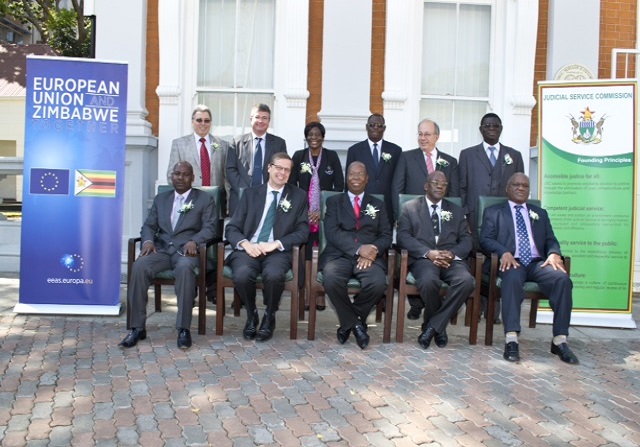
Today the ICJ is launching an EU funded project to contribute to an improvement in administration of justice in Zimbabwe.
It is hoped that it will also result in greater legal protection of human rights as enshrined in the new constitution of Zimbabwe and to meet Zimbabwe’s international legal obligations pursuant to UN and African Union treaties to which it is Party.
Some of the activities that will be carried out under this project include:
– Organising judicial symposia;
– Working towards the re-establishment of the Zimbabwe Judicial College;
– Organising training workshops for non-judicial court staff;
– Organising training for prosecutors, magistrates and lawyers;
– Working for the full implementation of international human rights and rule of law standards as they relate to the administration of justice, including the ACHPR Principles and Guidelines on the Right to a Fair Trial and UN Basic Principles on the Independence of the Judiciary and UN Basic Principles on the Role of Lawyers;
– Working with the Law Society of Zimbabwe to improve the professional integrity of legal practitioners; and
– Supporting the revision of Zimbabwe’s Court Rules.
Speeches:
Zimbabwe-Speech Com Chinhengo-Advocacy-2015-ENG (ICJ Commissioner Chinhengo)
Zimbabwe-Speech CJ GG Chidyausiku-Advocacy-2015-ENG (Chief Justice Chidyausiku)
Zimbabwe-Speech EU Ambassador-Advocacy-2015-ENG (EU Ambassador)

May 10, 2015 | News
From 11-15 May 2015, the mission will meet with a variety of stakeholders, including officials in the executive, the Ministry of Justice, the judiciary, members of Parliament, the legal profession, media, political analysts and civil society.
The International Fact Finding Mission in Swaziland (IFFM-SZ) is led by the ICJ, in collaboration with the Africa Judges and Jurists Forum (AJJF), Judges for Judges Netherlands (J4J) and the Commonwealth Magistrates’ and Judges’ Association (CMJA).
The mission aims, among other things, to:
- Assess the domestic legal framework (constitutional, legislative and administrative) and practice as it pertains to the independence of the judiciary and the legal profession in Swaziland;
- Identify obstacles posed – legal, structural, and practical – by the state of the independence of the judiciary to the capacity of the judiciary to fairly administer justice, including in relation to the protection of human rights;
- Gather information on and assess the relations between the critical stakeholders in the justice delivery chain;
- Gather information and assess the operations of the Chief Justice’s office in key delivery areas, such as the case management system (including the allocation and tracking of cases);
- Consider practice directives on administration of justice;
- Evaluate systems and practices for the appointment and disciplining of judicial officers and support staff;
- Assess whether an adequate programme of continuous legal education is in place for judicial officers; uphold the institutional and individual independence of the judiciary; and
- Assess the availability of access to justice.
The mission will rely on international human rights law and standards.
After the completion of the field meetings and interviews, ICJ will release a report detailing its findings and recommendations directed to key stakeholders for their consideration and implementation.
The ICJ is committed to supporting all stakeholders in strengthening the independence of the judiciary, the legal profession and observance of the rule of law in Swaziland.
The mission comes against the background of a number of recent developments of concern for the independence and accountability of the judiciary in the country.
Read also:
Swaziland: arrest of judges raises serious concerns
Leading legal voice intervene at UN level in the case of detained Swazi lawyer Thulani Maseko
Additional information:
The mission team is composed of Judge Moses Chinhengo (of Ruwa, Harare, Zimbabwe, retired High Court Judge Botswana and Zimbabwe; ICJ Commissioner; Interim Chair AJJF, Head of the IFFM-SZ) ; Judge Charles Mkandawire (of Lilongwe, Malawi, High Court Malawi; ICJ Commissioner; Regional President-CMJA and member of the IFFM-SZ) ; Judge Oagile Dingake (of Gaborone, Botswana, Professor of Public Law at University of Cape Town, Judge Residual Special Court of Sierra Leone, Judge High Court Botswana; member of the IFFM-SZ) ; and Judge Tamara Trotman (of The Hague, Netherlands, Judge of Court of Appeal in The Hague, Chair Judges for Judges, member of the IFFM-SZ).
The judges are supported by technical staff: Laurens Hueting (Legal Adviser, ICJ-Centre for Independence of Judges and Lawyers), Otto Saki (Senior Legal Adviser, ICJ-Africa Regional Programme) and Justice Mavedzenge (ICJ Consultant and University of Cape Town PhD Candidate and Rapporteur).
Contact:
Arnold Tsunga, Director, ICJ Africa Regional Programme Director, t: +27731318411 ; e: arnold.tsunga(a)icj.org
Picture by Darron Raw
May 4, 2015 | News
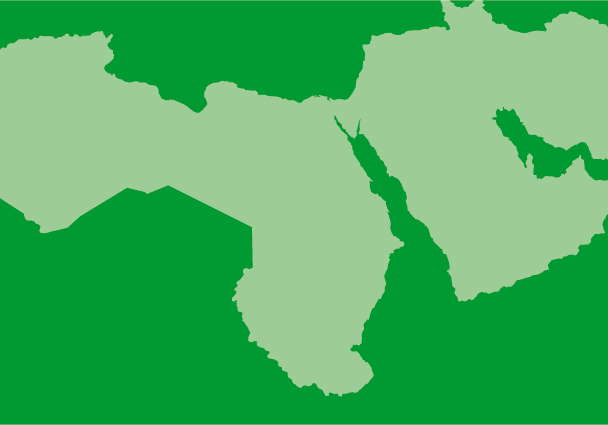
Following a recent international conference, the ICJ and the other participants elaborated and signed the Tunis Declaration on the Arab Court of Human Rights.Among other things, the Tunis declaration (see below) is calling for the members of the League of Arab States (LAS) to refrain from ratifying the Statute of the Arab Court unless and until it is revised in accordance with international standards, with a view to creating an effective Arab human rights court.
The conference was organized from 8-9 April in Tunis by the ICJ and the Legal Agenda, and attended by international, regional and national judges, lawyers, human rights defenders and members of civil society.
Key provisions of the Statute of the Court, which was adopted by the Ministerial Council of the League of Arab States on 7 September 2014, were discussed and assessed in light of the experience and practice of regional human rights systems and international mechanisms.
Conference participants identified both shortcomings of the Statute and the necessary reforms required to establish a court that provides meaningful access to individuals alleging a violation of their human rights.
A detailed analysis of the provisions of the Statute can be found in the ICJ’s report, The Arab Court of Human Rights: A Flawed Statute for an Ineffective Court, published on 8 April 2015 (to access the Statute of the Court, see annex 1 of the ICJ report).
MENA-Arab Court Tunis Declaration-Advocacy-2015-ENG (full text in PDF, English)
MENA-Arab Court Tunis Declaration-Advocacy-2015-ARA (full text in PDF, Arabic)
Apr 23, 2015 | News
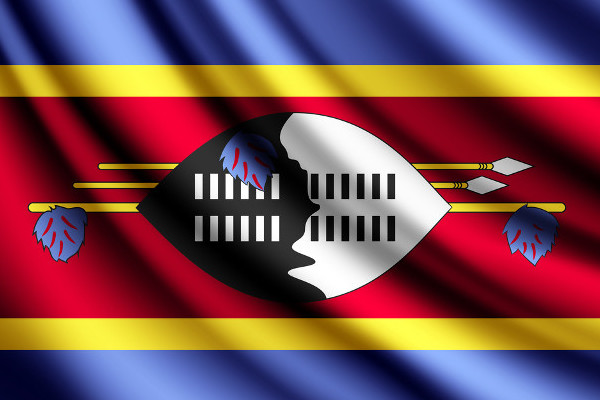
The ICJ is concerned at the recent arrest of Swaziland High Court Judges Jacobus Annandale and Mpendulo Simelane, the High Court Registrar Fikile Nhlabatsi and the Minister of Justice Sibusiso Shongwe.
The four detainees appeared today before High Court Justice Qinisile Mabuza (photo).
Justice Minister Sibusiso Shongwe was denied bail and remains detained, while the other two High Court Judges and the registrar were released on bail.
The judges, registrar and Minister of Justice are all facing various charges related to corruption and obstructing the course of justice.
The ICJ is also aware that police are presently seeking to arrest Chief Justice Michael Ramodibedi, and that they have surrounded his place of residence.
The ICJ has received information alleging that the police have cut off the electricity and water and have actively prevented people from bringing food supplies to him and his family.
The ICJ urges the authorities in Swaziland to immediately investigate the situation of the Chief Justice and, if the allegations are substantiated, to immediately restore supply of essential services to the Chief Justices family, denied in violation of rights guaranteed under the Swaziland’s Constitution and its international legal obligations.
“The arrest and attempted arrest of several judges, and a High Court Registrar as in this case, invariably raises questions of separation of powers and the independence of the judiciary,” said Wilder Tayler Secretary General of the ICJ.
“The ICJ therefore calls on the authorities in Swaziland to conduct themselves with rigorous adherence to rule of law principles, the separation of powers between the executive and the judiciary. They must also do so with strict respect for international human rights law,” he added.
The ICJ emphasizes that the Chief Justice and the other judges are entitled as everyone else in Swaziland to freedom from arbitrary detention and the right to a fair trial guaranteed under international law.
These protections include the right to be informed the reasons for their arrest and the nature of any criminal charges, the right to representation by a lawyer of their choice and the right to be considered for bail if appropriate.
If no crime is alleged, but serious professional misconduct is suspected, then arrest and detention is inappropriate.
Additional information:
The ICJ has had longstanding concerns with the state of the independence of the judiciary and legal profession and the fair administration of the justice in Swaziland.
The ICJ has recently intervened in a case involving the conviction of prominent lawyer Thulani Maseko in an unfair trial.
For an ICJ analysis of the independence of the judiciary and legal profession in Swaziland, go here.
Contact:
Arnold Tsunga, Regional Director, ICJ’s Africa Programme, t: +27 731318411, e: arnold.tsunga(a)icj.org

![Smoke rises after an Israeli air strike on the village of Taybeh in southern Lebanon [Source: Al Jazeera]](https://www.icj.org/wp-content/uploads/2026/03/Screenshot-2026-03-20-at-15.56.24-300x200.png)