Jul 22, 2020 | Advocacy, Cases, Legal submissions, News
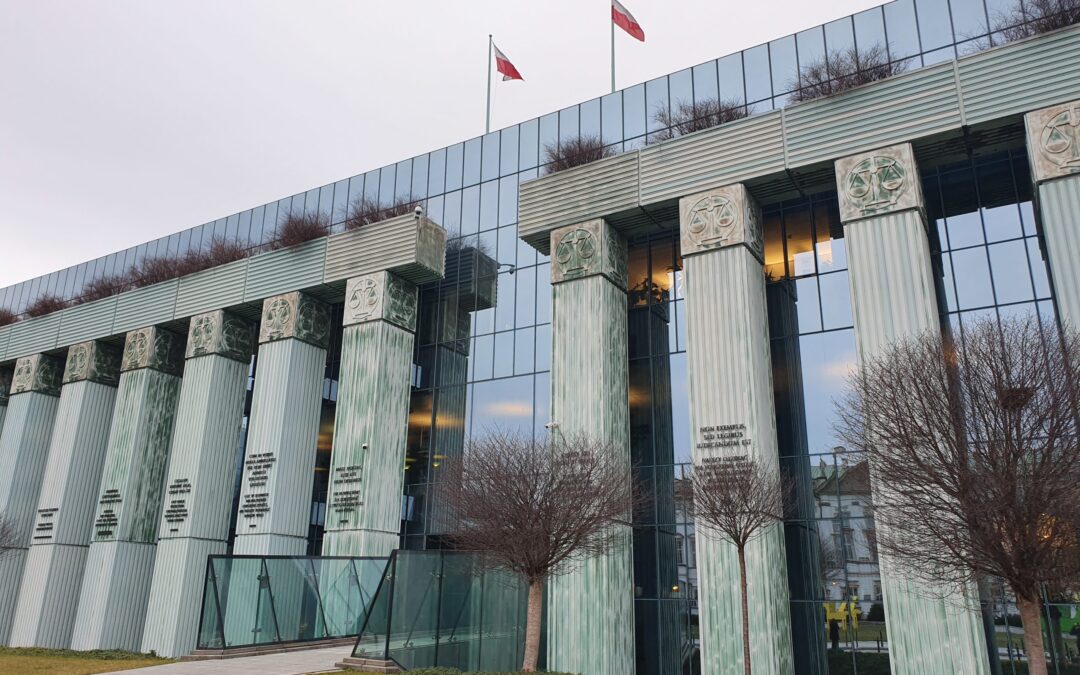
The ICJ and Amnesty International have submitted a joint third party intervention before the European Court of Human Rights in the case of Judges Mariusz Broda and Alina Bojara.
The case concerns the premature termination of their mandates as vice-presidents of the regional tribunal of Kielce in Poland. The two judges, that had been appointed to six-year terms in 2014, had their position revoked by the Minister of Justice in 2018.
The revocation was based on article 17.1 of the Law of 12 July 2017 modifying the Law on the Judicial System. This provision, presented and approved by the ruling Law and Justice Party (PiS), gave the Minister of Justice the power to revoke courts’ presidents and vice-presidents without justified grounds and with no possibility of appeal.
The two judges applied to the European Court of Human Rights alleging that they had been denied access to a tribunal to challenge the termination of their mandate .
In their third party intervention, the ICJ and Amnesty International analyze international standards on judicial independence, including as regards the role court presidents and vice-presidents, and the consequences of these standards for the right of access to court under Article 6.1 ECHR. The intervention also analyses the recent legislative and policy developments that have seriously undermined the independence of the Polish judiciary.
Read the full intervention here: Broda_v_Poland-AmicusCuriae-ICJ&AI-Cases-2020-ENG.
Jul 15, 2020 | Incidencia
Hoy, la CIJ hizo la siguiente declaración oral en el diálogo Interactivo sobre el Informe de la Alta Comisionada para los Derechos Humanos respecto de Venezuela.
Señora presidenta,
La Comisión Internacional de Juristas (CIJ) agradece el informe de la Alta Comisionada para los Derechos Humanos sobre la situación en Venezuela en seguimiento a la Resolución 42/25. Sin embargo, la Comisión lamenta que el reporte no haya sido publicado con suficiente anticipación a este Diálogo Interactivo, para permitir un análisis y una respuesta detallada.
El informe señala una amplia gama de violaciones a los derechos civiles, económicos, políticos, culturales y sociales.
La CIJ ha documentado durante años la ausencia de independencia judicial en Venezuela, así como la ausencia de rendición de cuentas en el ámbito nacional. En el Arco Minero del Orinoco, hemos observado numerosos casos de presuntas desapariciones forzadas, trata de personas, amenazas a defensores de derechos humanos, y serios abusos a los derechos de los pueblos indígenas.
La Comisión desea preguntarle a la Alta Comisionada, si puede explicar los obstáculos arraigados en el sistema judicial venezolano que evitan la efectiva rendición de cuentas por graves violaciones a los derechos humanos, y también si puede explicar los abusos cometidos contra los pueblos indígenas en el Arco Minero.
La CIJ espera con interés la discusión y la acción en torno al informe de la Misión Internacional Independiente de Determinación de los Hechos en el periodo de sesiones No. 45 del Consejo, y urge al Consejo a estar preparado para extender, y ampliar el alcance, del mandato de la Misión en ese momento.
Gracias.
Jul 13, 2020 | Advocacy, Non-legal submissions
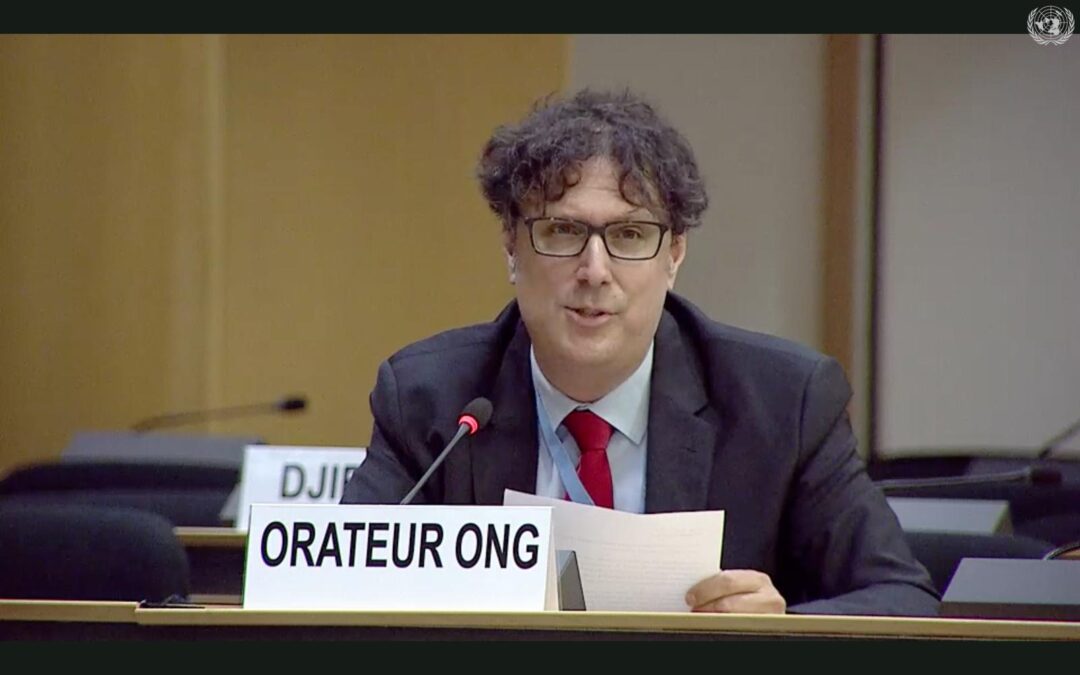
Speaking at the UN Human Rights Council the ICJ today emphasized the need for a human-rights-based approach to addressing corruption in justice systems, and urged more attention be given to the abuse of non-independent prosecution services by Executive governments.
The statement, delivered in an interactive dialogue with the Special Rapporteur on the independence of judges and lawyers, read as follows:
“Mr Special Rapporteur,
The International Commission of Jurists (ICJ) concurs with the affirmation in your report that justice systems must effectively counter corruption; that corruption in justice systems negatively impacts human rights; and that addressing such impacts is within the mandate of the Human Rights Council.[1]
At the same time, the UN Office on Drugs and Crime (UNODC) already actively provides resources and specialized technical expertise to States and prosecutors in implementing the Convention against Corruption. Keeping the Human Rights Council’s focus on the specific value added by a human-rights-based approach to such overlapping issues makes the best use of the Council and OHCHR’s limited resources and special competence and expertise.
For example, this report could have presented a detailed analysis of, and recommendations on, the right to remedy and reparation of victims of human rights violations caused by corruption of prosecutors, judges and lawyers. However, while the report briefly mentions victims (para 30), human rights defenders (para 31), and human rights training (para 58), and that human rights issues can impede international cooperation (para 49), but otherwise it mostly addresses technical advice for effective counter-corruption measures. The ICJ invites you to elaborate on the specific new elements a human-rights-based approach adds to the expert advice already provided by UNODC in this regard.
We also urge you to devote a future report to the manipulation of non-independent prosecution services by Executive governments to repress dissenting voices and human rights defenders, neutralize political opposition, shrink civil society space, and entrench impunity for human rights violations, which as our submission documented is no less urgent a global human rights issue than corruption, and is not a special focus of UN bodies other than the Council and OHCHR.
Thank you.”
[1] Indeed, twenty years ago the ICJ adopted a Policy Framework for Preventing and Eliminating Corruption and Ensuring the Impartiality of the Judicial System and its work against corruption in cooperation with judiciaries and prosecution services continues at the global and national levels.
Jul 8, 2020 | News
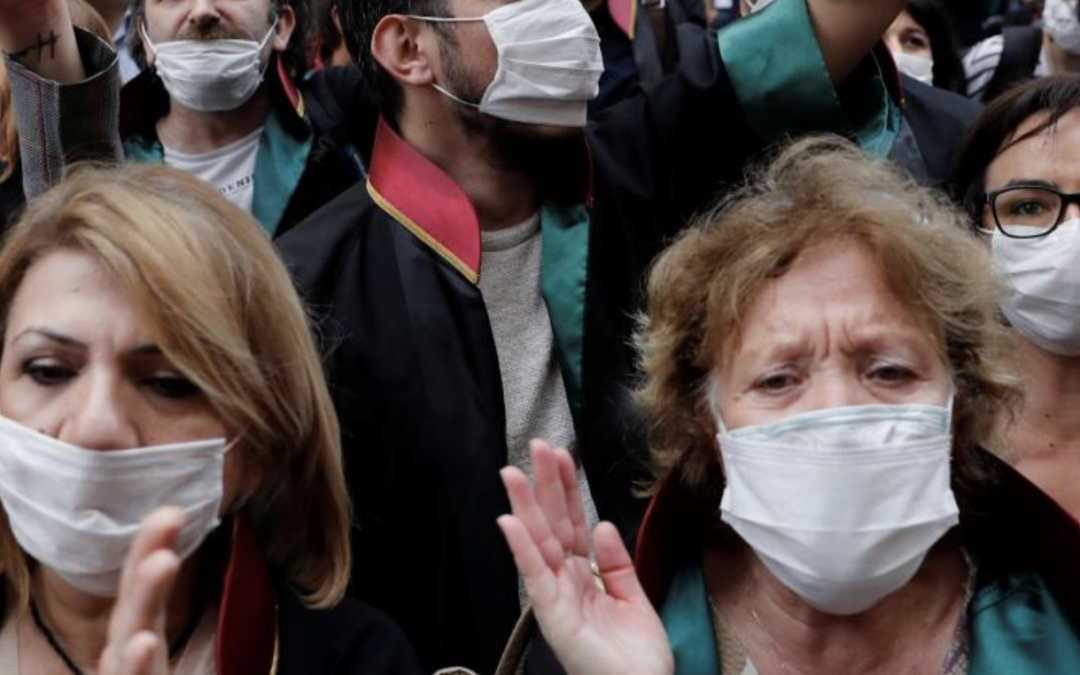
Draft law reduces leading bar associations’ authority, leads to creation of rival groups, the ICJ and Human Rights Watch said today. The Turkish government’s plan to allow for multiple bar associations appears calculated to divide the legal profession along political lines and diminish the biggest bar associations’ role as human rights watchdogs, they added.
The current bar associations have not been consulted, and 78 bars out of 80 signed a statement opposing the plan.
The ICJ and Human Rights Watch have published a question and answer document explaining the draft law, scheduled for a vote in parliament in the coming days. The document outlines the government-led effort to reduce the influence of leading bar associations, reflecting the executive’s growing dissatisfaction with the bar associations’ public reporting on Turkey’s crisis for human rights and the rule of law.
“Turkey’s prominent bar associations play a key role in defending fair trial rights and scrutinizing human rights at a time when flagrant violation of rights is the norm in Turkey,” said Hugh Williamson, Europe and Central Asia director at Human Rights Watch.
“The government move to create multiple bars and dramatically cut leading bars’ representation at the national level is a clear divide-and-rule tactic to diminish the bar associations’ authority and watchdog role,” he added.
The proposed amendments provide that in provinces with over 5,000 lawyers, a group of at least 2,000 lawyers can establish alternative bar associations.
In big cities such as Istanbul, Ankara, and Izmir, several bar associations could be established. The amendments would also greatly reduce the representation of the largest bar associations at the national level within the Union of Turkish Bars, the Ankara-based umbrella body with significant financial resources it controls and distributes to provincial bars.
The fact that the vast majority of elected legal profession representatives oppose the move and that the likely impact will be to greatly diminish the authority of leading provincial bars that have been critical of certain government initiatives demonstrates that the aim of the proposed change is to shield the government from justified criticism, the ICJ and Human Rights Watch said.
Drastically cutting the number of delegates from large bar associations representing thousands of lawyers to the national Union of Turkish Bar Associations would reduce the influence of the large bar associations in electing the national group’s president and participating meaningfully in other decision-making functions.
A provincial bar association with fewer than 100 lawyers, such as Ardahan in northeastern Turkey, for example, would be represented by 4 delegates, compared with 3 at present.
But a bar association such as Izmir in western Turkey, with over 9,500 lawyers, which sends 35 delegates, would be entitled to only 5. Istanbul, Ankara, and Izmir Bar, which represent 55 percent of the lawyers in Turkey, would be entitled to only 7 percent of all delegates within the national union.
The atmosphere of conflict in which the draft law has been introduced, its timing, and the lack of consultation with the bar associations themselves provides credible grounds for great concern and skepticism over the government’s motives, the groups said.
Over the past year, Turkey’s presidency and government have made public statements strongly criticizing leading bar associations in response to the bars’ legitimate expression of concerns about Turkey’s rule of law crisis and executive interference in the justice system.
The government has reacted strongly against the bars’ scrutiny of its failure to uphold human rights obligations through bar association publication of reports on torture, enforced disappearances, and other rights abuses ignored by the authorities.
For these reasons, the government’s proposed amendments are clearly designed to achieve a political purpose unrelated to an effort to advance or strengthen standards in the legal profession, the ICJ and Human Rights Watch said.
The government’s move is politically divisive and will contribute to undermining the appearance of independence and impartiality in the justice system.
“The government should immediately withdraw the current proposed amendment and embark on a process of full consultation with bar associations,” said Róisín Pillay, Director of ICJ’s Europe and Central Asia Programme.
“The government’s plan as it stands will only deepen mistrust in Turkey’s justice system as lacking independence by dividing the legal profession along political lines. This could have disastrous long-term consequences for upholding the role and function of lawyers and for fair trial rights.”
Contact:
Róisín Pillay, Director of ICJ’s Europe and Central Asia Programme, t: +32-2-734-84-46 ; e: roisin.pillay(a)icj.org
Massimo Frigo, Senior Legal Adviser, ICJ’s Europe and Central Asia Programme, t: +41-79-749-99-49 ; e: massimo.frigo(a)icj.org ; Twitter: @maxfrigo
Download
Turkey-Q and A on the bar associations-Advocacy-2020-ENG (Q & A, in PDF)
Turkey-Q and A on the bar associations-News-Press releases-2020-TUR (Story in Turkish, PDF)
Turkey-Q and A on the bar associations-Advocacy-2020-TUR (Q & A in Turkish, PDF)
Jun 26, 2020 | Cases, News
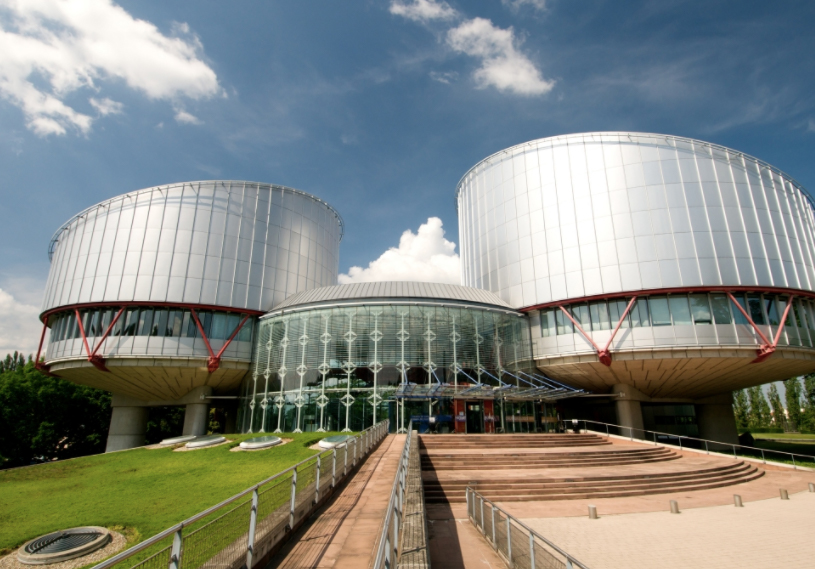
The ICJ today welcomed the judgment by the Court in the case of Bagirov v. Azerbaijan. It found that the suspension from legal practice and subsequent disbarment of Khalid Bagirov violated his rights to freedom of expression and to respect for private life under Articles 10 and 8 of the European Convention on Human Rights (ECHR).
Khalid Bagirov’s suspension from the practice of law was based on his public criticism of ill-treatment by the police, following the wide media coverage of the death of an individual in police custody. Later he represented the victim as a lawyer in the proceedings.
His subsequent disbarment arose from his remarks about a judge made in the courtroom when representing his client in another high-profile case.
The ICJ intervened in this case as a third party, providing an evaluation of the State’s obligation to protect the right to freedom of expression of lawyers in light of international standards on independence of the lawyers and the consequences of disciplinary proceedings for lawyers’ rights under Articles 8 and 10 ECHR.
The ICJ calls on the Azerbaijani authorities to fully and promptly implement the judgment, including by taking steps to restore Khalid Bagirov as a member of the Azerbaijan Bar Association.
“Khalid Bagirov must now be reinstated as a lawyer and be allowed to resume his legal practice in Azerbaijan,” said Massimo Frigo, ICJ Senior Legal Adviser.
“But in addition, this judgment shows that measures need to be taken to address the systemic problem of unjustified disbarments of lawyers who seek to defend human rights in Azerbaijan. Reforms are needed to ensure that the disciplinary process is independent and fair and that penalties are proportionate.”
In its judgment of 25 June 2020, the Court held under Article 10 of the Convention that the reasons given by the domestic courts in support of Khalid Bagirov’s disbarment were not relevant and sufficient, and that the sanction imposed on him was disproportionate to the legitimate aim pursued, having highlighted that “the disbarment cannot but be regarded as a harsh sanction, capable of having a chilling effect on the performance by lawyers of their duties as defence counsel”.
In relation to Article 8 ECHR, the Court further noted that “…in a series of cases it has noted a pattern of arbitrary arrest, detention or other measures taken in respect of government critics, civil society activists and human rights defenders … Against this background, the Court underlines that, notwithstanding the duties, in particular, with respect to their conduct, with which all lawyers must comply, the alleged need in a democratic society for a sanction of disbarment of a lawyer in circumstances such as this would need to be supported by particularly weighty reasons” which had not been established in this case.
In respect of the suspension of the lawyer, the Government contended that the interference with Mr Bagirov’s rights to private life and freedom of expression had been prescribed by law and pursued the legitimate aims of preventing the disclosure of information received in confidence or maintaining the authority and impartiality of the judiciary.
The Court found that, he was not the victim’s lawyer when he made the impugned statements about the police, furthermore, the Court mentioned that it did not find any provision of domestic law preventing a lawyer from calling for peaceful protests against police brutality for the purpose of preventing violence.
The Court further found that while Mr Bagirov’s remarks, about a judge’s lack of capacity, were capable of being offensive, the sanction imposed on him did not struck a fair balance between the need to protect the authority of the judiciary and the need to protect his rights to private life and freedom of expression.
In this connection, the Court stated that inter alia, Mr Bagirov had confined himself to making a statement in a courtroom as a lawyer, in the context of his objections to the shortcomings of the proceedings.
Background
In addition to its intervention in Bhagirov v Azerbaijan, the ICJ has also intervened as a third party in other cases of lawyers from Azerbaijan (Hajibeyli and Aliyev v. Azerbaijan, nos. 6477/08 and 10414/08, § 54, 19 April 2018).
In 2019, the ICJ published recommendations to the Azerbaijan Bar Association on the role and independence of Lawyers,
In 2016, the ICJ published a mission report Defenceless Defenders: Systemic Problems in the Legal Profession of Azerbaijan