Mar 6, 2019 | Comunicados de prensa, Noticias
La CIJ expresa profunda preocupación por el nombramiento del nuevo Director de Seguridad Institucional de Jueces y Juezas, nombrado por la Corte Suprema de Justicia y los efectos negativos que ello conlleva en las y los jueces independientes e imparciales.
Ante la denuncia que hiciera la Asociación Guatemalteca de Jueces por la Integridad (AGJI) y el Sindicato de Trabajadores del Organismo Judicial (STOJ), la CIJ se permite llamar la atención de la Corte Suprema de Justicia (CSJ), para que asuma con seriedad dicha denuncia.
La CIJ considera que existen razones fundadas para dicha denuncia y que el nombramiento del señor Roberto Mota Bonilla, lejos de brindar más confianza a las y los jueces sobre su protección, causa mayor frustración y dudas.
El señor Roberto Mota Bonilla perteneció a la Secretaría de Inteligencia y la Secretaría de Asuntos Administrativos y de Seguridad de la Presidencia (SAAS) y por lo tanto, existen indicios que comprometen su independencia, por tener cercanía con el Poder Ejecutivo, uno de los tres Poderes del Estado que, es evidente, viene interfiriendo en la Independencia Judicial desde antes del año 2017 y con más fuerza a partir de agosto de dicho año.
Desde su nombramiento, las y los jueces independientes e imparciales, han venido sufriendo una serie de actos que pueden calificarse como presiones, intimidaciones, limitaciones a su función, vigilancia y control injustificados, que pueden llegar a afectar seriamente la independencia judicial y el debido proceso en los casos que dichos jueces conocen.
Las Naciones Unidas, al aprobar los Principios Básicos Relativos a la Independencia de la Judicatura, declaró en el principio 2: “Los jueces resolverán los asuntos que conozcan con imparcialidad, basándose en los hechos y en consonancia con el derecho, sin restricción alguna y sin influencias, alicientes, presiones, amenazas o intromisiones indebidas, sean directas o indirectas, de cualesquiera sectores o por cualquier motivo”.
Además, según dichos Principios, la ley debe garantizar no sólo la permanencia en el cargo de los jueces por los períodos establecidos, sino que también su independencia y seguridad, así como una remuneración, pensiones y condiciones de servicio y jubilación adecuadas. (Principio número 11. Sobre las Condiciones de servicio e inamovilidad).
De manera más específica, el Proyecto de Principios sobre la Independencia del Poder Judicial, dispone en el artículo 27 que: “Las autoridades ejecutivas tendrán el deber de garantizar la seguridad y la protección física de los miembros del poder judicial y de sus familias, en especial en caso de que sean objeto de amenazas”[1].
Este principio es desarrollado también en el artículo 2.23 de la Declaración Universal sobre la Independencia de la Justicia (Declaración de Montreal, aprobada en la Conferencia Mundial sobre Independencia de la Justicia), al establecer que “el Poder Ejecutivo deberá garantizar la seguridad y la integridad física de los jueces y de sus familiares”.
Los Principios de Siracusa son aún más explícitos. Bajo el apartado de “protección física”, el artículo 27 establece que las autoridades ejecutivas “tendrán el deber de garantizar la seguridad y la protección física de los miembros del poder judicial y de sus familias, en especial en caso de que sean objeto de amenazas”.
O sea que dichos principios, consideran obligación del Poder Ejecutivo garantizar la seguridad y contar con la proteccion física de las autoridades competentes, tanto si se trata de amenazas personales y directas, como en una situación general relacionada con el orden público o la seguridad interna de una Nación. En todo caso, las y los jueces deberán poder desempeñar sus funciones con la calma y la seguridad que requiere su función.
En tal sentido, la CIJ hace un enérgico llamado a las y los magistrados de la Corte Suprema de Justicia, para que tomen con seriedad las denuncias presentadas por miembros de la AGJI y que destituya cuanto antes al Señor Mota Bonilla, por no garantizar independencia de criterio, ni objetividad en la protección de jueces y juezas. Al contrario, dicho nombramiento puede repercutir muy negativamente en la seguridad de jueces y juezas.
La CIJ expresa que en diferentes oportunidades ha señalado que la proteccion de jueces y juezas es esencial en un Estado de Derecho, para que puedan cumplir con su función en forma independiente e imparcial y buscando la mayor protección de los derechos humanos de las y los ciudadanos.
En el presente caso, todo parece indicar que mediante dicho nombramiento, se busca socavar la independencia judicial y afectar la función que llevan a cabo jueces y juezas independientes e imparciales.
Ramón Cadena, Director de la Comisión Internacional de Juristas para Centroamérica expresó: “En un Estado como el de Guatemala, cooptado por el crimen organizado, éste debe ser un tema que el Poder Judicial debería analizar más a fondo y con mucho detenimiento, para brindar las soluciones más adecuadas a las y los jueces. Todo indica que el nombramiento del señor Roberto Mota Bonilla es un paso más hacia la militarización del Estado de Guatemala. Los magistrados de la Corte Suprema de Justicia, deberían destituir al señor Roberto Mota Bonilla y abrir un espacio de diálogo con las y los jueces afectados y con la sociedad civil, para tratar este tema tan importante para la seguridad de las y los jueces, para la Independencia Judicial y para el fortalecimiento del Estado de Derecho.”
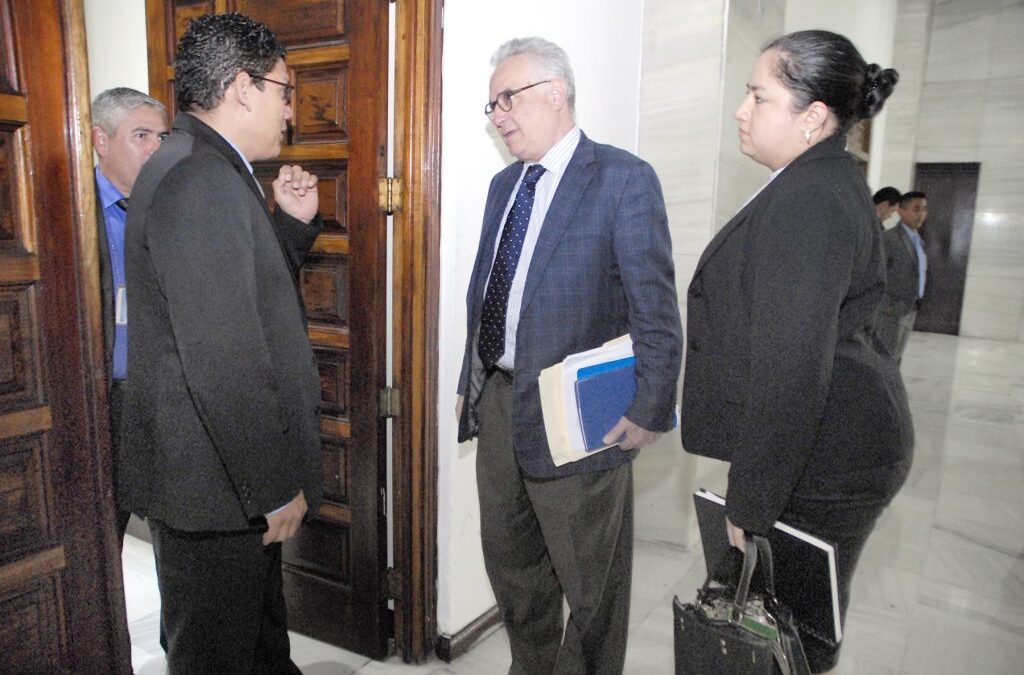
Foto: Ramón Cadena, director de la CIJ, se reunió ayer con los magistrados de la Cámara Penal.
[1] Comité de Expertos de la Asociación Internacional de Derecho Penal, la Comisión Internacional de Juristas y el Centro para la Independencia de Jueces y Abogados. Proyecto de Principios sobre la Independencia del Poder Judicial, mayo 1981.
Mar 4, 2019 | News
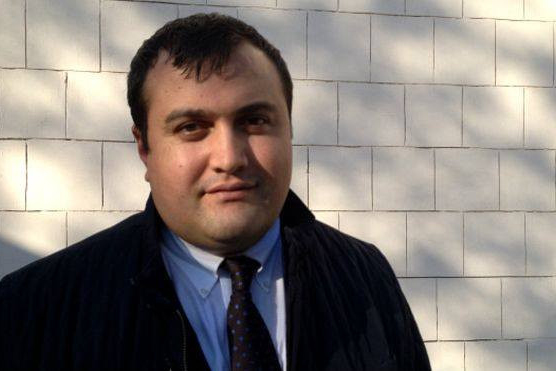
Today, the ICJ expressed concern at the disciplinary proceedings against lawyer Elchin Sadigov who was sanctioned with a reprimand on 25 February 2019 by the Presidium of the Bar Association of Azerbaijan.
The ICJ called on the Bar Association to reverse this sanction and take measures to end interference with the independent exercise of the representation of victims of human rights violations.
The decision to hold the lawyer accountable for actions taken in accordance with professional ethics and responsibilities jeopardizes the independence of lawyers and their capacity to protect human rights, and is likely to have a chilling effect on the independent exercise of lawyers’ duties in Azerbaijan, the ICJ said.
Elchin Sadigov represented Yunis Safarov, who was charged with the attempted murder of Elmar Valiyev, former mayor of Ganja City in Azerbaijan. According to Sadigov, he informed his client in a confidential conversation in detention, of the right to complain about torture or ill treatment.
Shortly afterwards, he was told that he had violated the law by persuading his client to complain about the ill-treatment which, the Prosecutor General’s Office officials “decided” in an official document, never took place.
On 5 September 2018, the Prosecutor General’s Office removed Elchin Sadigov as Safarov’s representative and complained to the Bar Association, seeking disciplinary action against the lawyer, among others, on the basis of “[…] creating false grounds to file a complaint to the European Court of Human Rights […], clearly knowing that it is not true, proposed his client to complain about torture inflicted by the police and investigative authorities, despite the fact that the accused told him that he had not been tortured, Sadigov continued psychological influence on his client again – as if he had been tortured – to refuse giving testimony, to refuse services of the State appointed lawyer […]”.
The complaint referred to the confidential conversation between the lawyer and his client, which was apparently overheard and possibly recorded by law enforcement officials. It also refers to a letter which appeared during the disciplinary proceedings, in which Sadigov’s client complained that his lawyer had tried to convince him to complain about use of torture in custody.
According to Elchin Sadigov, however, this letter may have been signed by his former client under pressure from the detention authorities.
The ICJ recalls that according to the UN Basic Principles on the Role of Lawyers, it is indispensable that lawyers “always loyally respect the interests of their clients.”
The Principles specify that they assist their clients “in every appropriate way, and taking legal action to protect their interests”. In the present case, as submitted by Elchin Sadigov and evident from the publicly available materials including photos and videos of Safarov with clear and multiple signs of severe beatings, the lawyer had every reason to believe that his client had been subjected to torture and ill treatment in custody.
Therefore, he had not only the right, but an affirmative professional duty to advise his client to use available remedies for this violation of human rights through procedural means such as a complaint. A failure to do this would be a breach of professional ethics and duties on the part of the lawyer as a trusted representative of his client. The ICJ is concerned that in this case a lawyer was held accountable for attempting to discuss with his client, in a confidential manner, issues related to the human rights of his client.
The ICJ is furthermore concerned that the principle of lawyer-client confidentiality has been violated in this case.
This principle is a fundamental component of the right to a fair trial, as protected under the International Covenant on Civil and Political Rights and the European Convention of Human Rights, to both of which Azerbaijan is a party.
According to the UN Basic Principles on the role of lawyers “[a]ll arrested, detained or imprisoned persons shall be provided with adequate opportunities, time and facilities to be visited by and to communicate and consult with a lawyer, without delay, interception or censorship and in full confidentiality…”
The ICJ is also concerned that lawyer Sadigov’s conversations may have been monitored in violation of the guarantees of professional secrecy with his client and contrary to international law and national procedure.
The ICJ considers it essential that the Bar Association send a strong signal in support of independent lawyers by lifting the sanction against lawyer Sadigov and consider legislative and practical improvements to ensure that confidentially of lawyers and their clients in detention is effectively guaranteed in practice.
Azerbaijan-Statement Sadigov-News-web stories (full story with additional information, in PDF)

Feb 15, 2019
The ICJ has published an overview of international standards on judges’ and prosecutors’ freedoms of expression, association and assembly, in a submission to the UN Special Rapporteur on the Independence of Judges and Lawyers.The document responds to the Special Rapporteur’s call for input for an upcoming report to the UN Human Rights Council in Geneva.
The submission outlines the relevant international standards and key regional jurisprudence and standards, as well as illustrative national cases and practice and several academic sources.
The ICJ concludes, among other things, that:
- Judges and prosecutors are like other citizens entitled to freedom of expression, belief, association and assembly, subject only to necessary and proportionate restrictions for valid purposes.
- In principle any such restrictions that are specifically related to their judicial functions, should be established by the judiciary itself or another independent body with majority membership of judges.
- Any proceedings against a judge or prosecutor related to their exercise of these freedoms should comply fully with international human rights law and standards in terms of the grounds and procedures, including as set out in standards on independence of the judiciary and prosecutors.
- Judges and prosecutors should be required to recuse themselves from any case where they have previously exercised these freedoms in a way that would give rise to a reasonable apprehension of bias in their subsequent conduct of the case.
- At the same time, the above considerations do not mean that a judge or prosecutor can never engage in expression, association or assemblies that touch on issues or parties that could speculatively come before the courts at some future point. Total isolation from the community and society is neither realistic nor desirable.
- In general, involvement in or comment on matters of party politics carry particularly high risks of giving rise to perceptions of lack of independence and there is relatively wide scope to enact restrictions on this ground.
- It is particularly important that judges (and prosecutors) can exercise their freedoms of expression, association and assembly in order to address: threats to the independence of the judiciary; threats to judicial integrity; fundamental aspects of the administration of justice; or to otherwise promote and protect universally recognized human rights and fundamental freedoms and the rule of law. As such, there is very limited scope for any authority to restrict exercise of these freedoms for these purposes.
- The relevant standards and principles apply to online forms of expression and association (including social media) in an equal or analogous manner to their application to offline forms. However, judges and prosecutors should be aware of and take into account practical aspects of online forms of expression and association.
The full submission can be downloaded in PDF format here: Universal-SRIJL Judges-Advocacy-non legal submission-2019-ENG
Feb 13, 2019
Today, the ICJ and the Human Rights Joint Platform (IHOP) published a briefing paper on the system of Turkish Criminal Peace Judgeships and its compliance with international law.
Since their creation in 2014, the Turkish criminal peace judgeships have been the focus of much criticism with regard to violations of human rights, as they are at the forefront of the authorisation or judicial review of decisions restricting the right to liberty and other human rights.
This briefing paper assesses the institution of the criminal peace judgeships in Turkey, established in 2014, and its compliance with the obligations undertaken by Turkey under international human rights law.
The ICJ-IHOP briefing paper concludes that the system of the criminal peace judges in Turkey does not meet international standards for independent and impartial review of detention, and suggests a set of detailed constitutional and legislative reforms to put the system back in line with Turkey’s human rights obligations.
The publication in English here.
The publication in Turkish here.

Feb 12, 2019 | Comunicados de prensa, Noticias
Según comienza el juicio a los doce líderes separatistas catalanes ante el Tribunal Supremo de España hoy en Madrid, la CIJ advierte que el juicio en base a la amplia definición de delitos como la rebelión y, posiblemente, la sedición restringen excesivamente los derechos a la libertad expresión, asamblea y asociación.
Los doce líderes políticos – incluyendo altos cargos del Gobierno catalán – han sido acusados en conexión a su participación en un referéndum sobre la independencia de Cataluña que tuvo lugar el 1 de octubre de 2017. Este referéndum se llevó a cabo a pesar de haber sido declarado ilegal por el Tribunal Constitucional.
El proceso de votación durante el referéndum fue parcialmente reprimido por la policía, según informes fidedignos de uso innecesario y desproporcionado de la fuerza suponiendo una violación de las obligaciones de derecho internacional de España.
A la CIJ le preocupa que la Fiscalía, y el Tribunal Supremo, admitiendo la imputación en el caso, han atribuido un significado excesivamente amplio al delito de rebelión bajo el artículo 472 del Código Penal. Según este artículo, el delito requiere de una insurrección violenta para derogar, suspender o modificar el orden constitucional.
Sin embargo, no se acusa a los organizadores del referéndum de utilizar o fomentar la violencia. Se les está juzgando en base a que deberían haber previsto el riesgo de intervención y uso de la fuerza por parte de la policía.
Por lo tanto, se presume que los acusados son penalmente responsables de la violencia que resultó de su decisión de seguir adelante con el referéndum, a pesar de haber sido declarado ilegal.
“La muy amplia definición del delito de rebelión que se está aplicando en este caso amenaza con interferir de forma innecesaria y desproporcionada con los derechos a la libertad expresión, asamblea y asociación,” dijo Róisín Pillay, Directora de la CIJ para Europa y Asia Central.
“La interferencia con la protesta y expresión política pacífica debe estar justificada como estrictamente necesaria y proporcionada según el derecho internacional de los derechos humanos. Cuando manifestaciones pacíficas o acciones políticas, aunque hayan sido declaradas como ilegales por las autoridades, provocan una respuesta excesiva de la policía, lo únicos responsables por el uso de la violencia son la policía y otras autoridades estatales”.
“Es crucial que el Tribunal Supremo, en su consideración de estos cargos, tome plenamente en cuenta las obligaciones de España bajo el derecho internacional de los derechos humanos,” añadió.
A pesar de que el Tribunal Supremo ha sostenido que el uso de la fuerza de las autoridades policiales durante la represión del referéndum del 1 de octubre de 2017 fue “legítima y, por tanto proporcionada”, observadores internacionales han concluido que dicho uso de la fuerza fue excesiva y desproporcionada.
De acuerdo con el derecho internacional de los derechos humanos, el mero hecho de que el uso de la fuerza sea considerado legal bajo la legislación nacional, no significa que por sí mismo pueda ser considerado como necesario o proporcionado.
El Tribunal Supremo ha aceptado también que, si los supuestos presentados por la Fiscalía son probados, podría incluirse el delito de sedición, el cual es cometido por aquellos que se alcen pública y tumultuariamente por la fuerza o fuera de las vías legales, para impedir la aplicación de las leyes y resoluciones gubernativas y judiciales.
“Delitos como sedición o rebelión definidos de una manera ambigua y amplia pueden suponer una violación del principio de legalidad, así como una interferencia arbitraria y desproporcionada con los derechos humanos,” dijo Róisín Pillay.
“En un caso altamente sensible y politizado, tal y como es el referéndum catalán, podría sentar un peligroso precedente de persecución a movimientos pacíficos de independencia y disidencia política, no sólo en España sino a nivel internacional,” añadió.
Varios de los acusados han sido retenidos en prisión preventiva durante largos periodos de tiempo, agravando aún más la interferencia con los derechos a la libertad de expresión, asociación y asamblea, y poniendo en duda la proporcionalidad de la respuesta.
Antecedentes
Las doce personas que están siendo juzgadas en conexión con el referéndum de Octubre de 2017: Oriol Junqueras, ex-vicepresidente de la Generalitat catalana; Carme Forcadell, ex-presidenta del Parlament catalán; ocho ex-consejeros del Gobierno catalán – Jordi Turull, Raül Romeva, Joaquim Forn, Santi Vila, Meritxel Borràs, Dolors Bassa, Josep Rull, Carles Mundó -; Jordi Sànchez, ex-líder de la Asamblea Nacional Catalana (ANC), y Jordi Cuixart, ex-líder de la organización independentista Òmnium Cultural.
El juicio, que comienza el 12 de febrero en el Tribunal Supremo de Madrid, se espera que dure varios meses.
España tiene obligación de proteger la libertad de expresión, incluyendo la expresión política, bajo el artículo 10 de la Convención Europea de Derechos Humanos (ECHR, por sus siglas en inglés) y el artículo 19 del Pacto Internacional de Derechos Civiles y Políticos (ICCPR, por sus siglas en inglés), y la libertad de asamblea y asociación pacíficas bajo el artículo 11 de ECHR y los artículos 21 y 22 de ICCPR. El Comentario General sobre libertad de expresión del Comité de Derechos Humanos afirma que Los Estados partes deben procurar con el mayor cuidado que las leyes sobre traición y las disposiciones similares que se refieren a la seguridad nacional, tanto si se califican de leyes sobre secretos de Estado o sobre sedición, o de otra manera, estén redactadas y se apliquen de conformidad con las condiciones estrictas del párrafo 3 del artículo 19 del ICCPR, lo cual requiere que las restricciones en la libertad de expresión estén legisladas y que sean necesarias en base a propósito legítimo, como la seguridad nacional o el orden público. El derecho a participar en la vida pública está protegido bajo el artículo 25 de ICCPR.

![Smoke rises after an Israeli air strike on the village of Taybeh in southern Lebanon [Source: Al Jazeera]](https://www.icj.org/wp-content/uploads/2026/03/Screenshot-2026-03-20-at-15.56.24-300x200.png)