Sep 2, 2018 | News
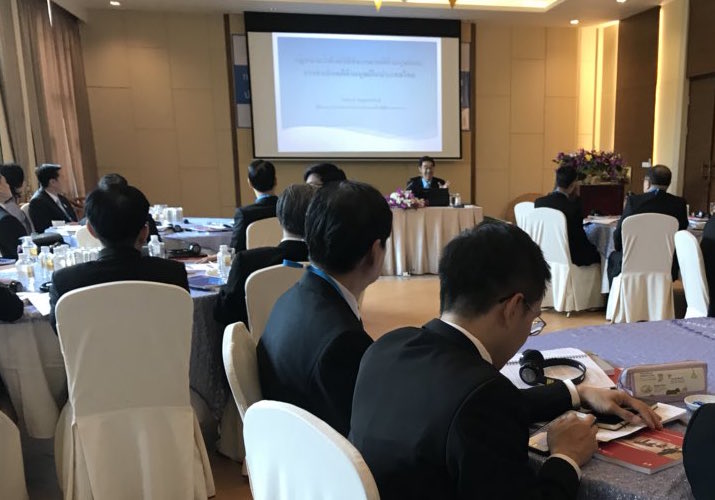
On 1 and 2 September, the ICJ held a “Workshop on the Independence of the Judiciary in the Context of the Inquisitorial Judicial System in Thailand” for members of the Thai judiciary in the north of the country.
Some 31 judges from 21 courts and the Administrative Office of the Court of Justice, Region V, attended the workshop, which was held in Chiang Mai.
The objective of the workshop was to discuss the role of judges and exercise of judicial power within the inquisitorial system, particularly in the context of adjudicating cases of human trafficking.
In an effort to combat human trafficking in Thailand, the Procedures for Human Trafficking Cases Act B.E. 2559 (2016) established inquisitorial system procedures for adjudication of cases of human trafficking.
With an increasing number of cases of human trafficking in Northern Thailand, judges in Northern Thailand are increasingly required to utilize inquisitorial processes in human trafficking cases.
Courts in Thailand generally adjudicate cases based on the adversarial judicial system.
In this context, the ICJ held the workshop in collaboration with the Administrative Office of the Court of Justice, Region V, in the North of Thailand, to share information and expand collaboration between Thai and international judges about inquisitorial processes.
Justice Aree Thecharuwichit, Chief Justice of the Office of the Chief Justice, Region V, Frederick Rawski, Regional Director of ICJ Asia and the Pacific, and Justice Radmila Dragicevic-Dicic, Vice-President of the ICJ, ICJ Commissioner, Acting President of the Belgrade Court of Appeals and Judge of the Supreme Court of Serbia delivered opening statements at the Workshop.
Justice Sittipong Tanyaponprach, Chief Judge of the Office of the Chief Justice, Region I, spoke about existing procedures in Thailand’s justice system to deal with human trafficking cases under the Procedures for Human Trafficking Cases Act 2016.
Justice Marcel Lemonde, Honorary President of Chamber in France’s Court of Appeal and an International Consultant in Judicial Matters, delivered an introduction to the inquisitorial system based on the French judicial system and spoke about existing challenges in inquisitorial processes.
Justice Radmila Dragicevic-Dicic, of the Supreme Court of Serbia and ICJ Vice-President spoke about judicial practice in cases involving human trafficking and shared her experience in adjudicating human trafficking cases in Serbia.
ICJ’s Senior Legal Adviser Kingsley Abbott moderated the workshop and provided an introduction to the ICJ’s resource materials on the independence of the judiciary and judicial accountability, including the ICJ’s Practitioners’ Guide No. 13 on Judicial Accountability.
The ICJ ended the Workshop with a statement reiterating its commitment towards working with Thailand’s judiciary to strengthen the rule of law and administration of justice in Thailand.
This Workshop is the second workshop held by the ICJ for Thailand’s judiciary in the North of Thailand.
Aug 23, 2018 | News
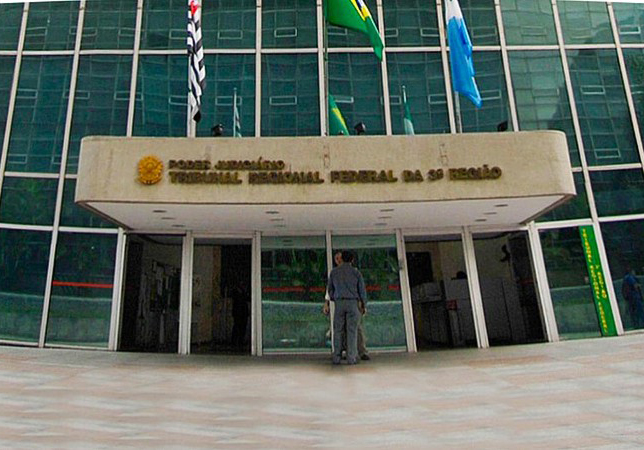
The Regional Federal Tribunal (TRF-3), in a watershed judgment, ruled that prescription or statute of limitations was not applicable to claims of reparation by a victim of torture during the military regime in the 1970s. The Court accepted the arguments of ICJ Commissioner Belisário dos Santos Jr.
The hearing in the lawsuit against the Union and the State of São Paulo took place on Wednesday 22, after the case had been dismissed by the court first instance.
Belisário dos Santos Jr., Executive Committee Member of the ICJ, argued the case for the victim at the invitation of the Juridical Department of CA XI.
He noted: “On the one hand there could be no statute of limitation on torture claims, while on the other hand the the application of the statute of limitations which adopted by Decree 20.910 / 32 had to be considered.”
The lawsuit, which began in 2012, alleges political persecution and torture that took place beginning 1971 .
Belisário dos Santos Jr. argued that the rationale for the law and jurisprudence affirming the inapplicability of statute of limitation lies in the seriousness of the violation of torture, which had been committed on a widespread and systematic basis by order or with the knowledge of high-level State authorities in Brazil at the time.
“The obligation to provide reparation under the UN Convention against Torture could not be superseded by provisions of the domestic law of a State. In addition, the obligation to provide a remedy and reparation is a legal duty of the State which must not depend on the conduct or activity of the victims. For these reasons, the case could not have the same treatment of other lawsuits against the Public Treasury,” he said.
Belisário dos Santos Jr. also pointed out that, pursuant to article 14 of the UN Convention against Torture, which was ratified by Brazil in 1991, “the reparation must be fair and adequate, as recognized by the jurisprudence of the Supreme Court of Justice and TRF 3, itself in accordance with international human rights law and jurisprudence. ”
The TRF-3 decided by 3-2 majority that the statute of limitation was inapplicable and, unanimously, granted the appeal on merit, allowing the lawsuit to proceed.

Aug 21, 2018 | Articles, Nouvelles
La CIJ et sa section polonaise ont exprimé aujourd’hui leur soutien aux actions de la Cour suprême pour défendre l’état de droit et l’indépendance du pouvoir judiciaire en Pologne, notamment en recourant à la Cour de justice des Communautés européennes (CJCE).
Ces faits interviennent dans la foulée d’attaques répétées de la part de personnalités politiques et des autorités.
La préservation et la sauvegarde de l’indépendance des tribunaux sont essentielles pour la protection des droits de l’Homme en Pologne, ont déclaré les deux organisations.
La CIJ et sa section polonaise ont exhorté les autorités exécutives et législatives du pays à cesser toute ingérence dans la conduite de ses fonctions légitimes par la Cour suprême.
La loi sur la Cour suprême qui a abouti à la «retraite» forcée d’un tiers de la Cour suprême, y compris de la présidente de la Cour, Małgorzata Gersdorf, doit être abrogée et les juges réintégrés, ont souligné la CIJ et sa section polonaise.
Le 2 août, la Cour suprême de Pologne a pris l’initiative, bienvenue, de présenter une demande de décision préliminaire à la Cour de justice de l’Union européenne (CJUE), conformément au droit de l’UE, afin de requérir son interprétation sur la conformité de la législation récente sur l’âge de la retraite des juges avec le droit de l’UE.
Plus précisément, la Cour suprême a demandé si la législation respectait le principe de l’inamovibilité des juges et de l’interdiction de la discrimination fondée sur l’âge en vertu de la directive 2000/78.
La Cour suprême a suspendu l’application de la loi tant que durera la procédure devant la CJUE.
La CIJ et sa section polonaise condamnent les attaques contre la Cour suprême de la part des autorités politiques, et notamment le président Andrzej Duda, qui ont prétendu que la suspension de l’application de la loi n’a aucun fondement juridique.
Au contraire, la Cour suprême de Pologne a agi dans le respect de ses obligations, en vertu de l’article 267 du Traité sur le fonctionnement de l’Union européenne (TFEU), pour questionner l’interprétation des traités et, conformément à la jurisprudence de la CJUE, et pour suspendre l’application de mesures qui pourraient constituer une violation du droit de l’Union européenne, dans l’attente du règlement de la question.
La législation soulève de sérieux problèmes en droit européen, tant en ce qui concerne la protection de l’état de droit en vertu de l’article 2 du TFEU que de la discrimination fondée sur l’âge.
Cette attaque contre les actions de la Cour suprême intervient alors que les autorités exécutives et législatives polonaises sapent systématiquement l’indépendance de la justice en Pologne, ce que la CIJ, sa section en Pologne et les juges du réseau mondial de la CIJ ont condamné à plusieurs reprises.
Les deux organisations soulignent que l’inamovibilité des juges est l’un des principaux piliers de l’indépendance judiciaire et donc de l’état de droit. Une lettre de la CIJ datée du 11 juillet 2018 (disponible uniquement en anglais), signée par 22 hauts magistrats de toutes les régions du monde, a exhorté le gouvernement polonais à agir immédiatement pour réintégrer les juges mis en retraite forcée.

Aug 21, 2018 | News
The ICJ and its Polish Section (ICJ Poland) today expressed their support for the actions of the Supreme Court to defend the rule of law and the independence of the judiciary in Poland, including by recourse to the European Court of Justice (CJEU).
This happened in the face of repeated attack by political figures and authorities.
Preserving and safeguarding the independence of the courts is essential for the protection of human rights in Poland, the organizations said.
The ICJ and ICJ Poland urged the Polish executive and legislative authorities to cease all interference with the conduct of the Supreme Court in the carrying out of its legitimate functions.
The law on the Supreme Court that has led to the forced “retirement” of one third of the Supreme Court, including the President of the Court, Małgorzata Gersdorf, must be repealed and the judges reinstated in office, the ICJ and ICJ Poland stressed.
On 2 August, the Supreme Court of Poland took the welcome step, in accordance with European Union law, of submitting a preliminary ruling request to the Court of Justice of the European Union (CJEU) seeking its interpretation on the compliance of the recent legislation on retirement ages of judges with EU law.
Specifically, the Supreme Court enquired as to the legislation’s compliance with the principle of irremovability of judges and the prohibition of discrimination on grounds of age under Directive 2000/78. The Supreme Court has suspended the implementation of the law during the proceedings before the CJEU.
The ICJ and ICJ Poland condemn the attacks against the Supreme Court by political authorities, including President Andrzej Duda, who claimed that the suspension of the law’s implementation has no legal basis.
On the contrary, the Supreme Court of Poland acted in compliance with its duties under article 267 of Treaty of the Functioning of the European Union to raise a question concerning the interpretation of the Treaties and, in conformity with the case-law of the CJEU, to suspend the application of such measures which may violate the law of the European Union, pending resolution of the question.
The legislation raises serious issues of EU law, both in regard to protection of the rule of law under Article 2 of the TFEU, and in regard to discrimination on grounds of age.
This attack against the actions of the Supreme Court occurs amid a systematic undermining of the independence of the judiciary in Poland by the Polish executive and legislative authorities, which the ICJ, ICJ Poland, and judges of the global ICJ network have repeatedly condemned.
The organizations emphasize that irremovability of judges is one of the main pillars of judicial independence and therefore of the rule of law. An ICJ letter of 11 July 2018, signed by 22 senior judges from all regions of the world, urged the Polish government to act immediately to reinstate the forcibly retired judges in office.
Aug 2, 2018 | Articles, Nouvelles
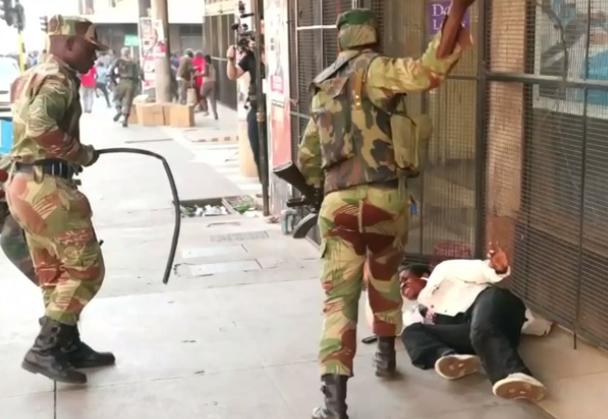
La CIJ condamne avec la plus grande fermeté les violences qui ont éclaté au Zimbabwe après les élections et appelle au rétablissement de l’état de droit et au respect des droits de l’Homme.
Au moins trois personnes seraient mortes à Harare le 1er août suite à l’utilisation de balles réelles par les Forces de défense du Zimbabwe (ZDF) «pour disperser» des manifestants non armés dans le quartier central des affaires de Harare.
Des membres de la ZDF auraient tiré à balles réelles sur la foule en fuite et auraient agressé des personnes sans distinction, causant des blessures et des pertes en vies humaines.
Bien que la CIJ ne pardonne pas les actes de violence commis par les manifestants et les partisans du parti au pouvoir, elle condamne fermement l’utilisation intentionnelle d’armes mortelles et d’autres actes de la ZDF qui étaient disproportionnés et inutiles dans les circonstances.
Selon la CIJ, les troubles auraient pu être maîtrisés d’une manière compatible avec les obligations internationales du Zimbabwe en matière de droits de l’Homme, ce qui aurait pu éviter des pertes en vies humaines et des blessures aux manifestants et aux passants.
«Le recours à la force létale contre des manifestants non armés ne doit jamais être toléré», a déclaré Sam Zarifi, secrétaire général de la CIJ.
“L’utilisation mortelle et intentionnelle d’armes à feu ne peut être effectuée que lorsqu’elle est absolument inévitable pour protéger la vie”, a-t-il ajouté.
La CIJ rappelle aux autorités zimbabwéennes leur engagement vis-à-vis de l’état de droit, du constitutionnalisme et de la protection des droits de l’Homme prévus par la Constitution et le droit international relatif aux droits de l’Homme.
La CIJ les appelle à respecter l’état de droit et à protéger les droits de l’Homme pendant cette période postélectorale.
La CIJ exhorte les autorités responsables à demander des comptes aux membres de la ZDF responsables des pertes en vies humaines et des mutilations physiques lors des manifestations du 1er août.
Contact:
Arnold Tsunga, Director of the Africa Regional Programme, International Commission of Jurists C: +263 77 728 3248, E: arnold.tsunga(a)icj.org

![Smoke rises after an Israeli air strike on the village of Taybeh in southern Lebanon [Source: Al Jazeera]](https://www.icj.org/wp-content/uploads/2026/03/Screenshot-2026-03-20-at-15.56.24-300x200.png)