Jul 25, 2017 | News
The ICJ is concerned with the passing of Constitutional Amendment no. 1 of 2017 by the House of Assembly of Zimbabwe on 25 July 2017.
The House of Assembly voted with over two-thirds majority for the amendment of the Zimbabwean Constitution.
The amendment grants the President the right to appoint to office, the Judge President of the High Court, the Deputy Chief Justice and the Chief Justice of Zimbabwe.
Before this amendment the Judicial Services Commission (JSC) spearheaded the process of selection and appointment of judges with the President merely appointing from candidates recommended to him by the JSC.
The enactment of this Bill to law is likely to have a negative effect on the public’s perception of the judiciary. It also has the potential to affect the impartiality and the independence of the judiciary.
“The amendment to the 2013 Constitution will negatively affect public confidence in the judiciary. Not only is this a departure from a position that was in line with international standards and best practices; the amendment is likely to have a ripple effect on the judiciary,” said Arnold Tsunga, the ICJ Africa Director.
“In the short term the executive now has a carrot, which it can dangle in front of judicial officers. If a judge wants to be promoted to Judge President, Deputy Chief Justice or Chief they may have to align themselves with the thinking of the executive. Over time, given the central roles that these three office bearers play in the appointment process and thought leadership, Zimbabwe is likely to have a very executive minded bench,” he added.
To this end the ICJ calls upon the government of Zimbabwe to reconsider its decision to amend the Constitution in the manner proposed in the bill.
The procedure in section 180 of the constitution had distinguished Zimbabwe’s appointment procedures as exemplary in the region.
It is unfortunate that through this amendment the country has failed to consolidate this leadership position.
The amendment would be regressive and poses a real risk of undermining the essential role of the judiciary in securing the rule of law in Zimbabwe.
Zimbabwe-Constitutional Amendment-News-web stories-2017-ENG (full statement, in PDF)
Jun 22, 2017 | News
The ICJ welcomes the adoption today, by consensus, of two UN Human Rights Council resolutions on the independence of judges & lawyers.
The Human Rights Council adopted the biannual resolution on independence of judges and lawyers, including a number of new elements on the theme of independence of lawyers and the legal profession. In particular, the resolution highlights the ongoing threats against and interference with the independence of lawyers and the ability of lawyers to fulfil their professional functions, including in relation to human rights.
The resolution reaffirms and builds on the UN Basic Principles on the Role of Lawyers.
The Human Rights Council also unanimously renewed the mandate of the Special Rapporteur on Independence of Judges and Lawyers for a further period of three years.
The unofficial text of the two resolutions are available in PDF format below:
Official versions will eventually appear on the UN website, at this location.
Jun 12, 2017 | Advocacy, Non-legal submissions
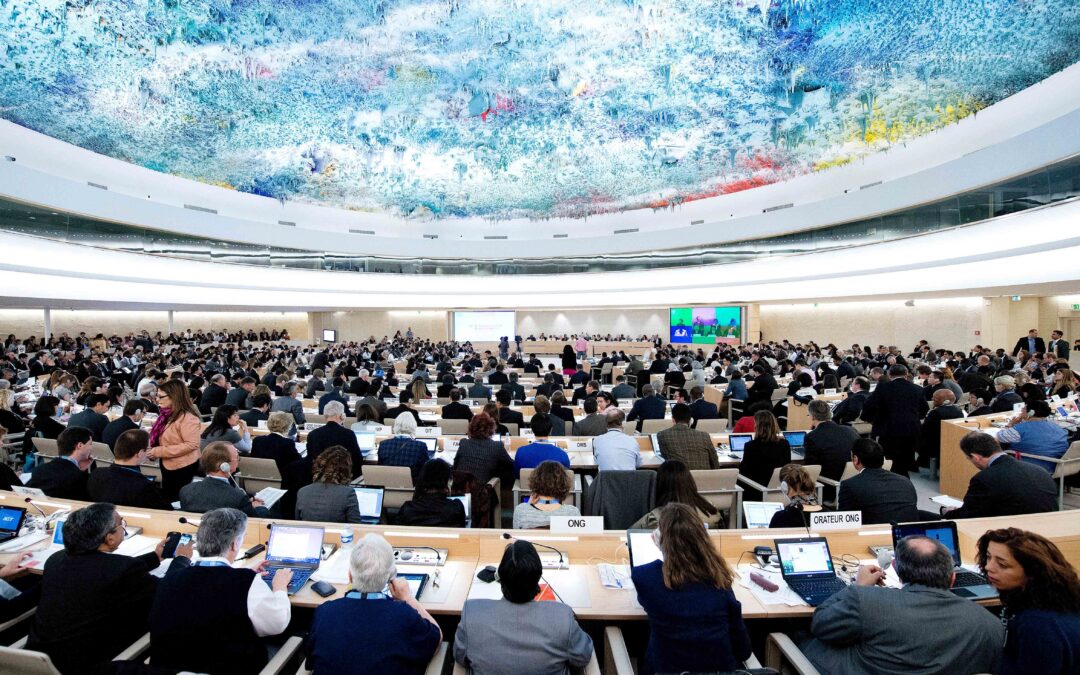
Speaking at the UN Human Rights Council, the ICJ today highlighted judicial corruption and threats to judges and lawyers in Turkey and Azerbaijan, as well as regressive steps on violence against women in the United States of America and Russian Federation.
The statement, delivered during the interactive dialogue with the UN Special Rapporteur on Independence of Judges and Lawyers and the UN Special Rapporteur on Violence against Women, was as follows:
“The ICJ warmly welcomes the new Special Rapporteur on Independence of Judges and Lawyers. As he has highlighted, ensuring judges are accountable for corruption and human rights violations, while respecting judicial independence, should be a global priority. Our Practitioners’ Guide on Judicial Accountability, published last year, should be of particular use to the Rapporteur and other actors in this regard.
Several situations serve as stark examples of other issues raised in his report. In Turkey, recent constitutional amendments give the President and Parliament control over the judiciary’s governing body. This has undermined the judiciary’s independence, already threatened by the mass dismissal of judges and the state of emergency. Lawyers and legal scholars, among others, are routinely dismissed or threatened by the authorities.
In Azerbaijan, the Bar Association is not independent and does not protect its members against undue interference with the exercise of their professional duties. Rather, it often serves as a tool of retaliation against independent human rights lawyers, including through disbarment proceedings that contravene international standards.
We would ask the Special Rapporteur for his views on the role his mandate can play in these and similar situations.
The ICJ also welcomes the report of the Special Rapporteur on violence against women.
Despite increasing global acknowledgement of the grave and systemic nature of violence against women, some States continue to introduce regressive legislation undermining protections for women. For example, the Russian Federation’s decriminalization of certain forms of domestic violence, and attempts in some parts of the United States of America to restrict availability of sexual and reproductive healthcare, particularly impact on victims of sexual violence. The Philippines’ President’s public statements disregarding the gravity of sexual violence are another example. The ICJ would ask the Special Rapporteur what can be done to prevent such backsliding?”
May 8, 2017 | Advocacy
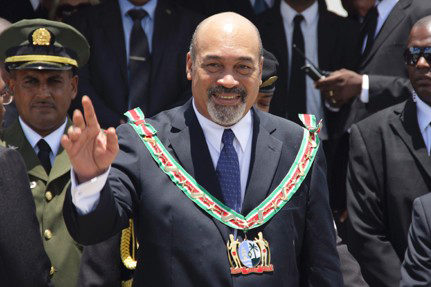
The following document updates a report issued by the ICJ on 29 May 2012 as part of an on-going trial observation mission concerning the trial of Suriname President Desiré Delano Bouterse, accused of crimes involving unlawful killings.
Download the update below:
Suriname-Justice delayed Bouterse case-Advocacy-2017-ENG (in PDF)
May 5, 2017 | Advocacy, News, Publications
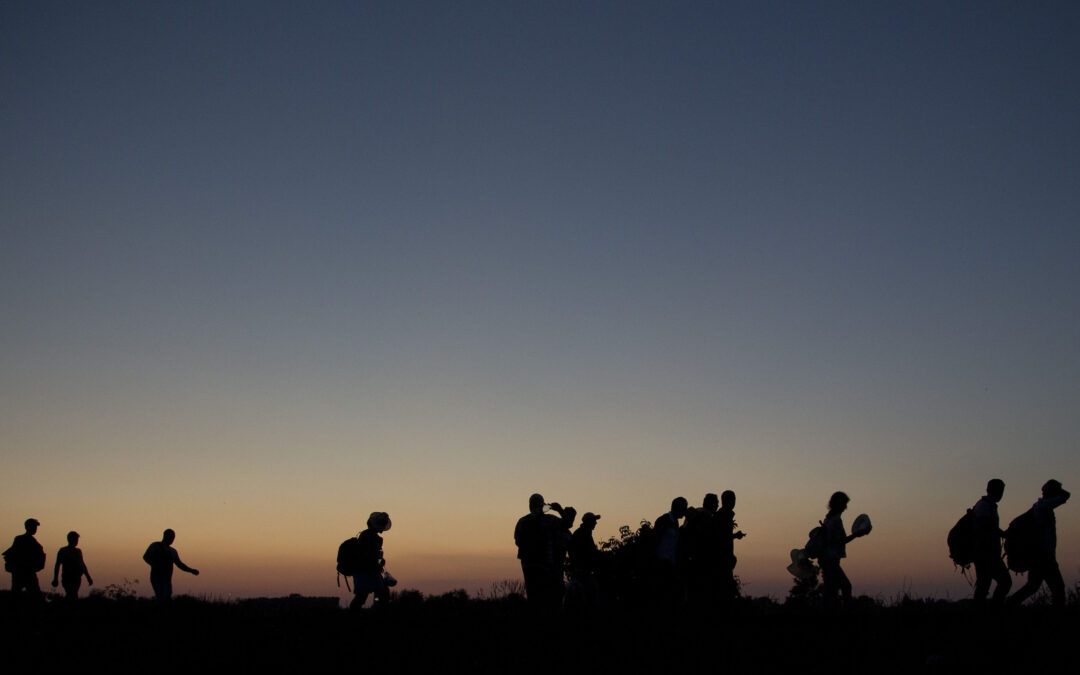
The ICJ has published a set of Principles on the Role of Judges and Lawyers in relation to Refugees and Migrants.
The Principles were developed by the ICJ on the basis of consultations with senior judges, lawyers, and legal scholars working in the field of international refugee and migration law (including at the 2016 Geneva Forum of Judges & Lawyers), as well consultations with States and other stakeholders on a draft version during the March 2017 Human Rights Council session, and other feedback.
The Principles seek to help judges and lawyers, as well as legislators and other government officials, better secure human rights and the rule of law in the context of large movements of refugees and migrants. They are intended to complement existing relevant legal and other international instruments, including the New York Declaration, as well as the Principles and practical guidance on the protection of the human rights of migrants in vulnerable situations within large and/or mixed movements being developed by the OHCHR.
The Principles address the role of judges and lawyers in relation to, among other aspects:
- determinations of entitlement to international protection;
- deprivation of liberty;
- removals;
- effective remedy and access to justice;
- independence, impartiality, and equality before the law;
- conflicts between national and international law.
The Principles, together with commentary, can be downloaded in PDF format by clicking here: ICJ Refugee Migrant Principles 2017.
They are also available in Spanish, French and Arabic.
The ICJ formally launched the published version of the Principles at a side event to the June 2017 session of the Human Rights Council (click here for details), where their importance and utility were recognised by the UN Special Rapporteur on the human rights of migrants, as well as representatives of UNHCR and the OHCHR.
The ICJ had earlier released the final text in connection with the Thematic Session on “Human rights of all migrants” for the UN General Assembly Preparatory Process for the Global Compact for Safe, Orderly and Regular Migration to be held in Geneva 8-9 May 2017, where in an oral statement the ICJ was able to highlight the potential utility of the Principles in the development of the Compact.
The ICJ further promoted consideration of the Principle, in an oral statement to the Human Rights Council.
More information about the process of development of the Principles, including the list of participants to the 2016 Geneva Forum, is available here.
The consultations, preparation and publication of the Principles was made possible with the financial support of the Genève Internationale office of the Republic and Canton of Geneva, for which the ICJ is grateful.
For further information, please contact ICJ Senior Legal Adviser Matt Pollard, matt.pollard(a)icj.org

![Smoke rises after an Israeli air strike on the village of Taybeh in southern Lebanon [Source: Al Jazeera]](https://www.icj.org/wp-content/uploads/2026/03/Screenshot-2026-03-20-at-15.56.24-300x200.png)