Aug 2, 2019
The ICJ has joined with some 40 other international, African and Burundian NGOs to call on States to extend the mandate of the UN Commission of Inquiry on Burundi, at the September session of the Human Rights Council.
The joint open letter to all delegations ahead of the upcoming 42nd ordinary session of the UN Human Rights Council, highlights the important work and impact of the Commission of Inquiry (CoI) to date, in a context of gross, widespread and systematic human rights violations, which may furthermore escale ahead of elections in 2020.
The NGOs call on Council Members and Observers to, at a minimum, support the extension of the mandate of the CoI on Burundi for a further year, until September 2020, in accordance with the Council’s responsibility to address situations of human rights violations, including gross and systematic violations, to advance accountability, to prevent further human rights violations and abuses, and to follow up on its actions and recommendations.
The Council should also request the CoI to prepare a report with a specific focus on elections and risk factors of human rights violations and abuses and to present it during an enhanced interactive dialogue at the Council’s 43rd session in March 2020.
The letter can be downloaded in full, in PDF format, in English or French.
Jul 17, 2019 | Advocacy, News, Non-legal submissions
Today, the ICJ filed a submission to the Human Rights Council’s Working Group on the Universal Periodic Review in advance of its review of Turkey’s human rights record in January 2020.
In its submission, the ICJ considered:
- the situation with the independence of the judiciary in Turkey, during and after the state of emergency of 2016-2018;
- the lack of effective remedies for the mass dismissals in the public sector occurred in that period;
- the shortcomings in fair trial rights in the criminal justice system:
- the obstacles to the action of civil society;
- the lack of accountability for torture and enforced disappeareances; and
- provided information on the status of international human rights treaties ratified by Turkey.
Contact:
Massimo Frigo, ICJ Senior Legal Adviser, e: massimo.frigo(a)icj.org
Full submission in English (PDF) : Turkey-UPR-Advocacy-non-legal submissions-2019-ENG
Jul 11, 2019 | Advocacy, Non-legal submissions
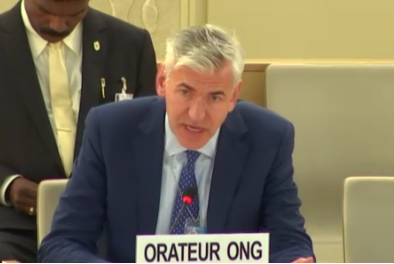
The ICJ today called on the Human Rights Council to seek to allow the International Commission Against Impunity in Guatemala (CICIG) to continue its essential work, and to promote similar initiatives elsewhere.
The statement, delivered during a general debate on technical cooperation, read as follows:
“The International Commission of Jurists (ICJ) welcomes the technical cooperation the United Nations has provided to the International Commission Against Impunity in Guatemala (CICIG).
For more than ten years, the CICIG has been essential to the fight against corruption and impunity in Guatemala. It has provided invaluable support to prosecutors and judges in the investigation and and trial of major crimes of corruption.
The combination of provision of technical assistance and actual participation in the proceedings as “querellante adhesivo” (“complementary prosecutor”) has been important to the CICIG’s effectiveness. For instance, the CICIG helped ensure that investigations took place into high-level officers from the Government and against people that had illegally financed their public campaigns. Several public officers have been brought to justice.
The ICJ therefore expresses its deepest concern that the Government of Guatemala has decided to allow the mandate of the CICIG to expire on the 3rd of September, despite its role remaining as essential as ever to the fight against corruption and impunity in the country.
We urge the Human Rights Council to seek to allow the work of the CICIG to continue, as well as to promote more generally the important potential of UN involvement in such mechanisms to strengthen the fight against impunity at the national level.”
Jul 5, 2019 | Advocacy, Non-legal submissions
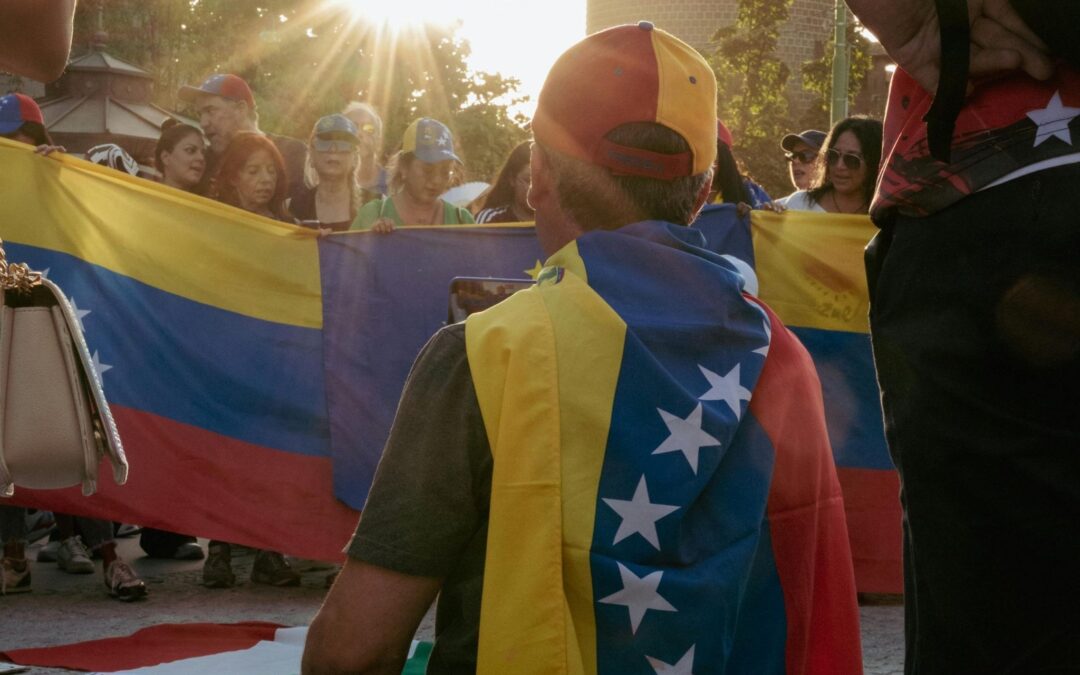
The ICJ today highlighted the role of the “National Constituent Assembly” in Venezuela in contributing to the destruction of the rule of law in the country, in an oral statement to the UN Human Rights Council.
The statement, delivered during an Enhanced Interactive Dialogue on the situation for human rights in Venezuela, in the presence of the UN High Commissioner for Human Rights, read as follows:
“Madame High Commissioner,
Next week the International Commission of Jurists (ICJ) will publish a detailed report on the “National Constituent Assembly” of Venezuela (NCA) mentioned briefly in your report (A/HRC/41/18, para 34).
The NCA was created unilaterally by the President, without popular endorsement through a referendum, in blatant violation of the Constitution.
As your report notes (footnote 26), the NCA has purported to act as a de facto Parliament. In this it has unlawfully usurped legislative powers clearly assigned by the Constitution to the already-existing National Assembly. Among other things, it has called early presidential elections and removed the Attorney General. It was the NCA that actually rescinded legislative immunity for National Assembly representatives, enabling their arrest and prosecution, after the Supreme Court purported to authorize it to do so (para 37).
Furthermore, as ICJ has extensively documented and your report recognizes, the Venezuelan judiciary has been deprived of its independence and impartiality (paras 56 and 76).[1] Lack of access to justice for widespread gross human rights violations by security forces is pervasive (paras 39 to 59, 77 to 79).
In this context, the NCA essentially operates as an unchecked instrument of the President, unilaterally modifying the legal system, declaring itself above the Constitution, and contributing to the destruction of the rule of law.
We therefore particularly welcome the recommendations in your report to restore the independence of the justice system and impartiality of the Attorney General (81(j)), to bring perpetrators of gross human rights violations to justice (81(c)), and for a renewed focus by the Council on accountability (para 83).
The ICJ further urges that the NCA must be abolished and the National Assembly allowed to operate normally with its full powers, if the rule of law is to have any chance of being restored in Venezuela.
We support calls for the Human Rights Council to establish a Commission of Inquiry or similar mechanism.
Thank you.”
[1] See, among other ICJ reports: Venezuela: The Sunset of the Rule of Law (2015); The Supreme Court of Justice of Venezuela: an Instrument of the Executive Branch (2017); and Achieving Justice for Gross Human Rights Violations in Venezuela (2017).
Jul 3, 2019 | Advocacy, Non-legal submissions
The ICJ today joined other NGOs in urging the UN Human Rights Council to take action on the Philippines.
The joint oral statement was delivered by the World Organisation Against Torture (OMCT) on behalf of OMCT, Amnesty International, the International Commission of Jurists (ICJ), Franciscans International, Swiss Catholic Lenten Fund, the International Federation for Human Rights (FIDH), FORUM-Asia. It read as follows:
“In March 2019, the UN High Commissioner for Human Rights noted that several sources “estimate that up to 27,000 people may have been killed in the context of the campaign against illegal drugs since mid-2016.”
Unlawful killings, including of children, carry on, and President Rodrigo Duterte and his administration continue to explicitly encourage these acts. In June 2019, the scale and seriousness of the reported human rights violations prompted 11 UN human rights experts to call on the Council to establish an independent investigation into such violations.
Intimidations by government officials at the highest levels against politicians, human rights defenders, journalists, and several Special Procedures mandate holders have also been rising.
At the 35th, 36th, and 38th sessions of the Council, Iceland, on behalf of a group of States, explicitly called on the government “to take all necessary measures to bring killings associated with the campaign against illegal drugs to an end and cooperate with the international community to investigate all related deaths and hold perpetrators accountable.”
In light of the failure of the government to effectively investigate and bring to justice those responsible, we urge all States to support the adoption of a resolution on the Philippines at this session, mandating the OHCHR to monitor and provide regular updates on the human rights situation to the Council, as the first step toward establishing an independent international investigation into extrajudicial killings and other human rights violations committed in the government’s ‘war on drugs.’.
Such a response is all the more important given the Philippines obligations to uphold the highest standards in human rights as a member of the Council.”