Sep 17, 2018 | Advocacy, Non-legal submissions
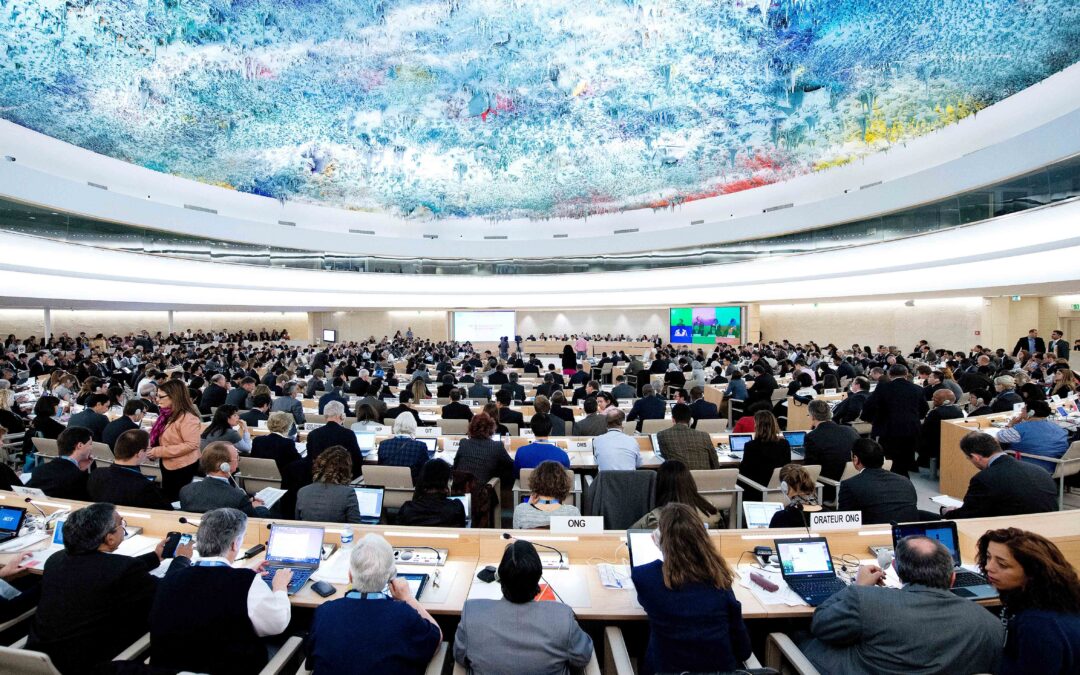
Today at the UN Human Rights Council, the ICJ emphasised the importance of effective investigations capable of leading to truth and justice, highlighting recent developments in Manipur, India as an example.
The statement read as follows:
“Justice processes in situations of conflict or transition require fighting impunity and re-establishing public trust.[1] An example is the new prospects for justice in relation to 1528 alleged extrajudicial killings cases in Manipur, India, which would make an important contribution to a transition out of the long-standing conflict.
In July 2016, in response to a petition filed on behalf of the victims, the Indian Supreme Court stated that “there is no concept of absolute immunity from trial…”,[2] opening the door to ending impunity. As of August 2018, the Central Bureau of Investigation has registered 29 complaints against security forces.[3] Recent reports suggest that the Government is also considering amending the Armed Forces Special Powers Act (AFSPA) to remove or restrict existing overbroad authorizations for use of lethal force.[4]
These are welcome developments. However, concerns remain, as the investigation status of the majority of the cases is unknown. Two UN Special Rapporteurs in July 2018 also affirmed that justice must be done in all cases.[5]
The ICJ calls on India to ensure independent, impartial and thorough investigations into all cases in Manipur, amend AFSPA, and to uphold the right to truth of victims and society about acts committed and the identity of perpetrators, in line with its international and national legal obligations, including as a party to the International Covenant on Civil and Political Rights.”
[1] Report of the Special Rapporteur on the promotion of truth, justice, reparation and guarantees of non-recurrence, A/HRC/39/53 (25 July, 2018), http://www.undocs.org/A/HRC/39/53.
[2] Para 163, Extra Judicial Execution Victim Families Association (EEVFAM) & Anr. v. Union of India & Anr. Writ Petition (Criminal) No. 129/2012.
[3] TNN, “Army Major named in FIR for killing 12-yr-old in fake Manipur encounter”, Times of India, August 3, 2018, https://timesofindia.indiatimes.com/city/imphal/army-major-named-in-fir-for-killing-12-yr-old-in-fake-manipur-encounter/articleshow/65252258.cms.
[4] “In AFSPA, Government Considering Crucial Changes”, NDTV, September 13, 2018, available at https://www.ndtv.com/india-news/in-afspa-government-considering-crucial-change-sources-1915706.
[5] Special Rapporteur on extrajudicial, summary or arbitrary executions and Special Rapporteur on the situation of human rights defenders, “India: UN experts call for urgent progress in investigation of hundreds of ‘fake encounter’ killings” (4 July 2018), https://www.ohchr.org/en/NewsEvents/Pages/DisplayNews.aspx?NewsID=23323&LangID=E .
Sep 14, 2018 | Noticias
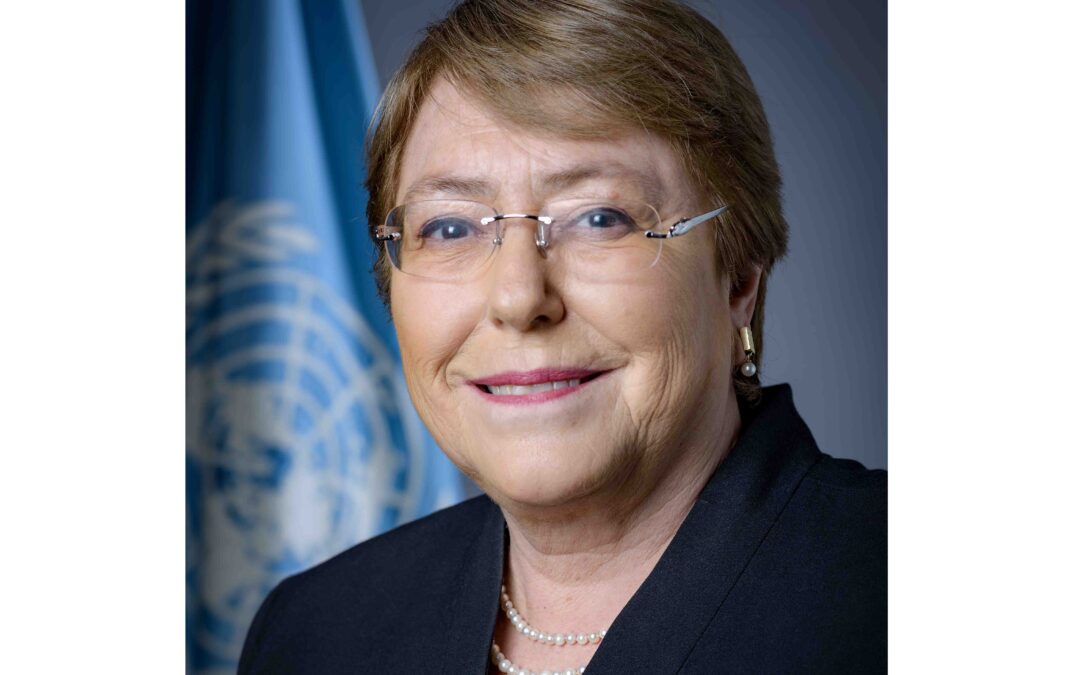
El 14 de septiembre 2018, la CIJ junto a 67 otras organizaciones internacionales y guatemaltecas de la sociedad civil enviaron una carta a la Alta Comisionada de las Naciones Unidas para los Derechos Humanos, Michelle Bachelet, para expresar sus graves preocupaciones en relación a los acontecimientos recientes restringiendo los esfuerzos para combatir la impunidad en el país.
Estos incluyen la decisión del Presidente Jimmy Morales el 31 agosto de 2018 de no renovar el mandato de la Comisión Internacional contra la Impunidad en Guatemala (CICIG); y la decisión subsecuente de parte de las autoridades guatemaltecas el 4 septiembre de 2018 de prohibir el regreso al país del comisionado de la CICIG Iván Velásquez; y las reformas judiciales aprobadas por el Congreso el 6 septiembre de 2018 que amenazan a socavar la independencia judicial y la función de los y las jueces de la Corte de Constitucionalidad y la oficina del Procurador de los Derechos Humanos.
Los signatarios expresaron su beneplácito por la referencia crítica sobre estos acontecimientos de parte de la Alta Comisionada en sus observaciones en la apertura del 39º periodo de sesiones del Consejo de Derechos Humanos.
En su carta, las organizaciones pidieron a la Alta Comisionada de continuar apoyando la luche contra la corrupción y la impunidad en Guatemala y de seguir presionando a las autoridades guatemaltecas para que adopten las medidas necesarias para facilitar el cumplimiento del mandato de la CICIG según los términos del Acuerdo firmado entre Guatemala y las Naciones Unidas.
La carta en español está disponible aquí. Guatemala-Letter to Michelle Bachelet-News-2018-SPA
Sep 14, 2018 | News
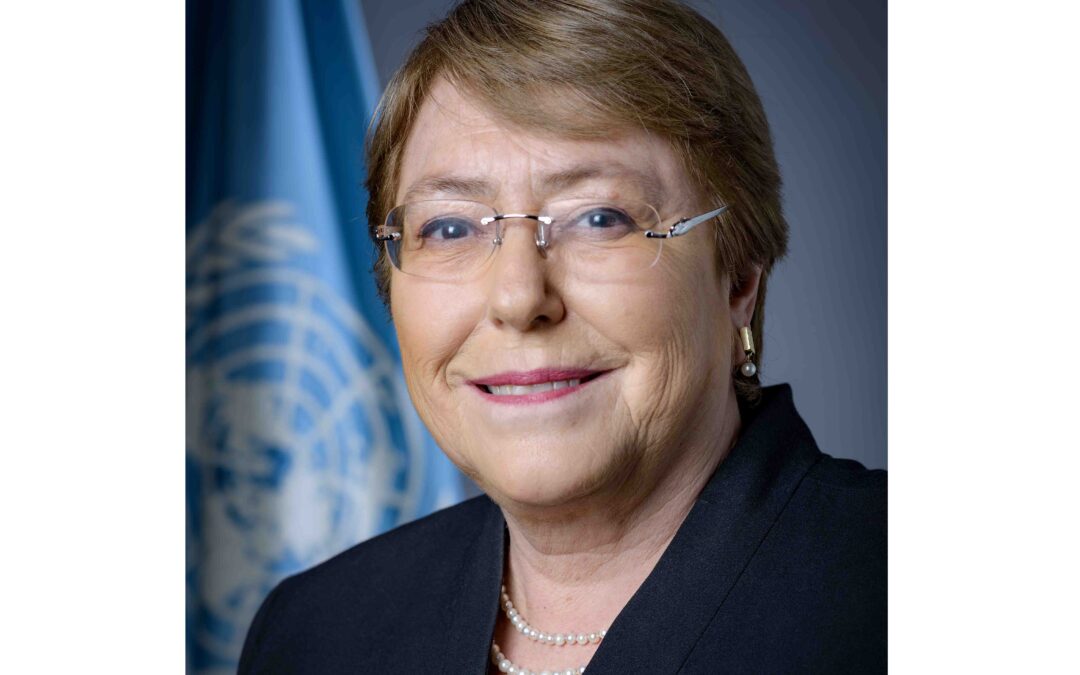
On 14 September 2018, the ICJ joined 67 other international and Guatemalan civil society organizations in a letter to the High Commissioner for Human Rights, Michelle Bachelet, to express grave concern about recent developments to curtail anti-impunity efforts in the country.
These include President Jimmy Morales’ decision on 31 August 2018 not to extend the mandate of the International Commission against Impunity in Guatemala (CICIG); the Guatemalan authorities’ subsequent decision on 4 September 2018 to prohibit the re-entry into the country of the CICIG’s Commissioner Iván Velásquez; and judicial reforms adopted by Congress on 6 September 2018 that threaten to undermine the independence of the judiciary and the function of the Constitutional Court judges and the office of the Human Rights Ombudsman.
The signatories welcomed the High Commissioner’s critical reference of these developments in her opening remarks to the 39th session of the Human Rights Council.
They asked that the High Commissioner give continued support in the fight against corruption and impunity in Guatemala and called on her to press the Guatemalan authorities to adopt necessary measures to facilitate compliance with the mandate of the CICIG under the terms of the Agreement signed between Guatemala and the United Nations.
The letter is available here (in Spanish): Guatemala-Letter to Michelle Bachelet-News-2018-SPA
Sep 13, 2018 | Advocacy, Non-legal submissions
The ICJ prepared an oral statement on procedural safeguards and civil society’s action to prevent arbitrary detention and enforced disappearance, for the interactive dialogue with the UN Working Groups on Arbitrary Detention and on Enforced and Involuntary Disappearances.
Although the statement could not ultimately be read out due to the limited time for civil society statements at the Human Rights Council, the text can found here:
“Mr President, Chairpersons of the Working Groups,
The International Commission of Jurists (ICJ) welcomes the focus of the report of the Working Group on Arbitrary Detention on “Linkages between arbitrary detention and instances of torture and ill- treatment”.
The ICJ shares the view of the Working Group that “safeguards … to prevent” torture and ill-treatment minimize and prevent “instances of arbitrary detention” (A/HRC/39/45, para. 59, and the view that “Judicial oversight of detention is a fundamental safeguard of personal liberty ” (A/HRC/39/45, para. 60).
The ICJ further welcomes the interim report of the Working Group on Enforced and Involuntary Disappearances on effective investigations (A/HRC/39/46), including the finding that “relatives of the disappeared have proven to be essential in the context of investigations and should have the right to know the truth … .” (para. 65)
The ICJ however stresses that these standards are not always upheld by States in their policies and actions.
For example, in Turkey, judicial review of detention is carried out by Judgeships of the Peace whose independence is highly questionable.
Finally, with regard to enforced disappearances, the ICJ is very concerned by the actions of Turkish authorities prohibiting the Saturday Mothers to hold their weekly protests in Galatasaray Square (Istanbul) in memory of their disappeared, in breach of their right to freedom of assembly.
Events of this kind seriously weaken the procedural safeguards and the action of civil society to protect and promote the prohibition of arbitrary detention and ensure accountability against enforced disappearances.
The ICJ urges the Council to address these worrying developments.
I thank you.”
HRC39-OralStatement-WGADWGEID-2018-draft-ENG (download the statement)
Sep 11, 2018 | Advocacy, Non-legal submissions
The ICJ today addressed the new UN High Commissioner for Human Rights, Michelle Bachelet, highlighting the role of her office in countering global threats to the rule of law and human rights.
The statement was made at the UN Human Rights Council, during general debate on the High Commissioner’s oral update. It read as follows:
“Madam High Commissioner,
The International Commission of Jurists (ICJ) warmly welcomes you to your new mandate – a mandate that the ICJ has, since 1964, fought to create and support.
A multitude of issues and situations urgently call for your attention. However, a dark cloud looms over them all, and casts its shadow across the globe, including in this chamber. From different directions, various political actors driven by authoritarian ideologies and impulses, thirst for power and fraudulent populisms, grow in strength and are joining forces to mount a concerted attack on the rule of law.
They openly scorn the stated aims of the UN Charter, including “faith in fundamental human rights” and the maintenance of “justice and respect for … international law.” They seek to undermine, defame, and destroy global, regional and national institutions built over decades as bulwarks to protect human rights and human dignity. They thrive on silence or passivity by global leaders and populations, as they assault independent judiciaries, media, and civil society.
Madam High Commissioner, you can make a unique impact by speaking forcefully and publicly in defense of human rights and the rule of law, in defense of victims, and against governments and individuals who demonstrate their hostility or indifference to these aims. The ICJ stands ready to support you and your office in the challenges that lie ahead.
Thank you.”