Apr 16, 2018 | Advocacy, News, Non-legal submissions
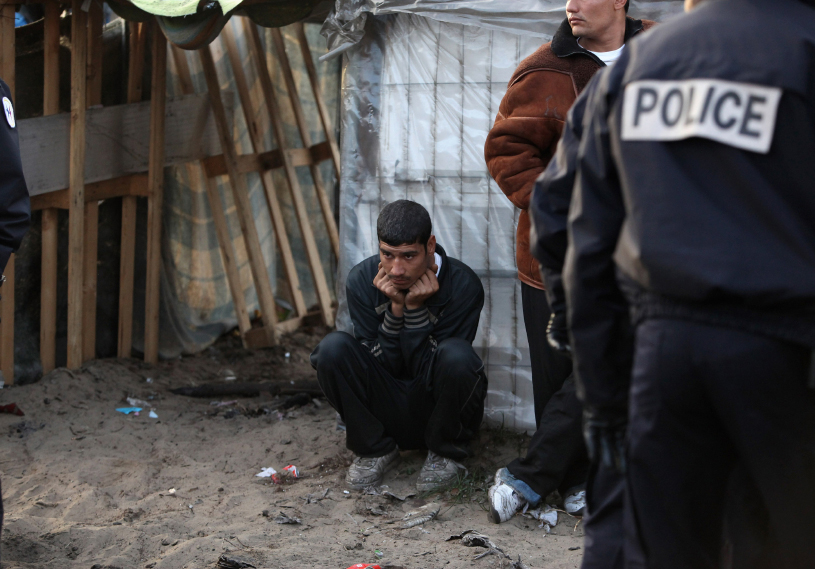
The ICJ and ECRE have presented today to the United Nations Special Rapporteur on the human rights of migrants a submission on access to justice for migrants in Europe.
The submission is an input for the forthcoming report of the UN Special Rapporteur on access to justice for migrants to the UN General Assembly.
The International Commission of Jurists (ICJ) and the European Council on Refugees and Exiles (ECRE) have provided a brief overview of aspects of access to justice for migrants, with a particular focus on asylum seekers and migrant children, in European countries.
The issues dealt with include:
- obstructions to access to justice in relation to access to the territory;
- the undue use of national security exceptions to weaken access to justice in immigration procedures;
- concerns with access to justice in expulsion and detention procedures;
- specific obstacles to access to justice for asylum seekers, including when appealing the rejection of their claims by first instance asylum authorities before a judicial or administrative appeal body;
- specific obstacles to access to justice for undocumented minors.
ICJECRE-NonLegalSubmission-SRMigrants-Access2JusticeEurope4Migrants-2018-ENG (download the submission)
Apr 16, 2018 | News
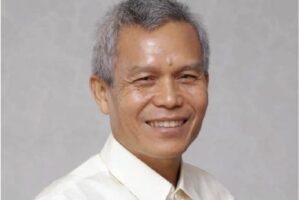
On the fourth anniversary of the apparent enforced disappearance of Karen activist, “Billy,” the ICJ repeats its calls for the Department of Special Investigations (DSI) to assume responsibility for effectively investigating the case.
To date no progress has been made to establish the fate of Billy and the DSI has declined to take up the matter.
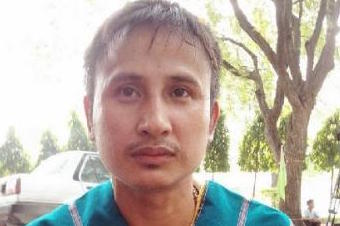
Pholachi “Billy” Rakchongcharoen was last seen on 17 April 2014 in the custody of Kaeng Krachan National Park officials.
At the time of his apparent enforced disappearance, Billy had been working with ethnic Karen villagers and activists on legal proceedings the villagers had filed against the National Park, the Wildlife and Plant Conservation Department, the Ministry of Natural Resources and Environment, and the former Chief of Kaeng Krachan National Park concerning the alleged burning of villagers’ homes and property in the National Park in 2010 and 2011.
“The very reason the DSI was created was to investigate complex cases of this kind, including where Government officials may be implicated in gross human rights violations that amount to crimes under international law,” said Kingsley Abbott, Senior International Legal Adviser with the ICJ.
“If the DSI continues to refuse to open a special investigation after four years of little apparent progress by the police, the DSI will risk being perceived as contributing to the pervasive culture of impunity that exists within Thailand,” he added.
This week, Billy’s wife, Phinnapha Phrueksaphan, advised the ICJ that the last time the DSI had discussed Billy’s investigation with her and her family was over a year ago.
The ICJ was further informed that on 9 April 2018, Phinnapha submitted a letter to the Director-General of the DSI seeking updates on the progress of Billy’s case and clarification as to why the DSI had not accepted Billy’s case for a special investigation.
“Thailand has a clear legal duty to continue to investigate the case until Billy’s fate or whereabouts are established and to ensure that the investigative process and any outcomes are transparent – which is especially important to victims’ families who play a crucial role in investigations,” added Abbott.
On 23 May 2017, Thailand established a Committee consisting of 18 officials, including from the DSI, to formulate policies for the prevention of acts of torture and enforced disappearance, and to investigate and provide remedies in accordance with the Convention against Torture and Other Cruel, Inhuman or Degrading Treatment or Punishment (CAT), to which Thailand is a party, and the International Convention for the Protection of All Persons from Enforced Disappearance (ICPPED), which Thailand has signed but not yet ratified.
On 26 June 2017, the Committee reportedly stated that it would consider past, pending and new cases of enforced disappearance, including the case of Billy.
However, the Committee has yet to demonstrate effectiveness in efforts to implement Thailand’s international human rights obligations.
“While any steps Thailand takes towards accountability for allegations of torture, ill-treatment and enforced disappearance is welcome, the Committee should not be seen as a meaningful substitute for establishing these as crimes under domestic law,” Abbott said.
Thailand-Billy disappearance 4th year-News-web story-2018-ENG (Full story in PDF)
Thailand-Billy fourth-News-webstory-2018-THA (Thai version, in PDF)
Further Reading
Billy’s case
ICJ, ‘Launch special investigation into enforced disappearance of “Billy”’, 6 August 2015
ICJ, ‘Strengthen efforts to solve the apparent enforced disappearance of “Billy”, 16 April 2015
ICJ, ‘“Disappearance” of Billy demands special investigation’, 17 July 2014
ICJ, ‘Thai authorities must urgently investigate Billy’s ‘disappearance’’, 28 April 2014
Draft Act criminalizing torture and enforced disappearance
ICJ and Amnesty International, Open letter to Thailand’s Minister of Justice on the amendments to the Draft Prevention and Suppression of Torture and Enforced Disappearances Act, 12 March 2018
English
Thai
ICJ and Amnesty International, Recommendations to Thailand’s Ministry of Justice on the Draft Prevention and Suppression of Torture and Enforced Disappearances Act, 23 November 2017
Human Rights Committee review of Thailand
ICJ and Thai Lawyers for Human Rights and Cross-Cultural Foundation, Joint follow-up submission to the UN Human Rights Committee, 27 March 2018
UN Committee against Torture review of Thailand
ICJ and Thai Lawyers for Human Rights, Joint submission to the UN Committee against Torture, 29 January 2018
Contact
Kingsley Abbott, ICJ Senior International Legal Adviser, email: kingsley.abbott(a)icj.org
Apr 13, 2018 | Multimedia items, News, Video clips
In 2017, Nepal held its first local-level elections for almost 20 years and the first ever conducted under the new federal state structure established under the 2015 Constitution. They were significant because of the unprecedented number of women who stood as candidates and won.
Women in Nepal have experienced systemic discrimination for decades, especially those in rural areas, among ethnic minorities and marginalized groups.
These elections presented the women of Nepal with the opportunity to break through barriers that have prevented them for decades from participating in political and public life.
The Local Level Governance Act lays out the mandate and functions of newly formed local bodies.
If the recently elected women are allowed to meaningfully participate in local governance, the new law could empower them further so that they can take the lead in addressing key human rights issues, especially the human rights of women.
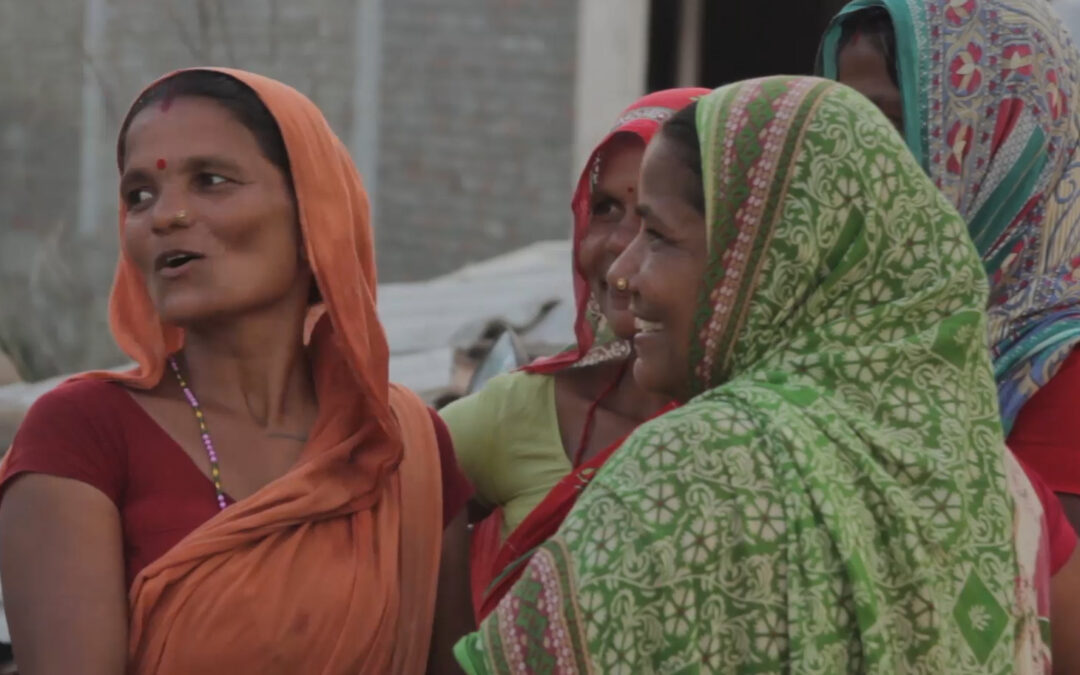
This video documents the campaign of Rikam BK, a Nepalese politician, belonging to the Communist party of Nepal-Maoist (CPN-M).
In the Nepal Legislative Election held on 26 November 2017, she was elected as a Sub-Mayor (NCP Maoist) of Lahan Municipal Council winning 5000 votes.
She is the chairperson of the Dalit Preservation Abhiyan Forum, in Siraha. She has been advocating the issue of land certificates in the names of both husband and wife.
She continues to call for those deprived of land rights to have equal access to land. She is also the member of National Alliance for Women Human Rights Defenders (NAWHRD).
Many of the women featured in this video are women human rights defenders who have been working to promote and protect human rights in Nepal for decades.
Many of them participated in the Regional Conference on Women Human Rights Defenders as Political Actors, which was organized by the ICJ, with the cooperation of NAWHRD.
The conference was held from 28 to 29 August 2017 in Kathmandu.
The ICJ recently released a briefing paper laying out the key points of the conference and offering a set of future actions aimed at supporting WHRDs in their role as political actors pursuing a human rights agenda.
Watch the video

Apr 12, 2018 | Articles, Nouvelles, Publications
Aujourd’hui, la CIJ a lancé son nouveau rapport Le jugement de civils par des tribunaux militaires au Venezuela. Il n’est cependant disponible qu’en espagnol.
Le rapport analyse le cadre constitutionnel et juridique de la juridiction pénale militaire du Venezuela, sa structure, sa composition et sa compétence.
Le rapport aborde également les graves problèmes d’indépendance de la juridiction pénale militaire vénézuélienne et la pratique du jugement de civils par des tribunaux militaires dans ce pays, à la lumière des normes internationales et des principes de l’Etat de droit.
Il récapitule les recommandations relatives à l’administration de la justice par les tribunaux militaires qui ont été adressées au Venezuela par divers organismes et procédures internationaux de protection des droits de l’Homme, tant au sein des Nations Unies que via le Système interaméricain.
Enfin, le rapport conclut que les tribunaux militaires vénézuéliens ne remplissent pas les conditions nécessaires et inhérentes à une bonne administration de la justice, institué par l’article 14 du Pacte international relatif aux droits civils et politiques, et que le jugement de civils par des tribunaux militaires constitue une violation flagrante du droit à un tribunal indépendant, impartial et compétent et est incompatible avec les normes et standards internationaux relatifs à l’administration de la justice.
Venezuela-Civiles Tribunales Militares-Publications-Reports-Thematic Reports-2018-SPA (le rapport complet, en espagnol et en PDF)

Apr 12, 2018 | Artículos, Noticias, Publicaciones
Hoy la CIJ lanza su informe El juzgamiento de civiles por tribunales militares en Venezuela.
El informe analiza el marco constitucional y legal de la jurisdicción penal militar de Venezuela, su estructura, composición y competencia.
Igualmente, el informe aborda los graves problemas de independencia de la jurisdicción penal militar venezolana y la práctica del enjuiciamiento de civiles por los tribunales militares de ese país, a la luz de estándares internacionales y de los principios del Estado de Derecho.
Asimismo el informe relaciona las recomendaciones sobre administración de justicia por tribunales militares que han venido formulando a Venezuela distintos órganos y procedimientos internacionales de protección de los derechos humanos, tanto en el ámbito de las Naciones Unidas como del Sistema Interamericano.
Finalmente, el informe concluye que los tribunales militares venezolanos no satisfacen las condiciones necesarias e inherentes a una recta administración de justicia, establecidas por el artículo 14 del Pacto Internacional de Derechos Civiles y Políticos, y que el juzgamiento de civiles por tribunales militares configura una violación flagrante de los derechos a un tribunal independiente, imparcial y competente y es incompatible con las normas y estándares internacionales sobre administración de justicia.
Venezuela-Civiles Tribunales Militares-Publications-Reports-Thematic Reports-2018-SPA (el informe, en PDF)