Mar 22, 2018 | News
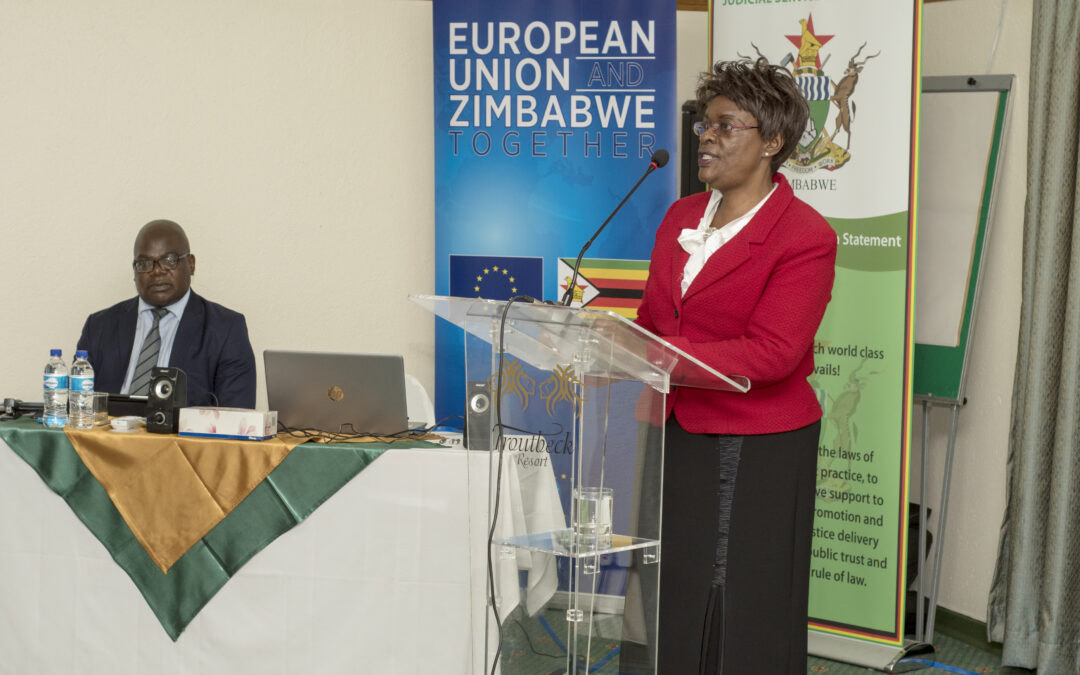
The ICJ and the Judicial Service Commission (JSC) of Zimbabwe, are convening a three-day Orientation Workshop for newly appointed judges.
It is held until 24 March at Troutbeck Inn, Nyanga.
The workshop is the fourth such meeting that the ICJ and the JSC have convened with the support of the European Union.
The training provides a useful bridge for the new appointees as they transition from the bar to the bench.
The topics covered during the training include judgement writing, court procedure and decorum, substantive law, judicial independence and issues of integrity on the bench.
The Hon. Judge President Chiweshe in his opening remarks stated that the objectives of the workshop are to familiarize incoming judges with their new work environment and to acquaint them with the specific divisions of that court.
This is to prepare them for the full assumptions of work in the judiciary. Justice Chiweshe noted that each division, criminal, civil and family law, will expose the judges to its own activities, guided by the judge from that division.
After the training the hope is that the judges will be deployed to their respective regions and stations fully acquitted with the tasks before them and can dispense justice diligently, impartially, fairly, without fear, favour or promise.
In attendance at the first day of the workshop were 17 judges (four female and thirteen male).
Mar 22, 2018 | Advocacy, Non-legal submissions
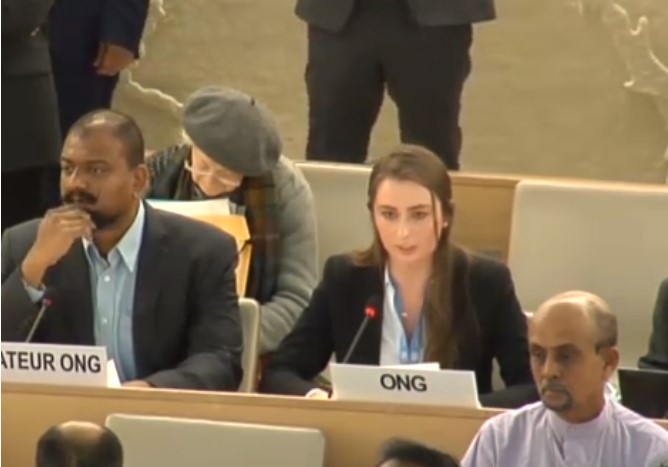
The ICJ today highlighted misuses of the law and legal system in Cambodia, in violation of human rights, and called for action by States and international and regional organisations, as well as the Government of Cambodia.
The statement was delivered during a general debate at the UN Human Rights Council, responding to concerns expressed earlier in the session by the UN High Commissioner for Human Rights and in the report of the UN Secretary General. It read as follows:
“The Cambodian Government continues to misuse the law to clamp down on the political opposition, on civil society and on ordinary individuals under the guise of the ‘rule of law’.
In November 2017, the Supreme Court dissolved the main opposition political party and banned 118 of its members from political activity after a politicized hearing in which the President of the Court was himself a high-ranking member of the ruling party.
The main opposition leader, Kem Sokha, remains in detention, under investigation for treason.
A recent Constitutional amendment imposes a broad ‘duty’ on individuals and associations to “uphold the national interest”. A new lèse-majesté law is inconsistent with freedom of expression.
Individuals continue to flee the country in fear for having exercised their fundamental freedoms.
In February, Sam Sokha, a UNHCR-recognized refugee, was deported from Thailand to Cambodia after she was convicted in her absence by a Cambodian court, for throwing a shoe at a ruling party billboard.
With national elections scheduled for July 2018, the Government’s trend of weaponizing the law against its people only seems set to harden.
States, international and regional organisations, and other international actors must heighten efforts to address the rule of law and human rights crisis in Cambodia.”
Video of the statement is available here:
Numerous statements expressing similar concerns about the situation in Cambodia followed by other NGOs. Some of them were interrupted by Cambodia on “points of order” and prevented from fully presenting their criticisms despite their alloted time remaining. The ICJ does not consider that the objections raised by Cambodia were valid and that the speakers should have been able to receive the full allotted time to complete their statements. Video of a final statement by the delegation of Cambodia is available below:
The ICJ statement today follows an earlier joint statement delivered yesterday by New Zealand on behalf of a group of 45 states, which is available to download in PDF format here (NZJointStatementCambodiaHRC37-2018) and to view by video here:

Mar 22, 2018 | Advocacy, Non-legal submissions
Today, the ICJ together with Forum for Human Rights submitted written information to the Committee against Torture ahead of its examination of the periodic report of the Czech Republic.
The two organisations argue that the Czech Republic violates Articles 2, 14 and 16 of the Convention Against Torture, by not ensuring access to a lawyer for children below the age of 15 (the age of criminal responsibility) in the pre-trial stage of juvenile justice proceedings.
1273 children younger than 15 were part of these pre-trial stage proceedings in the Czech Republic in 2017 without access to procedural guarantees, including legal counsel, unlike children aged 15-18 have under national legislation.
Children below the age of criminal responsibility do not benefit from such procedural rights and therefore, during the police questioning, they are typically left without any legal assistance and presence of a lawyer who neither can deter the police from resorting to ill-treatment or other abuses, nor work as a protection for police officers in case they face unfounded allegations of ill-treatment.
This situation constitutes a violation of the obligation to prevent torture or acts of cruel, inhuman or degrading treatment or punishment which do not amount to torture under Articles 2 and 16 of the CAT. Additionally, the Czech Republic fails to ensure access legal counsel for the purposes of an effective remedy under Article 14 of the CAT.
The joint submission aims to inform the 63rd session of the Committee Against Torture in April-May 2018 during which the Sixth periodic report of the Czech Republic will be examined.
Read the full joint submission here:
Czech-Republic-Joint-writteninformation- against-torture-2018-ENG (Full text in ENG, PDF)
Mar 22, 2018 | Articles, Multimédia, Nouvelles
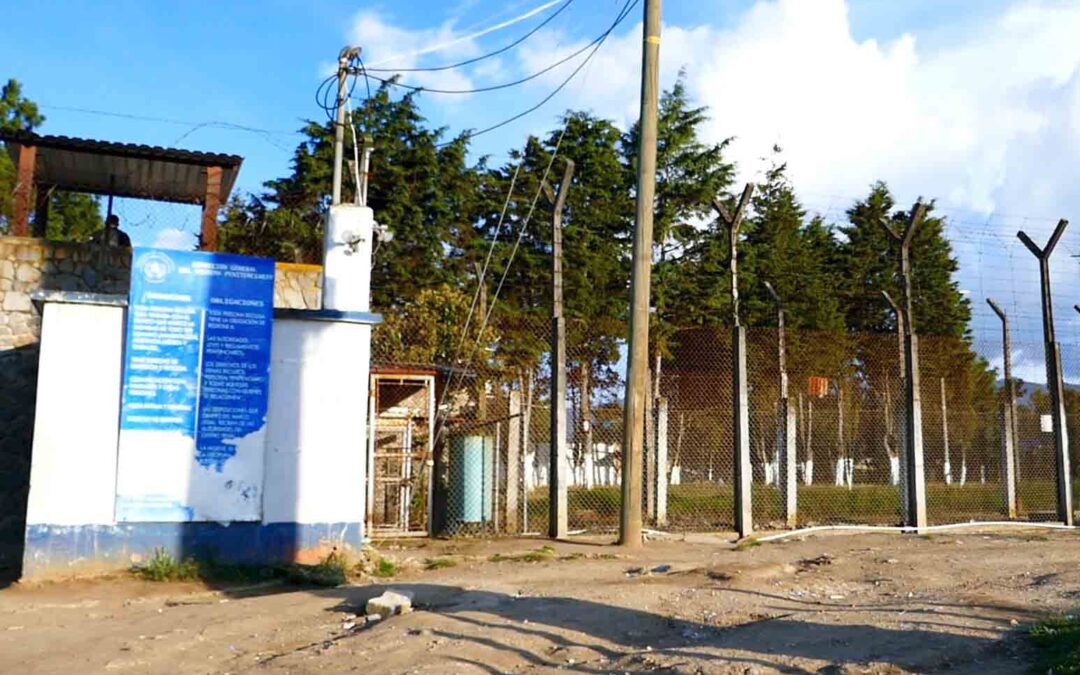
Des leaders communautaires a ont été accusés d’actions criminelles présumées et, dans certains cas, arbitrairement détenus pour avoir chercher à protéger leurs terres et leurs ressources naturelles des impacts négatifs liés à des projets industriels et à leurs infrastructures.
Une telle réponse est destinée à faire taire les voix dissidentes et leurs demandes légitimes de consentement libre, préalable et informé à l’installation de ces projets et infrastructures sur les terres des communautés indigènes.
Cette vidéo comprend des interviews de Ramón Cadena, directeur de la CIJ pour l’Amérique centrale, de deux dirigeants indigènes traditionnels qui ont été victimes de détention arbitraire, et d’une responsable communautaire qui explique l’impact de la détention sur la famille et toute la communauté.
La criminalisation du travail lié aux droits de l’Homme est un phénomène qui conduit à accuser pénalement des dirigeants communautaires simplement parce qu’ils s’opposent à un modèle de développement basé sur les industries extractives ou la privatisation de services sociaux essentiels.
Ce type de développement porte atteinte aux ressources naturelles (eau, sols et environnement) des territoires indigènes.
C’est un phénomène global mais particulièrement marqué au Guatemala.
L’exploitation de ressources naturelles, par le biais de mines à ciel ouvert et des autres opérations extractives industrielles sur les territoires autochtones, est l’une des principales raisons de la répression des protestations sociales et du travail des droits de l’Homme.
Du fait de l’impact environnemental de ce type d’exploitation, les différentes communautés s’y opposent et un certain nombre de dirigeants ont payé de leur vie cette opposition.
Lorsque des membres de leurs familles ont continuer à contester ces projets industriels, ils ont à leur tour été accusés d’infractions pénales.
Au Guatemala, il y a aussi un conflit social intense en raison de la manière dont sont gérés le réseau et l’approvisionnement électriques.
Suite à la privatisation du service d’électricité en 1966, l’Etat guatémaltèque a accordé des concessions à des entreprises nationales et internationales.
Au fil du temps, de nombreux utilisateurs se sont plaints de la piètre qualité et du coût élevé des services fournis par ces entreprises privées.
La Commission nationale de l’électricité n’a pas respecté son devoir de « s’assurer que les obligations des concessionnaires et des entrepreneurs soient remplies et les droits des utilisateurs protégés », ce que de nombreux utilisateurs mécontents ont exigé.
A cause de cette situation, de nombreux consommateurs se sont déclarés être en résistance, citant l’article 45 de la Constitution guatémaltèque stipulant qu’ «il est légitime que la population résiste pour protéger et défendre ses droits et ses garanties inscrites dans la constitution».
Pour avoir agi sur la base de cette protection constitutionnelle de nombreux dirigeants communautaires, des avocats et des défenseurs des droits de l’Homme ont été victimes d’attaques.
La CIJ soutient l’accès à la justice pour les personnes victimes de ces violations des droits de l’Homme.
Elle soutient les avocats qui défendent les victimes de la criminalisation des contestations sociales ; elle observe les procès des cas emblématiques ; elle promeut le dialogue entre les communautés et les autorités étatiques concernées ainsi qu’avec les maires locaux ; et dans certains cas, elle appuie les soumissions devant la Cour constitutionnelle.
Voir la vidéo:
Mar 22, 2018 | Advocacy, Non-legal submissions
The ICJ today highlighted at the UN the need for further action to address impunity in Sri Lanka and in Colombia.
The statement, delivered in a general debate at the UN Human Rights Council, responded to UN reports on Sri Lanka and Colombia, and read as follows:
Sri Lanka has not made sufficient progress on its commitments and obligations as reflected in Council resolution 30/1. Among the mechanisms contemplated, only the Office on Missing Persons (OMP) is operational. The process for establishing the other mechanisms, and the extent to which their composition will be based on the broad national public consultations carried out in 2016, remains unclear. The ICJ reiterates that, in line with operative paragraph 6 of resolution 30/1, the accountability mechanism cannot be seen as credible without involvement of international judges, prosecutors and investigators.
Furthermore, despite promises to repeal the Prevention of Terrorism Act (PTA), arrests still take place. As the High Commissioner recommended, the PTA should be promptly repealed without waiting for replacement legislation. Any proposed counterterrorism law must comply with international human rights standards.
In Colombia, the ICJ shares OHCHR’s deep concern about the exclusion of non-military State agents and private individuals from the scope of mandatory application of the Integrated System of Justice, Truth, Reparations and Guarantees of Non-repetition (per paragraph 90 of the Report). Furthermore, four months of unjustified delay by the Government in accrediting the new representative of the OHCHR Office, which ended only yesterday, undermined the ability of the Office to provide adequate technical assistance to guarantee victims’ rights in the Integrated System, as provided for by the Peace Agreement.”
[Paragraph 6 of Human Rights Council resolution 30/1 provides that the Council, “Welcomes the recognition by the Government of Sri Lanka that accountability is essential to uphold the rule of law and to build confidence in the people of all communities of Sri Lanka in the justice system, notes with appreciation the proposal of the Government of Sri Lanka to establish a judicial mechanism with a special counsel to investigate allegations of violations and abuses of human rights and violations of international humanitarian law, as applicable; affirms that a credible justice process should include independent judicial and prosecutorial institutions led by individuals known for their integrity and impartiality; and also affirms in this regard the importance of participation in a Sri Lankan judicial mechanism, including the special counsel’s office, of Commonwealth and other foreign judges, defence lawyers and authorized prosecutors and investigators;”]