Dec 5, 2017 | Advocacy, Non-legal submissions
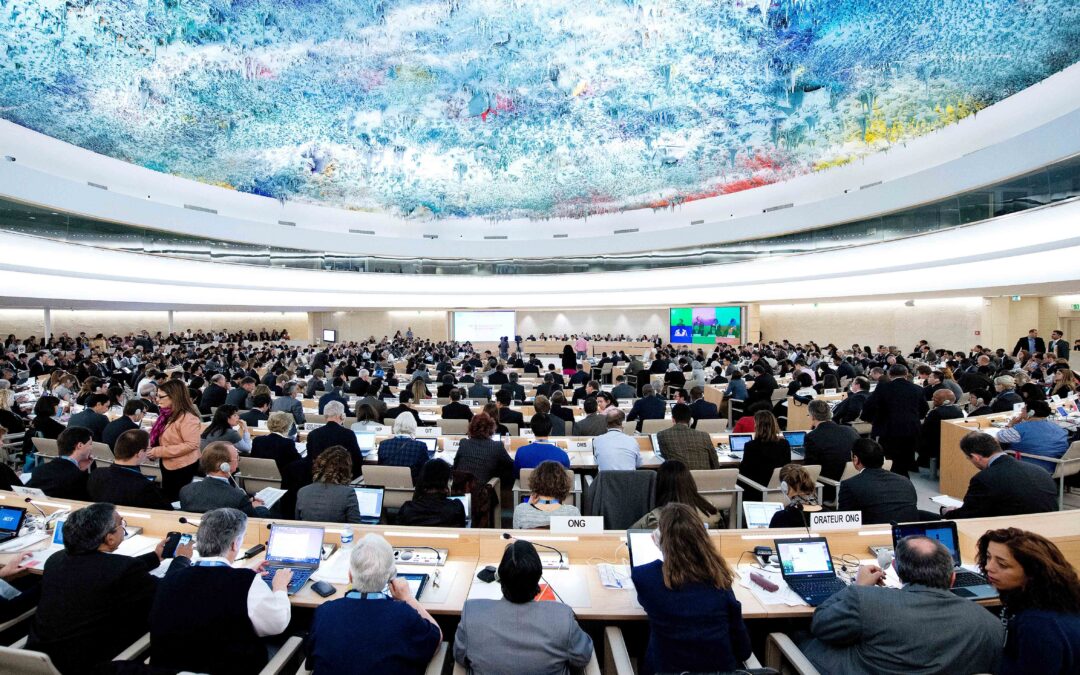
The ICJ today addressed an emergency Special Session of the UN Human Rights Council on Myanmar, outlining key requirements for the protection of the Rohingya minority, including safe and voluntary return of refugees.The Special Session is expected to adopt a resolution to address “The human rights situation of the minority Rohingya Muslim population and other minorities in the Rakhine State of Myanmar.”
The ICJ statement read as follows:
“It is encouraging that the Governments of Bangladesh and Myanmar have recognized the right of displaced Rohingya to return to their places of residence.
However, any provisions for return must comply with international law, including as regards non-refoulement. Effective guarantees that all displaced persons will be able to return to their place of prior residence in a safe, dignified, voluntary and sustainable manner, without discrimination, are essential.
Rohingya refugees must also be provided with alternatives to return, including the option of seeking international protection. Anything short of this would amount to their forcible return and thus violate the non-refoulement principle.
It is of the utmost urgency that the gross and systematic violations that have given rise to the forced displacement are immediately brought to an end and that measures are taken to prevent their recurrence, including by holding perpetrators responsible.
No-one may be forcibly returned to the current circumstances that prevail in Rakhine State, and voluntary returns will only ultimately take place if and when refugees are satisfied they are not returning to further violations in Myanmar.
Any provisions for restrictions on freedom of movement upon return are also of concern, particularly given past experience, with internment camps housing tens of thousands of Muslims displaced in 2012 still in place. Such restrictions elsewhere in Rakhine State contribute to violations of, among other things, the human rights to life, to health, to food, to education and to livelihoods.
To ensure that the rights of refugees are respected and protected, Bangladesh and Myanmar should immediately seek to ensure that UNHCR is involved, and its guidance followed, in any discussion of repatriation processes.
The Government of Myanmar must cooperate with the UN-mandated Fact Finding Mission to independently establish facts and provide a proper foundation for effective responses to human rights violations and humanitarian crises in Rakhine State, as well as in Shan and Kachin States, whose populations also face related patterns of human rights violations by military and security forces.”
The Council adopted a resolution at the end of the session, which reflects many of the concerns raised by the ICJ and others: A_HRC_S_27_L1
Dec 5, 2017 | Новости, Статьи
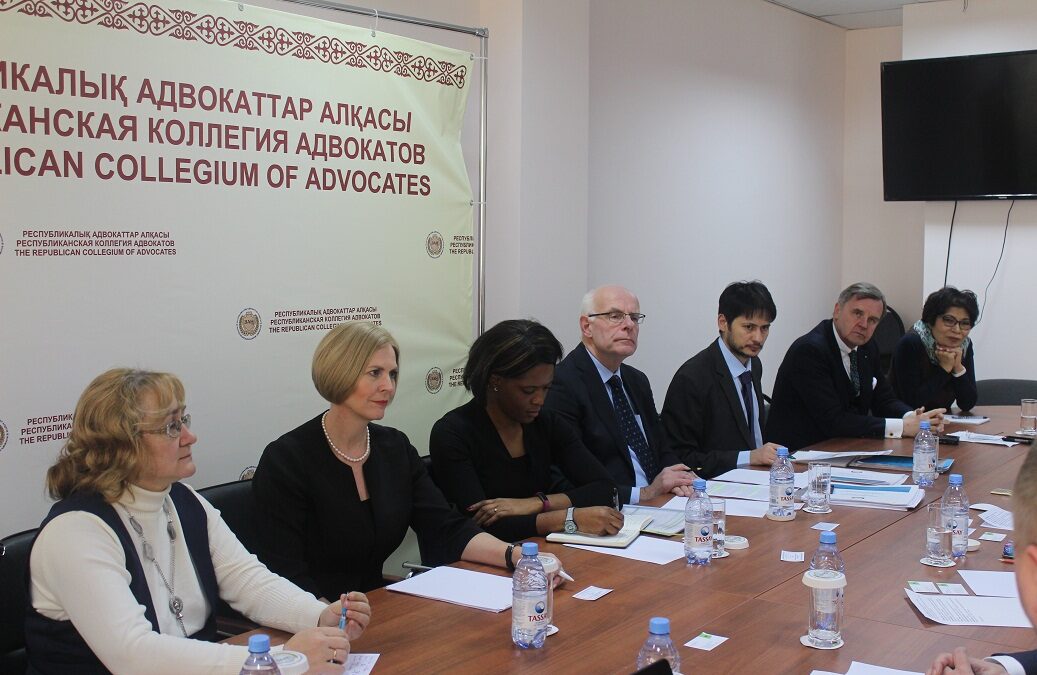
МКЮ, по итогам миссии в Казахстан для оценки законопроекта, направленного на реформу регулирования юридической профессии, призвала отложить принятие закона и привлечь представителей адвокатуры к более активному участию в его подготовке.
МКЮ подчеркнула, что любая реформа адвокатуры должна усиливать независимость адвокатов с тем, чтобы обеспечить всестороннее соблюдение международного права и стандартов, касающихся роли юристов.
Независимость адвокатуры является необходимым условием для того, чтобы адвокаты могли защищать права человека в отношении своих клиентов, в том числе право на справедливое судебное разбирательство и доступ к правосудию.
МКЮ обеспокоена тем, что законопроект предусматривает изменение дисциплинарной системы адвокатуры: вместо независимой процедуры он предполагает процедуру, которая будет находиться под значительным влиянием со стороны исполнительных органов власти.
Так, законопроект предусматривает участие представителей исполнительной власти в дисциплинарных органах.
МКЮ напоминает, что независимая дисциплинарная процедура является одним из столпов независимой адвокатуры и должна гарантироваться как на уровне закона, так и на практике.
В свете принципа независимости адвокатуры МКЮ также считает, что из текста законопроекта следует исключить положение, предусматривающее создание «государственной адвокатуры».
Одним из недостатков сложившейся системы управления адвокатурой в Казахстане является тот факт, что доступ к профессии адвоката не является процедурой, независимой от исполнительных органов власти.
МКЮ подчеркивает, что реформа предоставляет законодателю возможность сделать процедуру допуска адвокатов полностью независимой и подконтрольной только профессиональной ассоциации адвокатов.
Это позволит обеспечить соответствие действующего законодательства международной практике и принципу независимости адвокатуры.
МКЮ отметила, что адвокатские объединения не принимали достаточно активного участия в обсуждении реформы адвокатуры. В качестве профессионального объединения адвокатов Республиканская коллегия адвокатов должна играть существенную роль в подготовке законодательства, регулирующего ее функционирование, и, в идеале, должна возглавить дискуссию по реформе адвокатуры.
МКЮ считает, что не следует спешить с принятием закона; прежде чем перейти к следующему этапу рассмотрения законопроекта, следует организовать его обсуждение с участием всех заинтересованных сторон.
Реформа, проведенная в соответствии с предложенными рекомендациями, будет соответствовать международным обязательствам Казахстана, в частности, по Международному пакту о гражданских и политических правах и Основным принципам ООН, касающимся роли юристов.
Справочная информация:
4 и 5 декабря МКЮ посетила Астану, где был проведен ряд встреч на высоком уровне. Данный визит был связан с нынешней реформой адвокатуры и соответствующим законопроектом, вынесенным на рассмотрение Парламента.
МКЮ выражает признательность представителям различных стран, которые согласились принять участие в миссии:
Отмар Кури, Председатель Палаты адвокатов г. Гамбург, председатель Комиссии Федеральной палаты адвокатов Германии по Федеральному закону об адвокатуре
Йерун Брауер, Председатель Комиссии по этике Ассоциации адвокатов Нидерландов и бывший Председатель Ассоциации адвокатов Нидерландов
Георг Става, Председатель Европейской комиссии по эффективности правосудия (CEPEJ)
Кристина Блэклоз, Заместитель Председателя Общества права Англии и Уэльса
Чика Мура, Советник по вопросам международной стратегии, Общество права Англии и Уэльса
МКЮ благодарна всем тем, кто любезно согласился встретиться с представителями миссии. В частности, Миссия выражает признательность Министру юстиции Казахстана, Верховному Суду, членам Парламента, Председателю Республиканской коллегии адвокатов, РОО «Казбар» и всем остальным, кто принял участие во встречах.
Kazakhstan-MissionLawyers-News-pressreleases-2017-RUS (полная история на русском, PDF)
Dec 5, 2017 | News
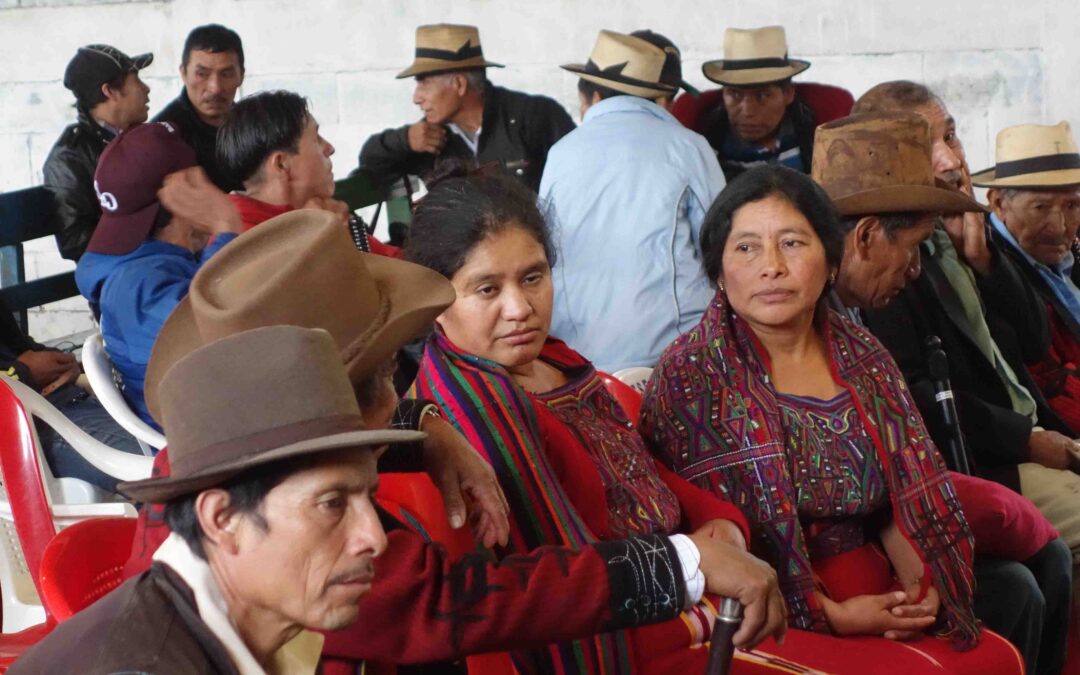
Guatemalan indigenous and peasant communities are finally finding a measure of justice and recovering lands and territories that had previously been seized by authorities or private economic actors, including during the internal armed conflict that took place from 1960 to 1996.
The ICJ learned of these encouraging developments at a workshop it held jointly with the UN Office of the High Commissioner on Human Rights (OHCHR) at an International Workshop on strategic litigation in the defense of land and territory, in Guatemala City, between 9 and 10 November.
One of the successful stories, told by Don Pedro Herrera, a community leader from Tzalbal community, municipality of Nebaj, Department of Quiché (Northern Guatemala), concerns a favourable decision by a first instance judge in Nebaj, in August 2016, ordering the restitution of some 1485 hectares (33 caballerias in the old measurement system still in use in Central America) to the Tzalbal communities.
The decision is under appeal before Guatemala’s Constitutional Court, but the Workshop heard that it had already boosted morale and hope among members of local communities on prospects for restitution for violations of their land rights.
The 33 caballerias had been segregated from the rest of municipal and community land in around 1984, in the midst of the Guatemalan civil war and as part of the counter-insurgency plans drawn by the military rulers purportedly to create loyal villages in the frontline to combat insurgency.
Most members of the community at the time had fled their homes, fearing for their lives that were threatened by both the armed insurgency and State military forces.
The de facto local authorities were coerced into signing documents agreeing to the separation of the land, but much of the population had remained unconcerned with the operation.
However, in 2011 FONTIERRAS, the government land authority, revealed to the community that their land had in fact been registered as State property following the forced separation in 1984.
Since then, Tzalbal communities started to take concerted action to recover the lands that they considered to be lawfully theirs and were the places where they maintained their homes and livelihood.
Tzalbal communities have some 70 families with some 500 people of all ages. When they learned that the land they traditionally possessed was “legally” the property of the State of Guatemala, they approached the ICJ- to provide legal assistance.
An Amparo constitutional writ was filed on behalf of the Tzalbal communities requesting the court to protect the rights of property and due process under the Guatemalan Constitution and declare the entry of land property in favour of the State in the land register invalid.
In August 2016, the first instance judge ruled in favour of the communities and ordered the register to amend the entry into the land registry. However, the State representatives have appealed against the ruling and a public hearing on the case took place the first week of November 2017. A final decision on the case by the Constitutional Court is now awaited.
Land, territory and resources are crucial assets for the survival and well being of indigenous and other local communities in Guatemala and other countries. For indigenous peoples, there is also an inherent and special relationship with land and territory which many times acquires religious and cultural significance. At the Workshop on Strategic Litigation, several other groups explained how they carry on their fight for justice and in defense of their land and territory.
Several of those groups recognized the instrumental assistance from the Guatemala office of the UN High Commissioner for Human Rights, which through its Maya Programme provides advice and support to local communities in their defense of land and territory.
One case under discussion, still underway, concerns the legal challenge to the Environmental Impact Assessment carried out by the Island Oil Company pursuant an oil exploration and exploitation contract with the government involving five municipalities of El Petén department. El Petén is the location of the largest biosphere reserve in Guatemala, where, curiously, human settlements are not allowed but some oil companies are authorized to carry out operations.
The legal battle has been led by Qeqchi, Mopan and Itza peoples and supported by the Maya Programme. An administrative remedy known as opposition was filed before MARN, the national authority for the preservation of the environment, alleging the violation of rights such as lack of consultation and consent from local communities. The administrative authority ruled in favour of the plaintiffs and ordered the exploration to stop until regulatory requirements are fully complied with.
Over time, the work of the ICJ and other groups, taken in coordination with the UN human rights office in Guatemala, has begun to show results.
More and more communities are taking concrete steps to legally challenge the actions or laws that cause or perpetuate their dispossession of their traditional land and territory.
Dec 5, 2017 | Artículos, Noticias
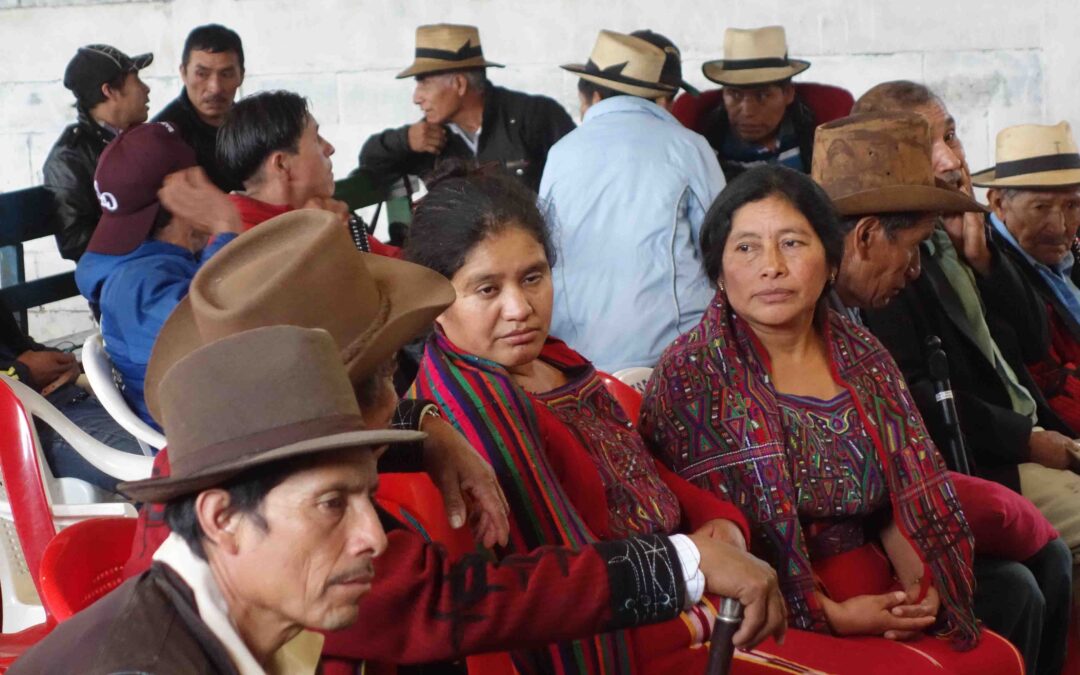
Las comunidades indígenas y campesinas guatemaltecas finalmente obtienen algo de justicia y recuperan tierras y territorios que anteriormente habían sido tomados por autoridades o actores económicos privados, incluso durante el conflicto armado interno que entre 1960 y 1996.
La CIJ pudo constatar estos desarrollos alentadores en un taller que organizó conjuntamente con la Oficina del Alto Comisionado de las Naciones Unidas para los Derechos Humanos (ACNUDH): Taller Internacional sobre litigios estratégicos en defensa de la tierra y el territorio, en la ciudad de Guatemala, entre 9 y 10 Noviembre 2017.
Una de las historias exitosas, contada por Don Pedro Herrera, un líder comunitario de la comunidad Tzalbal, municipio de Nebaj, departamento de Quiché (norte de Guatemala), se refiere a una decisión judicial favorable de un juez de primera instancia en Nebaj, de fecha Agosto de 2016, ordenando la restitución de unas 1485 hectáreas (33 caballerías en el antiguo sistema de medición aún en uso en América Central) a las comunidades de Tzalbal.
La decisión está en apelación ante el Tribunal Constitucional de Guatemala, pero en el Taller se dijo que ya había levantado la moral y esperanza entre los miembros de las comunidades locales sobre de la perspectivas de restitución de su tierra apropiada en violación de sus derechos a la tierra.
Las 33 caballerías fueron separadas del resto de las tierras municipales y comunitarias alrededor de 1984, en medio de la guerra civil guatemalteca y como parte de los planes de contra-insurgencia elaborados por los gobernantes militares, supuestamente para crear aldeas leales en la línea de frente de combate a la insurgencia armada.
La mayoría de los miembros de la comunidad en ese momento habían huido de sus hogares, temiendo por sus vidas que estaban amenazadas tanto por la insurgencia armada como por las fuerzas militares del Estado.
Las autoridades locales de facto fueron obligadas a firmar documentos que aceptaban la separación de la tierra, pero la mayor parte de la población no se preocupó por la operación.
Sin embargo, en el año 2011, FONTIERRAS, la autoridad de tierras del gobierno, reveló a la comunidad que las tierras habían sido registradas como propiedad del Estado luego de la separación forzada ocurrida en 1984.
Desde entonces, las comunidades de Tzalbal comenzaron a tomar medidas concertadas para recuperar las tierras que consideraban legítimamente suyas y son los lugares donde mantenían sus hogares y obtenían sus medios de subsistencia.
Las comunidades de Tzalbal tienen unas 70 familias con unas 500 personas de todas las edades. Cuando se enteraron de que la tierra que tradicionalmente poseían era “legalmente” propiedad del Estado de Guatemala, se acercaron a la CIJ para solicitar asistencia jurídica.
Se presentó un recurso constitucional de Amparo en nombre de las comunidades de Tzalbal solicitando al tribunal que proteja los derechos de propiedad y el debido proceso bajo la Constitución guatemalteca y declare inválida la inscripción de propiedad de la tierra a favor del Estado en el Registro de la Propiedad.
En Agosto de 2016, el juez de primera instancia se pronunció en favor de las comunidades y ordenó que el registro modificara la inscripción en el registro de la propiedad.
Sin embargo, los representantes del Estado han apelado contra el fallo y se llevó a cabo una audiencia pública sobre el caso la primera semana de Noviembre de 2017.
Ahora se espera una decisión final por parte del Tribunal Constitucional.
La tierra, el territorio y los recursos son activos cruciales para la supervivencia y el bienestar de las comunidades indígenas y otras comunidades locales en Guatemala y otros países.
Para los pueblos indígenas también existe una relación inherente y especial con la tierra y el territorio que muchas veces adquiere un significado religioso y cultural.
En el Taller sobre Litigios Estratégicos, varios otros grupos explicaron cómo continúan su lucha por la justicia y en defensa de su tierra y territorio.
Varios de esos grupos reconocieron la asistencia instrumental de la oficina en Guatemala del Alto Comisionado de las Naciones Unidas para los Derechos Humanos, que a través de su Programa Maya brinda asesoramiento y apoyo a las comunidades locales en su defensa de la tierra y el territorio.
Un caso en discusión, todavía en curso, se refiere a la impugnación legal de la Evaluación de Impacto Ambiental llevada a cabo por Island Oil Company en virtud de un contrato de exploración y explotación petrolera con el gobierno que involucra a cinco municipios del departamento de El Petén.
El Petén es la ubicación de la mayor reserva de la biosfera en Guatemala, donde, curiosamente, los asentamientos humanos no están permitidos pero algunas compañías petroleras están autorizadas para llevar a cabo operaciones.
La batalla legal ha sido liderada por los pueblos Qeqchi, Mopan e Itza y respaldada por el Programa Maya. Se presentó un recurso administrativo conocido como oposición ante el MARN, la autoridad nacional para la preservación del medio ambiente, alegando violaciones de derechos como la falta de consulta y consentimiento de las comunidades locales.
La autoridad administrativa falló a favor de los demandantes y ordenó que la exploración se detuviera hasta que se cumplieran los requisitos reglamentarios.
Con el tiempo, el trabajo de la CIJ y otros grupos, realizado en coordinación con la oficina de derechos humanos de la ONU en Guatemala, ha comenzado a mostrar resultados.
Cada vez más comunidades están tomando medidas concretas para desafiar legalmente las acciones o leyes que causan o perpetúan el despojo de sus tierras y territorios tradicionales.
Dec 5, 2017 | News
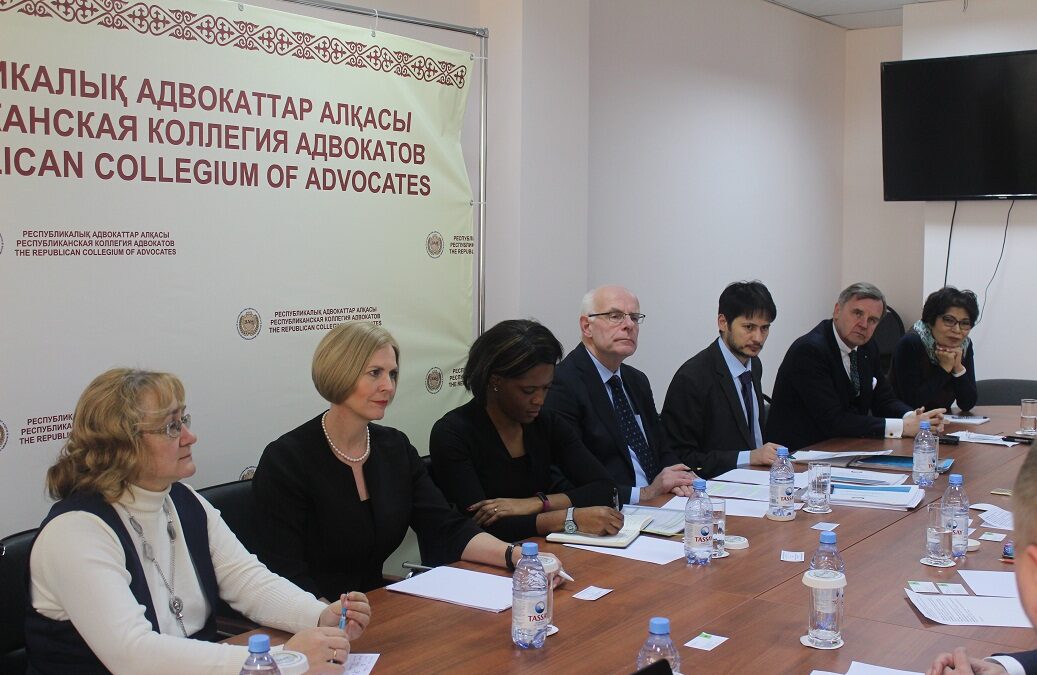
The ICJ, following a mission to Kazakhstan this week to assess the proposed draft law reforming the regulation of the legal profession, called for the postponement of the adoption of the law and more active participation of the legal profession in its development.
The ICJ stressed that any reform of the legal profession should strengthen the independence of lawyers to ensure that it is fully in line with international law and standards on the role of lawyers.
The independence of the legal profession is vital for lawyers to protect the human rights of their clients, including the right to a fair trial and access to justice.
The ICJ is concerned that the Draft Law changes the disciplinary system for lawyers from an independent procedure to one under significant influence of the executive.
In particular, the Draft Law provides for participation of representatives of the executive in disciplinary bodies.
The ICJ recalls that an independent disciplinary procedure is one of the pillars of an independent legal profession and should be guaranteed by law and in practice.
In line with the principle of an independent legal profession, the ICJ also believes that the provision in the Draft Law allowing for the creation of a “State Advokartura” should be removed.
One of the weaknesses of the current administration of the legal profession in Kazakhstan is that the qualification process for lawyers is not independent of the executive.
The ICJ stresses that the reform creates an opportunity to make the qualification procedure for lawyers fully independent, and administered by the Bar Association.
This would bring the current legislation in line with best international practices and with the principle of the independence of the legal profession.
The ICJ has noted that the Bar Association has not been sufficiently involved in the discussion of the reform of the profession. As a professional association of lawyers, the Bar Association should play a significant role the development of the legislation regulating its functioning and should ideally lead the discussion on the reform.
The ICJ believes that the adoption of the law should not be rushed and further discussion among all interested parties should take place before the Draft Law progresses further.
Reforms along the lines set out above would be consistent with Kazakhstan’s international obligations and commitments under, for instance, the International Covenant on Civil and Political Rights, and the UN Basic Principles on the Role of Lawyers.
Background
On 4 and 5 December, the ICJ carried out a visit to Astana where a number of high-level meetings were held. The visit was prompted by the reform of the legal profession and the related draft law which has been submitted to the Parliament.
The ICJ is grateful to its delegates from different jurisdictions who agreed to join the ICJ mission:
Mr. Otmar Kury, President of the Hamburg Bar Association, Chairman of the Commission on Federal Lawyers Act of the German Federal Bar
Jeroen Browder, President of the Ethics Commission of the Bar Association of the Netherlands and former President of the Bar Association of the Netherlands
Georg Stawa, President of the European Commission for the Effectiveness of Justice (CEPEJ)
Christina Blacklaws, Vice President of the Law Society of England and Wales
Chika Muorah, International Policy Adviser of the Law Society of England and Wales
The ICJ expresses its gratitude to all who kindly agreed to meet with it. In particular, the Mission thanks the Minister of Justice of Kazakhstan, the Supreme Court, members of the Parliament, the President of the Republican Bar Association, the “Kazbar” NGO and all others who it met with.
Kazakhstan-News-Web stories-Independence of the judiciary-2017-ENG (full report, in English)
Kazakhstan-MissionLawyers-News-pressreleases-2017-RUS (full story in Russian, PDF)