Nov 16, 2017 | Articles, Nouvelles, Publications, Rapports
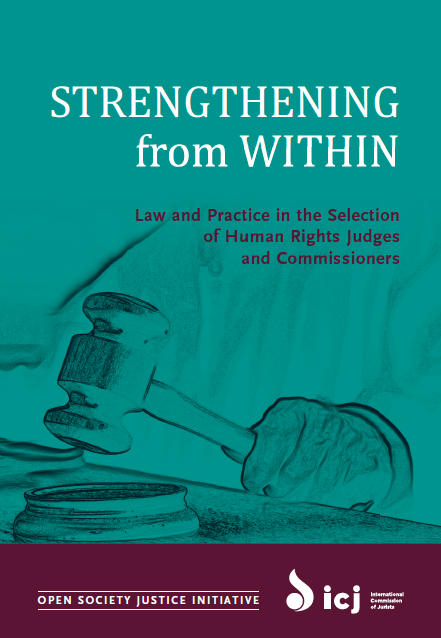
Les procédures nationales de sélection pour les magistrats des cours régionales des droits de l’Homme ne respectent que trop rarement les standards d’équité, d’intégration et de transparence, selon les conclusions d’un rapport publié aujourd’hui par la CIJ et l’Open Society Justice Initiative.
Ce rapport fait des recommandations visant à assurer la sélection des meilleurs candidats comme magistrats des cours régionales des droits de l’Homme.
Les cours et commissions régionales des droits de l’Homme, y compris la Cour africaine des droits de l’Homme et des peuples, la Cour européenne des droits de l’Homme et la Commission interaméricaine des droits de l’Homme, sont des défenseurs essentiels de l’état de droit.
Pourtant, malgré leur importance, le processus de sélection des magistrats et commissaires qui siègent dans ces organes, c’est-à-dire la façon dont ils sont nominés, contrôlés et in fine sélectionnés, demeure largement inconnu et bien souvent organisé de manière opaque.
Associée à des efforts politiques répétés pour éroder les institutions de droits internationaux, cette opacité souligne le besoin crucial de se concentrer sur le renforcement de ces systèmes depuis l’intérieur.
Ce rapport, consolidé depuis l’intérieur, répond justement à ce défi.
Il met en lumière les processus qu’utilisent les Etats pour nominer et sélectionner les magistrats et commissaires des droits de l’Homme.
En analysant les pratiques de nominations de 22 pays, ce rapport documente la façon dont les procédures de nominations ne respectent pas assez souvent les cadres légaux et les standards internationaux qui seraient censés les guider.
Ce rapport identifie également les pratiques prometteuses et propose des recommandations fondées sur l’expérience.
Un pouvoir judiciaire indépendant est essentiel à l’état de droit: pour les cours nationales, les procédures de sélection du pouvoir judiciaire doivent être équitables, transparentes et basées sur le mérite.
Ainsi que que le fait remarquer ce rapport, les cours et tribunaux internationaux du monde entier sont à la même enseigne.
Universal-Strengthening from Within-Publications-Reports-2017-FRA (rapport complet en français, PDF)
Nov 11, 2017 | Agendas, Events
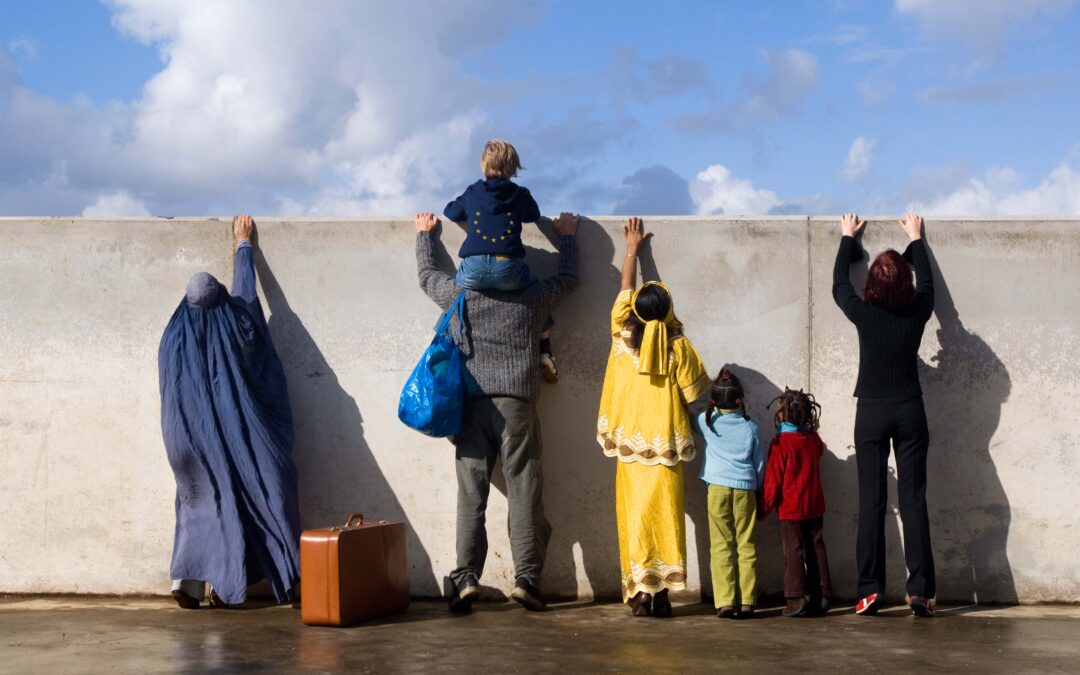
Today begins in Istanbul (Turkey) a two-day training for lawyers and CSO practitioners representing and working with migrants, refugees and asylum-seekers.
This event is organized by ICJ, in cooperation with its partners Refugee Rights Turkey, the European Council on Refugees and Exiles (ECRE), Mülteci-Der (MD) and ICJ-EI, as part of the EU co-financed project Fostering Access to Rights for Migrants, Refugees and Asylum-Seekers in Turkey.
30 lawyers and civil society practitioners – representing nine different bar associations and relevant organisations from the Istanbul area and other nearby key migration and asylum locations – are taking part in the training on 11 and 12 November.
The training aims to update lawyers and CSOs on the international and national law on the rights of refugees, migrants and asylum-seekers in order to be effective in their work at both the national and international levels. It aims at an effective implementation of the Turkish legal framework on asylum and migration.
The main thematic areas to be discussed will be the principle of non-refoulement, international protection, detention and access to economic, social and cultural rights.
The training will use as a basis the draft training materials prepared by the ICJ and its partners (to be published an the end of 2019) and, among other sources, the ICJ Practitioners Guide no. 6: Migration and International Human Rights Law.
The project “Fostering Access to Rights for Migrants, Refugees and Asylum-Seekers in Turkey” is funded by the European Instrument for Democracy and Human Rights (EIDHR) of the European Union.
Turkey-Training-Agenda-MigrationAsylumIHRL-Istanbul-2017-eng (download the agenda)
Nov 10, 2017 | News
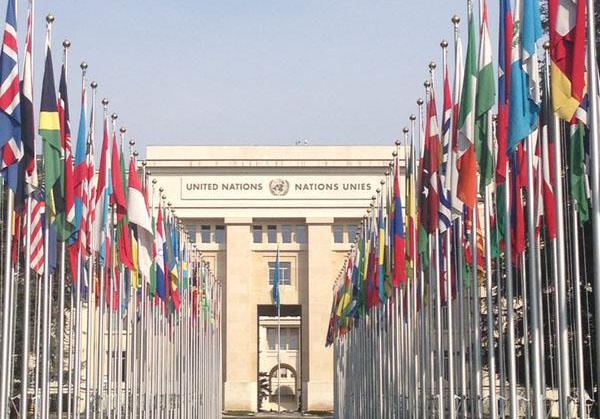
As Pakistan is set to undergo its third Universal Periodic Review (UPR) on 13 November, the ICJ has urged Pakistani authorities to meaningfully engage with the process to improve the human rights situation in the country.
“Pakistan’s past engagement with the UPR has been characterized by denial and defensive posturing,” said Frederick Rawski, ICJ’s Asia Director.
“As a recently-elected member of the UN Human Rights Council, it is more important than ever for the Pakistan to show that it takes its human rights obligations seriously by engaging with the upcoming UPR in its true spirit,” he added.
During its second UPR in 2012, Pakistan received 167 recommendations, of which it rejected seven, noted 34, and accepted 126.
The seven recommendations rejected by Pakistan relate to some of the most serious human rights violations in the country, including recommendations to adopt an official moratorium on the death penalty with a view to abolishing capital punishment in law and practice, repeal blasphemy laws, and decriminalize adultery and non-marital consensual sex.
Even accepted recommendations have been largely ignored in the four years since the previous UPR, the ICJ notes.
Enforced disappearances are still not recognized as a distinct, autonomous crime; perpetrators of gross human rights violations continue to escape justice; there has been complete inaction to prevent abuse of so-called blasphemy laws; and freedom of expression is often restricted on vague grounds such as “national security” and “immorality”.
“Pakistan’s human rights situation has in many ways deteriorated since 2012,” Rawski added.
“Yet – as reflected by Pakistan’s national report for the upcoming UPR – the authorities apparently remain in a state of denial about the dire human rights implications of these new measures,” he said.
These measures include the lifting the informal moratorium on the death penalty and carrying out nearly 500 executions in less than three years – among the highest in the world; passing laws allowing military courts to try civilians for certain terrorism-related offences; and a new wave of crackdowns on NGOs, journalists and human rights defenders, including retaliating against NGOs for presenting “a very bleak picture” of the country’s human rights situation to the UN.
“UN member states on Monday should urge Pakistan to end the dangerous downward spiral on rights by ending repression, respecting fundamental freedoms, and holding perpetrators of violations responsible,” Rawski said.
Contact
Frederick Rawski, ICJ Asia Pacific Regional Director, t: +66 64 478 1121, e: frederick.rawski(a)icj.org
Reema Omer, ICJ International Legal Adviser for Pakistan (London), t: +447889565691; e: reema.omer(a)icj.org
Additional information
The UPR is a unique mechanism of the UN Human Rights Council aimed at improving the human rights situation of each of the 193 UN Member States. Under this mechanism, the human rights record of all UN Member States is peer-reviewed every four to five years by the UPR Working Group, consisting of the 47 UN Member States of the Human Rights Council; however, any UN Member State can take part in the discussions and the dialogue during the UPR of the reviewed States. States then make recommendations to the country under review, which has the option of accepting or noting the recommendations.
Nov 8, 2017
Today, the ICJ and 15 other organizations wrote to the Prime Minister of Viet Nam requesting the immediate and unconditional release of human rights defender, Mr Nguyễn Bắc Truyển, who has been detained incommunicado and arbitrarily since the end of July 2017.
Vietnam-Nguyen Bac Truyens-Advocacy-Open letters-2017-ENG (full letter in English, pdf)
Nov 8, 2017 | News
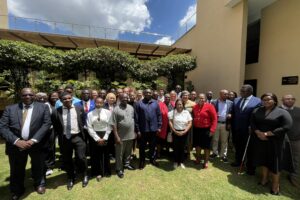
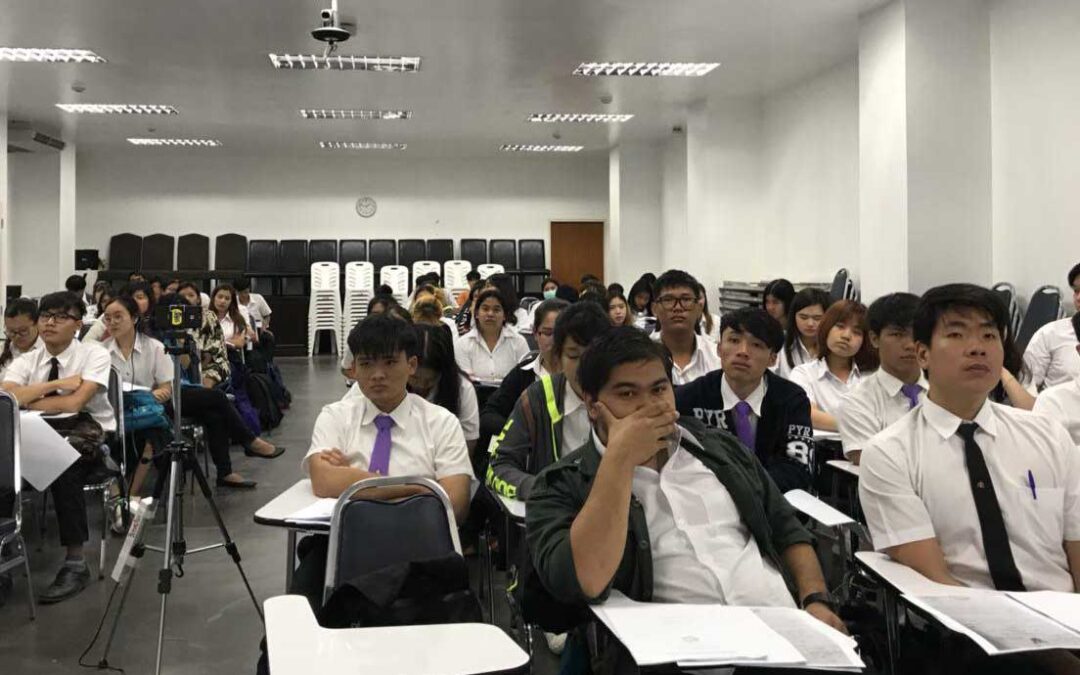
Today, the ICJ addressed an academic seminar on the topic of “Post-mortem Examinations and Inquires”, organized by Chiang Mai University’s Faculty of Law, in collaboration with the Cross Cultural Foundation, a partner of the ICJ.
Participants in the seminar, which was held at Chiang Mai University’s Faculty of Law campus, included undergraduate students and lecturers from Chiang Mai University.
The ICJ’s speakers at the workshop were Sanhawan Srisod, ICJ National Legal Adviser, who delivered an introduction to International Human Rights Law, and Kingsley Abbott, ICJ Senior International Legal Adviser, who addressed the right to life, and the international law and standards as they relate to investigations including the rights of victims and family members.
Other speakers at the Workshop were Preeda Nakphew a lawyer with the Cross Cultural Foundation, and Sarawut Pratoomraj, a Law Reform Officer with the Law Reform Commission of Thailand.
The seminar was part of an ongoing engagement between the ICJ and Chiang Mai University’s Faculty of Law.