Jun 19, 2017 | Advocacy, Non-legal submissions
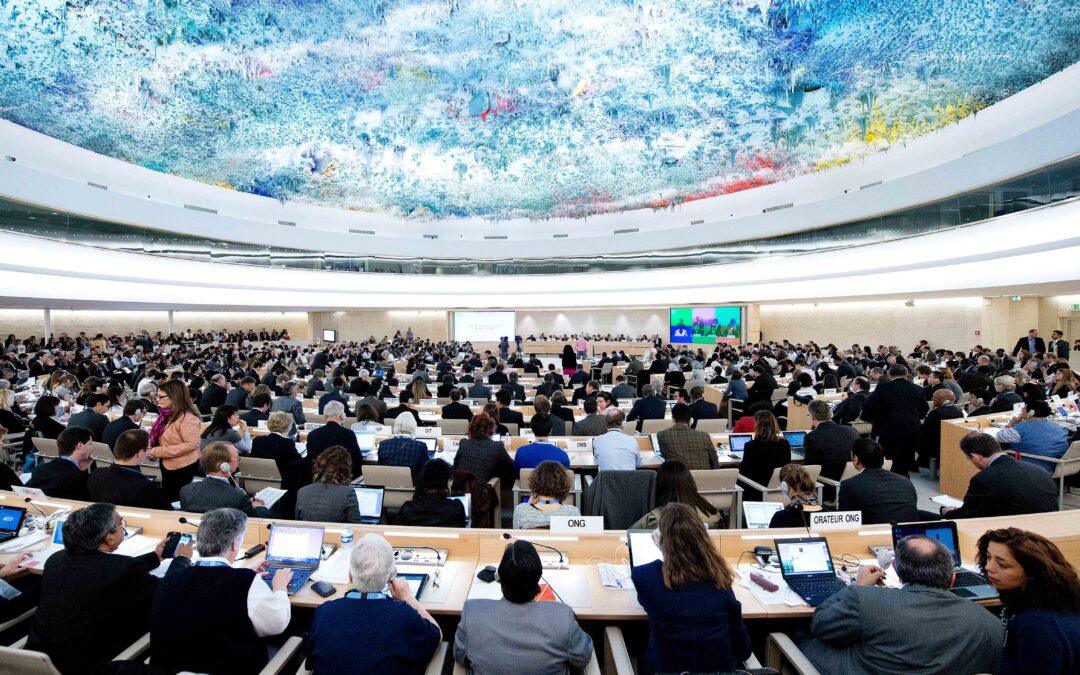
The ICJ has joined other NGOs in expressing concerns about the latest resolution on “protection of the family” currently under consideration by the Human Rights Council.
The statement, which was delivered by the International Humanist and Ethical Union during the Council’s general debate on Follow-up and implementation of the Vienna Declaration and Programme of Action (item 8), read as follows:
In the Vienna, States reaffirmed their commitment to the Universal Declaration of Human Rights. In that vein, we would like to express our strong concerns about the draft resolution on the protection of the family [A/HRC/35/L.21 on “Protection of the Family: Role of the family in supporting the protection and promotion of human rights of older persons.”]
Together with NGOs working on the rights of older persons, we highlight that this resolution reinforces ageist stereotypes, fails to adequately recognize older persons as individual rights holders and falls far short of States’ obligations to respect, protect and fulfil their rights. We reject its limited focus on ‘protection and assistance’ and failure to reflect research that the family is the primary site of violence against older persons. We also note that the resolution ignores the work of the Open-ended Working Group on Ageing and ignores the conclusions of the Independent Expert on the enjoyment of all human rights by older persons.
This resolution is one of a series of Protection of the Family resolutions that aim to subvert the universality of international human rights; stifle diversity and autonomy; and to shift rights protections away from family members, including older persons, into the institution of ‘the family’. We are concerned that the resolution attempts to instrumentalize older persons and their rights towards these ends.
We are also concerned by the resolution’s failure to recognize that various forms of family exist everywhere, and its stating that “the family plays a crucial role in the preservation of cultural identity, traditions, morals, heritage and the values system of society,” without recognising that families can perpetuate discriminatory and harmful values and traditions, particularly against older women. Culture and tradition are not static or homogeneous; we all have equal human rights to participate in and create culture. When powerful institutions attempt to claim ownership over, or enforce ‘authentic’ interpretations of culture, tradition, or values, individuals – particularly those who are marginalized or vulnerable – are denied their fundamental rights.
For these reasons, we do not believe this draft resolution is in line with human rights principles and standards and therefore call on the Core Group to withdraw it or for members of the Human Rights Council to amend or vote against it.
*Joining and supporting organisations:
Action Canada for Sexual Health and Rights
ARC International
Association for Women’s Rights in Development
Civil Authorize Negotiate Organization – Myanmar (C.A.N-Myanmar)
Coalition of African Lesbians
CREA
Federatie van Nederlandse Verenigingen tot Integratie van Homoseksualiteit – COC Nederland
HelpAge International
International Commission of Jurists
International Humanist and Ethical Union (IHEU)
International Lesbian, Gay, Bisexual, Trans and Intersex Association (ILGA)
International Longevity Centre Global Alliance (ILC GA)
OUtRight Action International
Sexual Rights Initiative
Jun 16, 2017 | Advocacy, Non-legal submissions
The International Commission of Jurists today drew to the attention of the Human Rights Council the failure of responsible States to ensure accountability for renditions and secret detention in several countries across the world.
The issue was highlighted by an oral statement in the General Debate on human rights situations that require the Council’s attention.
The ICJ statement continued as follows:
The US-administered rendition and secret detention programme of the last decade led to the commission of egregious violations of human rights and crimes under international law on a global scale with the complicity of several States, including in Europe.
Similar practices have been adopted in the Russian Federation where abductions of “terrorism” or “extremism” suspects and transfer to Central Asian States continue, in disregard of the principle of non-refoulement.
None of the States involved in the US-led renditions programme, or in abduction and transfer practices occurring in the Russian Federation, have ensured full accountability of those responsible and full redress for victims.
The ICJ calls on this Council to issue a strong call to all UN Member States to provide full accountability and redress for victims for the human rights violations that occurred during these operations.
Jun 16, 2017 | Адвокаси, Неюридические заявления
МКЮ сегодня обратила внимание Совета по правам человека на неспособность ответственных государств обеспечить подотчетность за выдачу и тайное содержание под стражей в нескольких странах мира. Этот вопрос был отмечен устным заявлением в Генеральном обсуждении о положении прав человека, которое требует внимания Совета.
Заявление МКЮ продолжалось следующим образом:
Осуществляемая США программа выдачи и тайного содержания под стражей последнего десятилетия привела к совершению вопиющих нарушений прав человека и преступлений по международному праву в глобальном масштабе с участием нескольких государств, в том числе в Европе.
Подобная практика была принята в Российской Федерации, где похищения подозреваемых в терроризме или «экстремизме» и передача в государства Центральной Азии продолжаются, не обращая внимания на принцип невыдворения.
Ни одно из государств, участвовавших в проводимой под руководством США программе выдачи, или в методах похищения и передачи, происходящих в Российской Федерации, не обеспечило полную ответственность виновных и полную компенсацию жертвам.
МКЮ призывает этот Совет настоятельно призвать все государства-члены ООН обеспечить полную ответственность и возмещение ущерба жертвам за нарушения прав человека, которые произошли в ходе этих операций.
Jun 16, 2017 | News
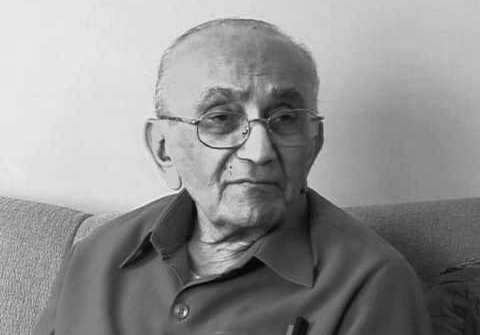
Justice Prafullachandra Natwarlal Bhagwati, former ICJ Commissioner and Honorary Member and Chief Justice of the Supreme Court of India, passed away at the age of 95, on 15 June 2017, following a brief illness.
“The International Commission of Jurists benefited greatly from Justice Bhagwati’s engagement and leadership. He was a giant of the human rights movement, dedicated to enlarging and ensuring access to justice for everyone, including those who couldn’t seek and receive justice due to their economic or social status,” said Sam Zarifi, ICJ’s Secretary-General.
“His dedication and ground-breaking approach to human rights accountability inspired many within and outside of the ICJ, and the values he represented will continue to inspire and inform our work,” he added.
Justice Bhagwati had a long history of promoting and protecting human rights, both at home and on the international stage, particularly for the most marginalized and vulnerable individuals and groups.
Former Chief Justice of India, Justice P.N. Bhagwati held a long and illustrious career within the Indian judiciary.
He introduced many innovative reforms within the Indian judicial system that increased access to justice for the poorest and most disadvantaged, including as a pioneer of public interest litigation and absolute liability.
Outside of India, Justice P.N. Bhagwati played a prominent role in the international human rights movement, for example as a member of the Committee of Experts of the International Labour Organization and Chair of the United Nations Human Rights Committee.
He was also actively involved in a number of non-governmental organizations, including the ICJ, where he committed to a high number of missions, seminars, publications and other activities on behalf of the organization.
He also served as a long-standing Chair of the Advisory Board for the ICJ’s Centre for the Independence of Judges and Lawyers.

Jun 15, 2017
The ICJ and nine other human rights organizations decry the human rights crises taking place in Egypt in a letter published today. Repression of human rights defenders, journalists and political opposition has reached a level not seen in decades.
It require effective action including by the UN Human Rights Council.
The full letter is available here (in PDF).
The ICJ is also co-sponsoring a side event, Egypt: the Price of Silence, on Monday 19 June at 14:30 (pdf): HRC35-SideEvent-Egypt-2017