Jun 24, 2016 | Advocacy
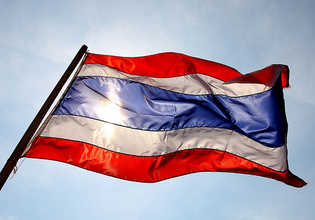
The ICJ, International IDEA (Australia) and the Office of the United Nations Resident Coordinator in Thailand have collaborated to produce an unofficial translation of the draft Constitution of Thailand which is scheduled to be the subject of a national referendum on 7 August 2016.
The original Thai text as formally published by the Royal Thai Government shall in all events remain the sole authority having legal force.
Thailand-Draft-Constitution-EnglishTr-Advocacy-2016-ENG (full text in PDF)
Contact
Sam Zarifi, ICJ Regional Director for Asia and the Pacific, t: +66807819002; e: sam.zarifi(a)icj.org
Kingsley Abbott, Senior International Legal Adviser, t: +66 94 470 1345; e: kingsley.abbott(a)icj.org
Jun 24, 2016 | News
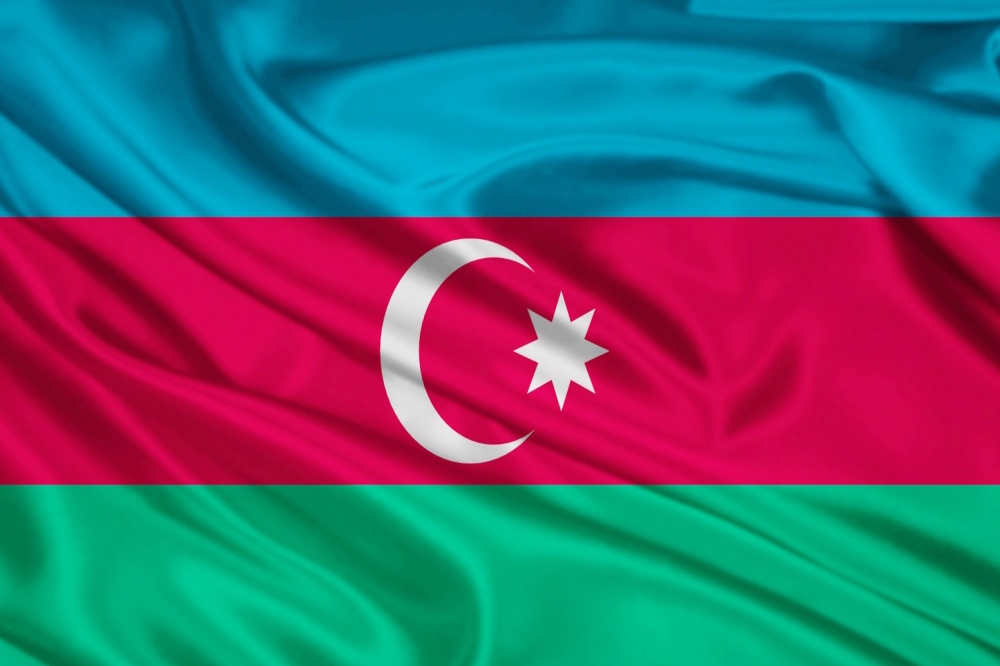
The ICJ conducted a research mission to Azerbaijan on 20-23 June, to assess the situation of lawyers in the country, in light of concerns about recent criminal and disciplinary proceedings against lawyers.
During the mission the ICJ met with lawyers and legal experts to discuss the governance of the legal profession, including questions of access to the profession, the need for sufficient numbers of qualified lawyers to provide effective access to justice, and the role of the bar association in protecting lawyers against harassment or interference in their work.
In the course of the mission the ICJ met with several lawyers against whom disciplinary proceedings had been initiated, or who had faced criminal or other sanctions. Many of these lawyers have been prominent in bringing human rights cases before the national and international courts.
On 23 June, ICJ representatives observed a hearing in the case of lawyer Alaif Ghasanov before the Baku Administrative Economic Court no.1, in which he is challenging his disbarment.
The ICJ will publish a report of the mission with recommendations to address harassment of lawyers and for reform of the governance of the legal profession.
Jun 23, 2016 | News
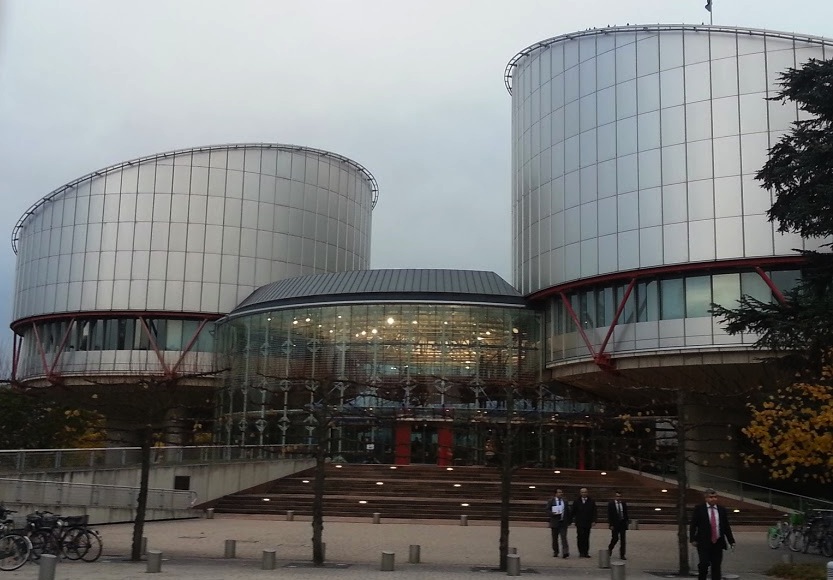
The ICJ welcomes today’s judgment of the European Court of Human Rights that the removal from office of Hungarian Supreme Court President András Baka violated the European Convention on Human Rights (ECHR).
The Court found that the pre-mature termination of his appointment deprived him of a fair process and was based on public statements he made that were critical of certain justice system reforms.
The ICJ intervened as third party in this case. The judgment is expected to be influential around the world in cases involving judicial independence and expression.
“Today’s judgment is a vindication for the security of tenure and freedom of expression of judges not only in Hungary, but around the world,” said Massimo Frigo, ICJ Europe Programme Legal Adviser.
“Judges should never be precluded from exercising their right and duty to speak out in protection of judicial independence,” he added.
In its ruling, the Grand Chamber of the European Court of Human Rights ruled that, by ending his prescribed term in office pre-maturely through a targeted legislative reform because of his public criticism, Hungary had violated his right to freedom of expression, under article 10 of the European Convention on Human Rights.
The Court held that expressing statements on the reform of the judiciary and other legislation was not only Judge Baka’s right, but also his duty.
The Court further ruled that former Supreme Court President András Baka had enjoyed a right to access courts to challenge his dismissal, and that his removal from office by a law that precluded such challenges violated article 6 of the ECHR on the right to a fair hearing.
In its judgment, the European Court cited a wide range of United Nations, European, Inter-American, and other international instruments and standards on judicial independence and freedom of expression.
The International Commission of Jurists anticipates that the Court’s ruling and reasons will have an important influence on cases concerning judicial independence and expression around the world.
Background:
Judge András Baka, former judge of the European Court of Human Rights from 1991 to 2008, had been appointed as President of the Supreme Court of Hungary on 22 June 2009.
His term in office, which was on his appointment guaranteed by law to continue until 22 June 2015, was prematurely terminated on 1 January 2012 following the entry into force of the Transitional Provisions of the new Hungarian Constitution.
This rule modified the eligibility requirements for the position of President of the Supreme Court, effectively excluding judge András Baka from the position.
Judge András Baka was also President of the National Council of Justice, and had publicly expressed criticism concerning various legal reforms brought on by the Hungarian Government that he considered to undermine the independence of the judiciary.
The judgment can be downloaded in PDF format.
Read also:
ICJ third party intervention
The ICJ also recently published a comprehensive analysis of relevant global standards in its Practitioners Guide No. 13 on judicial accountability.
An online compilation of global and regional standards on independence and accountability of judges, lawyers and prosecutors is also available here.
Contact
Massimo Frigo, Legal Adviser, ICJ Europe Programme, t: +41 22 979 38 05 ; e: massimo.frigo(a)icj.org
Jun 23, 2016
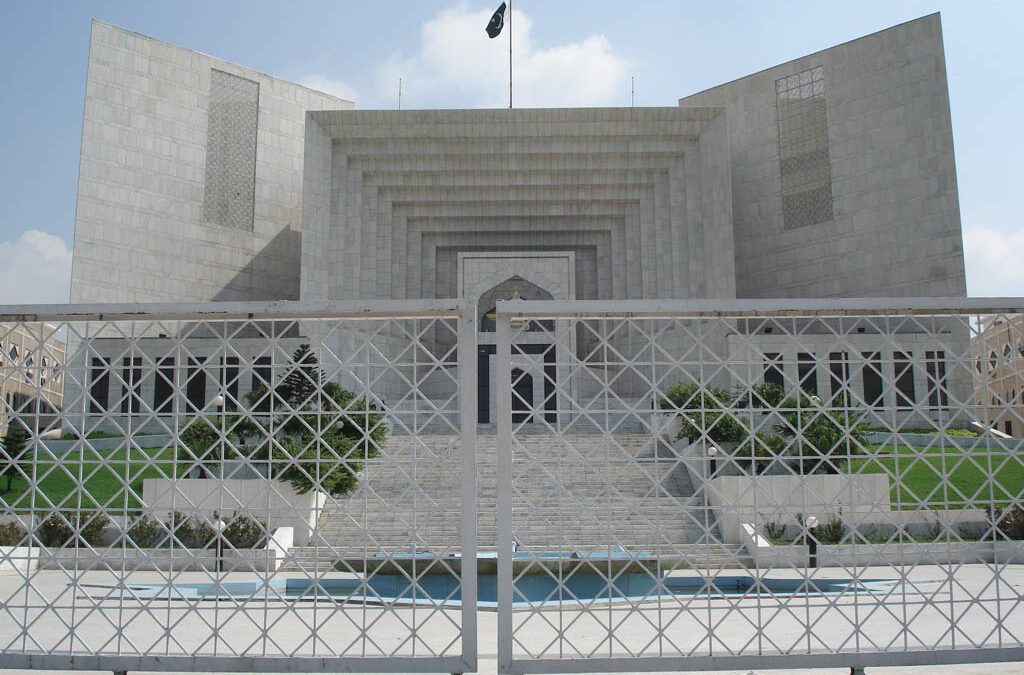
The Pakistan government must stop putting civilians charged with terrorism-related offences on trial before military tribunals, said the International Commission of Jurists (ICJ) in its Briefing Paper Military Injustice in Pakistan released today.
Since January 2015, when Pakistan empowered military courts to try civilians for terrorism-related offences, 11 military courts have been constituted to hear cases related to terrorism.
These 11 military courts have thus far concluded the trials of 105 people, finding the defendants guilty in 81 cases. Seventy-seven people have been sentenced to death and four have been given life sentences. At least 12 people have been hanged after trials that are grossly unfair.
“There is no doubt that the Pakistan government has an obligation to protect people in Pakistan from terrorist acts, but military tribunals are not a proper or effective response to this real threat,” said Sam Zarifi, ICJ’s Asia Director.
“These tribunals are opaque and operate in violation of national and international fair trial standards, and so are not effective in providing justice, truth or even proper remedies for the victims of terrorism,” he added.
Families of 17 people convicted by military courts have alleged the convicts were denied a right to a fair trial in petitions to the Supreme Court. The Court is expected to issue rulings on the petitions imminently.
Specific violations alleged by the petitioners include: denial of the right to counsel of choice; failure to disclose the charges against the accused; and failure to give convicts copies of a judgment with evidence and reasons for the verdict.
In some cases, the petitioners have alleged the convicts were subjected to enforced disappearance and torture and other ill-treatment, and in at least two cases, the petitioners have also alleged that the convicts were children under the age of 18 at the time they were arrested by law enforcement agencies.
Recent media reports of letters said to be from a judge (unnamed) of a military court have raised concerns about the accuracy of the testimonies against the accused; discrepancies between the charges and the evidence provided; and lack of legal training of military courts’ officers.
The ICJ is not in a position to verify the authenticity of the letters, but, noting the consistency of these concerns with those expressed by the ICJ and families of people convicted by military courts, the organization calls on the Pakistan government to investigate the allegations.
The ICJ reminds that in August last year, the Supreme Court upheld the legality of the trial of civilians before military courts in contravention of long-established principles of international law and the Court’s own jurisprudence.
“The Supreme Court now has the opportunity to ensure that at the very least, the procedures of military courts meet basic standards of fairness,” Zarifi said.
The expansion of the jurisdiction of military tribunals through the amendments to the Constitution and the Pakistan Army Act were a key part of the Pakistani government’s 20-point “National Action Plan”, adopted following the horrific attack on the Army Public School in Peshawar in December 2014.
NAP envisioned military courts to be a short-term “solution” to try “terrorists”, to be operational only for a two-year period during which the Government would bring about necessary “reforms in criminal courts system to strengthen the anti-terrorism institutions.”
“Now, with just six months left before the 21st Amendment expires, Pakistan has also failed to address failures of the criminal justice system, which were used as a justification for military trials for militants,” Zarifi added.
The ICJ has called on the Pakistan government to roll back the system of “military injustice”, and ensure that the 21st Amendment is not extended at the expiration of the sunset clause.
The ICJ has also urged that Pakistan reinstate a moratorium on executions with a view to abolishing the death penalty in law and practice.
Contact
Sam Zarifi, ICJ Asia Pacific Regional Director (Bangkok), t: +66 807819002; e: sam.zarifi(a)icj.org
Reema Omer, ICJ International Legal Adviser for Pakistan (London), t: +44 7889565691; e: reema.omer(a)icj.org
Pakistan-Military court-Advocacy-Analysis brief-2016-ENG (full text in PDF)