Jun 23, 2016 | Events
Side-event to the 32nd regular session of the Human Rights Council
24 June 2016, from 13:30 to 15:00 hrs
Room IX, Palais des Nations, Geneva
Accountability and remedy for business-related human rights abuse have been key advocacy objectives for many human rights organizations over the years.
Accountability and remedy have been identified as being some of the most salient normative and governance gaps in business and human rights. States and international organizations are now taking some action in response to those gaps and are considering initiatives and ways to tackle accountability and remedy deficits.
The Human Rights Council is currently engaged in a treaty-making process through an Intergovernmental Working Group, and it is considering a report by OHCHR on Accountability and Remedy during its 32nd session. Just one week prior, the International Labour Conference carried out crucial deliberations about ways to address those governance gaps and promote decent work in the global supply chain and to deter abuse.
This panel will look at these issues from the perspective of civil society and practitioners’ work, drawing from concrete experiences, recent achievements in the field and ongoing concerns.
Introduction:
- Surya Deva, UN Working Group on Business and Human Rights
Panel:
- Gabriela Kletzel – CELS
- Richard Meeran – Leigh Day
- Anna Biondi – ILO
- Gaëlle Dusepulchre- FIDH
- Moderator : Carlos López – ICJ
From the groundbreaking work to investigate and prosecute serious abuse against workers during the Argentinian military regime to the forward looking work of litigators of cases concerning parent and subsidiary companies’ responsibilities, exploring the new paths being broken in the recent International Labour Conference’s decisions on decent work on supply chains and the UN IGWG on transnational corporations and other business enterprises with respect to human rights, this panel will discuss ways in which these initiatives may address the crucial issues of accountability and remedy looking at past and present achievements and plans for the future.
The event flyer may be downloaded (PDF) here: Past abuses and remaining challenges_flyer_side event_HRC32
The event is organized by ICJ, Franciscans International, FIDH and CELS.
Jun 23, 2016
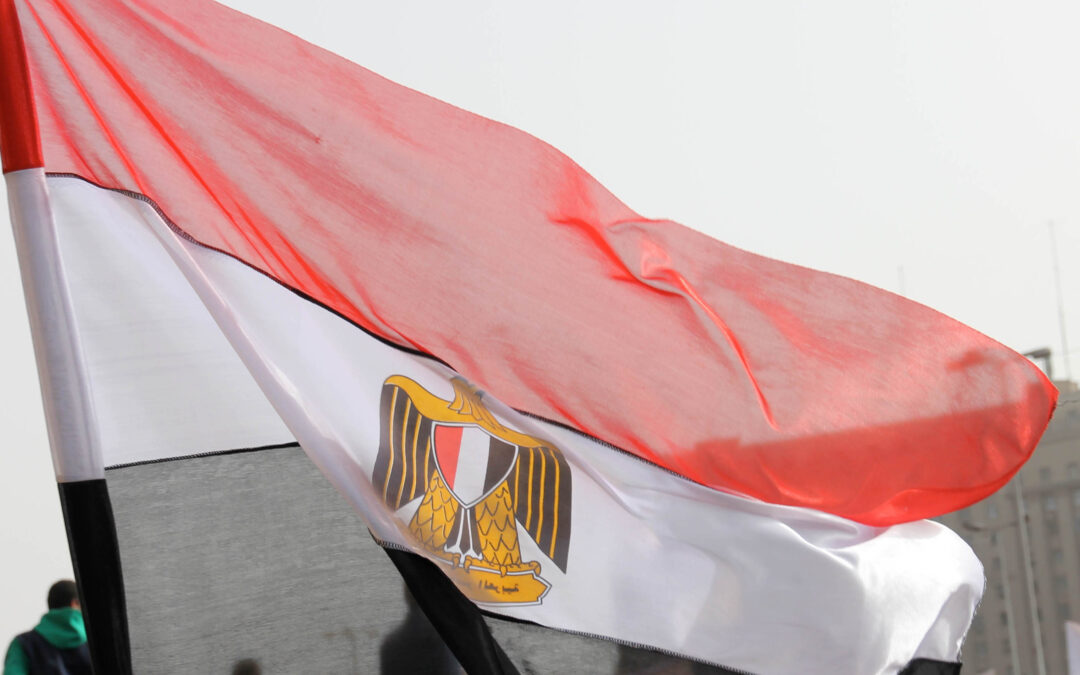
The ICJ has joined other international NGOs in a joint statement of concern about the severe and worsening repression of civil society in Egypt.
Together with, Amnesty International, CIVICUS, EuroMed Rights, FIDH, Front Line Defenders, Human Rights Watch, IFEX, the International Service for Human Rights, People in Need and the World Organisation Against Torture (OMCT), the ICJ highlights a number of anti-civil society measures and cases in Egypt, ultimately calling on Egyptian authorities to immediately take the following steps to address the severe violations against human rights defenders:
- Abide by their own pledges made in March 2015 at the conclusion of Egypt’s Universal Periodic Review before the United Nations Human Rights Council to “respect the free exercise of the associations defending human rights,” and comply with their obligations under Article 75 of the 2014 Constitution, which protects civil society organizations from interference by the government.
- Close the politically-motivated Case 173 of 2011, known as the “foreign funding case,” and withdraw all measures of harassment and intimidation of human rights defenders taken with reference to that case, including travel bans, the asset freeze order and trumped-up tax investigations.
- Amend penal code Article 78, which in very broad terms penalises the receipt of foreign funding without government approval and imposes a penalty of up to life imprisonment, which in practice in Egypt is 25 years, in addition to a 500,000 Egyptian pound fine (US$56,300).
- Cease all additional forms of legal and other harassment of human rights defenders.
- Repeal the Protest Law (Law 107 of 2013), which severely restricts the right to peaceful assembly, or amend it in order to bring it in line with international human rights law and the Egyptian constitution.
- Repeal the Counter-Terrorism Law (Law 94 of 2015), which effectively criminalizes freedom of expression, association and assembly, or amend it substantially to bring it in line with international human rights law and standards.
- Immediately release all individuals imprisoned solely for the peaceful exercise of their rights to freedom of expression, association and assembly; drop the charges against them and ensure that any who have been convicted have their convictions quashed.
The full statement may be downloaded in PDF format here: Egypt-Advocacy-JointNGOStatement-2016
Jun 22, 2016 | Advocacy, Non-legal submissions
The ICJ today made an oral statement at the United Nations, on threats to the independence of lawyers in Azerbaijan.
In the statement to the Human Rights Council, the ICJ emphasised that lawyers in Azerbaijan face suspension or disbarment for statements clearly constituting protected freedom of expression. In some cases, they are subject to arrest, detention, unfair trial, and arbitrary imprisonment.
The lack of independence of the Bar Association is a serious concern. This body is increasingly initiating apparently groundless disciplinary proceedings, including leading to disbarment, against lawyers who defend the interests of clients in high profile or politically sensitive cases. Disciplinary penalties in such cases are routinely upheld by the judiciary, which does not appear to be fully independent.
This was highlighted in preliminary findings of the Working Group on Arbitrary Detention following its recent visit (Working Group on Arbitrary Detention Statement upon the conclusion of its visit to Azerbaijan (16-25 May 2016)). Representatives of the ICJ are currently visiting Azerbaijan to further assess the situation.
The cases of Khalid Bagirov, Alaif Ghasanov and Intigam Aliyev illustrate these concerns. While welcoming the release of Mr Aliyev, we remain concerned at the maintenance of his underlying conviction despite credible reports that the charges against him were politically motivated.
Lawyer Muzaffar Bakhishov is currently subject to disbarment proceedings for having criticized the lack of independence of the judicial system.
These disbarments have a chilling effect on the work of other lawyers. They undermine access to effective and independent legal assistance to protect human rights.
The ICJ urged the Council to closely monitor this worrying trend for the rule of law.
The statement may be downloaded in PDF format here: HRC32-OralStatement-Azerbaijan-2016-final-ENG
Jun 22, 2016
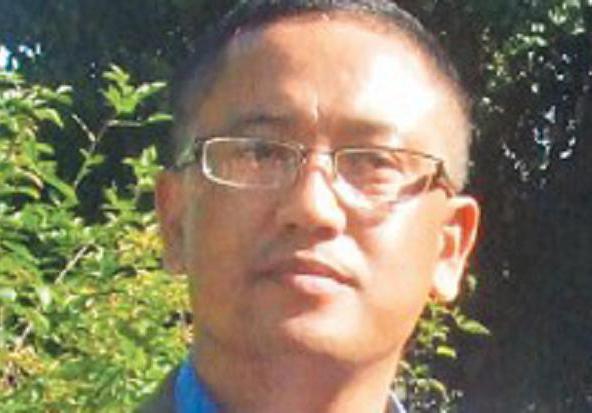
In a briefing paper published today, the ICJ explained the legal issues and political context of the case against Colonel Kumar Lama, a Nepali Army officer.
Earlier this month, Colonel Lama’s trial on allegations of torture of two Nepali detainees in 2005 resumed in the United Kingdom.
“This case is one of the all too rare occasions when the principle of universal jurisdiction has been applied in judicial procedures in the UK, if not the world over,” said Sam Zarifi, ICJ’s Asia Director. “The decision will have far reaching implications, not only for the victims in this case but for all victims of torture and other serious abuses around the world seeking justice.”
In January 2013, the UK exercised a form of “universal jurisdiction” to charge Colonel Lama on two counts of committing torture under Section 134(1) of the Criminal Justice Act, 1988.
The charges are based on allegations that Colonel Lama was involved in the torture of two Nepali detainees in 2005, at the height of Nepal’s decade-long internal armed conflict. Colonel Lama’s trial began in February 2015 in London. After a few weeks, however, the trial was adjourned because there were problems with interpretation in court. The trial began afresh earlier this month.
The briefing paper addresses questions around the charges against Colonel Lama; the political context in Nepal when the acts of torture allegedly happened; the principle of “universal jurisdiction”; and procedural questions around such trials in the UK.
“The case comes at a time when an agreement between the ruling parties in Nepal is threatening to entrench impunity for those who planned and carried out unlawful killings, enforced disappearances, torture and ill-treatment, and other serious crimes in Nepal’s civil war,” added Zarifi.
“It is an important and long overdue opportunity to challenge the systemic impunity for conflict-era human rights abuses in Nepal.”
Contact
Sam Zarifi, ICJ Asia-Pacific Director, t: +66-807-819-002; e: sam.zarifi(a)icj.org
Nepal-Lama Q&A-Advocacy-2016-ENG (full paper in PDF)
Jun 22, 2016 | Advocacy
The ICJ and other human rights groups issued a joint statement on the 10th anniversary of the Optional Protocol to the Convention against Torture.
It can be downloaded here: Universal-OPCAT+10 Joint Statement-Advocacy-2016-ENG (full text in PDF)