Apr 19, 2016
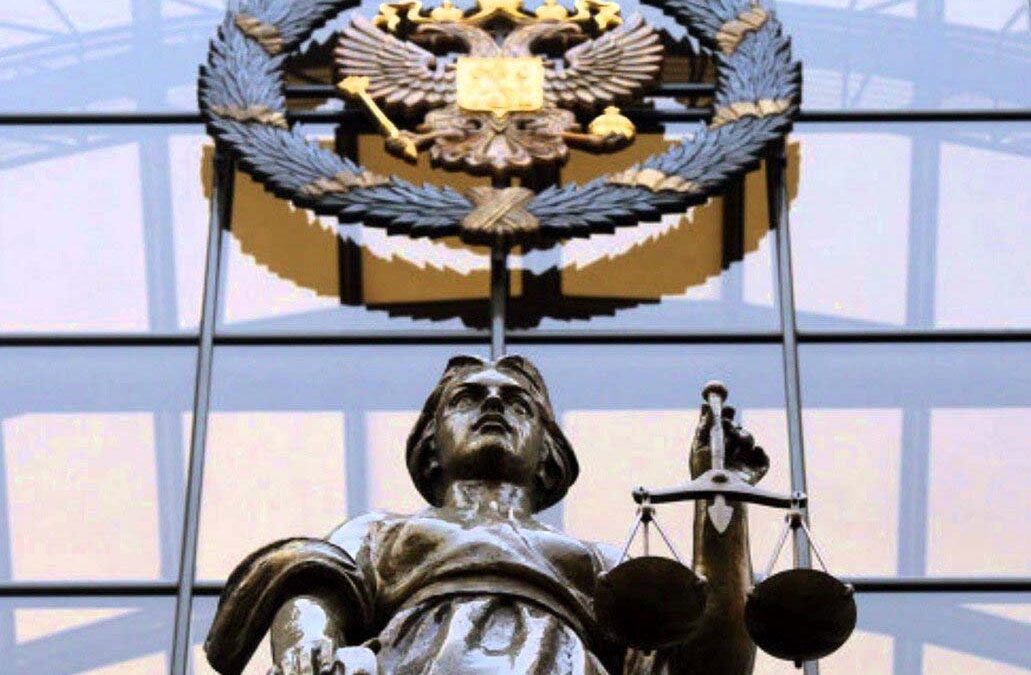
Today, the ICJ has provided comments on the Draft Resolution of the Plenum of the Supreme Court of the Russian Federation “On judicial practice of application of legislation regulating the issue of disciplinary responsibility of judges”.
The comments focus on a number of issues in the disciplinary system that the ICJ considers to be of particular importance in this regard.
The ICJ recommended that the Draft Resolution should, in particular:
– Clarify further the definition of disciplinary misconduct;
– Prohibit disciplinary action for judicial decisions of judges; and
– Clarify further the very exceptional nature dismissals of judges.
These comments and recommendations draw on the ICJ’s report and recommendations Securing justice: the disciplinary system for judges in the Russian Federation published in 2012 following a mission to the Russian Federation.
The report made a series of recommendations for specific and practical measures designed to advance the process of reform of the judicial disciplinary system in the Russian Federation.
Among other things the report concluded that “comprehensive reforms of the [disciplinary] system [were] needed to establish a judiciary that is an effective guardian of the Rule of Law, complies with international standards on the judicial independence, and is a reliable guarantor of the right to a fair hearing”.
Russia-Recommendaitons on Draft Resolution-Advocacy-Analysis Brief-2016-ENG (full text, in PDF)
Russia-Recommendaitons on Draft Resolution-Advocacy-Analysis Brief-2016-RUS (full text, in PDF)
Apr 18, 2016 | Advocacy, Non-legal submissions
The ICJ and Thai Lawyers for Human Rights provided a joint submission to the UN Human Rights Committee for its consideration during the adoption of a list of issues for the examination of the Second Periodic Report of Thailand under the International Covenant on Civil and Political Rights.
During its 117th Session, from 30 June to 25 July 2016, the Committee will prepare and adopt a List of Issues on Thailand.
These issues will be put to the Government of Thailand for formal response ahead of the Committee’s full examination of Thailand’s Second Periodic Report during the Committee’s 119th Session, the exact dates of which have yet to be confirmed but which is expected to take place in March 2017.
The ICJ and Thai Lawyers for Human Rights’ joint submission raises matters and suggests concrete questions to be put to the Government of Thailand concerning the following issues:
– Thailand’s derogation under Article 4 of the Covenant;
– Torture and other ill-treatment, enforced disappearances and custodial deaths in disputed circumstances; and
– Thailand’s new institutional and legal framework since the coup d’état, which severely restricts the exercise of Covenant rights within the country and in particular the recent introduction of the National Council for Peace and Order’s (NCPO) Head Order 13/2016, which grants members of the military wide-ranging law enforcement powers to ‘prevent and suppress’ 27 ‘crimes’, together with blanket immunity from prosecution.
THAILAND-JOINT ICJ TLHR HRC LOI SUBMISSION-Advocacy-non legal submission-2016-ENG (full text in PDF)
Apr 15, 2016 | News
The Nepal government should immediately stop all intimidation and harassment of the National Human Rights Commission (NHRC) and its staff and respect its independence in line with international standards, the ICJ and other rights groups said today.
The attempts to intimidate the NHRC are a direct contradiction of the United Nation’s Principles relating to the Status of National Institutions (the Paris Principles) as well as Nepal’s constitution, the ICJ Amnesty International and Human Rights Watch said.
According to the commissioners and confirmed by independent media accounts, on April 3, 2016, Prime Minister K.P. Sharma Oli summoned the National Human Rights Commission chair, Anup Raj Sharma, and other commissioners to question them about the NHRC’s statement delivered by Commissioner Mohna Ansari during the Universal Periodic Review (UPR) of the human rights situation in Nepal before the UN Human Rights Council in Geneva in March.
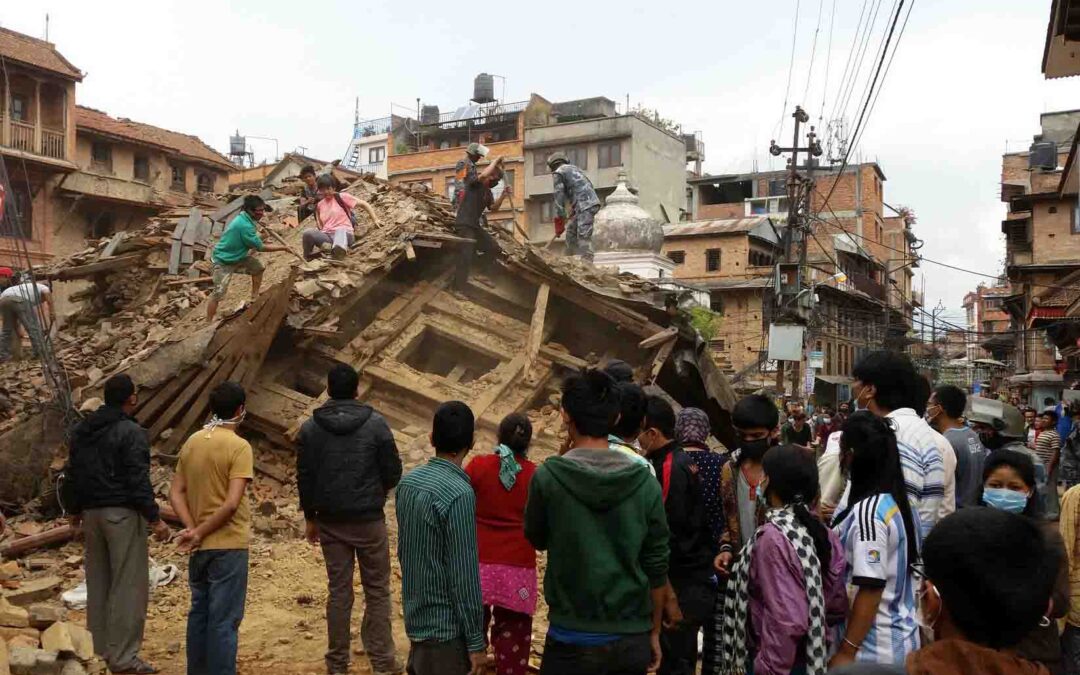
In its statement, the commission highlighted various ongoing human rights concerns, including discriminatory citizenship provisions in the new constitution, the continued failure to properly investigate alleged unlawful killings and excessive use of force during protests in the Terai region in 2015, violations of the economic, social, and cultural rights of earthquake victims (photo), and the need for credible transitional justice for conflict victims.
“As the principal independent constitutional body mandated to promote and protect human rights in the country, the NHRC plays a vital role in ensuring governmental accountability, and was well within its authority under both the Nepali Constitution and international standards when it delivered its submission to the UN Human Rights Council during the UPR,” said Nikhil Narayan, ICJ’s South Asia Senior Legal Adviser.
“The PM’s blatant attempt to intimidate the NHRC members for that submission is a flagrant violation of the government’s basic obligation to ensure the NHRC’s ability to carry out its work independently and without undue interference,” he added.
While it is entirely appropriate for the prime minister, like other stakeholders, to consult with the NHRC, such exchanges should be conducted with due respect for the legitimate exercise of the institution’s constitutional mandate, independently and free of undue interference or intimidation, the rights organizations said.
NHRC members present at the meeting uniformly expressed the sentiment that Oli, through his aggressive questioning and reprimanding of the commissioners over the contents of certain sections of its submission, was trying to intimidate the commission and in particular Commissioner Ansari, at whom the questioning appeared exclusively directed.
“The line and manner of questioning, including insinuations of bias and a lack of neutrality, particularly those aimed at Commissioner Ansari, the public face of the NHRC in Geneva, revealed an intent not of clarification, but intimidation that seeks to limit the role and effectiveness of the NHRC,” said Champa Patel, director of the South Asia Regional Office at Amnesty International.
Based on media accounts, discussions between the commissioners and the prime minister reflected an apparent attempt by the prime minister to discredit the commission’s statement by portraying it as the personal views of Commissioner Ansari alone or those of a nongovernmental organization.
Sharma promptly rebutted this characterization in a public statement on April 10, clarifying that “the statement delivered by NHRC Spokesperson Ansari at the UPR session was that of the commission and not her own,” and that “[i]mpunity has affected the overall promotion and protection of human rights.”
Amnesty International, Human Rights Watch, and the ICJ have consistently and repeatedly highlighted rights concerns similar to those the commission expressed in its UPR submission. The prime minister and government of Nepal should implement without delay the commission’s recommendations concerning discriminatory constitutional provisions, impunity for perpetrators of Terai violence on all sides, ensuring justice in the process of transition, and protecting the rights of earthquake victims.
The prime minister and the government of Nepal must publicly state that they will respect and guarantee the independence and integrity of the National Human Rights Commission, as the principal constitutionally mandated human rights body in the country, in accordance with international standards.
“The prime minister overstepped his authority, and his attempts to intimidate and intervene in the work of the NHRC contravene the Paris Principles, which clearly provide for the establishment of autonomous and independent institutions,” said Meenakshi Ganguly, South Asia director at Human Rights Watch. “The prime minister seems unwilling to recognize that the NHRC acts independently and is not an arm of the executive, subject to governmental dictates.”
Contact:
Nikhil Narayan, ICJ’s South Asia Senior Legal Adviser, t: +97-7-981-318-7821 ; e: nikhil.narayan(a)icj.org
Sam Zarifi, ICJ’s Asia Director, t: +66-807-819-002 ; e: sam.zarifi(a)icj.org
Additional information:
The Paris Principles set out internationally agreed upon standards designed to guide the work of national human rights institutions in a credible, independent and, effective manner. Crucially, the Paris Principles define the role, composition, status, and functions of these bodies, which include engaging with the UN and regional institutions and states’ obligation to ensure their real independence through a broad mandate, adequate funding, and an inclusive and transparent appointment process.
Furthermore, the UN Declaration on the Right and Responsibility of Individuals, Groups and Organs of Society to Promote and Protect Universally Recognized Human Rights and Fundamental Freedoms (Declaration on Human Rights Defenders) reaffirms the right of human rights defenders and institutions to advocate for human rights at the national and international level, including by engaging with the UN and other intergovernmental organizations.

Apr 15, 2016
The Indian government must ensure protection of rights of transgender people in line with its international obligations and the seminal ruling of the Supreme Court in National Legal Services Authority (NALSA) v. Union of India, the ICJ said in a briefing paper released today.
“While there has been some progress over the past two years since the NALSA judgment, it is not enough,” Sam Zarifi, ICJ’s Asia Pacific Director said. “India must take steps to immediately implement all directions of the Supreme Court, and ensure that transgender persons in India can enjoy the full range of their human rights, free from discrimination and violence”.
“The directions in the NALSA judgment provide an important charter for transgender rights in the country,” Zarifi added. “It is time for the government to uphold the equality and dignity of transgender persons in India, and enable them to fully enjoy their human rights, free from discrimination and violence”.
The ICJ’s briefing paper addresses questions regarding the scope of the NALSA decision; the government’s role and responsibility in implementing it; what implementation steps have been taken so far and other related developments since the judgment; what the significant gaps in implementation have been; and India’s relevant international human rights law obligations.
Background
On 15 April 2014, the Indian Supreme Court released its judgment in the NALSA case.
Grounding its reasoning in the rights to equality, non-discrimination, freedom of expression and dignity, the Court affirmed transgender persons’ right to their self-identified gender, such as male, female or as third gender, and directed the government to grant legal recognition of the same and to take specific steps to ensure equality and non-discrimination for transgender persons.
It has now been two years since the NALSA decision.
But the Indian Central and state governments have still not implemented some of the core directions set out in the judgment.
For example the basic process of accessing legal gender recognition remains unclear, with individuals being forced to navigate a dizzying array of bureaucratic hurdles.
India has ratified several international human rights instruments that require the government to respect, protect and fulfill the right to equality and non-discrimination for transgender people.
Contact:
Danish Sheikh: t +91 8197979171
Sanhita Ambast: t +91 9810962193
India-Q&A NALSA-Advocacy-Analysis brief-2016-ENG (full brief, in PDF)

Apr 7, 2016 | News
The Malaysian government should reject a proposal to make the Attorney General automatically the chair of the Bar Council of Malaysia, the ICJ said today.
The Malaysian Bar must remain independent and the government should not entertain this or any other measure that would compromise this independence, the ICJ says.
Yesterday, during the debate session at the Dewan Rakyat (Lower House of the Malaysian Parliament), parliamentarian Datuk Datu Nasrun Datu Mansur suggested that the Attorney General should be automatically appointed as the chairman of the Bar Council of Malaysia.
Datuk Datu Nasrun Datu Mansur made the suggestion while criticizing the Bar Council for its role in demanding greater government accountability.
“This latest proposal is just the most recent attempt by the government to silence all opposition and to weaken the rule of law,” said Emerlynne Gil, ICJ’s Senior Legal Adviser for Southeast Asia.
“First the government weakened the independence of the judiciary, and now it is going after the lawyers who are standing up for justice and accountability,” she added.
Responding to the suggestion, Law Minister Nancy Shukri said that the government will look into this, noting that amendments need to be made to the Legal Profession Act 1976 for this measure to be adopted.
“International standards on the independence of lawyers state very clearly that governments should not interfere with the work of professional associations of lawyers like the Malaysia Bar,” said Gil.
The United Nations Basic Principles on the Role of Lawyers stipulate that lawyers have the right “to form and join self-governing professional associations to represent their interests, promote their continuing education and training, and protect their professional integrity,” the ICJ reminds.
Furthermore, the Basic Principles distinctly state that “the executive body of the professional associations shall be elected by its members and shall exercise its functions without external interference.”
“An independent and self-regulated bar association is important to safeguard the professional interests and integrity of lawyers in Malaysia,” Gil said.
“It acquires specific importance especially now in Malaysia where there have been questions regarding the way justice is being administered in the country,” she added.
The Malaysia Bar is an essential agent in the administration of justice and hence, the lawyers belonging to it play a key role in supporting and calling for law and justice sector reform in the country, the ICJ further says.
Contact:
Emerlynne Gil, Senior International Legal Adviser for Southeast Asia, t: +66 840923575 ; e: emerlynne.gil(a)icj.org
Background:
The Malaysia Bar passed a motion last month during its 70th Annual General Assembly calling for the resignation of Attorney-General Tan Sri Mohamed Apandi Ali because he summarily ended the investigation of alleged corruption by Prime Minister Najib Razak.
The Prime Minister appointed Attorney-General Apandi on 27 July 2015, in the midst of the corruption investigation.
Attorney General Apandi subsequently cleared Prime Minister Najib Razak of any criminal wrongdoing and instructed the Malaysian Anti-Corruption Commission to close the investigations.
According to the ICJ, the motion passed by the Malaysia Bar calling for the resignation of the Attorney General was within its mandate as an independent professional association of lawyers, seeking as it did to draw attention to how administration of justice is being jeopardized right now.
The UN Basic Principles specifically recognize the right of lawyers to take part in public discussion of matters concerning the law, the administration of justice and the promotion and protection of human rights.
The UN Human Rights Council has unanimously affirmed that “an independent legal profession” is among the “essential prerequisites for the protection of human rights, the rule of law, good governance and democracy, and for ensuring that there is no discrimination in the administration of justice”. Such independence should be respected in all circumstances.