Mar 24, 2016
The Indian Supreme Court should decriminalize consensual same-sex relations when it reviews its December 2013 decision in the Suresh Kumar Koushal case, said the ICJ in a briefing paper released today.
The judgement of this case is upholding the constitutionality of the criminalization of consensual same-sex relations under section 377 of the Indian Penal Code (IPC),
The briefing paper answers some key questions arising from the Supreme Court’s referral earlier this year of its Suresh Kumar Koushal decision to a five-judge bench of the Court, based on the Court’s acknowledgment that the case involved issues with “constitutional dimensions”.
“The referral has opened up a significant new chapter in this critically important litigation, which has been ongoing since 2001”, said Sam Zarifi, ICJ’s Asia-Pacific Director. “The Supreme Court has the opportunity to ensure that this archaic and discriminatory law is taken off the statute book for good”.
The ICJ’s briefing paper answers questions regarding the nature of the Supreme Court’s referral in this case through a curative petition. It also sets out the issues in the case that are currently before the Court; the history of this particular litigation; and India’s international obligations around these issues.
“It is time to move beyond the injustice of the Suresh Koushal Case,” Zarifi said. “Holding section 377 unconstitutional would have enormous transformative value for LGBT rights in the country and beyond.”
“It would set the stage for the full recognition of LGBTI rights as human rights, as required by international human rights law, by which India is bound,” he added “in particular, the principles of non-discrimination, equality before the law and equal protection of the law.”
Background
Section 377 of the IPC makes it a criminal offence for “[w]hoever voluntarily has carnal intercourse against the order of nature with any man, woman or animal”.
It has been interpreted to apply to consensual same-sex sexual relations. It has also been used as a tool of harassment and intimidation against sexual and gender minorities in India.
By allowing the criminalization of consensual same-sex conduct, section 377 has facilitated numerous human rights violations, including non-discrimination, equality before the law, equal protection of the law, liberty and security of person, free expression, health, and privacy.
Under international human rights law, India is bound to respect, protect and fulfill all these rights.
India-Q&A art 377-Advocacy-Analysis brief-2016-ENG (full briefing paper, in PDF)
Mar 23, 2016 | Advocacy, Non-legal submissions
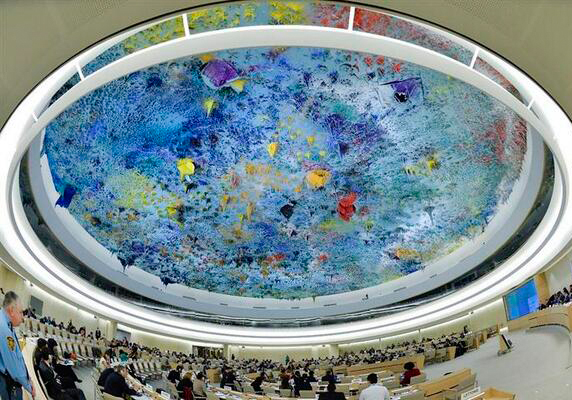
The ICJ today joined other NGOs in an oral statement to the UN Human Rights Council on the findings of the report of the OHCHR investigation mission on Libya.
It includes that violations of international law taking place throughout Libya “may amount to war crimes and other international crimes under international law.”
The statement continued as follows:
All sides to the conflict in Libya continue to perpetrate grave human rights violations and abuses. As highlighted by the UN High Commissioner for Human Rights, these violations continue to take place with “complete impunity” amid the collapse of the domestic justice system.
Unless genuine accountability is provided for these ongoing crimes the cycle of violence in Libya will continue, and the peace process will likely become no more than a well-intentioned piece of paper.
In this context, this Council has a duty to remain seized of the human rights situation in Libya, ensure continued monitoring of the situation and act to strengthen international accountability for crimes committed in Libya if the national system remains incapable of fulfilling this role. We are deeply concerned that the current resolution before this Council falls short of that standard.
Additionally, all UN member states should ensure that the International Criminal Court has the capacity to fulfill the mandate provided to it by the Security Council and begin fully fledged investigations into past and ongoing crimes committed in Libya.
As highlighted by civil society in a letter to this Council: “It is critical that all parties to the conflict are put on notice that their actions are being monitored and that accountability for serious crimes is a real prospect rather than an empty threat. Failure to do so will likely embolden those committing violations of international human rights and humanitarian law and will reinforce the endless cycle of impunity” in Libya.
The statement was on behalf of Cairo Institute for Human Rights Studies, CIVICUS, Human Rights Watch, International Commission of Jurists, FIDH, and OMCT.

Mar 23, 2016 | Incidencia
Declaración oral ante el Consejo de Derechos Humanos.
“La Comisión Internacional de Juristas quiere referirse al informe del Alto Comisionado sobre Colombia. Pese a los avances en las negociaciones de paz entre el Gobierno y las Fuerzas Armadas Revolucionarias de Colombia (FARC), creando nuevas instituciones y mecanismos, seguimos preocupados sobre las garantías a los derechos a la justicia y a la verdad de las víctimas y la posibilidad que se consagre la impunidad. Los acuerdos estipulan que las informaciones recabadas por la Comisión de la Verdad y la Unidad Especial de Búsqueda de Personas Desaparecidas, no podrán ser entregadas a la Jurisdicción Especial para la Paz, ni ésta podrá requerirlas. Ello es contrario a los estándares internacionales en la materia y en particular los Principios actualizados para la protección y la promoción de los derechos humanos mediante la lucha contra la impunidad.
Asimismo, el llamado procedimiento de “contraste” establecido para la Jurisdicción Especial para la Paz, para aquellos que tempranamente reconozcan sus crímenes y responsabilidad, no garantiza la realización de investigaciones exhaustivas ni tampoco una participación activa de las víctimas en los procedimientos, socavando sus derechos a un recurso efectivo, a la justicia y a la verdad. Igualmente, los lineamientos sobre la aplicación de la Jurisdicción Especial para la Paz a los agentes del Estado, dado a conocer por el Gobierno en diciembre de 2015, estaría socavando el principio de responsabilidad penal del superior jerárquico.
Mi organización ve con profunda preocupación que la cuestión de las garantías de no repetición, esencial para la justicia de transición, no haya sido considerada durante la negociación. Las reformas institucionales relativas a la separación de la Policía Nacional del Ministerio de Defensa, la desmilitarización de los cuerpos de seguridad del Estado, la depuración administrativa de la Fuerza Pública y la revisión de la doctrina militar – típicas medidas de garantías de no repetición –están ausentes en este proceso de negociación.
La Comisión Internacional de Juristas exhorta al Gobierno y a las FARC a garantizar plenamente en el Acuerdo Final, y en la legislación que lo implementará, los derechos a la justicia y a la verdad de las víctimas y a excluir toda modalidad de impunidad, de conformidad con el Derecho internacional.”
Declaración leída por: Sr Carlos López
Mar 23, 2016
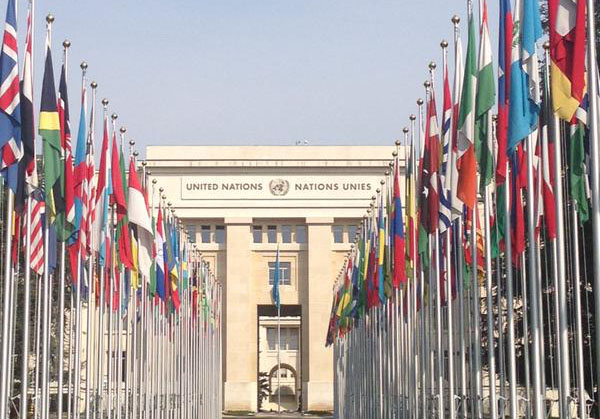
Member States of the UN Human Rights Council should support the adoption of a vital draft resolution on the protection of human rights defenders and vote down over 30 hostile amendments proposed by China, Cuba, Egypt, Pakistan and Russia, which could substantially weaken the text.
In an open letter to governments, more than 100 non-governmental organisations from all regions of the world have said that the resolution – which focuses on the situation and protection needs of those working to promote economic, social and cultural rights – is a timely, balanced and important response to the worsening crackdown on human rights defenders. States from all regions, including Australia, Brazil, France, Ghana, Japan and Tunisia, among others, have already pledged their support for the Norwegian-led text.
The draft resolution will be voted upn by 47 Member States of the Human Rights Council on 23 or 24 March.
The amendments being pushed by China, Cuba, Egypt, Pakistan and Russia include proposals to remove any reference in the text to the term ‘human rights defenders’, to deny the legitimacy of their work, and to weaken their protection against attacks and reprisals.
Re: Support resolution on the protection of human rights defenders addressing economic, social and cultural rights
22 March 2016
Your Excellency,
The undersigned civil society organisations, coming from all regions, urge your delegation to support the adoption of the resolution on the protection of human rights defenders working to promote economic, social and cultural rights as tabled. We urge you to resist efforts to undermine and weaken this resolution.
The draft resolution entitled ‘Protecting human rights defenders addressing economic, social and cultural rights (A/HRC/31/L.28) is being considered by the 31st session of the Human Rights Council. It will be presented for adoption on 23 or 24 March.
South African jurist and former High Commissioner for Human Rights, Navi Pillay, has articulated the importance of such a resolution in the following terms:
As a South African, I have seen and experienced first-hand the role of ESC rights defenders in combating poverty and injustice and in promoting universal human rights for all, even the most powerless and disadvantaged. I have seen how the work of those who defend ESC rights benefits entire communities; just as attacks against those who defend ESC rights harm entire communities. That is why it is so important and timely that the UN Human Rights Council is currently negotiating a resolution on the protection of ESC rights defenders.
The draft resolution has been developed through a number of open and transparent informal negotiations.
The text, as tabled, is balanced and appropriate, in recognising the vital contribution of human rights defenders to the realisation of economic, social and cultural rights and the right to development. It is currently cosponsored by a broad group of States from all regions of the world.
The text also identifies the threats, attacks and challenges facing this group of defenders and the obligations, duties and interests of State and non-State actors in terms of supporting and safeguarding this work. It provides good practice guidance to both State and non-State actors in this regard.
Despite the importance of the resolution – so tragically illustrated at the commencement of the 31st session with the murder of Honduran woman human rights defender Berta Caceres – a small group of States, led by the Russian Federation, China, Egypt, Cuba and Pakistan are seeking to seriously undermine the text. A large number of adverse amendments being pushed by these States include proposals which have the purpose or would have the effect of:
- Removing any reference to the term ‘human rights defenders’;
- Denying the legitimacy of the work of human rights defenders;
- Weakening protection against, and accountability for, intimidation and reprisals against human rights defenders and others who cooperate with the United Nations;
- Failing to acknowledge the specific risks and violations faced by women, indigenous, and land and environment human rights defenders, their families and communities;
- Diluting and regressing from consensus language and terminology from past human rights defenders resolutions; and
- Seeking to justify limitations on human rights that are impermissible under international human rights law.
The amendments being advocated by the Russian Federation, China, Egypt, Cuba and Pakistan should be seen in the context of the systematic efforts currently underway in several of these States to restrict and criminalise the important and legitimate work of human rights defenders and independent civil society organisations in violation of international human rights law. The proposal to weaken language on reprisals should similarly be understood in the context of several of the proposing States being the subject of allegations of intimidation or reprisals in both the Secretary-General’s report and the joint communications report of Special Procedures.
We urge you not to associate with such positions. Instead, we respectfully urge your delegation to co-sponsor resolution L.28 as tabled, vote against the amendments presented, and vote in favor of the resolution as drafted.
Civil society and human rights defenders around the world look to the HRC and its Member States for support and protection, and we hope your delegation will stand with us.
Yours sincerely,
- International Service for Human Rights
- Amnesty International
- Arc International
- ARTICLE 19
- Asian Forum for Human Rights and Development
- Association for Women’s Rights in Development (AWID)
- Boys of Bangladesh
- Cairo Institute for Human Rights Studies (CIHRS)
- Cambodian Center for Human Rights (CCHR)
- CELS (Argentina)
- CIVICUS
- Coalition Ivoirienne des Défenseurs des Droits Humains (CIDDH)
- Defend Defenders (East and Horn of Africa Human Rights Defenders Project)
- Digital Empowerment Foundation (India)
- Egyptian Initiative for Personal Rights (EIPR)
- FIDH, within the framework of the Observatory for the Protection of Human Rights Defenders
- Foundation HELP (Tanzania)
- Global Initiative for Economic, Social & Cultural Rights
- Globe International Center
- Groundation Grenada
- Gulf Centre for Human Rights (GCHR)
- Human Rights Defenders Network Sierra Leone
- Human Rights House Foundation
- Human Rights Law Centre (Australia)
- Human Rights Watch
- International Commission of Jurists
- International Lesbian and Gay Association (ILGA)
- International Platform against Impunity
- Ivorian Observatory for Human Rights (OIDH)
- JASS -Just Associates-
- LGBT Centre (Mongolia)
- Mongolian Women’s employment supporting federation
- Nazra for Feminist Studies (Egypt)
- OT Watch (Mongolia)
- Peace Brigades International
- Protection International
- Reporters Without Borders
- Rivers without Boundaries Mongolia
- Salmmah Women’s Resource Centre (Sudan)
- Southern Africa Litigation Centre (SALC)
- Steps Without Borders NGO
- Terra de Direitos (Brazil)
- Urgent Action Fund for Women’s Human Rights
- West African Human Rights Defenders’ Network
- World Organisation Against Torture (OMCT), within the framework of the Observatory for the Protection of Human Rights Defenders
(The above 45 NGOs were the initial signatories, an updated version with additional signatories is here.)
Mar 23, 2016 | Advocacy, Non-legal submissions
Today, the ICJ made a submission to the Human Rights Council’s Working Group on the Universal Periodic Review in advance of the Human Rights Council’s review of Uganda in October/November 2016.
In its submission, the ICJ expressed concern about the detrimental impact of the adoption and enforcement of the Anti-Homosexuality Act, 2014; the effect of pre-existing and extant criminalization of consensual same-sex sexual conduct; and the introduction of the Prohibition of Promotion of Unnatural Sexual Practices Bill, on the respect for and the protection and realization of human rights in Uganda.
A copy of the submission can be found here:
Uganda-ICJ CESCR submission-Advocacy-non legal submission-2015-ENG (full text in PDF)