Mar 18, 2016 | Advocacy, Non-legal submissions
The ICJ today joined an oral statement on the role of judges, lawyers, and prosecutors, as well as the threats they face, and the Universal Periodic Review of the UN Human Rights Council.
The statement, delivered by the Director of the International Bar Association’s Human Rights Institute, Dr Phillip Tahmindjis, read as follows:
“The International Bar Association’s Human Rights Institute (IBAHRI) released this week its report on the ‘Role of the UPR in advancing human rights in the administration of justice’. The report assesses more than 38,000 recommendations made between 2008 and 2014 for references to the legal profession.
The report’s key findings include:
UPR recommendations still insufficiently address the role of judges, lawyers and prosecutors, or the threats they face, as extensively documented by the Special Rapporteur on the Independence of Judges and Lawyers. Significantly, these recommendations often make no reference to relevant UN standards.
Recommendations relating to the independence of judges are often too vague to be an effective response to the shortcomings of any given jurisdiction. Serious issues in the appointment and removal of judges are mostly ignored.
The independence of lawyers was considered in fewer than 100 of the 38,000 UPR recommendations.
Prosecutorial independence is addressed in less than 10 per cent of the recommendations calling upon States to effectively investigate or prosecute rights violations.
Guarantees for legal professionals’ rights to freedom of expression, assembly and association are barely addressed. This fails to reflect the key role that self-governing organisations of legal professionals should play in upholding human rights and the rule of law, the independence of the legal profession and law reform processes.
As international organisations of legal professionals, we foster the engagement of the legal profession in UN human rights mechanisms and in monitoring the implementation of UPR recommendations.
We call upon the Human Rights Council, as well as States, to ensure that in the third cycle of the UPR, the role of judges, lawyers, and prosecutors receives the heightened attention that it is due, as recognised by the UN Basic Principles on the independence of the judiciary, the UN Basic Principles on the role of lawyers and the UN Guidelines on the role of prosecutors.”
The following organisations endorsed the statement:
- Commonwealth Magistrates’ and Judges’ Association
- Commonwealth Lawyers Association
- International Bar Association’s Human Rights Institute
- International Commission of Jurists
- Judges for Judges
- Lawyers for Lawyers
- Southern Africa Litigation Centre
The statement can be downloaded in PDF format here: HRC31-JointOralStatement-UPRLegalProfessions-2016
The IBAHRI report on ‘The role of the UPR in advancing human rights in the administration of justice’ is available at : http://tinyurl.com/gr525sq
Mar 17, 2016 | Advocacy, Non-legal submissions
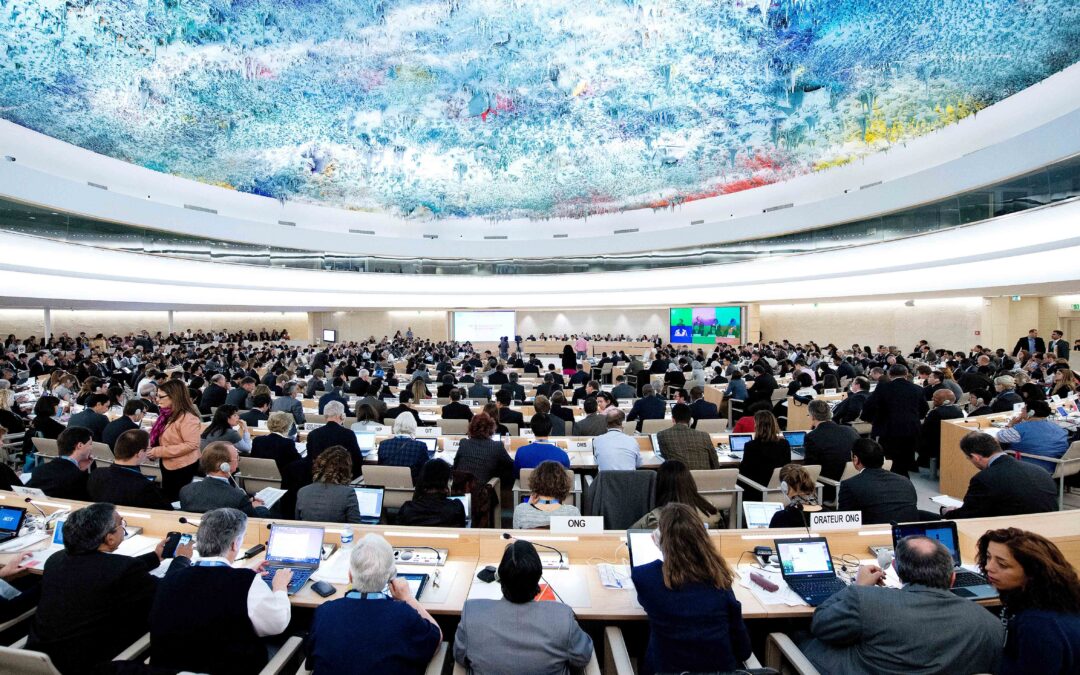
The ICJ today joined with the International Bar Association’s Human Rights Institute to make an oral statement on judges & lawyers in Myanmar, during the consideration of its Universal Periodic Review outcome by the UN Human Rights Council.
The statement:
“The International Bar Association’s Human Rights Institute (IBAHRI) and the International Commission of Jurists welcome Myanmar’s decision to accept recommendations made at the Universal Periodic Review relating to the administration of justice and the independence of the legal profession and call on the Government of Myanmar to implement the recommendations which it has accepted ‘in principle’ to reform the Bar Council Act to allow for the Bar Council to become a truly independent and self-governing association.
In order to ‘guarantee in law and practice that lawyers and judges can perform their professional functions without improper interference and legally form and join self-governing associations’, we call for the right to join such associations to be enshrined in law, and that the right of the first Independent Lawyers’ Association of Myanmar (ILAM) to register as an association be respected;
In order to ‘define professional legal standards and disciplinary procedures in conformity with the Basic Principles on the Role of Lawyers’, we call upon the government of Myanmar to engage in a consultation process with the legal profession and other stakeholders in relation to the revision of the Bar Council Act. The government should also commit sufficient funds to allow for the funding of the system created by the new Legal Aid Law.
We are encouraged by and support efforts by the Office of the Supreme Court of the Union to draft and implement a Code of Judicial Ethics.
Finally, we urge the Government to improve legal education and continue legal professional development including with regard to international human rights law and the UN human rights mechanisms.
We are glad to provide support in the realisation of these recommendations and will look for collaboration with the Government to that end.”

Mar 17, 2016 | News
The Indonesian House of Representatives should reject proposed amendments to the country’s Anti Terrorism Law that would actually contravene international law, said the ICJ and other human rights groups today.
“The horrific recent attacks in Jakarta highlight the Indonesian government’s obligation to protect people from acts of terrorism, but experience from around the world has shown that countering terrorism must occur along with protection of human rights, not in violation of Indonesia’s legal obligations,” said Sam Zarifi, ICJ’s Regional Director for Asia and the Pacific.
The ICJ, the Commission for the Disappeared and Victims of Violence (KontraS), and the Indonesian Human Rights Monitor (IMPARSIAL) noted that the proposed amendments would authorize unnecessarily prolonged detention of suspects, putting them at risk of torture, ill-treatment, enforced disappearance, and arbitrary detention.
The amendments also include a provision on administrative detention.
“This is generally forbidden in international law, save in the most exceptional circumstances far narrower than as contemplated under the amendments,” Zarifi added.
A letter sent by the organizations to the House of Representatives lays out recommendations on how this provision may be revised so that it would not violate the rights of detainees.
“There is no reference anywhere in the amendments how detainees may challenge the lawfulness of their detention. It has to be clear in the law that these remedies are available to them,” said Haris Azhar, National Executive Coordinator of KontraS.
The three organizations also underline the amendment proposing stripping Indonesian combatants abroad of their nationality would be contrary to international law, if this would render them stateless.
“Nationality is what legally binds an individual to a particular State. It is an essential prerequisite to the enjoyment and protection of the full range of human rights,” said Poengky Indarti, board member of IMPARSIAL.
They also said that the proposed provision on incitement to terrorism would unduly limit political speech, especially those that are contrary to the views of persons wielding power and authority, such as opinions on self-determination or changes to the legal and constitutional structures.
The proposed amendments impose the death penalty on particular offences.
The ICJ, IMPARSIAL, and KontraS oppose capital punishment in all cases without exception, as it is a violation of the right to life and the right not to be subjected to cruel, inhuman, and degrading treatment.
In the letter, they remind the government of Indonesia to immediately impose a moratorium on the use of the death penalty, with a view to moving towards its total abolition.
The ICJ, IMPARSIAL, and KontraS urged the members of Indonesia’s House of Representatives to keep in mind that whatever measures Indonesia uses to counter terrorism must comply with international law and protect human rights.
Contact:
Emerlynne Gil, ICJ’s Senior International Legal Adviser (Bangkok), t: +66 840923575 ; e: emerlynne.gil(a)icj.org
Fatia Maulidiyanti, S.IP, International Desk of KontraS (Jakarta), t: +62 21 391 9097/98 ; e: fatia(a)kontras.org
Poengky Indarti, Member of the Board of IMPARSIAL (Jakarta), t: +62 812 8362 8659 ; e: poengky1970(a)gmail.com
Indonesia-Letter to Gvt-Advocacy-Open letters-2016-ENG (full text of letter, in PDF)
Mar 16, 2016 | Advocacy, Non-legal submissions
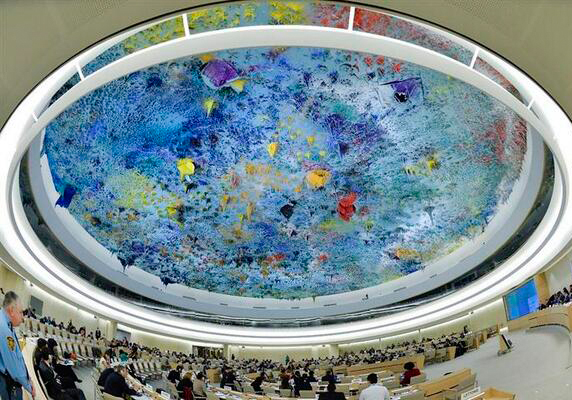
The ICJ today delivered an oral statement to the UN Human Rights Council, on the Universal Periodic Review of Nepal.
“The ICJ is concerned that the Government of Nepal has yet to implement many of the recommendations it accepted during the first UPR cycle, including several that reflect its international legal obligations regarding the new Constitution, investigation and prosecution of serious crimes, and establishment of credible transitional justice mechanisms.
The police continue to refuse to investigate conflict-era cases even when explicitly ordered by courts to do so. The transitional justice commissions do not enjoy the support of the victims and human right organizations, a year into their two-year mandate. Victims’ rights to truth, justice and reparation are not being respected, protected and fulfilled.
More than 59 persons, including 10 police personnel, were killed during recent protests, but as yet we are not aware of any impartial and effective investigation of the killings.
Many serious crimes under international law, including torture and enforced disappearance, still are not recognised as crimes under the Nepali penal code.
The ICJ therefore calls upon the Government to reconsider its position, and to accept and implement the UPR recommendations arising from this cycle, relevant to:
- Strengthening the constitutional protection of human rights;
- Amending the Truth and Reconciliation Commission Act, 2014, in line with international standards and Supreme Court orders;
- Establishing a credible transitional justice process;
- Preventing, investigating, and responding effectively to any use of excessive force by security forces;
- Ensuring prompt, independent and impartial investigations and, prosecution in cases of unlawful killings, whether the perpetrators are security forces or protesters;
- Amending the Penal Code to explicitly incorporate serious crimes under international law; and
- Ratifying relevant treaties, and accepting requests for visits of the Working Group on Enforced Disappearances, and Special Rapporteur on the right to truth.”
A more detailed written statement may be downloaded in PDF format here: HRC31-Advocacy-WrittenStatement-Nepal-2016

Mar 15, 2016
Today, the ICJ launched a new report (in Spanish) documenting the impact of the El Quimbo dam project on the economic, social and cultural rights, as well as the environment, of the people living in the Colombian Huila Department.
The report highlights the response of both the State and the company behind the project to the demands of the affected communities, following massive social protests, conflicts and legal actions.
It also formulates a series of recommendations to ensure that the human rights and the environment in the region are protected and to end all the abuses against the local communities.
The report is the result of a field mission in Colombia, in which participated the ICJ Commissioners Philippe Texier (France) and Belisário dos Santos Junior (Brazil), Sandra Ratjen, ICJ Senior Legal Adviser on Economic, Social and Cultural Rights, and the Colombian lawyer Alberto León Gómez.
Colombia-ElQuimbo Megaprojects & ESCR-Publications-Facts Finding Mission Report-2016-SPA (full report in PDF, Spanish)