Sep 14, 2015
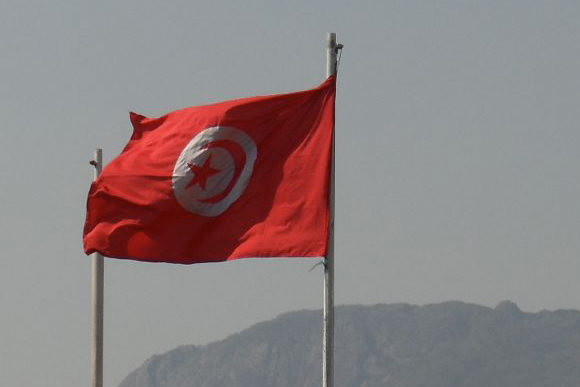
The ICJ today called on the members of the Tunisian parliament to amend the draft law on the High Judicial Council (HJC), with a view to ensuring its full compliance with international standards on judicial independence.
In a new position paper, the Geneva-based organization acknowledges that the draft law provides enhanced guarantees for judicial independence, in particular by ending executive control over the HJC, by providing for a majority of the HJC’s members to be judges elected by their peers, and by ensuring that the HJC is the only body competent to manage the career of judges.
But the ICJ remains concerned that in certain key respects, the draft law falls short of international standards.
In particular, it does not provide for specific, concrete measures to ensure women’s full and equal participation and representation in the HJC and the judiciary as a whole, for the HJC to be consulted on, and involved in, the preparation and implementation of the judiciary’s budget, and for adequate financial resources to be available for both the HJC and the judiciary in general.
“The Tunisian Assembly should ensure that the draft law is amended so that the HJC is truly independent, pluralistic and gender-representative and its competencies are expanded to include its involvement in the preparation and implementation of the budget for the entire judiciary, not only that of the HJC,” said Said Benarbia, Director of the ICJ MENA Programme.
The ICJ is also concerned that, while the draft law provides enhanced guarantees for the management of the career of judges by the HJC, the provisions relating to the security of tenure of judges and the transfer of judges, as well as certain aspects of the disciplinary system, are not fully in line with international standards.
“The draft law should be amended to ensure that judges may only be removed for reasons of incapacity or behaviour that renders them unfit to discharge their duties, that in all circumstances their consent is sought for any transfer to another jurisdiction, and that all disciplinary proceedings against them are fair and determined in accordance with established standards of judicial conduct,” Benarbia added.
Contact:
Theo Boutruche, Legal Adviser of the ICJ Middle East and North Africa Programme, t: +96 170 888 961, e: theo.boutruche(a)icj.org
Tunisia-Final HJC Draft Law-Advocacy-Position Paper-2015-ENG (full text of position paper in PDF, English)
Tunisia-HJC law-News-2015-ARA (full news text in PDF, Arabic)
Tunisia-Final HJC Draft Law-Advocacy-Position Paper-2015-ARA (full text of position paper in PDF, Arabic)
Sep 14, 2015 | Advocacy, Non-legal submissions
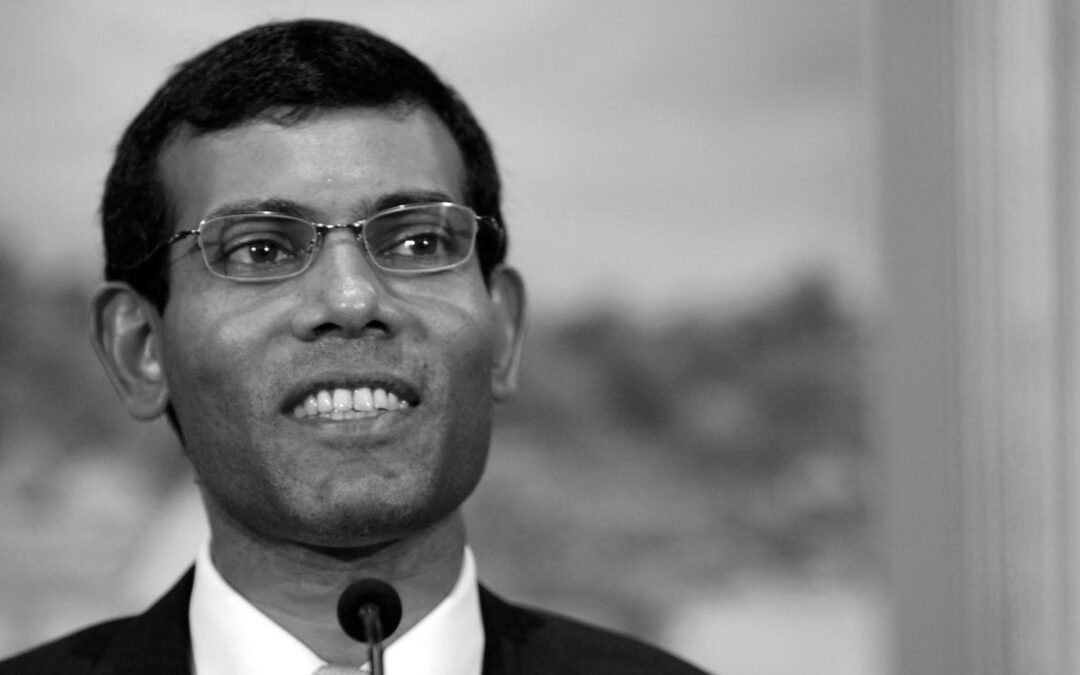
In advance of the UN Human Rights Council’s adoption of the outcome of its review of the Maldives’ human rights record as part of the Universal Periodic Review (UPR) process, the ICJ has submitted a written statement.
It highlights the Maldives’ failure to accept and implement a number of member states’ UPR recommendations.
In particular, the ICJ pointed out the urgent need for Maldives to accept and implement recommendations regarding the following issues, among others:
- Strengthening the independence and impartiality of the judiciary;
- Strengthening the independence and impartiality of the Judicial Service Commission;
- Strengthening the National Human Rights Commission, in accordance with the Paris Principles;
- Strengthening women’s representation in the judicial profession;
- Immediately releasing former president Mohamed Nasheed and other political prisoners, and ensuring the fairness of any further legal proceedings in such cases; and
- Safeguarding freedom of expression and media, association and peaceful assembly by investigating cases of human rights abuse and violations against journalists, civil society and human rights defenders, and taking effective measures to prevent further abuses
The Council will consider member states’ UPR recommendations for the Maldives during its 30th session on 24 September 2015, ahead of which the Maldives government will be expected to formally respond and indicate which of the recommendations it will commit to implement.

Sep 14, 2015 | Events
Judges, lawyers, prosecutors and human rights: 30 years of UN action
Side event, Tuesday 15 September 2015, 1600 – 1800
Room XXII, Palais des Nations, Geneva
Followed by a drinks reception hosted by the IBA’s Human Rights Institute
in Bar Serpent, Palais des Nations
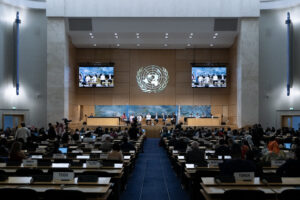
The International Bar Association’s Human Rights Institute (IBAHRI) and the International Commission of Jurists (ICJ) are organising a side event at the Palais des Nations to mark the 30th Anniversary of the Basic Principles on the Independence of the Judiciary and the 25th Anniversary of the Basic Principles on the Role of Lawyers and Guidelines on the Role of Prosecutors. This side-event, taking place during the 30th session of the Human Rights Council, will look back on the progress that has been made in the protection of judges, lawyers and prosecutors over the past 30 years and the continuing challenges for implementation of the UN standards.
Side Event, 1600-1800
Opening remarks:
- Her Excellency Zsuzsanna Horváth Ambassador of Hungary
Speakers:
- Monica Pinto Special Rapporteur on the independence of judges and lawyers
- Anne Ramberg Secretary General, Swedish Bar Association
- Irene Petras Executive Director, Zimbabwe Lawyers for Human Rights
- Nazir Afzal Former Chief Crown Prosecutor, North West England
Drinks Reception, 1800
The IBA’s Human Rights Institute will host a drinks reception in Bar Serpent, Palais des Nations, with a number of high-level speakers to follow the side event to the 30th session of the Human Rights Council.
Speakers:
- Her Excellency Patricia O’Brien Ambassador of Ireland
- His Excellency Mothusi Bruce Rabasha Palai Ambassador of Botswana
- Monica Pinto Special Rapporteur on the independence of judges and lawyers
Side event co-sponsors include, in addition to the IBAHRI and ICJ:
Australian Permanent Mission to the UN, Permanent Mission of Hungary to the UN, Permanent Mission of Ireland to the UN, Permanent Mission of Mexico to the UN, Permanent Mission of Thailand to the UN, Permanent Mission of the Republic of Botswana to the UN, Council of Europe
Association pour la Prévention de la Torture, Avocats Sans Frontières, Colombian Commission of Jurists, Commonwealth Lawyers’ Association, Commonwealth Magistrates’ and Judges’ Association, International Legal Assistance Consortium, Judges for Judges, Lawyers for Lawyers
Attendance at this side event is open to individuals who have access to the UN grounds at Palais des Nations in Geneva.

Sep 14, 2015 | Events, News
This side event will be held on Wednesday 16 September 2015, 12h00 – 14h00, at the Palais des Nations, Conference Room XXI, in Geneva.
It will assess the most effective strategies and recommend concrete measures for States, businesses and other stakeholders to prevent and eradicate contemporary forms of slavery from supply chains and to provide assistance and redress to victims.
It will also identify key challenges and opportunities in addressing slavery and slavery-like practices in supply chains, including in terms of the legal standards, policy measures, institutional framework, and implementation.
The speakers will also discuss opportunities for contemporary forms of slavery eradication within the 2030 Agenda for Sustainable Development framework.
Universal-HRCEnding contemporary forms of slavery in supply chains-Event-Agenda-2015-ENG (full agenda, in PDF)
Sep 11, 2015
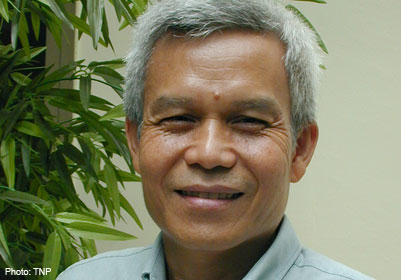
Today marks 1,000 days since prominent Lao civil society leader Sombath Somphone “disappeared” at a police checkpoint on a busy street in Vientiane.
We, the undersigned organizations, reiterate our call for the Lao government to intensify its efforts to conduct a prompt, impartial, and effective investigation into Sombath’s apparent enforced disappearance, to determine his fate or whereabouts, and to take the necessary measures to bring those responsible to justice.
At the second Universal Periodic Review (UPR) of Laos, held in Geneva on 20 January 2015, 10 states made recommendations to Laos to investigate Sombath’s disappearance. In addition, five states raised questions about the issue.
We are dismayed by the Lao authorities’ failure to provide any specific information on the status and progress of the investigation since 7 June 2013.
This failure has occurred despite the government’s claim in June 2015, during the UPR process, that it was “still thoroughly conducting” an investigation into Sombath’s “whereabouts.”
It is not enough for Laos to simply assert it is still investigating the case. Laos’ international legal obligations require it to carry out a prompt investigation and to keep Sombath’s family informed on the progress and status of the investigation.
We are troubled by the Lao government’s continued refusal to accept external assistance regarding the investigation of Sombath’s enforced disappearance.
The government has ignored important recommendations made by several human rights organizations despite an official statement that it is “ready to receive suggestions from any interested parties” regarding the investigation.
We also decry the Lao government’s refusal to disclose any information concerning all other victims of enforced disappearances in the country.
To this day, the fate or whereabouts of at least 13 individuals, including three student leaders who were arrested on 26 October 1999 for organizing a peaceful pro-democracy protest in Vientiane remain unknown.
On 29 September 2008, Laos signed the International Convention for the Protection of All Persons from Enforced Disappearance (ICPPED).
However, almost seven years on, the government has made no demonstrable progress towards the ratification of the treaty.
We urge the Lao government to immediately ratify the ICPPED, incorporate its provisions into the country’s legislation, and effectively comply with its treaty obligations.
In January 2016, Laos will assume the Chair of the Association of Southeast Asian Nations (ASEAN).
The government’s protracted failure to resolve the case of Sombath’s enforced disappearance is a clear dereliction of its international obligations, which seriously undermines Vientiane’s attempts to gain credibility as a rights-respecting member of the regional bloc.
We call on Laos to undertake prompt, impartial, and effective investigations into Sombath’s case and all other outstanding cases of enforced disappearances and provide effective remedies and reparation to all victims pursuant to its international legal obligations, including under the International Covenant on Civil and Political Rights (ICCPR) and the Convention against Torture (CAT), and ratify the ICPPED.
Signed:
- ALTSEAN-Burma
- ASEAN Parliamentarians for Human Rights (APHR)
- Asian Federation Against Involuntary Disappearances (AFAD)
- Civil Rights Defenders
- FIDH (International Federation for Human Rights)
- Focus on the Global South
- Forum-Asia
- International Commission of Jurists (ICJ)
- Justice for Peace Foundation
- Lao Movement for Human Rights (LMHR)
- Sombath Initiative