Jul 16, 2015
An opinion piece by Vani Sathisan, ICJ International Legal Adviser in Myanmar and James Tager, a Harvard Satter Fellow with the ICJ.
Over the past three months, the ICJ has written to investors, developers, an international audit company and an environmental research institute to ask for the public disclosure of information relating to two of Myanmar’s largest economic development projects: The Dawei and Kyauk Phyu Special Economic Zones (SEZs).
The ICJ asked for information regarding environmental impact assessments, environmental management plans, and financial audit reports.
The ICJ received no substantive responses.
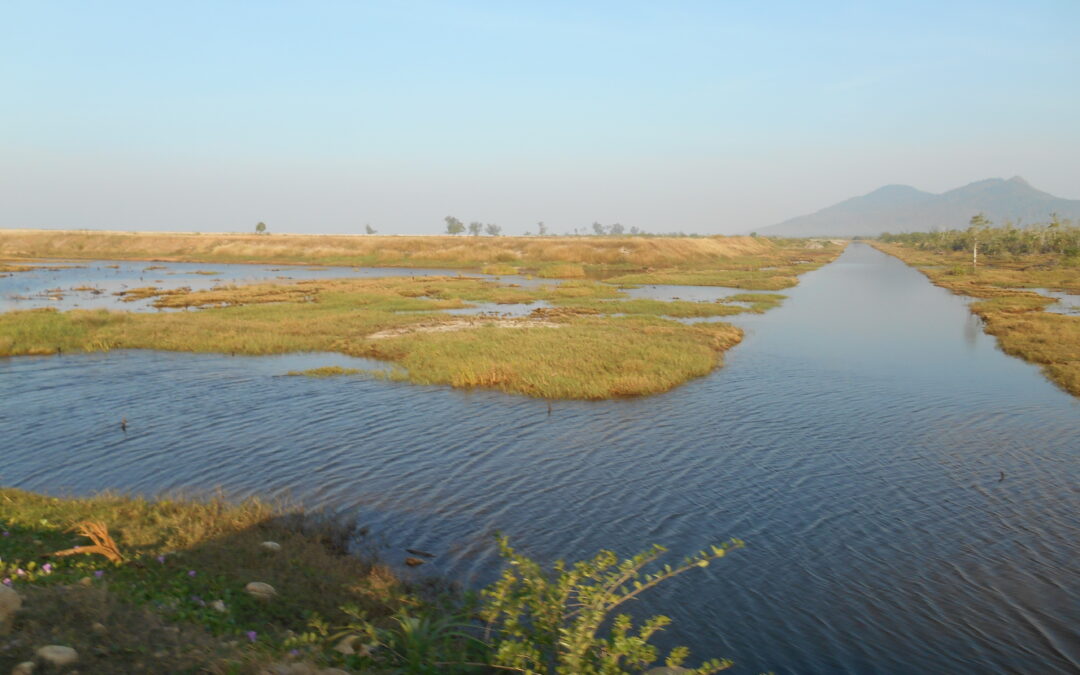
The Dawei (photo) and Kyauk Phyu SEZs, two of Myanmar’s three proposed SEZs, are key elements of the country’s economic development plans.
Transparency about the proposed projects is vital to ensure the protection of those whose rights will be affected by these massive investment projects. The Myanmar government, and interested investors, must remove the secrecy around these projects and provide the basic information requested regarding these projects.
In a country where businesses normally proceed without input from local communities, such secrecy has fostered serious human rights abuses, including land misappropriations, loss of livelihoods, serious environmental damage, and violent curtailments of freedom of expression and association.
The two SEZ projects will include a power plant, industrial zones, a natural gas terminal, a water reservoir, and substantial infrastructure, which can have massive effects on the environment and the health of nearby communities. The experience in Rakhine State, where the proposed Kyauk Phyu SEZ will be located, is instructive: development of gas fields and other resource extraction projects have been fraught with allegations of forced labour and the forced eviction of hundreds of farmers from their lands.
The companies operating in SEZs are not the only ones rejecting transparency.
When the Business and Human Rights Resource Centre recently wrote to over a hundred foreign companies operating in Myanmar, seeking details on their activities and human rights commitments, only a quarter responded with relevant information, another quarter provided general statements, and approximately half failed to respond altogether.
Lack of transparency around projects with potentially harmful environmental and social impacts can leave communities vulnerable to abuse. They can also affect investors, exposing them to project delays, litigation, and reputational damage.
Myanmar is increasingly seeing examples where lack of transparency at the early stages of a project hurt companies—and more important, the communities among which they work.
The Letpadaung copper mining project, a joint venture between Chinese-owned Myanmar Wanbao and the military-owned Myanmar Economic Holdings Limited, has displaced hundreds of families amidst an opaque land acquisition process and a lack of genuine consultations with the affected communities.
Protests about the mine were quelled with police firing white phosphorous to break up a protest in 2012 and the shooting death of a protestor in 2014.
Wanbao finally published its environmental and social impact assessment (ESIA) report just last week, but only after Letpadaung had attracted unwanted attention as an example of human rights abuses and corporate malfeasance.
Even where laws for corporate transparency exist, for instance the human rights reporting requirements imposed by the United States government, some US companies avoid disclosing their investments and activities in Myanmar, at times by incorporating in other jurisdiction such as Singapore.
Notwithstanding such evasive tactics, the responsibility ultimately rests with the Myanmar government to hold investors to account by enforcing regulations, including demands for corporate transparency and the country’s environmental regulations – such as they are.
Myanmar’s Environmental Conservation Law currently mandates an Environmental Impact Assessment (EIA) for all investment projects, but the law still lacks clear and enforceable environmental controls. The EIA Procedures, which would set out the specific requirements for EIAs under the Law, remain in draft form.
The most recent draft that the ICJ has seen includes the requirement that project proponents share the EIAs with civil society and local communities. It is vital that these disclosure provisions remain in the final EIA Procedures.
Corporate officers and government officials will continue to refuse to disclose EIA results if they do not believe that working with affected communities is an obligation.
But Myanmar’s government has the obligation, under international law, to uphold the rights of its people to informed participation in environmental decision-making.
These obligations must start with government officers committing to sharing information with communities affected by proposed projects, and must continue with enforcement of regulations ensuring that corporate actors do the same.
When it comes to questions about the environmental effects of projects that will affect Myanmar’s communities, silence cannot be the answer.
Jul 16, 2015 | Events, News
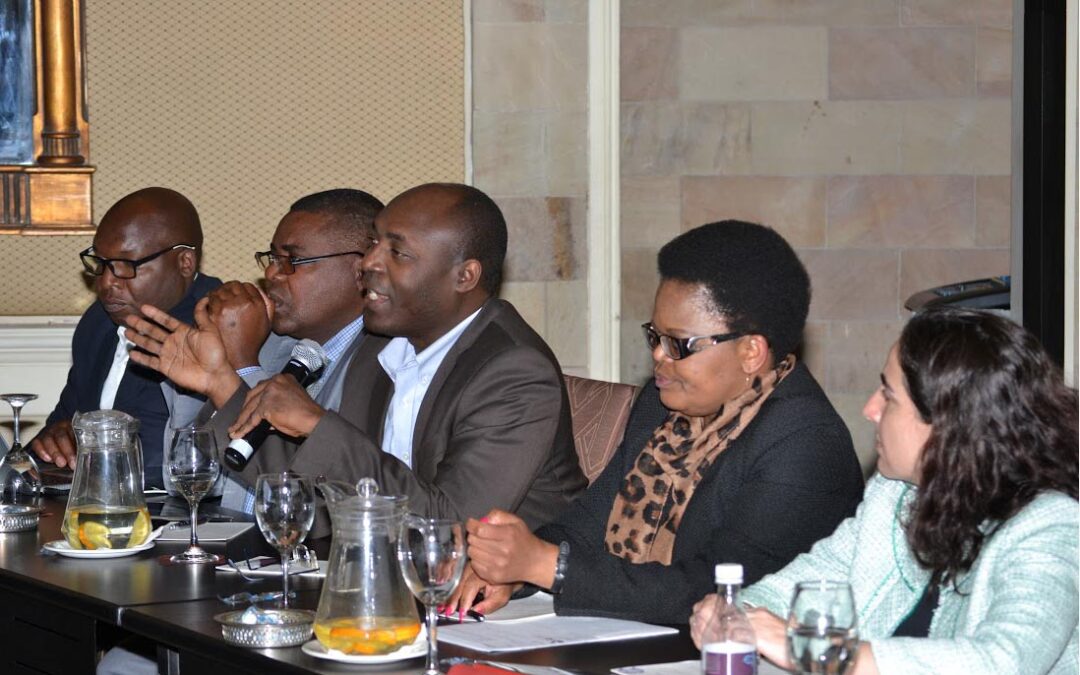
With the support of Open Society Foundations, and in collaboration with the Africa Judges & Jurists Forum, the ICJ today commenced its two-day conference on Rising Judicial Persecution of Human Rights Defenders in Africa, held in Pretoria, South Africa.
Building on a workshop convened by the ICJ in August 2013 for Southern Africa Development Community (SADC) lawyers defending human rights defenders, the conference seeks to raise awareness about rising judicial and security sector persecution of human rights defenders and the impact of this on the enjoyment of human rights and fundamental freedoms.
The conference also provides a platform for judicial officers to give their perspectives on the persecution of defenders and, in dialogue with lawyers, to map out strategies to reduce such persecution and increase legal protection.
The conference also looks into the work of regional and international mechanisms for the protection of human rights defenders.
At the conclusion of the conference, consideration will be given to the identification of best practices and recommendations on ensuring protection of human rights defenders subjected to judicial persecution.
Africa-Workshop Programme Rising Judicial Persecution of HRDs-News-Events-2015-ENG (download conference programme, in PDF)

Jul 14, 2015 | News
The Royal Government of Cambodia must immediately end the legal harassment of human rights defender, Ny Chakrya, Head of the Human Rights and Legal Aid Section of the Cambodian Human Rights and Development Association (ADHOC), the ICJ said today.
On 13 July 2015, a Deputy Prosecutor at the Phnom Penh Municipal Court questioned Ny Chakrya for two hours in relation to statements he had made at two press conferences in May 2015.
The summons and questioning were, according to information provided to the ICJ, pursuant to a complaint by an Investigating Judge and another prosecutor.
The proceedings appear to be based on the fact that at the press conferences Ny Chakrya alleged that two clients of ADHOC had been arbitrarily arrested and detained in Siem Reap province and were facing an unfair trial.
“The legal harassment of Ny Chakrya for merely raising allegations of human rights violations is itself a clear violation of human rights,” said Kingsley Abbott, ICJ’s International Legal Adviser.
“Human rights defenders play a vital role in promoting and protecting human rights and the State has a duty to create the conditions for them to be able to carry out their work effectively and without fear of retaliation,” he added.
The International Covenant on Civil and Political Rights (ICCPR), to which Cambodia is a State Party, guarantees the right to freedom of expression; the prohibition of arbitrary arrest or detention and the right to a fair and public hearing by a competent, independent and impartial tribunal established by law; and the right to seek effective remedies for alleged violations of human rights.
The UN Declaration on Human Rights Defenders, adopted by a consensus of States including Cambodia, affirms the right of everyone to peacefully oppose human rights violations.
It reaffirms the prohibition of retaliation, threats and other harassment against anyone who takes peaceful action against human rights violations, both within and beyond the exercise of their professional duties.
It also protects the right of persons to file formal complaints about alleged violations of rights.
The UN Guidelines on the Role of Prosecutors provide that prosecutors have the duty to uphold human rights and that states must ensure they have the power and discretion to fulfill this and other duties. Prosecutors should not proceed with a case they know to be unfounded.
“The complaint against Ny Chakrya was clearly without foundation and he should never have been summoned for questioning in the first place,” Abbott said. “To continue to proceed with this case would be a violation of Ny Chakrya’s rights as a human rights defender.”
The ICJ reiterates its call for the end of the legal harassment of Ny Chakrya and that his case should be closed definitively by whatever means or to whatever extent is available to the Deputy Prosecutor and other state officials.
Background:
According to information provided to the ICJ, on 22 June 2015 the Phnom Penh Municipal Court issued a summons for Ny Chakrya to appear before it for questioning pursuant to a complaint filed by the Investigating Judge and the Deputy Prosecutor of the Siem Reap Provincial Court alleging public defamation (Art. 305 of the Cambodian Criminal Code), acts of slanderous denunciation (Art. 311 of the Cambodian Criminal Code), and the publication of comments to put pressure on the jurisdiction (Art. 522 of the Cambodian Criminal Code).
On 13 July 2015 at the Phnom Penh Municipal Court, the Deputy Prosecutor questioned Ny Chakrya about statements he made at two press conferences organized by ADHOC.
At a press conference on 12 May 2015 in Siem Reap, Ny Chakrya and a lawyer from ADHOC alleged that two clients of ADHOC had been arbitrary arrested and detained in the context of a high profile land dispute in Siem Reap province.
Ny Chakrya alleged that their arrest and detention was a violation of Cambodian law and international human rights law.
At a press conference on 20 May 2015 in Phnom Penh, Ny Chakrya sought to raise public awareness about a complaint that he had filed the same day to the President of the Disciplinary Council of the Supreme Council of Magistracy.
In the complaint, Ny Chakrya alleged that the Deputy Prosecutor and Investigating Judge of the Siem Reap Provincial Court lacked independence and that the two villagers would not receive a fair trial as a result.
On 17 June 2015, the Siem Reap Provincial Court found ADHOC’s clients guilty of inciting a group of villagers to trespass on, use and destroy the property of Community Takhmao Development Agricultural & Industrial, an agricultural development company.
They were sentenced respectively to six months’ and eight months’ imprisonment.
The criminal proceedings arose in the context of a dispute between Community Takhmao Development Agricultural & Industrial and villagers in Chup Romdeng Village in Siem Reap province regarding the alleged illegal clearing of land in Siem Reap province.
Contact:
Kingsley Abbott, ICJ International Legal Adviser, t: +668 4092 3575 ; e: kingsley.abbott(a)icj.org
Jul 14, 2015 | Advocacy, Non-legal submissions
Today, the ICJ delivered an oral statement before the Human Rights Committee during a half a day of general discussion in view of the Committee’s ongoing elaboration of a new General Comment on Article 6 (Right to Life) of the International Covenant on Civil and Political Rights.
The ICJ’s oral statement focussed on the following:
- the principles of equality before the law, equal protection of the law and non-discrimination, as well as non-refoulment;
- State Parties’ duty to protect the right to life in respect of conduct of private actors;
- State Parties’ duty to take measures to protect and ensure the right to life in connection with acts of gender-based violence against women and violence against individuals based on their real or imputed sexual orientation and/or gender identity or expression;
- the relationship between the right to life and certain economic, social and cultural rights;
- the extraterritorial reach of the Covenant; and
- the application of Article 6 during situations of armed conflict.
Universal-ICJ oral statement HALF DAY GENERAL DISCUSSION ON GC-Advocacy-2015-ENG (full text in PDF)
Jul 13, 2015
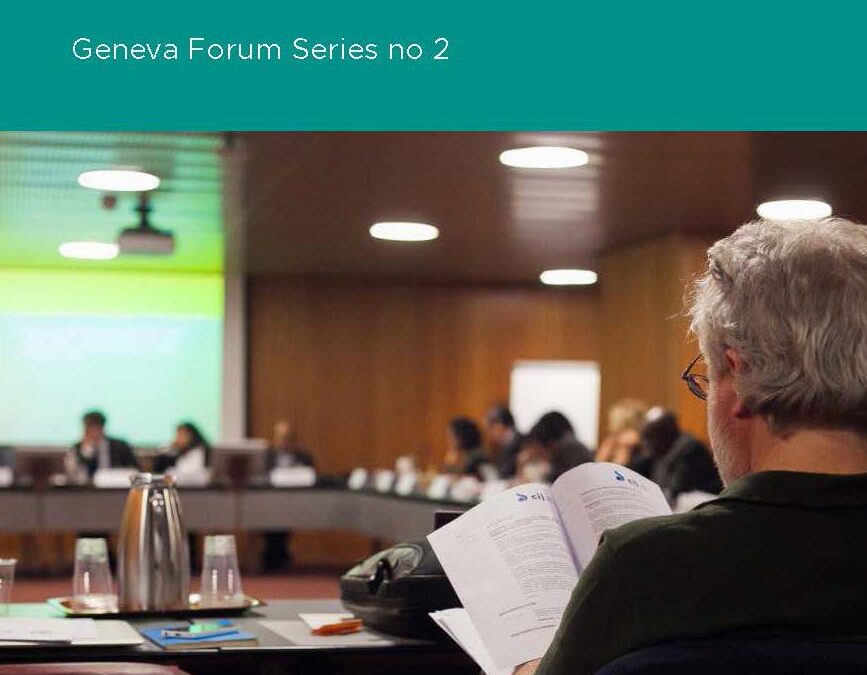
The present publication, no. 2 in the “Geneva Forum Series”, reflects the discussions at the 2014 Geneva Forum of Judges and Lawyers on judicial enforcement of economic, social and cultural rights.
The development and global acceptance of the justiciability of economic, social and cultural rights has been a slow and lengthy process, despite a growing consensus that it is possible to have recourse to courts to seek their enforcement.
The discussion is hence no longer whether these rights are justiciable, but how the remaining obstacles to access to justice and the enjoyment of the right to an effective remedy by victims of violations of these rights can be overcome.
At the 2014 Geneva Forum of Judges and Lawyers, participants discussed the progress to date as regards the legal and judicial enforcement and protection of economic, social and cultural rights; respecting the separation of powers while ensuring effective judicial protection; and, challenges and obstacles in the judicial enforcement of economic, social and cultural rights.
The ICJ has convened the Geneva Forum of Judges and Lawyers each year since 2010.
Organized by the ICJ’s Centre for the Independence of Judges and Lawyers, the Forum gathers legal practitioners from around the world for dialogue aimed at identifying and finding practical solutions to the challenges their professions face.
Improved judicial protection of human rights is the underlying motivation and theme for the Forums.
The Geneva Forum Series seeks to provide a permanent record of the discussions.
Download the full report here:
Universal-Judicial Enforcement ESCR Geneva Forum Series 2-Publications-Conference Report-2015-ENG