
Jun 19, 2015 | Communiqués de presse, Nouvelles
La CIJ a invité aujourd’hui les autorités marocaines à modifier les projets de loi sur le Conseil supérieur du pouvoir judiciaire (CSPJ) et sur le Statut des magistrats, afin d’assurer leur pleine conformité avec les normes et standards du droit international sur l’indépendance judiciaire.
La CIJ a invité les autorités à assurer que : le CSPJ soit indépendant aux niveaux institutionnel et organisationnel, ait une compétence exclusive quant à la gestion de la carrière des magistrats, notamment en ce qui concerne la sélection des juges stagiaires, soit impliqué dans la détermination du budget de la magistrature, et habilité à administrer l’allocation des ressources judiciaires.
Ce communiqué fait suite à la conclusion d’une mission de haut niveau qui s’est déroulée au Maroc entre le 12 et le 18 juin 2015 visant à rencontrer des membres des branches du pouvoir exécutif, législatif et judiciaire, ainsi que des représentants de la société civile, afin de s’entretenir sur les réformes judiciaires entreprises par les autorités marocaines.
Durant cette mission, la CIJ a soumis aux autorités deux mémorandums analysant les projets de loi à la lumière des normes du droit international et formulant des recommandations pour des modifications et des réformes.
Contact:
Theo Boutruche, Conseillé juridique du programme de la CIJ pour le Moyen Orient et l’Afrique du nord, t: +96 170 888 961, e: theo.boutruche(a)icj.org
Information supplémentaire:
La délégation de la CIJ était dirigée par M. Philippe Texier, ancien juge à la Cour de cassation française et commissaire de la CIJ.
La délégation a rencontré M. Driss Dahak, Secrétaire général du gouvernement ; M. Abdelilah Lahkim Bennani, Secrétaire général du ministère de la Justice et des Libertés ; M. Mustapha Farès, Premier Président de la Cour de cassation ; M. Mustapha Meddah, Procureur général de la Cour de cassation ; M. Mohamed Cheikh Biadillah, Président de la Chambre des Conseillers ; M. Omar Adkhil, Président de la Commission de justice, législation et droits de l’homme de la Chambre des Conseillers ; M. Mohamed Zerdali, Président de la Commission de justice, législation et droits de l’homme de la Chambre des Représentants ; M. Abdellatif Chentof, Président du Club des magistrats du Maroc ; M. Mohamed Khadraoui, vice-Président de l’Amicale Hassania des magistrats ; et M. Mohamed Akdim, Président de l’Association des barreaux du Maroc (ABAM).
Morocco-Draft Law CSPJ-News-press releases-2015-FRE (Communiqué de presse complet en PDF)
Morocco-Memo on the CSPJ-Advocacy-Briefing paper-2015-FRE (Texte complet en PDF)
Morocco-Memo on Statute for Judges-Advocacy-Briefing paper-2015-FRE (Texte 2 complet en PDF)
Jun 19, 2015 | Advocacy, Non-legal submissions
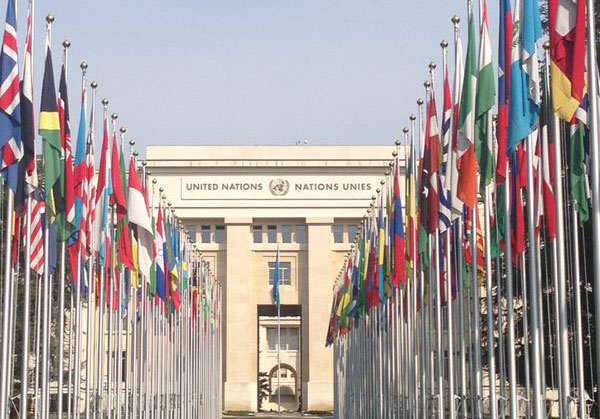
Today, the ICJ made a submission to the Human Rights Council’s Working Group on the Universal Periodic Review in advance of the Human Rights Council’s review of Singapore.
In its submission, the ICJ expressed concern about the following:
(1) corporal punishment;
(2) the death penalty;
(3) the continued criminalization of consensual same-sex relations;
(4) corporate accountability for companies registered in Singapore; and
(5) international human rights instruments and mechanisms.
A copy of the submission can be found here:
Singapore-ICJ UPR-Advocacy-non legal submission-2015-ENG

Jun 19, 2015
An opinion piece by James Tager, a Harvard Satter Fellow with the International Commission of Jurists in Bangkok, Thailand.
Observers have been surprised to see the National Human Rights Commission of Thailand (NHRCT) recently solicit candidates for new Commissioners. That’s because the NHRCT’s very existence is at risk right now.
As part of the general deterioration of Thailand’s human rights situation after the coup d’etat of May 2014, the drafters of the country’s new Constitution have proposed to ‘merge’ the NHRCT with the Office of the Ombudsman. This move would end the already weak NHRCT’s ability to function as an effective National Human Rights Institution (NHRI).
The UN and human rights advocates inside and outside the country are calling on Thailand to stop the merger of the NHRCT and the Ombudsman, and to bring selection procedures for new Commissioners in line with international standards governing NHRIs.
Who sits on the NHRCT is a key determinant of whether the body will be effective.
The Thai government should halt the selection process until the selection of new Commissioners conforms to these international standards.
Even before the suggested merger, the NHRCT has often failed to take a strong position on many human rights issues in the country.
Despite these problems, the NHRCT remains part of the framework of human rights protection for Thailand, receiving hundreds of human rights complaints every year.
Given its flaws, it might seem that any attempt to ‘reform’ the NHRCT would be welcome.
But the proposed merger will only weaken the NHRCT, precisely at a time when Thailand’s military junta has given itself sweeping, unchecked powers and invoked a series of repressive laws that have facilitated human rights violations, including the rights to a fair trial and to freedom of expression and assembly.
The merger plan fails to recognize that the NHRCT and the Ombudsman have very different functions. The Office of the Ombudsman has a mandate that extends only to the misuse of power by State officials, has no competence to investigate a situation or violation without first receiving a complaint, and may invoke only national law carrying out its work.
In contrast, the NHRCT has a mandate to examine human rights violations and situations, has powers of investigation which the Office of the Ombudsman lacks, and is guided not only by national laws but also international human rights law and standards.
The new draft Constitution would fuse these two institutions together without clarifying the scope and contours of the new body’s mandate.
Instead, the planned merger threatens to create an institution with weakened powers, restricted authority, and a hazy focus.
Not only is the proposed merger objectionable for what it threatens to change, but also for what it threatens to keep: with only small alterations, the current draft Constitution maintains the same opaque and government-controlled appointment process for new Ombudsman/Commissioners, with little consultation with broader society.
The merger proposal comes at a time when the NHRCT’s independence and credibility has already come under question on the world stage.
The NHRCT, like all officially recognized national human rights institutions, receives its accreditation from the International Coordinating Committee of National Institutions for the Promotion and Protection of Human Rights (ICC), an international body comprising NHRIs across the world.
In October 2014, the ICC recommended that the NHRCT be downgraded from “A” status to a “B” because it does not comply with the Paris Principles, the international standards governing the proper functioning of all NHRIS, including their independence and effectiveness.
The NHRCT has until the end of October 2015 to demonstrate that it has taken sufficient steps to comply fully with the Principles, or the Commission’s downgrade will take effect.
If Thailand takes action now to reform the selection procedures for new Commissioners, such a step could go a long way towards Thailand keeping its “A” status. In contrast, the ICC has already declared that it would construe the proposed merger as further evidence of the need to downgrade the NHRCT.
The ICC may consider the merger as an indication that the NHRCT has been effectively dissolved, leaving Thailand without a genuine NHRI in the eyes of the international community.
Either action would seriously harm the Thai government’s already battered human rights standing. The Thai government frequently refers to the NHRCT’s work at international gatherings when it is trying to burnish its international image, but a downgraded Commission will no longer be able to present to the UN Human Rights Council or vote within ICC meetings.
The Commission will be treated as an observer, rather than an organization in good standing, in its presentation around the world, including during its engagement with the UN Human Rights Council.
Thailand’s NHRCT needs reform, but these reforms should strengthen the body’s ability to operate independently and to protect human rights. A welcome first step would be the immediate reformation of the selection process for new Commissioners.
Instead of submerging the NHRCT into the institution of the Ombudsman, the Thai government should make it a stronger monitor and advocate for human rights in the country.

Jun 19, 2015 | Artículos, Noticias
La CIJ pide a la Asamblea Legislativa de El Salvador elegir a las personas independientes, idóneas y honestas como magistrados de la Corte Suprema de Justicia.
La CIJ, ante la próxima elección por parte de la Asamblea Legislativa de El Salvador de cinco magistrados a la Corte Suprema de Justicia, expresa:
- De conformidad con el Derecho Internacional de los Derechos Humanos, los Estados deben hacer todos los esfuerzos posibles, para dotarse a sí mismos de un Poder Judicial Independiente. En tal sentido, es necesario que la Asamblea Legislativa haga todos los esfuerzos posibles para elegir de la lista de 30 personas, a las más idóneas, honestas e independientes;
- La Asamblea Legislativa debería dar tiempo suficiente, para permitir que en el proceso de elección, la sociedad salvadoreña pueda presentar sus observaciones y críticas hacia cada uno de los candidatos y candidatas; asimismo, después de elaborar una lista corta de posibles candidato/as (lista de 10 personas por ejemplo), la Asamblea Legislativa debería llevar a cabo audiencias púbicas con cada uno de ellos, para que la ciudadanía pueda enterarse con más detalle de la trayectoria de cada candidato/a y de su conocimiento en aspectos de administración de justicia;
- La Asamblea Legislativa debería elegir a las personas que tengan más conocimiento y experiencia en materia de administración de justicia y que sean jueces de carrera, para que quienes sean electos puedan llegar a impulsar los cambios que el Sistema de Justicia requiere. Por ejemplo, las reformas a la Carrera Judicial; separación de las facultades administrativas y jurisdiccionales de las y los magistrados de la Corte Suprema de Justicia; reformas a los procesos disciplinarios que se aplican a jueces y magistrados, entre otras.
Ramón Cadena, Director del programa la Comisión Internacional de Juristas para Centroamérica expresó en su visita a El Salvador: “Si bien los acuerdos de paz introdujeron reformas importantes, después de más de quince años se requiere introducir nuevas reformas para fortalecer la independencia del Poder Judicial, en relación a los otros poderes del Estado de El Salvador y alcanzar una mayor independencia judicial. Seguiremos observando de cerca el desarrollo y los resultados de este proceso de elección.”

Jun 19, 2015 | News
La CIJ pide a la Asamblea Legislativa de El Salvador elegir a las personas independientes, idóneas y honestas como magistrados de la Corte Suprema de Justicia.
La CIJ, ante la próxima elección por parte de la Asamblea Legislativa de El Salvador de cinco magistrados a la Corte Suprema de Justicia, expresa:
- De conformidad con el Derecho Internacional de los Derechos Humanos, los Estados deben hacer todos los esfuerzos posibles, para dotarse a sí mismos de un Poder Judicial Independiente. En tal sentido, es necesario que la Asamblea Legislativa haga todos los esfuerzos posibles para elegir de la lista de 30 personas, a las más idóneas, honestas e independientes;
- La Asamblea Legislativa debería dar tiempo suficiente, para permitir que en el proceso de elección, la sociedad salvadoreña pueda presentar sus observaciones y críticas hacia cada uno de los candidatos y candidatas; asimismo, después de elaborar una lista corta de posibles candidato/as (lista de 10 personas por ejemplo), la Asamblea Legislativa debería llevar a cabo audiencias púbicas con cada uno de ellos, para que la ciudadanía pueda enterarse con más detalle de la trayectoria de cada candidato/a y de su conocimiento en aspectos de administración de justicia;
- La Asamblea Legislativa debería elegir a las personas que tengan más conocimiento y experiencia en materia de administración de justicia y que sean jueces de carrera, para que quienes sean electos puedan llegar a impulsar los cambios que el Sistema de Justicia requiere. Por ejemplo, las reformas a la Carrera Judicial; separación de las facultades administrativas y jurisdiccionales de las y los magistrados de la Corte Suprema de Justicia; reformas a los procesos disciplinarios que se aplican a jueces y magistrados, entre otras.
Ramón Cadena, Director del programa la Comisión Internacional de Juristas para Centroamérica expresó en su visita a El Salvador: “Si bien los acuerdos de paz introdujeron reformas importantes, después de más de quince años se requiere introducir nuevas reformas para fortalecer la independencia del Poder Judicial, en relación a los otros poderes del Estado de El Salvador y alcanzar una mayor independencia judicial. Seguiremos observando de cerca el desarrollo y los resultados de este proceso de elección.”