Apr 10, 2015
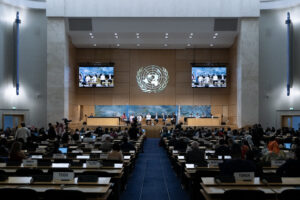
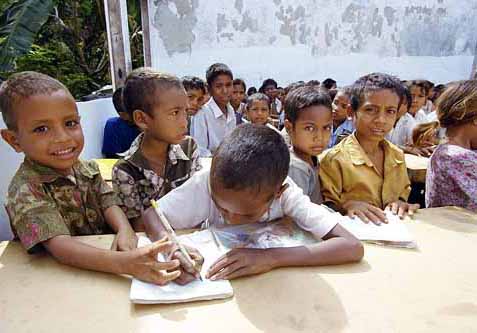
Today, the ICJ submitted a briefing to the Committee on the Rights of the Child in view of the Committee’s preparation of a List of Issues for the examination of Brunei Darussalam’s Second and Third Periodic Reports under the Convention on the Rights of the Child.
In its submission, the ICJ draws the attention of the Committee to concerns related to:
i.) the minimum age of criminal responsibility;
ii.) minimum age for marriage and/or forced marriage;
iii.) whipping as a judicially imposed punishment on children; and
iv.) undue limitations on the right to freedom of religion.
The ICJ’s submission concludes with a list of recommended questions for inclusion in the List of Issues for the examination of Brunei Darussalam.
Brunei-UNC right of the Child-Advocacy-legal submission-2015-ENG (full text in PDF)

Apr 9, 2015 | News
The ICJ today condemned the passing of the amendments to the archaic 1948 Sedition Act by Parliament’s House of Representatives.
The amendments broaden and deepen even further the scope for this law to be abused by authorities in order to violate human rights.
The amendments were passed after a final vote that saw 108 MPs in favour and 79 MPs against the proposal.
“The passed amendments were part of a series of bills that were rushed through Parliament this week, including the draft Prevention of Terrorism Act”, said Emerlynne Gil, ICJ’s International Legal Adviser. “It is unfortunate that Prime Minister Najib Razak has chosen to renege on his promise to abolish the Sedition Act and instead went ahead to make the law worse than it already is.”
“It is undeniable that these amendments would send a further chilling effect on the freedom of expression in Malaysia that is already restricted,” Gil added.
The amendments will now need to be passed by the Senate and thereafter, receive assent of the Malaysian King before it becomes law.
CONTACT:
Emerlynne Gil, ICJ International Legal Adviser, email: emerlynne.gil(a)icj.org or mobile: +66 84 092 3575

Apr 9, 2015 | News
Among the victims of a gun attack today at the Palace of Justice of Milan, according to press reports, were Judge Fernando Ciampi and lawyer Lorenzo Alberto Claris Appiani.
Press reports state that the person who opened fire in the Palace of Justice of Milan, killing three persons and injuring several others, was a defendant in a case.
The ICJ calls on relevant authorities immediately to launch a thorough inquiry into the system of security at the Palace of Justice, for judges, lawyers, and prosecutors, as well as witnesses and parties to cases, employees, and others present in the buildings.
The ICJ recalls that the State has a duty under international law to ensure protection for members of the judiciary and others who may be at risk of such attacks.

Apr 9, 2015 | Advocacy, Non-legal submissions
The ICJ and other leading human rights NGOs today publish a checklist of qualifications for use in the ongoing selection of a new UN expert on the right to privacy.
The UN is accepting applications for the newly-created Special Rapporteur on the right to privacy, to be appointed at the June session of the Human Rights Council. The deadline for receipt of nominations is 30 April 2015.
The checklist was developed together with Access, the American Civil Liberties Union, Amnesty International, Article 19, the Association for Progressive Communications, Electronic Frontier Foundation, and Privacy International. These NGOs, with the support of dozens of other civil society organisations from around the world, advocated for and strongly supported the establishment of the Special Rapporteur mandate at the March session of the Human Rights Council.
This checklist is intended to support governments, NGOs, academics, relevant professional networks, national human rights institutions and others in the identification of and outreach to highly qualified and independent candidates.
The checklist can be downloaded in PDF format here: HRC29-CriteriaSRPrivacy-Advocacy-2015
The application and selection process is explained on the website of the Office of the High Commissioner for Human Rights, here.

Apr 8, 2015
The ICJ calls on member States of the League of Arab States (LAS) to refrain from ratifying the Statute of the Arab Court of Human Rights unless and until it is comprehensively amended.
In a report published today, the ICJ highlights numerous failings in the drafting process and the provisions of the Statute that fall short of international standards.
The Statute, approved by the Ministerial Council of the LAS on 7 September 2014, does not permit individuals or groups, including victims of human rights violations, to file a complaint directly with the Court. Only States parties, and NGOs that are both accredited in a State party and are specifically permitted to do so by that State, can bring cases before the Court.
“By denying the right of victims to have direct recourse to the Court, the Statute defeats the very purpose and objective of establishing the Arab Court of Human Rights,” said Said Benarbia, Director of the ICJ’s Middle East and North African Programme. “Amendments to the Statute’s access provisions should be introduced to ensure direct access at a minimum for individuals who allege they have been a victim of a violation of a right within the jurisdiction of the Court.”
Further reforms needed include proper guarantees for the independence and impartiality of the Court and its judges, a requirement for the Court to interpret the Arab Charter of Human Rights consistently with States’ other international law obligations, and for the Court to have broad discretion to decide whether cases are admissible, without the undue restrictions of a strict requirement to exhaust local remedies.
In addition, if the Court is to be effective, it must be able to order interim or provisional measures; to order measures capable of protecting victims, witnesses and other participants in Court proceedings from reprisals; the host State must be required to provide the necessary guarantees for the Court and its staff; and there must be mechanisms to ensure that the Court’s judgments are actually implemented in practice.
“Member States of the LAS must refrain from ratifying the Statute in its current form and should instead launch a transparent and inclusive process to amend the Statute in full accordance with international standards,” Benarbia added. “All stakeholders, including victims of human rights violations and their representatives, civil society organizations, judges, academics and Bar Associations, should be given the opportunity to participate in all stages of the process of establishing the Arab Court, including the reform of the Statute.”
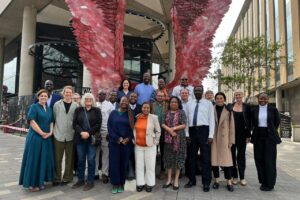
Said Benarbia was speaking at a joint conference of the ICJ and Legal Agenda in Tunis, from 8 to 9 April 2015, bringing experts on international and regional mechanisms and courts, together with judges, lawyers and civil society organizations from LAS member states, to examine the Statute of the Arab Court in light of international standards and experiences.
Contact:
Said Benarbia, ICJ Director of the Middle East and North Africa Programme, e: said.benarbia@icj.org
MENA-Arab Court of Human Rights-Publications-Report-2015-ENG (full report in PDF, English version)
MENA-Arab court of Human Rights-Publications-reports-2015-ARA (full report in PDF, Arabic version)
MENA-Arab Court Report-News-Pressrelease-2015-ARA (full Arabic version of press release in PDF)
MENA-Arab Court Tunis Declaration-Advocacy-2015-ENG (full text in PDF)
MENA-Arab Court Tunis Declaration-Advocacy-2015-ARA (full text in PDF, Arabic)
MENA-Arab Court Speech Monageng-Advocacy-2015-ENG (full text in PDF)
MENA-Arab Court Memo Monageng-Advocacy-2015-ENG (full text in PDF)
MENA-Conference Agenda-News-Event-2015-ENG (full agenda in PDF, English)
MENA-Conference Agenda-News-Event-2015-ARA (full agenda in PDF, Arabic)