Apr 8, 2015
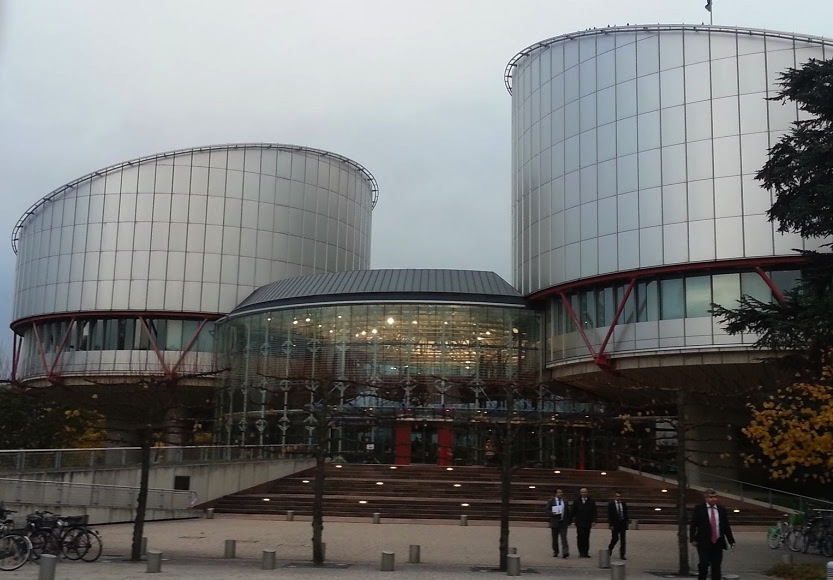
The ICJ submitted today a third party intervention before the European Court of Human Rights in the case of Baka v. Hungary, regarding the dismissal of the former Supreme Court President of Hungary.
In these submissions, the ICJ addressed:
(1) the scope of application of article 6.1 ECHR in cases relating to judicial appointments, the judicial career, and security of tenure including removal from office, in light of the Convention jurisprudence and of principles of the rule of law and of the role and independence of the judiciary;
(2) international standards on security of judicial tenure, freedom of expression of judges, and the role of judges in contributing to debate on questions of judicial independence, which are relevant to protection of article 10 ECHR rights of judges.
The ICJ argued in its third party intervention that the special and fundamental role of the judiciary as an independent branch of State power, in accordance with principles of the separation of powers and the rule of law, is recognised within the ECHR, both explicitly and implicitly.
This special role must accordingly be given significant weight in assessing any restrictions imposed by the executive (and legislative) branches on Convention rights applicable to judges.
Therefore, in order to preserve the special role of the judiciary the ECHR should be interpreted in a manner that limits the scope for the executive- or legislative branch to justify the imposition of restrictions on article 6.1 ECHR rights of judges in employment disputes on grounds of legitimate interest.
Second, for the same reasons, the ECHR should be interpreted to preclude restrictions of freedom of expression applicable to judges and civil servants that would impair the right and the duty of the judiciary to speak out in protection of judicial independence.
ECtHR-AmicusBrief-Baka v Hungary-Advocacy-Legal Submission-2015-ENG (download the third party intervention)
Apr 8, 2015
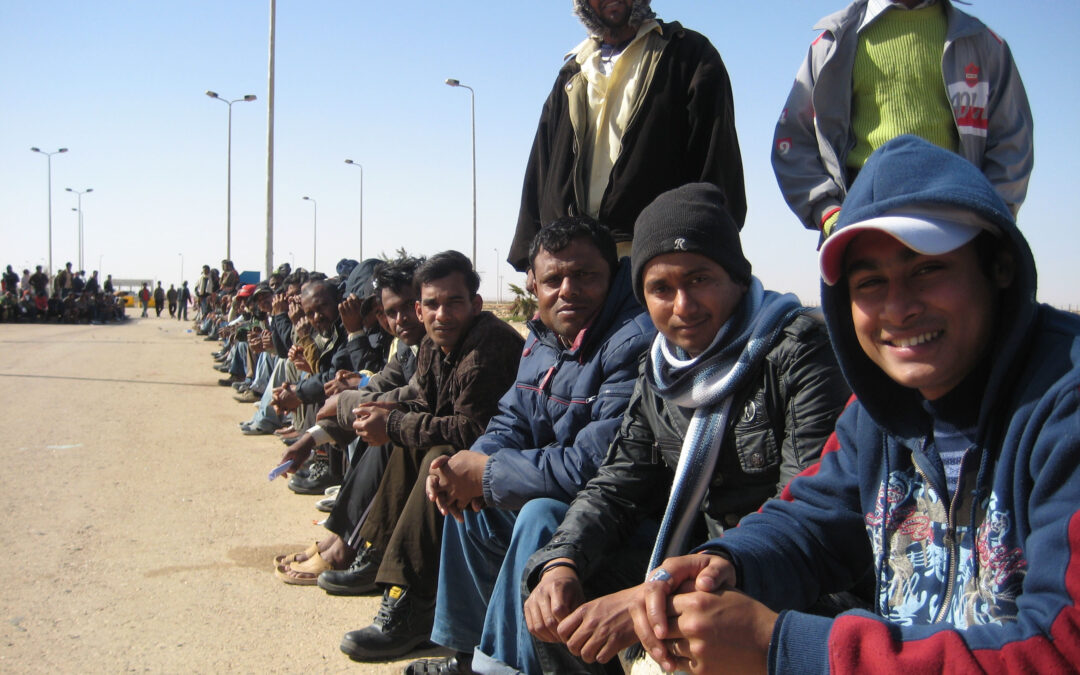
The ICJ made a submission to the EU Ombudsman on the compliance of the Code of Conduct on Joint Return Operations of Frontex with international human rights law.
The submission was presented in the context of European Ombudsman’s own initiative inquiry concerning the means through which Frontex ensures respect for fundamental rights in joint return operations.
The ICJ concluded that the Code of Conduct for Joint Return Operations Coordinated by Frontex, while a considerable improvement on the previous absence of regulation, does not fully reflect Frontex’s duties in the field of joint return cooperation, organization and execution.
In particular, the ICJ stressed that the standards of the Code of Conduct on the use of force, coercive measures, training and identification do not fully reflect Member States and EU institutions, agencies and bodies obligations under international and EU law.
Finally, the ICJ found that a primary weakness of the Code of Conduct is the lack of proper standards, guarantees and guidelines in relation to the returnee’s right to an effective remedy and reparation, as enshrined in article 47 EU Charter, article 13 ECHR and article 2.3 ICCPR.
Disclaimer: the ICJ is a member of Frontex Consultative Forum on Fundamental Rights. This submission is not sent in the ICJ’s capacity as a member of the Consultative Forum and does not necessarily represent the views of the Forum.
EU-JointReturnsInquiry-ICJSubmission-2015-ENG (download the submission)
Apr 7, 2015
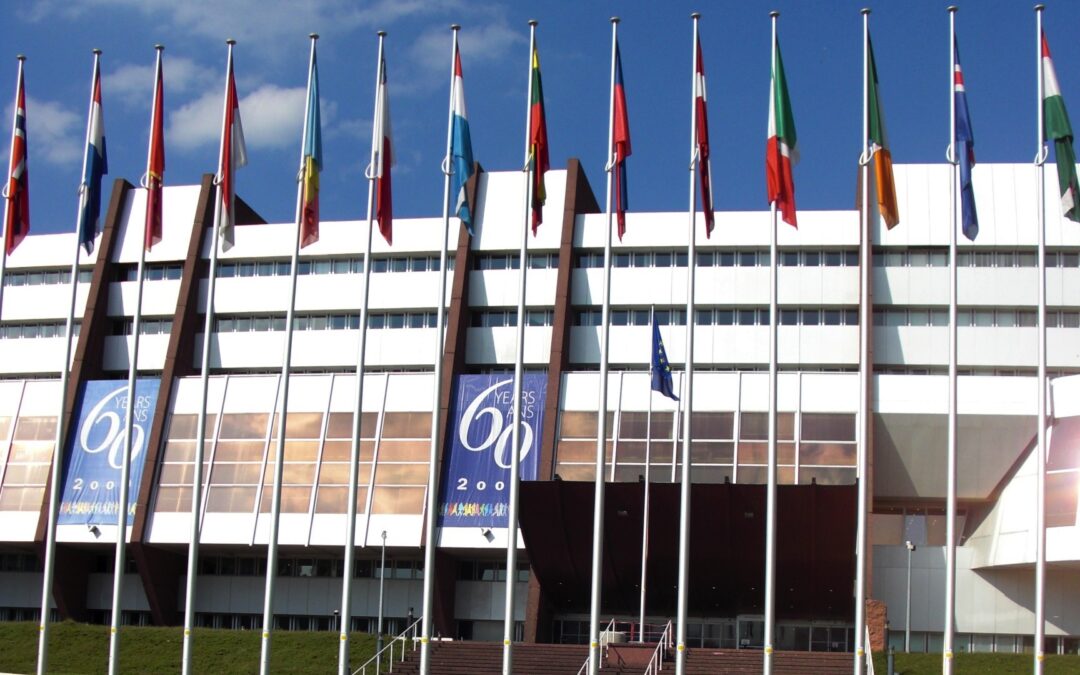
The ICJ and Amnesty International submitted today their observations on the revised draft Additional Protocol to the Council of Europe Convention on the Prevention of Terrorism to the Committee of Experts on Terrorism (CODEXTER).
The submission highlights key points that the two organizations set out in more detail in a previous submission to the Committee on Foreign Terrorist Fighters and Related Issues (COD-CTE) on a previous (12 March) draft of the Additional Protocol, as well as in earlier preliminary observations, and which are not reflected in the text of the draft Protocol as it presently stands. This submission also includes comments on the new Article 7 of the draft Protocol.
The ICJ and Amnesty International urged CODEXTER to consider these concerns and recommendations and to make further amendments to the text of the draft Protocol accordingly before it is submitted for adoption by the Committee of Ministers of the Council of Europe.
CouncilofEurope-CODEXTER-DraftProtocolTerrorismConvention-ICJ-AISubmission-2015-ENG (download the last submission)
CouncilofEurope-Submission-ForeignFighters-Advocacy-Legal Submission-2015-ENG (download the second submission)
CouncilofEurope-Letter-ForeignFighters-Advocacy-Legal Submission-2015-ENG (download the first submission)

Apr 7, 2015 | News
The Malaysian government must cease efforts to strengthen the country’s draconian Sedition Act 1948, which has been used with increasing frequency and severity to suppress and punish criticism of the government, said the ICJ today.
An amendment to Malaysia’s Sedition Act tabled at parliament today would make sedition a non-bailable offence, aggravating the Sedition Act’s incompatibility with international human rights standards.
“The Sedition Act has been used against the government’s political opposition much more frequently than in previous years,” said Emerlynne Gil, ICJ’s International Legal Advisor for Southeast Asia. “Since January 2015, ICJ has recorded at least 36 academicians, lawyers, politicians, students, and activists have been investigated, arrested, or charged under the Sedition Act.”
According to the ICJ, this is a significant spike when compared to the total number of reported sedition cases recorded by Malaysian civil society in previous years: 2010 (5 cases); 2011 (3 cases); 2012 (7 cases); 2013 (19 cases); 2014 (42 cases).
“Instead of repealing or restricting the Sedition Act, the new amendment actually makes it worse by limiting the ability of courts to grant bail to people accused under the Sedition Act,” Gil added.
The amendment specifically states that if the Public Prosecutor certifies in writing that it would not be “in the public interest” to grant bail to the person charged with sedition, the person shall therefore not be released on bail, a matter otherwise normally determined by the courts in each case.
Denying bail based on a mere certificate by the Public Prosecutor removes any requirement that the court be presented with evidence to remand a person in custody and it may also preclude effective inquiry by the court into the lawfulness of the arrest and detention.
“The proposed amendment removes the court’s discretion to determine whether to grant bail or not when presented with a certification from the Public Prosecutor,” Gil said. “It appears therefore that the court has no power to require evidence or even articulation of the reasons to evaluate whether it is reasonable and necessary to remand the person charged with the offence in custody.”
Under international law, the right to seek provisional release before final conviction, for instance through posting bail, is closely linked to the right not to be subjected to arbitrary detention.
Under international standards, a detention that complies with national law can nevertheless be considered arbitrary based on elements of inappropriateness, injustice, and lack of predictability.
In principle, anyone arrested on criminal allegations should have the right to seek release pending trial, including through bail proceedings before a court of law.
National laws should only allow bail to be denied where the facts of the individual case give rise to some specific reasonable ground for continued detention, such as preventing flight, or interference with evidence, or the commission of further violent offences.
Further, where the charges are incompatible with human rights – for instance when it is based entirely on protected freedom of expression – then there can be no basis whatsoever for pre-trial detention. Thus, any detention under the Sedition Act, a vague and ambiguously defined law, would be an arbitrary deprivation of liberty.
Finally, the ICJ recognizes that there have been instances when those arrested under the Sedition Act have allegedly committed acts that are recognizably criminal in character.
In these instances, other criminal laws in Malaysia could provide a proper basis for any investigation and detention.
Contact:
Emerlynne Gil, ICJ’s International Legal Advisor for Southeast Asia: emerlynne.gil@icj.org or +66840923575.
NOTE:
The figures above and the information contained in the chart and graph below are based on ICJ’s documentation in 2015 in comparison with the documentation of reported sedition cases for the past five years done by one of Malaysia’s leading organizations, Suara Rakyat Malaysia (SUARAM).
Malaysia-Graph Sedition Cases 2010to2015-Advocacy-2015-ENG (full graph in PDF)
Malasia-Sedition table 2015-Advocacy-2015-ENG (full ICJ table in PDF)
Malaysia-SUARAM document Overview – Sedition cases 2010to2014-Advocacy-2015-ENG (full SUARAM table, in PDF)

Apr 7, 2015 | News
Bangladesh President Abdul Hamid should intervene to stay the imminent execution of Muhammad Kamaruzzaman, a senior leader of the Jamaat-e-Islami party, said the ICJ today.
Kamaruzzaman was sentenced to death by the International Crimes Tribunal (ICT) in 2013 after an unfair trial, the ICJ says.
On Monday, 6 April 2015, the Bangladesh Supreme Court rejected Kamaruzzaman’s last-ditch petition for independent review of the sentence – he was claiming discrepancies in prosecution witness testimony during the trial – paving the way for his imminent execution.
“The ICJ has long supported the right of victims to seek truth and justice for the atrocities committed in the 1971 war to gain Bangladesh’s independence, but the death penalty, especially after a trial with procedural and substantive flaws, perpetuates the cycle of violence and is a perversion of justice,” said Sam Zarifi, the ICJ’s Director for Asia and the Pacific.
The ICJ has previously raised concerns that the ICT does not comply with international standards for fair trials.
Following the Supreme Court’s rejection of his review petition, Kamaruzzaman must now decide whether to seek clemency from the President, as the last resort.
The ICJ opposes capital punishment in all cases without exception.
The death penalty constitutes a violation of the right to life and the right not to be subjected to cruel, inhuman or degrading punishment.
“The death penalty is not justice and is the ultimate form of cruel and inhuman punishment,” Zarifi said. “Especially where the death penalty is concerned, the trial process has to meet the highest standards of fairness and due process, but this case falls far short of that.”
The ICJ calls on Bangladesh to impose an official moratorium on the death penalty, with a view to abolishing the death penalty outright.
Contact:
Sam Zarifi, ICJ Asia Pacific Regional Director (Bangkok), t: +66 807819002; email: sam.zarifi(a)icj.org
Background:
In May 2013, the ICT found Kamaruzzaman guilty of mass killing during the 1971 Liberation War and sentenced him to death.
In November 2014, the Supreme Court issued a judgment on appeal upholding Kamaruzzaman’s conviction and death sentence.
In December 2014, the UN General Assembly adopted a resolution, for the fifth time since 2007, emphasizing that the use of the death penalty undermines human dignity and calling on those countries that maintain the death penalty to establish a moratorium on its use with a view towards its abolition.
117 UN Member States, a clear majority, voted in favor of a worldwide moratorium on executions as a step towards abolition of the death penalty.