Apr 7, 2015 | News
Venezuela is intimidating and harassing human rights defenders, and making unsubstantiated allegations that they are seeking to undermine Venezuelan democracy, 28 international and Latin American human rights organizations, including the ICJ, said today.
The authorities’ allegations concern the groups’ legitimate functions of documenting abuses and representing victims before international human rights bodies.
Venezuelan authorities should cease this tactic immediately, the groups said.
Governments participating in the Summit of the Americas in Panama on April 10-11, 2015, should press the administration of Nicolás Maduro to ensure that human rights defenders can do their job without fear of reprisals, the organizations said.
The government harassment is clearly intended to discredit and intimidate groups that document human rights violations, the groups said.
On February 12, Diosdado Cabello, president of the National Assembly and member of the governing party, stated on the website of his weekly TV show, Con el Mazo Dando, aired on the state-run Venezolana de Televisión, that “NGO representatives from the Venezuelan extreme right” would participate in hearings before the Inter-American Commission on Human Rights (IACHR) in March.
Cabello had previously criticized Venezuelan human rights defenders who participated in the country’s review by the UN Committee Against Torture in Geneva, or traveled abroad to conduct advocacy meetings.
On March 18, during his show, Cabello read a list of names of individuals and organizations who had traveled to Washington, DC, to participate in the IACHR hearings.
The list included leading human rights groups such as Provea, Espacio Público (Public Space), Observatorio Venezolano de Prisiones (Venezuelan Observatory of Prisons), Transparencia Venezuela (Transparency Venezuela), Cofavic, Codevida, and Observatorio Venezolano de Conflictividad Social (Venezuelan Observatory of Social Conflicts).
Cabello accused them of receiving instructions from the US Embassy in Caracas before traveling to the hearings.
Cabello contends that the information presented on the show had been provided by anonymous “patriotic informants” (patriotas cooperantes).
Twelve human rights defenders who arrived in Caracas on various flights between March 20 and 22 have said that they were followed by unidentified men from when they landed until they left the airport, were filmed or photographed, and/or that officials irregularly searched their bags.
On March 23, María Alejandra Díaz, a lawyer who represented the government at the IACHR hearings, said on Venezolana de Televisión that “The issue of human rights is just a façade” and that nongovernmental groups that participated in the hearings “say they are Venezuelan” but “play the imperialist game” and “lie in front of the IACHR to make Venezuela look like the devil.”
An article published on April 3 in the official newspaper Correo del Orinoco accused two well-respected human rights defenders of being part of the US Central Intelligence Agency’s “Venezuelan delegation” at the Summit of the Americas.
Their objective is to “legitimize destabilization actions” in Venezuela, the article says.
Under international law, governments must ensure that human rights defenders are allowed to pursue their legitimiate activities without reprisals, threats, intimidation, harassment, discrimination, or unnecessary legal obstacles.
The Inter-American Court of Human Rights held in 2003 that “[r]espect for human rights in a democratic state depends largely on human rights defenders enjoying effective and adequate guarantees so as to freely go about their activities.”
The rights to freedom of expression and association may be subject to limitations, but the limitations must adhere to strict standards so that they do not improperly impede the exercise of those rights. Any restrictions should be prescribed by law, be necessary in a democratic society, and proportionate to the aim pursued.
In 2012, the UN special rapporteur on the rights to freedom of peaceful assembly and of association called on countries to ensure that these rights “are enjoyed by everyone and any registered or unregistered entities” and that no one is subject to “harassment, persecution, intimidation or reprisals” for exercising them.
Signatories
Amnesty International
Asociación Pro Derechos Humanos (APRODEH) (Peru)
Asociación por los Derechos Civiles (ADC) (Argentina)
Centro de Derechos Humanos de la Montaña Tlachinollan (Mexico)
Centro de Derechos Humanos Miguel Agustín Pro Juárez, A.C. (Centro Prodh) (Mexico)
Centro de Estudios de Derecho, Justicia y Sociedad (Dejusticia) (Colombia)
Center for Justice and International Law (CEJIL)
CIVICUS
Ciudadanos en Apoyo a los Derechos Humanos, A.C. (CADHAC) (Mexico)
Comisión Colombiana de Juristas (Colombia)
Comisión Ecuménica de Derechos Humanos (CEDHU) (Ecuador)
Corporación Humanas (Chile)
Coordinadora Nacional de Derechos Humanos (Peru)
Due Process of Law Foundation (DPLF)
Instituto de Estudios Legales y Sociales del Uruguay (IELSUR) (Uruguay)
Instituto de Defensa Legal (IDL) (Peru)
Instituto de Desenvolvimento e Direitos Humanos (Brazil)
International Commission of Jurists
International Federation for Human Rights (FIDH)
International Service for Human Rights (ISHR)
Frontline Defenders
Fundación Myrna Mack (Guatemala)
Fundación Regional de Asesoría en Derechos Humanos (INREDH) (Ecuador)
Human Rights Watch
Observatorio Ciudadano (Chile)
Robert F. Kennedy Center for Justice & Human Rights
Transparency International
World Organization Against Torture
Venezuela-Harassment of HRDs-News-web stories-2015-SPA (full text in PDF, Spanish version)
Venezuela-Harassment of HRDs-News-web stories-2015-POR (full text in PDF, Portuguese version)
Apr 7, 2015
The draft Prevention of Terrorism Act (POTA) should either be rejected or amended by the parliament of Malaysia, said the ICJ today in an open letter to the Speaker of the Lower House of the Parliament of Malaysia.
“This law is really prone to abuse and violates international human rights standards,” said Emerlynne Gil, ICJ International Legal Adviser for Southeast Asia.
“This is just the unlawful Internal Security Act with another name. Persons may be sent to prolonged administrative detention on security grounds, on a permanent basis, while the draft law also precludes any effective inquiry by the judiciary into the lawfulness of any other aspect of the arrest or detention of persons arrested under this law.”
“There is a very high threshold that needs to be met to justify the creation of a system of administrative security detention. The government of Malaysia has not shown how the current situation in the country meets this threshold,” Gil added.
Malaysia-Open Letter to Parliament on POTA-Advocacy-open letter-2015-ENG
Apr 2, 2015
On 1 April 2015, the ICJ made a submission to the UN Committee on the Rights of the Child in response to the Committee’s initial call for comments on its project of elaboration of a General Comment on the rights of adolescents under the UN Convention on the Rights of the Child.
The ICJ’s submission focuses on adolescents’ right to comprehensive sexuality education, as a human right with specific relevance to the respect, protection and realization of the rights of adolescents under the Convention.
Global-Submission CRC GC right of adolescents -LegalAdvocacy-2015-ENG
Apr 1, 2015 | News
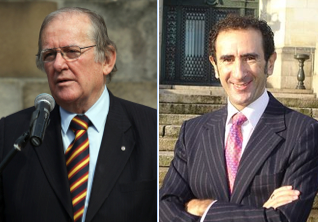
The ICJ is please to announce the appointment of two new Commissioners: Justice John Lawrence O’Meally (Australia) and Justice Fatsah Ouguergouz (Algeria).
The new Commissioners were elected, by existing Commissioners, by a ballot counted on 13 March 2015.
Justice John Lawrence O’Meally (Australia) is a mediator accredited by the Institute of Arbitrators and Mediators of Australia, and on the New South Wales (NSW) Bar Association’s list of mediators for cases in the Supreme Court of NSW. He is a graduate of the University of Sydney and was admitted to the NSW and Australian Bars in 1964 and then later to the Papua New Guinea Bar and Western Pacific Bar. He has worked as a barrister and judge in Australia, Papua New Guinea, Antigua and Barbados. He has been a Consultant to the Governments of St Lucia on Restructuring the District Court and the Solomon Islands on Restoration of the Legal System. He is a Member of Council of the Australian Section of the ICJ and President of the NSW Branch.
Justice Fatsah Ouguergouz (Algeria) is one of the inaugural judges of the African Court of Human and People’s Rights, first elected in 2006 and then re-elected in 2010 for a six-year term. He graduated in Law from the University of St. Etienne in France and has a PhD in International Law from the Graduate Institute of International Law in Geneva. He has taught Public International Law at the University of Geneva, has served as a Human Rights Officer in Rwanda for the United Nations High Commissioner for Human Rights, worked as Legal Officer at the Office of Legal Affairs of the United Nations in New York and was Secretary of the International Court of Justice at the Hague.
In addition to the two new members, Professor Sir Nigel Rodley was also re-elected to serve a second term as President of the ICJ.
Mar 31, 2015 | Адвокаси, Новости, Статьи
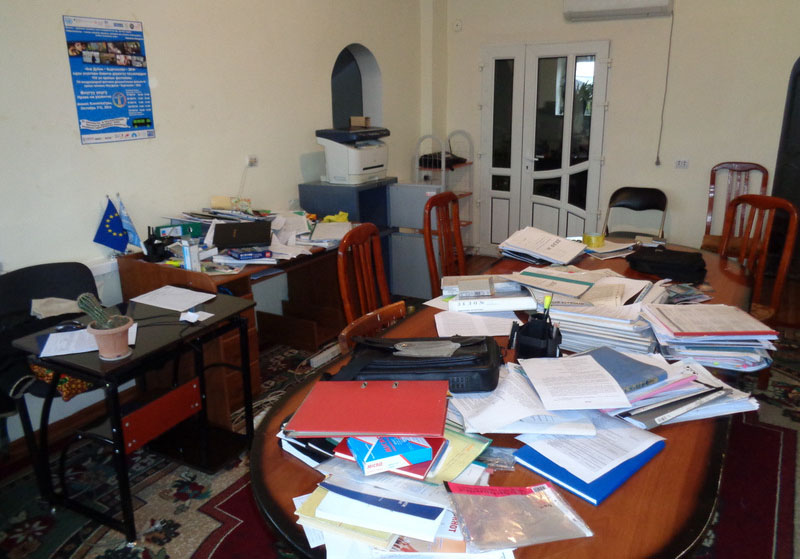
Сегодня МКЮ выразила обеспокоенность в связи с обысками, проведенными в жилище и офисе адвокатов следователями города Ош.
По месту жительства адвоката Валерьяна Вахитова и в офисе правозащитной организации «Бир Дуйно-Кыргызстан», где работали адвокаты Валерьян Вахитов и Хусанбай Салиев, был проведен обыск, в результате которого были изъяты материалы из досье адвокатов. МКЮ считает, что данные обыски составили нарушение права на конфиденциальность общения между адвокатом и подзащитным.
Конфиденциальность общения адвоката со своим подзащитным и тайна адвокатского досье пользуются международно-правовой защитой в рамках права на справедливое судебное разбирательство, а также запрета произвольного вмешательства в право на уважение корреспонденции, частной жизни и (в данном случае) жилища.
Обыски последовали за задержанием Умара Фарука, гражданина США, журналиста, который предположительно собирал данные о межэтнической напряженности в Кыргызской Республике, в частности, на границе с Узбекистаном. 25 марта 2015 года Фарук был задержан сотрудниками Государственного комитета по национальной безопасности (ГКНБ).
При задержании у него был изъят ряд предметов, включая компакт-диски «с видеозаписями выступлений… на религиозную тему и отрывками боевых действий», постановления о привлечении в качестве обвиняемого, вынесенные в отношении подзащитных адвокатов, А.М. Юсупова и И.И. Салибаева, а также визитные карточки обоих адвокатов.
28 марта Умар Фарук был депортирован из Кыргызской Республики в связи с осуществлением сбора данных в отсутствие аккредитации.
Следователь обратился в суд с ходатайством о производстве обыска в помещениях, занимаемых адвокатами, на том основании, что там могут находиться документы, «необходимые при расследовании» уголовного дела № 082-15-0236.
Постановления о производстве обыска в офисе НКО, где работали адвокаты, а также по месту жительства Валерьяна Вахитова были вынесены судьями К.М. Матисаковым и Б.Т. Сатыбалдиевым в ходе отдельных заседаний, состоявшихся 26 и 27 марта.
Как следует из постановления, суд удовлетворил ходатайство следователя о производстве обыска по месту жительства адвоката Вахитова с учетом необходимости «всестороннего, объективного и полного расследования уголовного дела, получения доказательств, необходимых при расследовании дела, неотвратимости наказания за совершенное преступление и в целях государственной безопасности».
Аналогичные мотивы были приведены в постановлении о производстве обыска в офисе «Бир Дуйно-Кыргызстан». Органом следствия были изъяты компьютеры, карты памяти, диктофоны и диски, содержащие сведения по делам клиентов адвокатов.
Адвокат Вахитов сообщил о том, что наряду с другими документами были изъяты файлы по девяти делам, в которых он представляет интересы граждан в договорных органах ООН, включая переписку адвоката с органами ООН.
МКЮ обращает внимание на официальное заявление Государственного комитета по национальной безопасности от 30 марта, в соответствии с которым проведение обыска по месту жительства и работы адвокатов являлось «законным и проходило в рамках УПК КР».
28 марта Совет адвокатов Адвокатуры Кыргызской Республики, который является главным исполнительным органом адвокатуры, распространил открытое письмо, в котором призывает Генерального прокурора Индиру Жолдубаеву «принять самые строгие меры, предусмотренные законом, в отношении сотрудников ГКНБ КР, нарушивших гарантии независимости адвокатской деятельности и неприкосновенности адвокатов».
МКЮ считает, что проведение обысков составило явное нарушение законодательства Кыргызской Республики. В соответствии со статьей 29 Закона «Об адвокатуре Кыргызской Республики и адвокатской деятельности», «истребование, изъятие, осмотр, проверка, копирование документов, сбор и использование информации, связанные с юридической помощью по конкретному уголовному делу, допускаются лишь в случае привлечения адвоката в качестве обвиняемого…».
Уголовное дело в отношении адвоката может быть возбуждено только Генеральным прокурором либо его заместителем (часть 3 статьи 29).
Согласно статье 30 Закона, адвокатской тайной являются любые сведения, связанные с оказанием адвокатом юридической помощи своему доверителю.
Читайте полное заявление здесь:
Kyrgyzstan-Searches of lawyers-Advocacy-2015-RUS (русская версия, PDF)