Feb 27, 2015 | Events, News
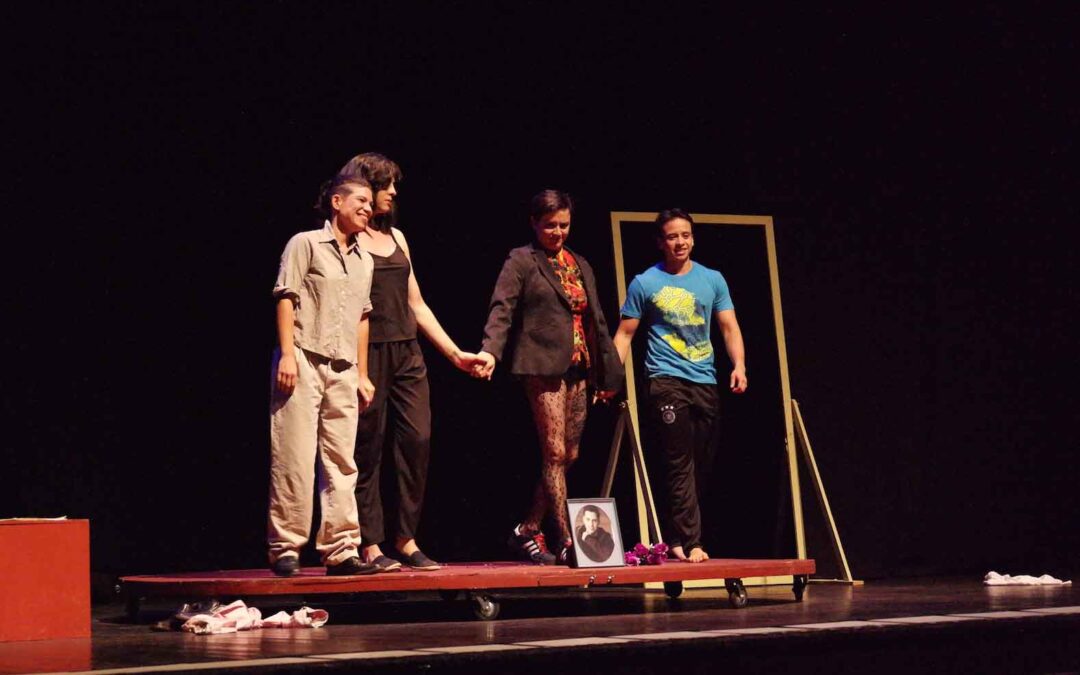
Presentación de la obra de teatro DESIDENCIAS y debate. Este es el primer evento de esta indóle que la CIJ lleva a cabo a favor de la promoción de los derechos humanos de las personas LGBTI en Guatemala.
La CIJ en asocio con la Oficina del Alto Comsionado de las Naciones Unidas para los Derechos Humanos en Guatemala (OACNUDH), el Programa Conjunto de las Naciones Unidas sobre el VIH/SIDA (ONSIDA), la Procuraduría para la Defensa de los Derechos Humanos (PDH) y con la colaboración de OASIS, llevó a cabo la presentación de la Obra DESIDENCIAS de la Colectiva Siluetas y la entrega de la Guía para profesionales del CIJ sobre orientación sexual, identidad de género y Derecho Internacional de los Derechos Humanos.
A la actividad asistieron más de 250 personas de diferentes organizaciones de la sociedad civil, operadores de justicia, estudiantes universitarios y público en general.
La Colectiva Siluetas inció a mediadios del año 2001 y actualmente la intergran tres guatemaltecas: Camilia Urrutia, Tatiana Palomo y Lu Robles y, la salvadoreña, Laia Cañénguez. La puesta en escena de la Obra DESIDENCIAS estuvo a cargo de Camila Urrutia, Laia Ribera, Lola Vásquez y Gabriel Álvarez, actrices lesbianas, transgénero y transexuales.
La obra expone muchos tabús dentro de la sociedad guatemalteca sobre la identidad sexual y la orientación de género.
La CIJ impulsará nuevas acciones para la promoción de la no discriminación y del derecho a la igualdad así como de otros estándares internacionales a favor de las personas LGBTI en Guatemala.
Feb 27, 2015 | News
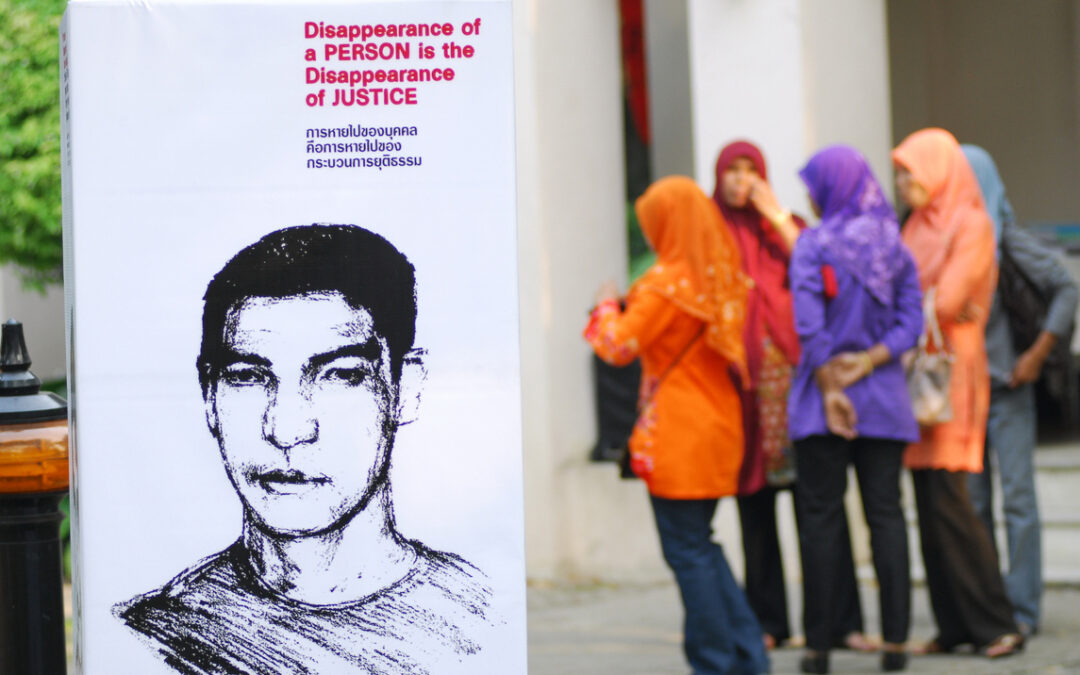
The Nepali government must fully implement yesterday’s decision of the Supreme Court rejecting the possibility of amnesties for perpetrators of serious human rights abuses during the country’s civil war, said today the ICJ.
The decision, by a three-person special constitutional bench, composed of Justice Kalyan Shrestha, Justice Baidhya Nath Upadhyay and Justice Cholendra Shumsher JB Rana, struck down the amnesty provision of the Commission on Investigation of Disappeared Persons, Truth and Reconciliation Act 2014 (TRC Act) promulgated last May 2014.
The Court also ruled that only the judiciary, and not the Commissions established by the TRC Act, can determine the criminality of any violations committed in the context of the country’s decade-long conflict.
“Nepal’s Supreme Court has once again firmly reasserted the right of the victims of human rights violations to seek justice,” said Sam Zarifi, ICJ’s Asia Director. “This bold and principled decision should finally end the cynical attempts by politicians from all Nepal’s major parties, as well as the military, to legislate impunity and shield themselves from accountability.”
The decision distinguished between the jurisdiction of the courts and the criminal justice system, and the non-judicial reconciliation and truth-seeking mechanisms established by the TRC Act.
In the months before the decision, the government had essentially frozen the prosecution of claims already before various courts, and had blocked the filing of First Information Reports (FIRs) by victims trying to lodge new complaints.
“Now, the government must not only remove obstacles to these cases, it must commit itself to prosecuting such claims,” Zarifi added. “The Government must immediately take all necessary steps to implement the court ruling including to ensure criminal investigation of FIRs, and address the concerns raised by the victims on the formation of the Truth and Reconciliation Commission and Commission of Inquiry on Enforced Disappearance.”
This is the second time that the Nepali Supreme Court has rejected the amnesty scheme introduced by the Nepali government.
On 2 January 2014, the Supreme Court had declared unconstitutional the Ordinance on the Truth and Reconciliation Commission (TRC Ordinance).
However, the Government effectively ignored the Court order and introduced a slightly modified version of the 2013 Ordinance replicating almost all of the provisions of the TRC Ordinance, including many of its problematic aspects, such as the ‘amnesty’ provision.
“The Government, with the help of the international community, must now dedicate itself to meeting the promise of the political parties to provide justice, truth and reparations to the victims and survivors of the conflict,” said Zarifi. “Only doing so will help end the country’s cycle of impunity.”
Contact:
Sam Zarifi, ICJ Asia Pacific Regional Director (Bangkok), t: +66 807819002; email: sam.zarifi(a)icj.org
Feb 19, 2015 | News
The ICJ and other rights groups welcome the decision Africa’s main human rights treaty body has made which recognizes Sudan’s obligation to protect human rights defenders and to ensure that their work promoting and protecting the rights of others is not hindered or frustrated.
The ICJ, the International Federation for Human Rights (FIDH), the World Organisation against Torture (OMCT), the African Centre for Justice and Peace Studies (ACJPS) and REDRESS hail the important decision of the African Commission on Human and Peoples’ Rights (ACHPR), published on 13 February 2015, which called on Sudan to effectively investigate and prosecute the security and intelligence officers alleged to be responsible for the arbitrary arrest, torture and ill-treatment of three prominent human rights defenders; to reopen and unfreeze the bank accounts of a human rights organization shut down in connection with the case and to pay them compensation.
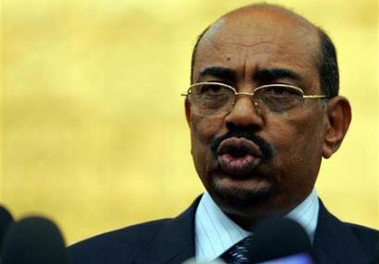
Human rights defenders Monim Elgak, Amir Suliman and the late Osman Hummaida were targeted for their supposed cooperation with the International Criminal Court in a pending case against the President of Sudan Omar Al Bashir (photo) arising from international crimes committed in Sudan’s Darfur region.
The three human rights defenders were arrested on 24 November 2008 by Sudan’s National and Intelligence Services (NISS) and subjected to torture and ill-treatment for three days.
After their release, they were effectively forced to flee Sudan because of their fear of further persecution, given the impunity enjoyed by the security and intelligence services and the inaction of the Sudanese government.
Suliman was Director of the Khartoum Centre for Human Rights and Environmental Development (KCHRED), which in 2009 was shut down by the Sudanese authorities and had its bank accounts frozen.
Hummaida, an ardent advocate for human rights who founded the Khartoum Centre and set up the ACJPS in Uganda, after his release, to ensure continued reporting of the human rights situation in Sudan, died in 2014.
The complainants turned to the ACHPR in 2009. The Commission found their complaint admissible in 2012, agreeing that the Sudanese justice system prevented them from obtaining redress in Sudan.
OMCT and FIDH intervened on their behalf at the ACHPR and the complaint was supported by the ICJ, ACJPS and REDRESS.
Reacting to the decision, Amir Suliman, Legal Programme Coordinator of ACJPS and complainant in the case, said: “The African Commission’s decision is an important recognition of the harm caused not only in our own case but the daily harm caused to the Sudanese people through the actions of the security and intelligence services. It also highlights the lack of effective safeguards against torture and remedies for victims.”
Monim El Jak, complainant in the case and Acting Chairperson of the Commission for the Protection of Civilian and Human Rights in the conflict zones of Southern Kordofan and Blue Nile, said: “We hope this decision will make the Sudanese government stop and reflect on its ongoing crackdown on civil society groups and human rights activists and also helps to put an end to other human rights violations.”
The UN Human Rights Defenders Declaration establishes that states must take effective measures to facilitate the work of human rights defenders and protect their rights.
Gerald Staberock, OMCT Secretary General, added: “The ruling sends a powerful message against torture and for the protection of those who fight torture and impunity in Sudan and in Africa. Sudan has now to fully implement and comply with this ruling providing reparations. It is time for all to recognize the vital role human rights and anti-torture activists play for the benefit of their societies.”
Karim Lahidji, the FIDH President, said: “The decision of the African Commission is significant and comes in a context where Sudanese human rights defenders continue to work in an environment that is marked by extreme insecurity and rampant impunity. Sudan must ensure that reprisals against those advocating for justice and fundamental rights and freedoms are no longer tolerated and unpunished.”
Arnold Tsunga, ICJ Africa Regional Programme Director, said: “The Government of Sudan must now expeditiously comply with the findings of the African Commission to provide reparation to the victims, as well as to ensure guarantees of non-repetition.”
Lutz Oette, REDRESS Counsel, added: “Human rights defenders continue to be harassed, arbitrarily arrested, detained, and prosecuted in Sudan, or driven into exile. The African Commission’s decision is a timely reminder of Sudan’s obligations to protect human rights defenders, and to put a stop to its current practice.”
Contact:
Arnold Tsunga, ICJ Africa Regional Programme Director, t +27 73 131 8411, e arnold.tsunga(a)icj.org

Feb 19, 2015 | Адвокаси, Юридические заявления
Сегодня МКЮ представила информацию Комитету ООН по правам человека до начала рассмотрения седьмого периодического доклада Российской Федерации в соответствии с Международным пактом о гражданских и политических правах (МПГПП).
В представленном документе обращается внимание на обеспокоенность МКЮ в отношении независимости судебной власти в Российской Федерации, которая остается слабой, поскольку многие судьи не понимают, что означает практическое применение независимой судебной власти. Во многих случаях они склонны к чрезмерному влиянию либо из внешних интересов, либо изнутри судебной иерархии.
В этом представлении рассматриваются три аспекта, вызывающих особую озабоченность:
- Процесс отбора, назначения и продвижения для судей, в котором существует разрыв между правом и практикой, и «внепроцедурное» влияние и сокращения сохраняются;
- Судебная дисциплинарная система, в частности увольнение судей; а также,
- Недавний процесс назначения судей в Верховный суд.
Без всесторонней реформы, направленной на устранение этих структурных недостатков, препятствует право каждого на справедливое разбирательство в компетентных, независимых и беспристрастных судах, установленных законом, гарантированных статьей 14 МПГПП.

Feb 19, 2015
Today, the ICJ submitted information to the UN Human Rights Committee in advance of its examination of the Russian Federation’s seventh periodic report under the International Covenant on Civil and Political Rights (ICCPR).
The submission draws attention to the ICJ’s concerns relating to the independence of the judiciary in the Russian Federation, which remains weak, with many judges lacking an understanding of what it means in practical terms to exercise independent judicial power. In many cases, they are prone to undue influence, either from outside interests or from inside the judicial hierarchy.
This submission addresses three aspects of particular concern:
- The selection, appointment and promotion process for judges, in which a gap exists between law and practice, and “extra-procedural” influence and shortcuts persist;
- The judicial disciplinary system, in particular dismissal of judges; and,
- The recent process of appointment of judges to the Supreme Court.
Without comprehensive reform addressing these structural deficiencies, the right of everyone to fair proceedings before competent, independent and impartial tribunals established by law, guaranteed under Article 14 of the ICCPR, is impeded.
RUSSIANFEDERATION-HRCttee submission-ADVOCACY-LEGAL SUBMISSION-2015-ENG(rev)