Jun 25, 2014 | Advocacy, Non-legal submissions
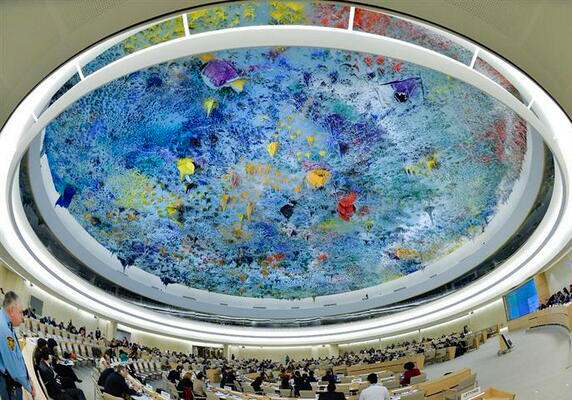
The ICJ made an oral statement at the UN Human Rights Council, highlighting a severe lack of domestic judicial capacity, and the large needs for justice in relation to gross violations and international humanitarian law, as well as ordinary civil and criminal matters, in South Sudan.
The ICJ reported in 2013 that, notwithstanding substantial legal reforms, the justice system in South Sudan was so under-resourced that statutory courts were effectively unavailable to a large majority of the population. Further, judicial appointment procedures were insufficiently independent or transparent to satisfy international standards. Customary courts have a greater presence, but rightly do not have criminal jurisdiction, and further do not meet international standards as regards, for instance, institutional guarantees for independence and impartiality.
In addition to the difficulties most residents already faced in accessing justice, the conflict has resulted in gross violations of human rights and international humanitarian law. South Sudan must ensure effective remedy and reparation for victims of such violations, and that anyone reasonably suspected of responsibility is investigated and, if there is sufficient evidence, prosecuted. At the same time, it must fulfill the fair and effective administration of ordinary civil and criminal justice.
Particularly given the scale and gravity of the violations, the South Sudanese justice system simply does not have the capacity to bear this burden, at least not alone. In addition to building the capacity of the domestic judiciary, it is clear that an international criminal tribunal, preferrably the International Criminal Court, will need to play a key role. Other states, too, will have to exercise all grounds of jurisdiction at their disposal, and deliver effective mutual legal cooperation.
The ICJ considers that the lack of an effective, independent and impartial court system in South Sudan may well have contributed to the rapid deterioration of the situation over the past months. Building an independent and impartial justice system in which all residents of South Sudan can have confidence is essential to preventing recurrence of the violations in the future.
HRC26-Oral statement on SouthSudan-Advocacy-non legal submission-2014 (full statement in PDF)
Jun 24, 2014 | News
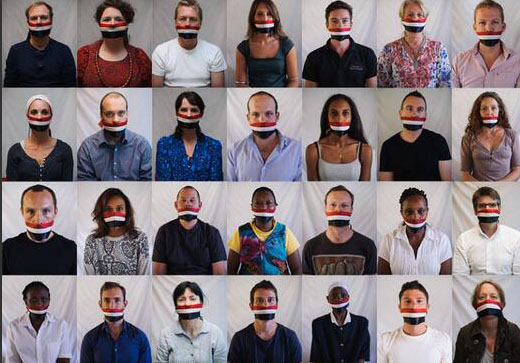
The ICJ deplores the wave of recent decisions by Egyptian officials and courts that aim to silence journalists, human rights defenders, political activists and all those suspected of opposing the military and the government.
Jun 23, 2014 | News
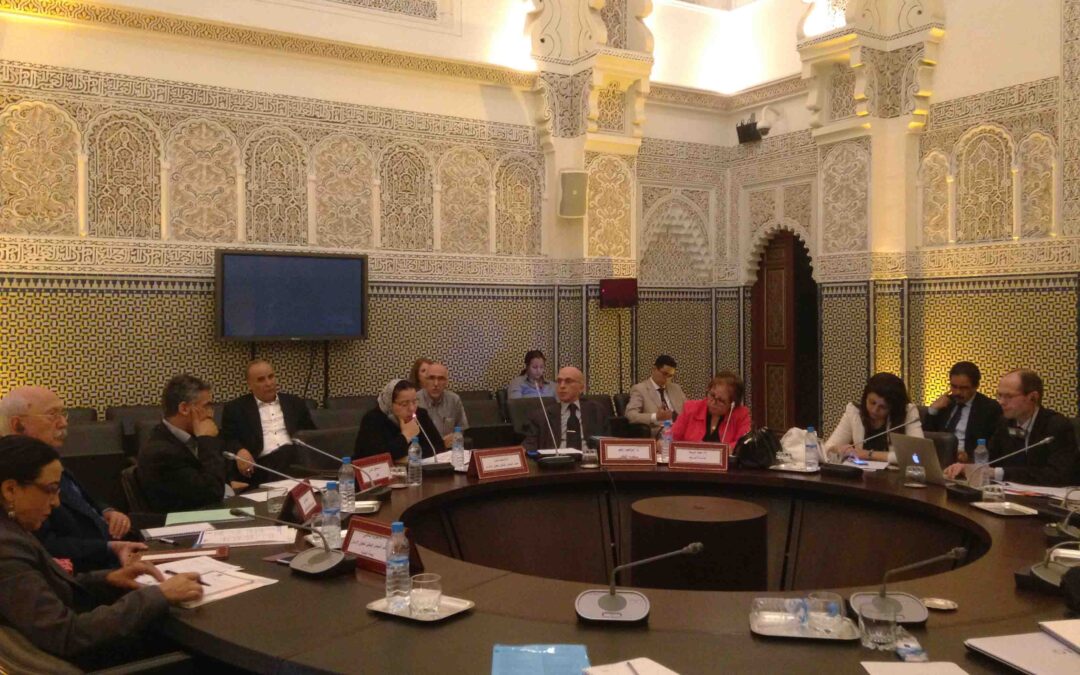
An ICJ delegation including ICJ Commissioners Justice Philippe Texier and Professor Olivier De Schutter concluded a one-week mission in Morocco to discuss access to justice for social rights in the country.
During its stay, the ICJ delegation met with various public authorities and civil society actors.
Among these meetings, the ICJ organized a round table discussion together with the Conseil National des Droits de l’Homme, and a discussion with civil society together with the Organisation Marocaine des Droits Humains and the Friedrich Ebert Foundation.
All the meetings allowed to discuss the normative advances as well as the remaining difficulties in the implementation of Morocco’s international obligations in the area of economic, social and cultural rights, including the obligation to guarantee effective mechanisms for the remedy and reparation of violations of these rights when they occur.
In this latter field, weaknesses have been identified in law and practice, with important efforts still to be realized in strengthening an institutional framework that is able to inquire, sanction and redress violations of ESCR.
During the discussions and consultations, the ICJ paid particular attention to the situation of marginalized and disadvantaged individuals and groups, including those who work in, and live around, free trade zones and areas for export-oriented agricultural production.
Jun 23, 2014 | Advocacy, Non-legal submissions
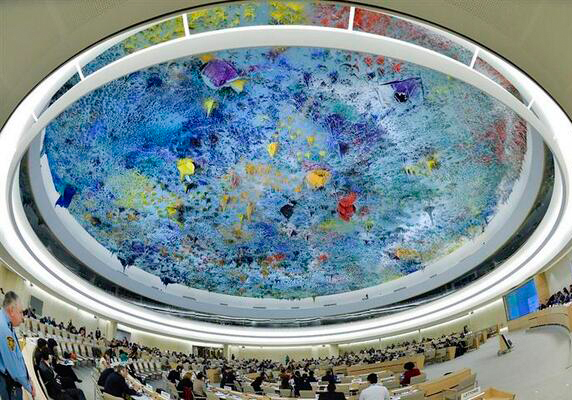
The ICJ has delivered an oral statement on the independence of judges, prosecutors and lawyers in Venezuela, at the UN Human Rights Council in Geneva.
Referencing its report, Strengthening the Rule of Law in Venezuela, the ICJ discussed the failure by Venezuelan authorities to respect institutional guarantees for the independence and impartiality of the judiciary and prosecutors, as well as undue interference with individual judges, prosecutors and the legal profession. The ICJ highlighted the lack of security of tenure for most judges and virtually all prosecutors in Venezuela, and how the insecurity is amplified by cases of reprisal such as against Judge María Lourdes Afiuni Mora.
The ICJ urged Venezuelan authorities to take concrete measures to restore the rule of law and ensure the protection of human rights in Venezuela, in meaningful dialogue with civil society, and for other states to encourage Venezuela to do so.
The oral statement can be downloaded in full in PDF format here: ICJ-HRC26-Item4-Venezuela-OralStatement2-Advocacy-non-legal submission-2014
Jun 20, 2014 | Events
The ICJ’s International Legal Adviser, Reema Omer, participated in a panel discussion on ‘Rule of Law in Bangladesh’, convened on 19 June 2014 in the margins of the Human Rights Council’s 26th regular session in Geneva.
The event was co-sponsored by the Asian Legal Resource Centre, CIVICUS, FIDH, OMCT and Human Rights Watch and was moderated by Mr Mandeep Tiwana, Head of Policy and Research for CIVICUS. Panelists included Mr Adilur Rahman Khan, Secretary of Odhikar; Mr M.D. Ashrafuzzaman, Urgent Appeals Programme Coordinator of the Asian Legal Resource Centre; Mr Gerald Staberock, Secretary General of OMCT; and Ms Reema Omer, International Legal Adviser of the ICJ’s Asia Pacific Regional Programme.
The ICJ’s intervention focussed on the incompatibility of the Bangladesh Information and Communication Technology Act 2006 (ICTA) and its 2013 amendments with international human rights law and standards. Based on the ICJ’s briefing paper on the ICTA from November 2013, and referring to recent cases, Reema Omer highlighted how the Act and its amendments amount to an assault on the freedom of expression and a stifling of public discourse. Her intervention also spoke of the judiciary’s responsibility to prevent such attacks on freedom of expression.
Bangladesh-ICT-Brief-2013 (download the ICJ’s briefing paper on the ICTA)
ICJ press release of 20 November 2013 concerning the ICTA