Jun 19, 2014
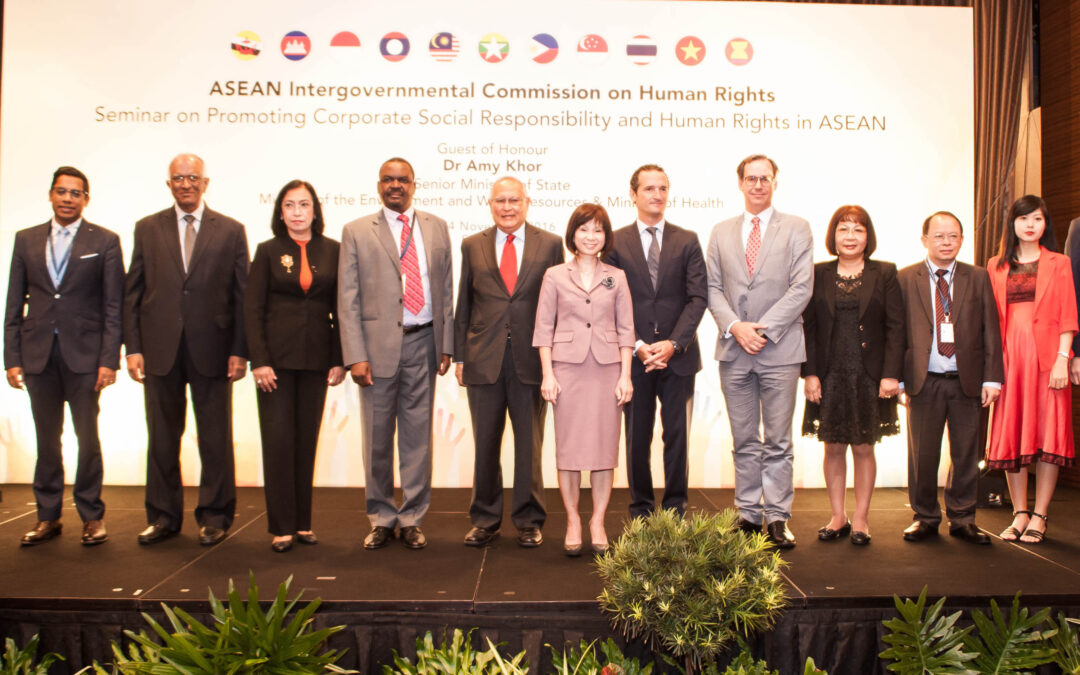
The ICJ welcomed the opportunity to contribute to a review of the Terms of Reference of the ASEAN Intergovernmental Commission on Human Rights (AICHR), saying some of the current TOR provisions were problematic.
In a legal memorandum, the ICJ said it hoped the AICHR will use this opportunity to demonstrate its commitment to transparency and integrity by undertaking consultations with a wide variety of stakeholders as it reviews and revises its TOR.
The memorandum contains very practical and pragmatic recommendations to strengthen the AICHR’s Terms of Reference.
“It is a given that the Terms of Reference should include strong protection competencies since these are missing in the AICHR’s mandate,” said Emerlynne Gil, the ICJ’s International legal adviser for Southeast Asia. “It is also important that the Terms of Reference include provisions that ensure the quality and independence of representatives, and establish a strong and well-resourced Secretariat to assist the AICHR in fulfilling its mandate.”
The ICJ supports the idea of a regional human rights mechanism that effectively promotes and protects human rights in a manner that is particularly adaptive to the distinctive conditions of the region, provided that it abides by principles that reinforce and do not fall below international human rights law and standards.
In this memorandum, the ICJ identifies and discusses problematic provisions in the TOR that may prevent the AICHR from fully functioning as a body tasked “to promote and protect human rights and fundamental freedoms of the peoples of the ASEAN” and makes recommendations on the amendment of these provisions.
It also discusses additional functions and institutional improvements that may be undertaken to strengthen the AICHR as a regional human rights mechanism, in line with the commitments made by ASEAN member States in Vienna in 1993 and in the ASEAN Charter.
To see the full text of the memorandum please click on the following PDF link:
Memorandum on TOR of AICHR
CONTACT:
Emerlynne Gil, ICJ International Legal Adviser for Southeast Asia, t +66 2 619 8477; email: emerlynne.gil(a)icj.org
Craig Knowles, ICJ Media Consultant, t +66 81 9077653; email: craig.knowles(a)icj.org

Jun 18, 2014 | News
The ICJ’s Centre for the Independence of Judges and Lawyers (CIJL) has launched the first in a series of Country Profiles, a new online tool on the ICJ’s website.
Profiles on Myanmar, the Russian Federation, South Sudan and Swaziland are being published today.
Tunisia, Venezuela and Honduras will be added in the coming months.
By the end of 2014, all five regions in which the ICJ is active will be represented (Asia-Pacific, Africa, Europe, Latin America, MENA). The CIJL plans to add further countries on an on-going basis, and periodically to update existing profiles.
Each profile summarises information about the independence of judges, lawyers and prosecutors in the country, and assesses the situation against relevant international law and standards.
The profiles aim to provide users, including legal professionals, academics, government officials and human rights defenders, with material in an accessible format which can also be used for further analysis.
The profiles reflect the efforts of the CIJL and other ICJ programmes to monitor the independence and accountability of judges, lawyers and prosecutors in certain countries, particularly those where their independence is threatened or under attack.
Moreover, the profiles provide reference points on the laws and the standards applicable to the independence of judges and lawyers and the administration of justice in each country.
The profiles can be accessed from the ICJ webpage for the Centre for the Independence of Judges and Lawyers.
They are available as an interactive database on the ICJ’s website, and can also be downloaded in PDF format.

Jun 18, 2014 | Advocacy, Non-legal submissions
The ICJ delivered an oral statement to the UN Human Rights Council, during the interactive dialogue with the Commission of inquiry on the Situation on human rights in the Syrian Arab Republic.
Jun 16, 2014 | News
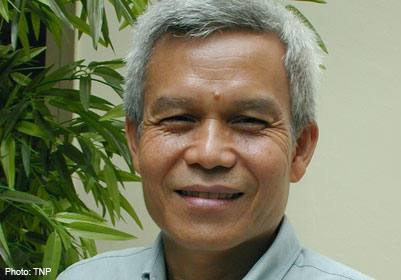
The ICJ today called on the Lao PDR government to carry out a thorough and impartial investigation into the ‘disappearance’ of prominent development activist Sombath Somphone to clarify his fate or whereabouts.
Jun 16, 2014 | Advocacy, Non-legal submissions
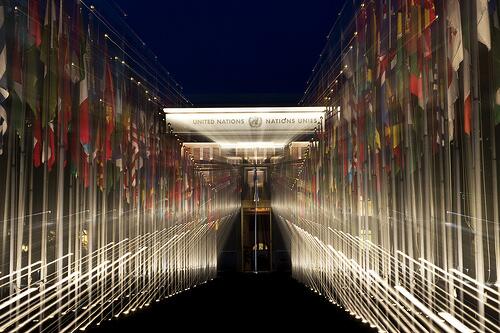
The ICJ today made an oral statement at the UN Human Rights Council, in the interactive dialogue with the Special Rapporteur on the independence of judges and lawyers, responding to her report on her visit to the Russian Federation.