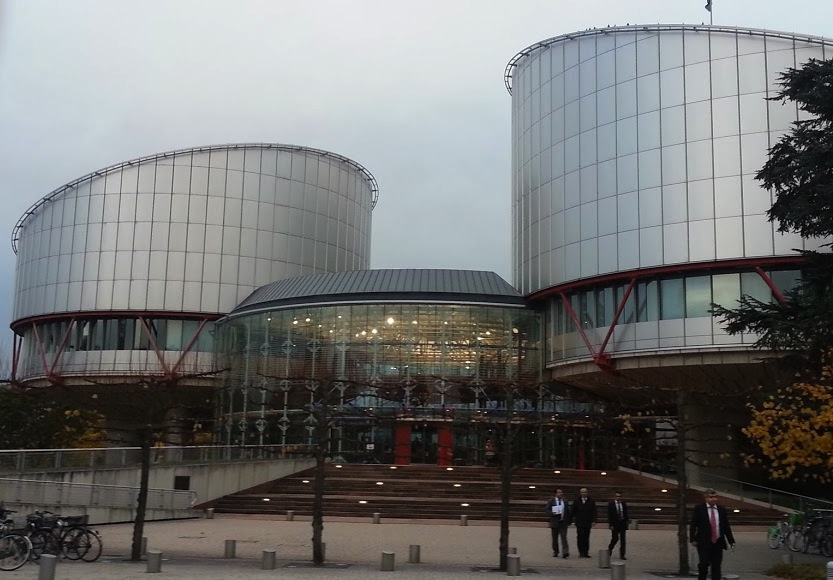
Submission in the case of Sabalić v. Croatia
The European Court of Human Rights granted permission to the AIRE Centre, ILGA-Europe and the ICJ for a third-party intervention in the case of Pavla Sabalić v. Croatia (Application No. 50231/13).

The European Court of Human Rights granted permission to the AIRE Centre, ILGA-Europe and the ICJ for a third-party intervention in the case of Pavla Sabalić v. Croatia (Application No. 50231/13).

The ICJ today called on the Pakistan Senate to reject a Bill that would grant the military and law enforcement authorities sweeping powers to detain individuals, in contravention of international human rights standards.
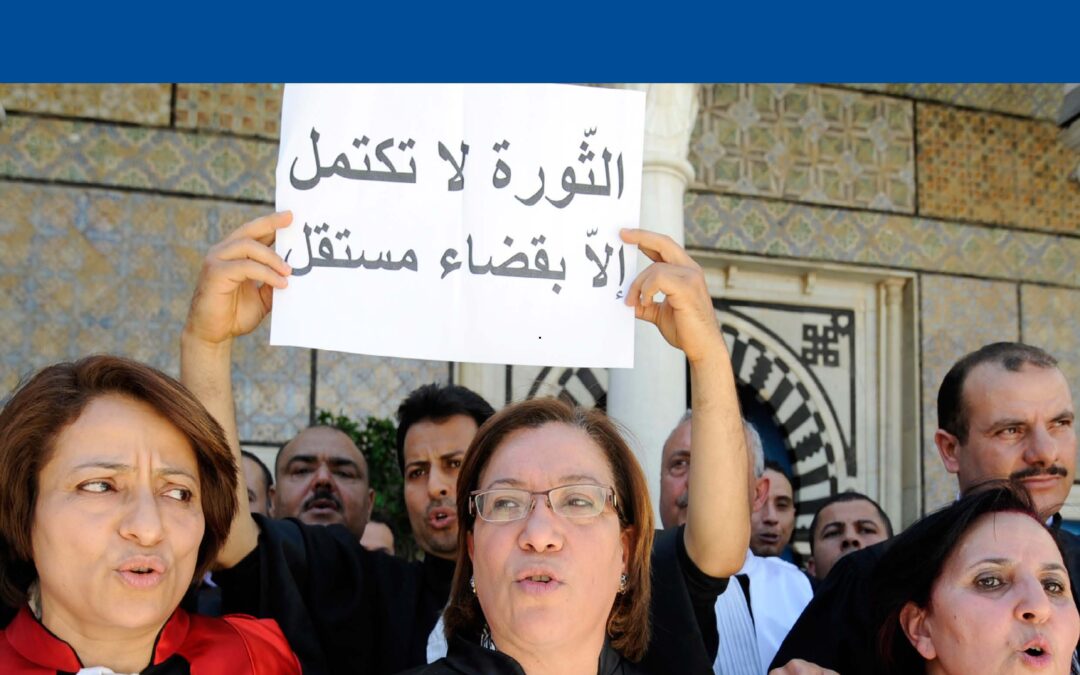
The ICJ today called on the Tunisian authorities to build on the advances made in the January 2014 Constitution by introducing legal and policy reforms to ensure the Tunisian judiciary is fully independent and accountable and is able to uphold human rights and the rule of law.
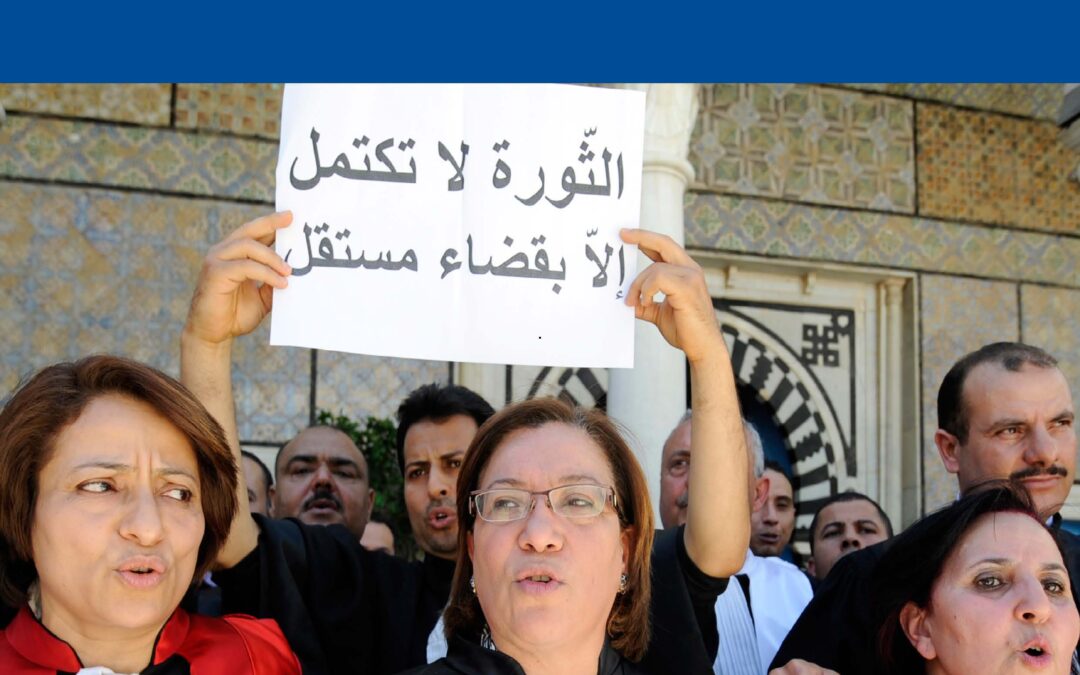
Ce rapport de la CIJ sur l’indépendance du pouvoir judiciaire en Tunisie examine la nouvelle Constitution et les autres lois, institutions et politiques qui ont un impact sur l’indépendance de la justice à la lumière des normes internationales et régionales, y compris les traités dont la Tunisie est partie.
En particulier, la CIJ analyse le Conseil Supérieur de la Magistrature, le statut des magistrats, les mécanismes de responsabilité judiciaire, les tribunaux militaires et le parquet, et évalue la façon dont ils protègent ou pas l’indépendance du pouvoir judiciaire et le respect de l’Etat de droit et des droits de l’homme.
Tunisia-Strengthen Judicial Independence-Report Introduction-2014-FRE (Texte complet en PDF)
Contact:
Said Benarbia, Directeur de la section Moyen Orient et Afrique du Nord de la CIJ, tel: +41 22 979 38 1, e-mail: said.benarbia(a)icj.org
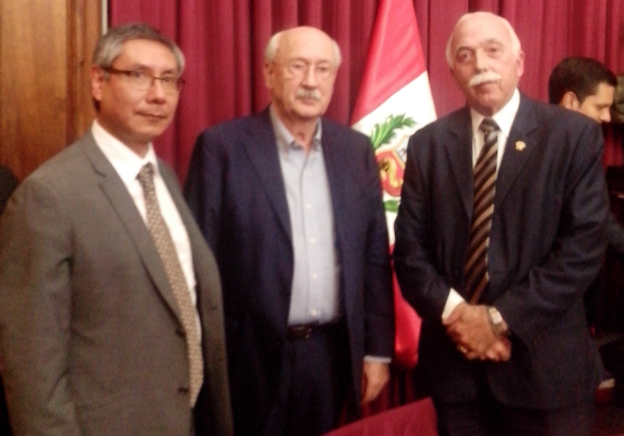
An ICJ Mission to assess the respect of social rights in the Peruvian agro-export industry concluded a field visit to the country with bleak preliminary conclusions.
The Mission of observers, which included Philippe Texier and lawyers Alberto L. Gomez Z. and Carlos Lopez, focused their assessment in the Valley of Ica, south of Lima. On Wednesday 7 May, the Mission shared their visit conclusions with the Sub-committee on Labour and Social Security of the Peruvian Parliament.
Philippe Texier, former judge at the Court of Cassation of France and former chair of the UN Committee on Economic, Social and Cultural Rights, told the Parliamentary Sub-committee that conditions of work in the agroexport industry are precarious, allow cases of child labour and fall generally short of international standards accepted by Peru through international conventions.
The final report of the Mission panel will be released at a later stage after additional research and consultation is carried out.
While in Peru, the panel held meetings in Lima and in Ica with a wide range of trade unions, labour and health authorities, local NGOs, experts, individual workers and even working children.
The experts also paid visits to the field to see workers and children, were interviewed by IDL Radio and made a presentation of preliminary conclusions to the Parliamentary Sub-Committee on Labour and Social Security.
The agro-export industry in Peru mainly produces asparagus, mangoes, avocado pears, paprika and grapes, most of which is exported to Europe and North America.
It has experienced exponential growth during the last decade, where important national and international investments were made in this industry.However, economic growth has not been matched with improvements in social conditions of workers and the local population.
Contact:
Carlos Lopez, Director, Business and Human Rights, carlos.lopez(a)icj.org +41 22 979 3816
 Joint Letter: Urgent diplomatic action to halt further executions in eastern Libya
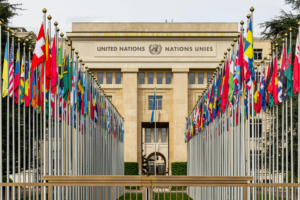 Czech Republic: UN Committee on the Rights of the Child finds that immigration detention of children violated the prohibition of arbitrary detention and ill-treatment
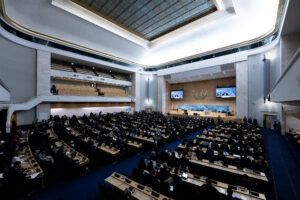 UN Human Rights Council once again navigates troubled waters to protect human rights in crisis situations, despite global setbacks.
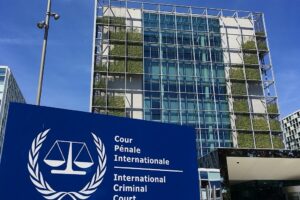 Joint statement: States Must Act Now to Protect the International Criminal Court from Unlawful US Sanctions