Oct 3, 2013 | Comunicados de prensa, Noticias, Publicaciones
Un nuevo estudio sobre el acceso a la justicia y los recursos ante violaciones de los derechos económicos, sociales y culturales, presentado hoy por la CIJ, destaca varios obstáculos que impiden a los salvadoreños/as acceder a la justicia efectiva.
El estudio de Acceso a la Justicia – Recursos contra la violaciones de los derechos sociales en El Salvador, presentado en un foro público organizado en colaboración con la Fundación de Estudios para la Aplicación del Derecho y del Instituto de Derechos Humanos de la Universidad Centroamericana (UCA), es el resultado de un proceso de investigación y de consulta que inició en 2012 e involucró a diversos actores estatales y de la sociedad civil.
Se hace un balance de los recursos de que disponen las víctimas de violaciones de los derechos económicos, sociales y culturales, tales como los derechos laborales y los derechos a la vivienda y la salud, y evalúa su accesibilidad y eficacia. El informe hace recomendaciones para abordar los obstáculos identificados.
El Salvador-Acceso à la Justicia launch-News-press release-2013-spa (comunicado en PDF)
Salvador-Acceso a la Justicia-Publications-Report-2013-spa (informe en PDF)

Oct 3, 2013
A new study on access to justice and remedies for violations of economic, social and cultural rights, launched today by the ICJ highlights various obstacles that prevent Salvadorians from accessing justice effectively.
They include economic, normative, procedural and other legal obstacles.
The study Acceso a la Justicia – Recursos contra la violaciones de los derechos sociales en El Salvador launched at a public conference organized in collaboration with the Fundación de Estudios para la Aplicación del Derecho and the Instituto de Derechos Humanos de la Universidad Centroamericana (UCA), is the outcome of a research and consultation process that started in 2012 and involved various official and civil society actors.
It takes stock of the remedies available to victims of violations of economic, social and cultural rights such as labour rights and the rights to housing and health and assesses their accessibility and effectiveness.
The report makes recommendations to address the obstacles identified.
The study illustrates that providing access to courts and legal remedies is a fundamental element of any strategy to realize economic, social and cultural rights and to combat poverty and social inequalities.
As Jessica Vasquez, ICJ’s Legal Adviser on Economic, Social and Cultural Rights (ESCR) in Central America, stated: “a right that cannot be claimed by those who allege that it is threatened or violated is not a right. Economic, social and cultural rights, just like civil and political rights, require not only effective public policies but also a regular monitoring in order to assess whether progress is achieved or not, as well as remedies and reparation in cases of confirmed violations.”
El Salvador is one of the first countries to have ratified the Optional Protocol to the International Covenant on Economic, Social and Cultural Rights and thus to have accepted the jurisdiction of a UN body to hear complaints of rights violations in El Salvador, where the alleged victims are unable to obtain justice domestically.
“The ICJ study aims to contribute to the discussions on access to justice and legal remedies for these rights that are made especially timely and opportune by El Salvador’s ratification of this new treaty,” said Sandra Ratjen, ICJ’s Senior Legal Adviser on Economic, Social and Cultural Rights (ESCR).
The launch of the study at the Universidad Centroamericana is part of a week of ESCR-related activities carried out by an international mission involving the ICJ Office for Central America, the ICJ programme on ESCR as well as ICJ Commissioners Philippe Texier and Rodrigo Uprimny.
The ICJ delegation will meet various relevant actors, including public authorities, civil society organizations and lawyers.
Contacts
Ramon Cadena, ICJ Office Central America at +502 5511 9976
Sandra Ratjen, ICJ Programme on ESCR at + 41 79 9640596
Jessica Vásquez, ICJ Office Central America at +502 4219 0411
Javier Melgar, ICJ Consultant El Salvador at +503 7986 5185
El Salvador-Acceso à la Justicia launch-News-press release-2013-spa (full text in pdf, Spanish)
Salvador-Acceso a la Justicia-Publications-Report-2013-spa (full text in pdf, Spanish)
Oct 2, 2013 | News
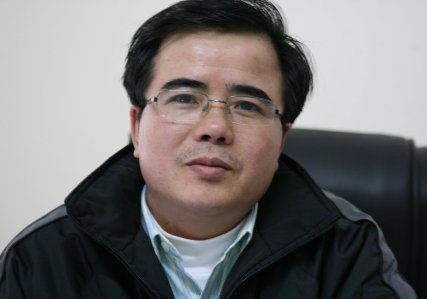
The ICJ said the conviction today of Le Quoc Quan, a lawyer and human rights defender in Vietnam, violated international standards governing the right to a fair trial.
Judge Le Thi Hop of the People’s Court of Hanoi convicted and sentenced Le Quoc Quan to 30 months imprisonment with time served since late December 2012 to be taken into account.
His company was ordered to pay the unpaid tax amount of 645 million VND (approximately USD 30,000) and fine of 1.3 billion VND (approximately USD 60,000) for the offence of tax evasion under section 161 of the Vietnamese Penal Code.
One of Le Quoc Quan’s accountants, Phuong, was sentenced to eight months imprisonment.
Edmund Bon, a prominent Malaysian attorney and the ICJ’s appointed trial observer, was denied entry into court.
Police barricaded the courthouse to keep out hundreds of demonstrators protesting the perceived harassment of Le Quoc Quan.
“The court did not dispel the widespread belief that this case is political in nature and intended to silence a government critic,” Edmund Bon said. “The verdict was delivered after a 30-minute deliberation and the judge took about an hour to read the written grounds of judgment.”
The hearing was originally scheduled for 9 July 2013, but was postponed at the very last minute due to the judge’s illness.
On 17 September 2013, the court issued a notification informing that the trial had been rescheduled to 2 October 2013 and that the trial would be a public one.
Nevertheless, on the day of trial, only a handful of foreign diplomats who had obtained an invitation and pass from the Ministry of Foreign Affairs were allowed to enter a room to observe the proceedings through a television screen.
Le Quoc Quan’s wife was the only family member who was permitted to observe the trial.
No independent journalists were allowed to enter the courtroom except for a reporter with the police and government media personnel.
The trial before a judge and two jurors started at 8.00am and ended at 2.30pm with a 15-minute recess in between. Six witnesses gave evidence. Counsel for the prosecution and defence took approximately one hour to make legal submissions.
“Le Quoc Quan’s trial and verdict raise serious questions regarding Vietnam’s commitment to ensure fair criminal trials that are to be open to public scrutiny, as it required to do as a party to the International Covenant on Civil and Political Rights,” said Edmund Bon.
The ICJ also notes that the court had breached Le Quoc Quan’s right to a speedy trial.
Section 194 of the Vietnamese Criminal Procedure Code specifically provides that, upon a postponement, courts that hear first-instance trials have to set a new hearing date within 30 days.
Here, the court took almost two months to do so.
“The court’s failure to reschedule the case within a timely manner is a clear violation of Le Quoc Quan’s rights to be tried within a reasonable time and without undue delay, as stipulated under articles 9 and 14 of the ICCPR respectively,” Bon added.
Since his arrest on 27 December last year, Le Quoc Quan has already spent a total of more than nine months in prison, awaiting trial.
“Le Quoc Quan should have instead been granted bail when his wife had filed an application for his release as there was no reason to believe that he would have had absconded the country,” said Edmund Bon.
The lawyers of Le Quoc Quan are expected to appeal the court’s decision within 15 days.
Contact
Sam Zarifi, ICJ Asia-Pacific Regional Director, Bangkok, tel. no. +66 8078 19002 or sam.zarifi(a)icj.org

Oct 2, 2013 | Events
The ICJ today welcomed the launch of the OSCE/FBA Handbook for Monitoring Administrative Justice as a tool able to contribute to the open administration of justice.
Noting that trends throughout the world see administrative cases dealt with in a manner that lacks transparency and fails to comport with the open administration of justice, the ICJ expressed the hope that the tool will be used by practitioners and officials to make an impact on the ground. The ICJ pointed to several reasons why the open administration of justice, in all forms of proceedings, is important to human rights and the rule of law:
- As a starting point, it is widely recognised, including by the UN Human Rights Committee in its General Comment on the right to a fair trial, that the open and transparent administration of justice is an important safeguard for the interests of both the individual and society at large.
- The conduct of administrative and other proceeds in an open and transparent manner helps to ensure the integrity of such proceedings and protect against potential abuse.
- Publicly accessible documentation, including timely and reasoned decisions, protects individuals from being subject to arbitrary decisions.
- Transparency and openness contributes to accountability by enabling parties to determine the viability of any appeal or review, including the possibility of taking a case to regional or international mechanisms.
- In all these ways, the open administration of justice also helps guarantee the right of individuals and society to access justice, including remedies and reparation.
The Handbook is a publication arising from a joint initiative of the Folke Bernadotte Academy (FBA) Rule of Law Unit and the OSCE Office for Democratic Institutions and Human Rights. Work began on the Handbook in May 2011. The ICJ participated in expert meetings on the development of the Handbook in 2011 and 2012.
OSCE/FBA Handbook for Monitoring Administrative Justice

Oct 2, 2013 | News
The ICJ welcomes the endorsement today by the Parliamentary Assembly of the Council of Europe of the Tshwane Principles on National Security and the Right to Information.
The ICJ was one of a number of civil society groups and government representatives who contributed to the development of the Principles.
Headline stories such as the Bradley Manning, Edward Snowden, and David Miranda cases, and the large number of other similar cases and situations around the world that do not necessarily receive the same media attention, demonstrate the timeliness and relevance of the Principles.
The ICJ hopes that the precedent set by the PACE will now be followed by other inter-governmental organisations at the global and regional levels, recognizing and endorsing the Principles.
Links to the resolution and recommendation by the PACE:
http://assembly.coe.int/nw/xml/XRef/Xref-DocDetails-EN.asp?fileid=20190&lang=EN
http://assembly.coe.int/nw/xml/XRef/Xref-DocDetails-EN.asp?fileid=20194&lang=EN
Global-Tshwane Principles on right to information-position paper-2013 (full text in pdf)