Oct 2, 2013
Amnesty International and the ICJ comment on the case of three asylum seekers in the Netherlands who say the criminalisation of who they are puts them at risk of being persecuted in their country of origin.
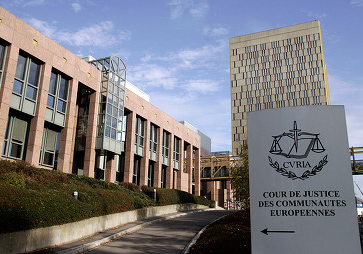
Following Advocate General Sharpston’s Opinion in the case of X, Y and Z v Minister voor Immigratie, Integratie en Asiel (C‑199/12, C‑200/12 and C‑201/12) pending before the Court of Justice of the European Union, in these observations Amnesty International and the ICJ assert that when the criminalization of same-sex acts or conduct provides the possibility of imprisonment upon conviction it would per se give rise to a well-founded fear of persecution irrespective of evidence of recent enforcement.
Europe-Observations by AI and ICJ on X, Y and Z CJEU-analysis brief-2013 (full text in pdf)
Photo: ec.europa.eu
Oct 1, 2013 | News
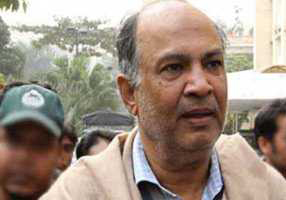
The ICJ denounces the death penalty handed down today by the International Crimes Tribunal (ICT) to Salauddin Quader Chowdhury, a member of the Bangladesh Nationalist Party, the main opposition party.
If carried out, the sentence would violate Bangladesh’s international law obligations to protect the right to life and freedom from cruel, inhuman, or degrading punishment, the ICJ states.
The International Crimes Tribunal convicted Chowdhury (photo) on nine of 23 charges, including murder and genocide, and sentenced him to death.
“The Bangladesh Tribunal is one of very few transitional justice mechanisms that have imposed the death penalty,” said Sam Zarifi, ICJ’s Asia-Pacific Director. “It is unfortunate that Bangladesh seeks to punish human rights violations by committing rights violations itself.”
The ICJ considers the death penalty in all cases to constitute a violation of the right to life and the right not to be subjected to cruel, inhuman or degrading punishment.
This is the seventh verdict delivered by the International Crimes Tribunal. Death sentences have been handed out in all but one case.
”Bangladeshi law as well as international human rights standards require that death penalty cases receive a fair and thorough review, so it is crucial that appellate review of these cases proceed properly, without undue political pressure or a timeline established by impending elections in or before January 2014,” Zarifi said.
“Those responsible for the horrific war crimes and crimes against humanity during Bangladesh’s war of liberation in 1971 should be brought to justice in processes that are fair, and seen to be fair, instead of being subjected to vengeance,” he added.
Contact
Sam Zarifi, ICJ Asia-Pacific Regional Director, (Bangkok), t:+66 807819002; email: sam.zarifi(a)icj.org

Sep 30, 2013 | News
Last week the ICJ concluded a series of five workshops organized in collaboration with the National Human Rights Commission of the Federation of Bar Associations of Venezuela and states bar associations.
The workshops, that were held in five cities of Venezuela in the course of 2013, provided participants with a space for free reflection and debate on issues of judicial independence and the functioning of rule of law institutions.
The themes discussed in the workshops included human rights in legal education; the role of bar associations in promoting and strengthening an independent, competent and integral legal profession; human rights litigations; professional, civil and criminal responsibility of lawyers; and the role of the Supreme Court and the Office of Public Prosecution in a democratic society.
Participants to the workshops included representatives of bar associations, former Supreme Court justices and senior judges, practicing lawyers and members of Venezuelan civil society.
***
SPANISH TEXT:
La CIJ concluye serie de 5 talleres sobre independencia judicial en Venezuela
La semana pasada la Comisión Internacional de Juristas concluyó una serie de cinco talleres organizados en colaboración con la Comisión Nacional de Derechos Humanos de la Federación de Colegios de Abogados de Venezuela y los Colegios de Abogados de varios Estados en Venezuela.
Los talleres, que tuvieron lugar en cinco ciudades de Venezuela en el transcurso de 2013, ofrecieron a los participantes un espacio de reflexión libre y de debate sobre temas relativos a independencia judicial y el funcionamiento de las instituciones del Estado de derecho.
Los temas tratados en los talleres incluyeron la importancia de la formación en derechos humanos de los abogados; el papel de los Colegios de Abogados en la promoción y fortalecimiento de una profesión independiente, competente e integral; los litigios en materia de derechos humanos; la responsabilidad profesional, civil y penal de los abogados; y el papel del Tribunal Supremo de Justicia y del Ministerio Público en una sociedad democrática.
Los participantes en los talleres incluyeron a representantes del gremio, ex jueces del Tribunal Supremo y jueces de tribunales superiores, abogados en ejercicio y miembros de la sociedad civil venezolana.
Venezuela-CIJ Programa Seminario Barquisimeto-agenda-2013-spa (full text in pdf)
Venezuela-CIJ Programa Seminario Coro-agenda-2013-spa (full text in pdf)
Venezuela-CIJ Programa Seminario Puerto Ayacucho-agenda-2013-spa (full text in pdf)
Venezuela-CIJ Programa Seminario San Cristobal-agenda-2013-spa (full text in pdf)
Venezuela-CIJ Seminario Caracas-Programa-agenda-2013-spa (full text in pdf)
Sep 30, 2013
The ICJ has issued a briefing paper explaining the international legal issues and underlying political context of the case against Nepali Army officer Colonel Kumar Lama in a Question and Answer format.
The case against Nepali Army officer Colonel Kumar Lama, arrested in the United Kingdom on allegations that he was responsible for torture in Nepal, will come before the UK criminal court on 21 October 2013.
“This decision has far reaching implications, not only for the victims in this case but for all victims of torture around the world seeking justice,” said Sheila Varadan, ICJ Legal Advisor for South Asia.
Colonel Kumar Lama was arrested on the morning of Thursday, 3 January 2013 in the UK while he was on leave from his duties as a United Nations Peacekeeper in Sudan.
Exercising the principle of universal jurisdiction, Colonel Lama was charged with two counts of committing torture under Section 134(1) of the Criminal Justice Act 1988 in the United Kingdom.
“This is the first time the UK courts are seriously considering the principle of universal jurisdiction since the Augusto Pinochet case,” Varadan added.
The charges are based on allegations that Colonel Lama participated in the torture of two Nepali detainees in 2005, at the height of Nepal’s decade-long internal armed conflict.
“The case comes at a time when ongoing impunity is causing serious political instability in Nepal and calls for transitional justice mechanism continue to go unheard,” Varadan said.
CONTACTS
Sheila Varadan, ICJ South Asia Legal Adviser (Bangkok), t: +66 857 200 723 (mobile); email: sheila.varadan(a)icj.org
Ben Schonveld, ICJ South Asia Director (Kathmandu), t: +9779804596661 (mobile); email: ben.schonveld(a)icj.org
Nepal-LAMA Case Q & A -advocacy-analysis brief-2013 (full text in pdf)
Sep 26, 2013 | News
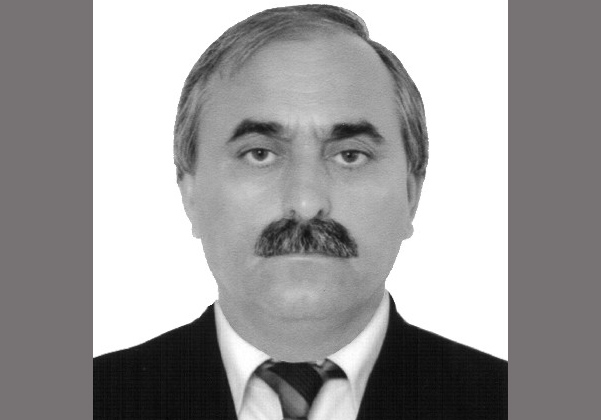
The ICJ today expressed grave concern over the shooting of a Supreme Court judge of Dagestan and his son.
The ICJ calls on the federal and local authorities to ensure prompt, independent, impartial and thorough investigation of the shooting of Judge Mukhtar Shapiyev (photo) and his son.
Those reasonably suspected of responsibility for this crime should be identified and brought to justice in fair and transparent proceedings, where the rights of all the parties, including the victims and the accused are respected.
The ICJ recalls that Mukhtar Shapiyev is the third judge to be killed in Dagestan this year.
On 15 January, Magomed Magomedov, a Supreme Court judge of Dagestan, was shot and died as a result of the attack and, on 9 March, federal judge Akhmed Radzhabov, was shot to death near his house.
“When judges’ security is not guaranteed, and when they face a real and constant risk to their lives, the justice system and the very rule of law are undermined,” Temur Shakirov, Legal Adviser of the ICJ Europe Programme, said. “The UN Basic Principles on the Independence of the Judiciary clarify that it is the obligation of the State to ensure that those who are entrusted with the power to take judicial decisions are effectively protected.”
Reports indicate that Mukhtar Shapiyev and his son, Kamil Shapiyev, were shot at by at least two persons near their home in the capital Makhachkala at about 20:45 on Wednesday 25 September. Both victims later died in hospital.
Judge Shapiyev previously worked as the Prosecutor of one of the districts in Dagestan. In January 2012, he was appointed as a Supreme Court judge of Dagestan and worked in the collegium on civil cases.
Urgent measures, which the ICJ calls for to guarantee that the security of judges in Dagestan is effectively protected, include ensuring effective security against attempts on their lives and lives of their family members.
CONTACTS
Róisín Pillay, Director, ICJ Europe Programme, roisin.pillay(a)icj.org
Temur Shakirov, Legal Adviser, ICJ Europe Programme, temur.shakirov(a)icj.org
Russia-Judge killed in Dagestan-news-web story-2013-rus (full text in pdf)