Sep 5, 2013 | News
The ICJ collaborated on this judicial colloquium with the UN Entity for Gender Equality and Empowerment of Women and the Thailand Office of the Judiciary.
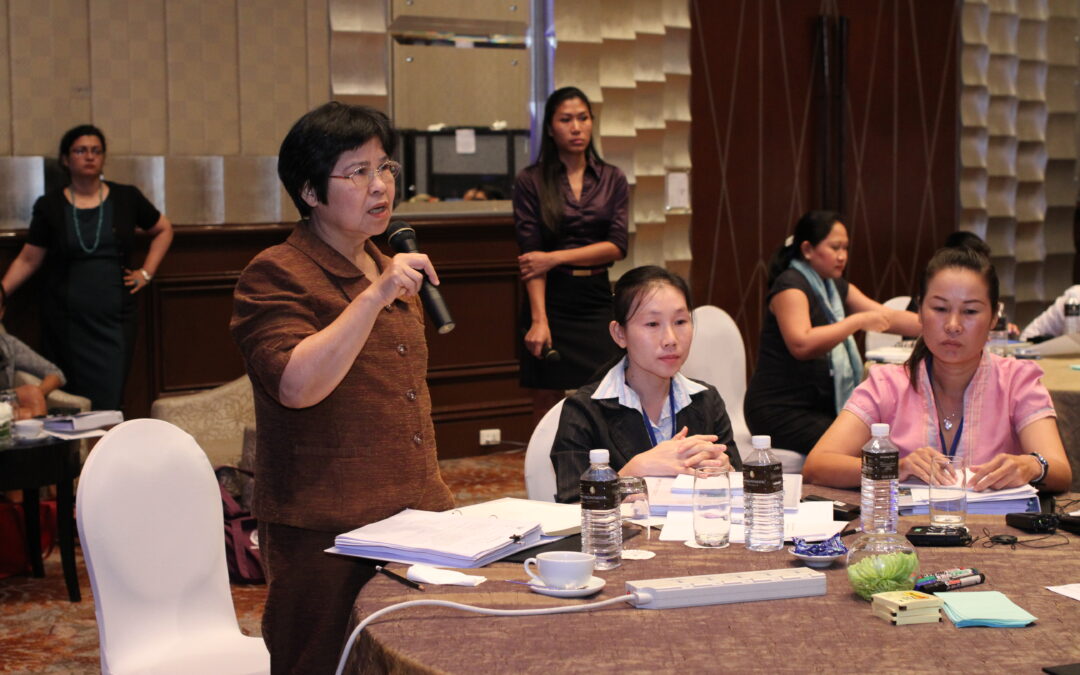
The Judicial Colloquium on Gender Equality Jurisprudence and the Role of the Judiciary in Promoting Women’s Access to Justice was held from 4 to 5 September 2013 in Bangkok, Thailand.
Judges from eight Southeast Asian countries (Cambodia, Indonesia, Lao PDR, Myanmar, the Philippines, Thailand, Timor Leste, and Thailand) came to the colloquium to discuss the role of judges in the implementation of the Convention on the Elimination of All Forms of Discrimination against Women (CEDAW).
Representatives from the eight countries’ judicial training institutions and civil society organizations joined them in this colloquium. All eight participating countries are parties to the CEDAW.
The judicial colloquium is part of the work of the ICJ in engaging various actors, including judges, lawyers, and human rights defenders, to explore ways to address the range of obstacles that persistently reduce women’s access to justice and legal protection.
Sam Zarifi, ICJ’s Regional Director for Asia and the Pacific, also noted the importance of this colloquium in the context of the development of a regional human rights mechanism in the ASEAN. He observed during his opening speech that the ASEAN is in the midst of setting standards and emphasized “it is important for judges to be aware of international standards of this issue so that they can substantially contribute to the discourse in setting up a regional mechanism.”
At the end of the colloquium, the participating judges, representatives from judicial training institutes and civil society organizations adopted a statement which noted, among other things, the uneven progress in the implementation of CEDAW in domestic laws and that judges should strive to interpret domestic law in consonance with the CEDAW.
They also agreed on recommendations, one of which is to encourage the formation of a regional network of judges to promote continuing dialogue, knowledge and information sharing regarding the application of CEDAW and other international human rights treaties in judicial systems.
Contact:
Emerlynne Gil, International Legal Advisor, tel. no. +66 6198477 ext. 206 or emerlynne.gil(a)icj.org

Sep 4, 2013 | E-bulletin on counter-terrorism & human rights, News
Read the 75th issue of ICJ’s monthly newsletter on proposed and actual changes in counter-terrorism laws, policies and practices and their impact on human rights at the national, regional and international levels. The E-Bulletin on Counter-Terrorism and Human...

Sep 4, 2013 | News
The ICJ calls on Egyptian authorities to conduct a thorough, effective, independent and impartial investigation into the unlawful and excessive use of force by security and armed forces, in particular during the dispersal of the Rabaa Al-Adawyia and Annahda pro-Morsi sit-ins on 14 August.
The statement comes as the ICJ concluded a high-level mission on 29 August to assess the human rights and rule of law situation in Egypt following the ouster of President Mohamed Morsi by the armed forces.
The use of live ammunition to disperse the sit-ins and against pro-Morsi protesters has resulted in the deaths of more than 1000 individuals, most of which appear to amount to unlawful killings.
The investigation should also examine violent attacks by some pro-Morsi supporters, including the use of firearms, against security officers, police stations, and bystanders, and attacks on religious minorities, in particular Christians, their churches, buildings, and homes.
“The Egyptian authorities should investigate the unlawful use of live ammunition against protesters with a view to holding the perpetrators to account, providing remedy and reparation to the victims, and ending the impunity the security and armed forces have enjoyed over human rights abuses,” said ICJ Commissioner Kalthoum Kennou. “In policing demonstrations, security must act to safeguard the right to life, in particular by ensuring that the decision to use lethal firearms is made only when strictly unavoidable in order to protect life.”
The ICJ is also concerned that following the crackdown, thousands of people were arrested under conditions that violate due process guarantees, in particular the rights to have access to a lawyer and to family members.
Hundreds are also reportedly missing and the ICJ fears many of them have been subjected to enforced disappearance.
Hearings for renewing pre-trial detentions orders are conducted in prisons and, as a result of the large number of detainees, most are either not represented by legal counsel, or are not able to have access to and to consult with their lawyers. Many of the detainees are being held arbitrarily under administrative detention, the ICJ further notes.
“The Egyptian authorities must ensure the rights of those arrested to liberty, security of person, to have access to lawyers and family members and to challenge the lawfulness of their detention, ” said ICJ Commissioner Shawan Jabarin ” the Egyptian authorities must fully communicate the list of all the detainees, their places of detentions and the fate and whereabouts of the hundreds who are reportedly missing. They must also comply with their legal obligations under international law and ensure that no one is subjected to enforced disappearance.”
The Office of the Public Prosecutor has charged thousands of individuals who were arrested following the ouster of president Morsi and the dispersal of the sit-ins, including with “ attempted murder”, “opposing authorities”, “attacking law enforcement officials”, “causing disorder”, “blocking roads” and “throwing Molotov cocktails at the police”.
The office also charged President Morsi and his advisers, including leaders of the Muslim Brotherhood, with, among other charges, “inciting followers to commit premeditated murder, use of force, use of firearms and illegal attacks on authorities.”
Moreover, seventy-five judges who called for the reinstatement of former President Morsi have been investigated by an investigating judge, appointed by the Minster of Justice, for “backing a particular political party and deviating from judicial traditions and its values of neutrality, impartiality and non-partisanship.”
The ICJ notes, however, that neither the Office of the Public Prosecutor nor the Minister of Justice have so far investigated, ordered the investigation, or brought criminal action for the unlawful killings of protesters by armed and security forces following the ouster of President Morsi.
In meetings with the ICJ delegation, state officials, including the Minister of Justice, argued that the use of live ammunition and lethal force to disperse sit-ins was legitimate and in line with both national and international standards.
“In times of crisis, judges and prosecutors must safeguard and uphold the rule of law, not curtail the enjoyment of fundamental rights and freedoms,” said Said Benarbia, ICJ Senior Legal Advisor for the Middle East & North Africa Programme.
“The Egyptian authorities must therefore ensure that the Office of the Public Prosecutor and courts are not politicized or used as a means to crackdown on political opponents and protesters, or to shield armed and security officials responsible of human rights abuses from accountability,” Benarbia added.
Contact:
Said Benarbia, ICJ Senior Legal Adviser of the Middle East and North Africa Programme, tel: 41 22 979 38 17, e-mail: said.benarbia(a)icj.org
Additional information:
The ICJ delegation was led by Justice Kalthoum Kennou, judge at the Tunisian Cassation Court and ICJ Commissioner, and Mr. Shawan Jabarin, ICJ Commissioner and General Director of Al-Haq, an ICJ affiliate in the occupied Palestinian territories. The delegation met with Minister of Justice Adel Abdelhamed Abdullah, Minister of Transitional Justice and National Reconciliation Amin El Mahdi, members of the judiciary, including President of the Judges Club Ahmed El Zend, lawyers, civil society, and families of victims of human rights violations after the dismissal of former President Mohamed Morsi.

Sep 3, 2013 | News
The ICJ today expressed its serious concern at the continued detention of lawyer Zinaida Mukhtorova in a psychiatric facility.
In its statement, the ICJ expressed concern that this detention may amount to an act of harassment or reprisal for Zinaida Mukhtorova’s legitimate exercise of her professional functions. Furthermore, the ICJ is concerned at reports that her detention may have been extended today as a reprisal for her challenging the detention through the courts.

Sep 3, 2013 | Новости, Статьи
Международная комиссия юристов (МКЮ) сегодня выразила серьезную озабоченность в связи с продолжающимся содержанием адвоката Зинаиды Мухторовой в психиатрической лечебнице.
Это второй случай, когда данного адвоката лишают свободы посредством содержания в больнице используя как основание психическое здоровье.
МКЮ обеспокоена тем, что это может представлять собой преследование или наказание за законное осуществление Зинаидой Мухторовой своих профессиональных функций. Кроме того, МКЮ обеспокоена сообщениями о том, что ее содержание под стражей могло быть продлено сегодня как ответная мера за обжалование своего лишения свободы в судебном порядке.
Примерно в 10:30 утра 9-го августа, Зинаида Мухторова, практикующий адвокат из Балхаша, Казахстан, была силой уведена со своего дома четырьмя полицейскими, двумя санитарами мужского пола, двумя медсестрами и врачом.
20-го августа, решением Балхашского городского суда ходатайство прокуратуры о содержании адвоката в больнице было удовлетворено.
Вызывает особую тревогу то, что решение суда, санкционирующее содержание Зинаиды Мухторовой в лечебнице, содержит как одну из причин ее задержания «возможное возникновение кверулянтской» деятельности и «сутяжничество».
Данные формулировки вызывают серьезные опасения относительно того, что законная профессиональная деятельность используется, как основание для психиатрического содержания Зинаиды Мухторовой, и которая интерпретируется как «опасность для окружающих» без объяснения точных угроз, которые она якобы представляет для общественности.
По словам Зинаиды Мухторовой, 2-го сентября, Комиссия от Комитета по контролю за фармацевтической и медицинской деятельностью Карагандинского областного департамента здравоохранения посетила учреждение, где в настоящее время находится адвокат.
После проведения беседы, комиссия приняла решение о ее переводе с принудительного на добровольное лечение.
Тогда же она сообщила персоналу, что хочет покинуть больницу, на что ей ответили, что она может сделать это 3-го сентября. Ей было разрешено сообщить родственникам о своем отъезде.
Тем не менее, как сообщается, после того, как заместитель главного врача доктор Р.Р. Искаков получил документы, касающиеся обжалования в суде ее содержания в больнице, он отменил ее освобождение и сообщил, что она не будет выпущена до окончания всех судебных процессов.
Если эти сообщения соответствуют действительности, то дальнейшее содержание под стражей Зинаиды Мухторовой противоречит статье 128 (2) Кодекса Республики Казахстан “О здоровье народа и системе здравоохранения” в соответствии с которым, лицо, добровольно находящееся на лечении в психиатрической лечебнице может покинуть ее, подав соответсвующее заявление.
«Психиатрическое содержание адвоката на основании осуществления своей профессиональной деятельности, представляет собой произвольное лишение свободы в нарушение статьи 9 МПГПП. Отказ в освобождении лица, лишенного свободы, в нарушение требований национального законодательства, будет также являться произвольным задержанием”, – сказала сегодня Роушин Пиллей , директор программы МКЮ по Европе.
«Этот тревожный случай вызывает опасения относительно свободы адвокатов осуществлять свои профессиональные обязанности без запугивания, преследования или репрессалий”, – сказала она.
Содержание в больнице или принудительное медицинское или психическое лечение юристов по причине их профессиональной деятельности противоречат требованиям Основных принципов ООН, касающихся роли юристов , поскольку они представляют собой преследования, запугивания или репрессалии за осуществления профессиональной деятельности.
В соответствии с Основными принципами ООН, касающимися роли юристов, правительства должны гарантировать, чтобы адвокаты не подвергались преследованиям или административным, экономическим или иным санкциям или угрозам применения таких санкций, за любые действия, которые соответствуют признанным профессиональным обязанностям, нормам и этике.
МКЮ призывает власти Республики Казахстан прекратить произвольное лишение свободы Зинаиды Мухторовой, и обеспечить ее освобождение в соответствии с национальным законодательством.
Правительство должно гарантировать, что ни уголовные, ни любые другие карательные меры в отношении адвокатов не будут применяться за выполнение ими своих обязанностей в соответствии с общепринятыми принципами профессионального поведения.
Контакты:
Роушин Пиллей, директор Региональной программы МКЮ по Европе, roisin.pillay(a)icj.org
Тимур Шакиров, правовой советник Региональной программы МКЮ по Европе, temur.shakirov(a)icj.org
Kazakhstan-LawyerDetention-statement-2013-rus (читайте статью на русском)