Aug 22, 2013 | Advocacy, Non-legal submissions
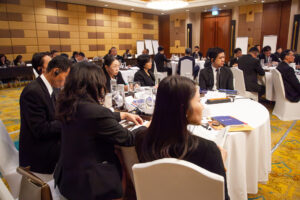
With other nongovernmental organizations, the ICJ calls on the Human Rights Council to select candidates for Special Procedure mandates on the basis of technical, professional and other objective requirements.
Ahead of the 24th session of the Human Rights Council (9 to 27 September 2013), several NGOs, including the ICJ, today joined in submitting written statements to the UN concerning the selection of candidates for membership in the Working Group on Arbitrary Detention and the Working Group on Enforced and Involuntary Disappearances and for the mandate-holder of the Special Rapporteur on the situation of human rights defenders. The statements identify a checklist intended as an interpretive aid for the selection of candidates based on qualifications and skills; relevant expertise; established competence; and flexibility and availability of time.
HRC24-JointWrittenStatement-SelectionCriteriaWGAD-NonLegalSubmission-2013 (download full statement concerning selection criteria for the Working Group on Arbitrary Detention)
HRC24-JointWrittenStatement-SelectionCriteriaWGEID-NonLegalSubmission-2013 (download full statement concerning selection criteria for the Working Group on Enforced and Involuntary Disappearances)
HRC24-JointWrittenStatement-SelectionCriteriaSRHRDs-NonLegalSubmission-2013 (download full statement concerning selection criteria for the Special Rapporteur on the situation of human rights defenders)
Aug 22, 2013 | News
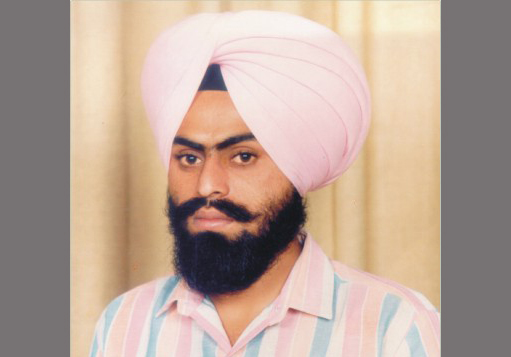
The ICJ called upon the Indian Government to halt the imminent execution of Professor Devinderpal Singh Bhullar.
In August 2001, Professor Bhullar was sentenced to death under the Terrorist and Disruptive Activities (Prevention) Act following his conviction on charges related to the bombing of the All Indian Youth Congress in New Delhi in 1993.
“Those who commit acts of terrorism should be prosecuted before competent, independent and impartial courts that meet international due process standards”, said Ben Schonveld, ICJ’s South Asia Director.
“However, while those responsible for such acts must be held to account, the ICJ opposes the death penalty in all circumstances, without exception as it is an inherently cruel and irreversible punishment that violates the right to life.”
“Furthermore, there are serious questions about whether Professor Bhullar’s trial was in accordance with the requirements of international law”, Schonveld added. “His conviction and death sentence are based solely upon an alleged confession he made in police custody, which he later retracted, claiming it was extracted under torture.”
The ICJ says that the execution of an individual in these circumstances would violate India’s obligations under the International Covenant on Civil and Political Rights to respect the right to life, the right to a fair trial and the absolute prohibition of torture.
In May 2011, President Pranab Mukherjee rejected Professor Bhullar’s petition for clemency. The Supreme Court rejected his earlier plea on 12 April 2013 to commute the sentence to life imprisonment, and upheld its decision on 14 August 2013.
India ended an eight-year moratorium on the death penalty with the executions of Ajmal Kasab on 21 November 2012 and Mohammad Afzal Guru on 9 February 2013.
“The resumption of the death penalty by India is contrary to the global and regional movement towards the abolition of the death penalty”, said Schonveld.
The ICJ reminds that 150 countries worldwide, including 30 states in the Asia-Pacific region, have abolished the death penalty in law or in practice.
The ICJ urges the Indian Government to immediately reinstate the moratorium on the death penalty, with a view to abolishing the death penalty permanently and acceding to the Second Optional Protocol to the International Covenant on Civil and Political Rights on the abolition of the death penalty.
Over the years, the member states of the United Nations have adopted various instruments in support of the call for the worldwide abolition of the death penalty. In 2007, the UN General Assembly adopted a resolution emphasizing that “that the use of the death penalty undermines human dignity” and calling for the establishment of a moratorium on the use of the death penalty “with a view to abolishing the death penalty”.
The resolution was reaffirmed in 2008, 2010, and most recently in December 2012, when and overwhelming majority of 110 UN Member States voted in favor of a worldwide moratorium on executions as a step towards abolition of the death penalty.
Contact:
Ben Schonveld, ICJ South Asia Director, (Kathmandu); t: +977 9804596661; email: ben.schonveld(a)icj.org

Aug 22, 2013
The ICJ calls on members of the Human Rights Council, collectively and individually, to ensure that the establishment of truth commissions fully complies with the internationally recognized right of victims and society to know the truth.
Ahead of the 24th session of the Human Rights Council (9 to 27 September 2013), the ICJ today submitted a written statement to the UN identifying seven minimum criteria that must be adhered to for truth commissions to serve as effective mechanisms that contribute to the respect of the right to truth. Focusing on core aspects of four of these criteria, the ICJ explained that:
1. Truth commissions must be given a mandate that reflects the relevant material, personal, temporal and territorial aspects of the conflict or situation.
2. Safeguards of independence must be in place such that the selection of commissioners is undertaken through a non-discriminatory, inclusive, transparent process involving public consultation; ensuring appointment of a representative body based on candidates’ expertise, integrity, moral authority and demonstrated commitment to human rights and the rule of law; and allowing for removal in the case of incapacity, death, conflict of interest or misconduct.
3. Explicit procedures must be in place to give effect to victims’ rights to access to effective remedies and reparation, including appropriate compensation, restitution, rehabilitation and measures of satisfaction.
4. The operation of truth commissions must be in compliance with the State’s obligation to investigate, prosecute and punish acts involving gross human rights violations and serious violations of international humanitarian law, excluding the possibility of granting amnesties or other measures that result in impunity for individuals responsible for serious crimes under international law.
HRC24-TruthCommissions-LegalSubmission-2013 (download full written statement in PDF)

Aug 21, 2013 | Новости, Пресс-релизы
МКЮ сегодня призвала правительство Кыргызской Республики принять срочные меры для предотвращения повторяющихся нападений на адвокатов.
Призыв последовал за получением достоверных сведений о нападении на двух адвокатов в зале суда на юге страны.
20 августа 2013 года, адвокаты Динара Медетова и Кубанычбек Жороев подвергались физическому нападению по завершении судебного слушания в Ошском областном суде.
Это последнее в серии подобных нападений, которые представляют собой угрозу жизни и безопасности адвокатов, препятствуют защите адвокатами прав своих клиентов, и подрывают справедливость судебных разбирательств.
МКЮ понимает, что Министерство внутренних дел опровергло факт нападения на адвокатов.
Однако нападение подтверждается сообщениями надежных свидетелей.
МКЮ обеспокоена тем, что вопреки неоднократным нападениям подобного рода, правительство и правоохранительные органы продолжают не принимать необходимых мер по их предотвращению, или обеспечению их эффективного расследования, и привлечению виновных лиц к ответственности.
“Отрицание этих нападений может лишь усугубить проблему. В действительности же необходимо проведение независимого, беспристрастного и тщательного расследования этого инцидента”, – сказала Роушин Пиллей, директор Региональной программы МКЮ по Европе.
“Правительство должно работать с правоохранительными органами для обеспечения безопасности адвокатов, свидетелей и обвиняемых в уголовных процессах на всей территории страны, а также с целью защиты Кыргызской Республикой права на справедливое судебное разбирательство, в соответствии с требованиями своих международно-правовых обязательств”, – добавила она.
Два адвоката осуществляли защиту Махаматкира Бизурукова, этнического узбека, в судебном слушании, связанным с этническими столкновениями на юге страны в 2010 году.
Согласно информации, имеющейся у МКЮ, присутствующие неоднократно перебивали, оскорбляли и угрожали адвокатам в ходе судебного слушания, что создавало атмосферу запугивания и не позволяло адвокатам оказывать эффективную защиту своего клиента.
В ходе заседания адвокатам также угрожали смертью, на что судья никак не реагировал.
По завершении слушания, согласно полученной информации, около десяти женщин со стороны потерпевшего в деле осуществили физическое нападение на адвокатов.
“Если бы не мой коллега, который помог мне бежать, я могла бы получить очень серьезные травмы или даже умереть”, – сообщила МКЮ адвокат Медетова. Адвокат позже вернулась в Бишкек из-за опасения дальнейших нападений.
Нападение произошло, несмотря на предварительное письменное обращение адвокатов, переданном в местное УВД, председателю суда и прокурору Ошской области, с просьбой обеспечить безопасность в ходе процесса, в свете нападений на обвиняемого, свидетелей и адвокатов на предыдущих слушаниях по тому же делу.
МКЮ понимает, что глава УВД и прокурор заверили адвоката Медетову в том, что будут приняты меры для обеспечения безопасности адвокатов.
Однако, полиция не приняла никаких мер для предотвращения или прекращения нападения на адвокатов в зале суда.
После нападения, глава УВД сказал адвокатам, что они не могли оказать защиту адвокатам, так как потерпевшая сторона будет рассматривать подобную защиту, как предвзятость в пользу обвиняемого.
МКЮ напоминает, что международные стандарты, в том числе Основные принципы ООН, касающиеся роли юристов, требуют, чтобы “в тех случаях, когда возникает угроза безопасности юристов в результате выполнения ими своих функций, власти обеспечивают им надлежащую защиту”.
МКЮ призывает правительство недвусмысленно и публично осудить эти нападения и обеспечить принятие эффективных мер для их расследования и привлечения виновных к ответственности.
Контакты:
Роушин Пиллей, директор Региональной программы МКЮ по Европе, roisin.pillay(a)icj.org
Тимур Шакиров, правовой советник Региональной программы МКЮ по Европе, temur.shakirov(a)icj.org
Kyrgyzstan-Attack on lawyers-news-press release-2013-RUS (полный текст)

Aug 21, 2013 | News
The ICJ today called on the government of the Kyrgyz Republic to take urgent measures to prevent repeated attacks on lawyers.
The call followed reliable reports of an assault on two lawyers in a court in the south of the country.
On 20 August 2013, lawyers Dinara Medetova and Kubanychbek Zhoroyev were physically attacked following a hearing in the Osh Regional Court.
This is the latest in a series of such attacks, which have threatened the lives and safety of lawyers, have hindered lawyers in defending the rights of their clients, and have undermined the fairness of trials.
The ICJ understands that the Ministry of Interior has denied that the attack on the lawyers took place. However this attack is confirmed by the accounts of reliable witnesses.
The ICJ is concerned that, in the face of repeated attacks of this kind, the government and law enforcement authorities have consistently failed to take effective measures to prevent them, or to ensure that they are effectively investigated and the perpetrators brought to justice.
“Denying that these attacks take place can only perpetuate the problem,” said Róisín Pillay, Director of the ICJ Europe Regional Programme. “What is needed is an independent, impartial and thorough investigation into the incident.”
“The government must work with the law enforcement authorities to ensure that the safety of lawyers, witnesses and defendants in criminal trials is ensured throughout the country, and that the Krygyz Republic protects the right to a fair trial, as required by its international legal obligations,” she added.
The two lawyers were defending Makhamatkir Bizurukov, an ethnic Uzbek, in a trial related to the 2010 ethnic clashes in the south of the country.
According to information available to the ICJ, the lawyers were repeatedly interrupted, insulted and threatened by members of the public in the course of the hearing, creating an atmosphere of intimidation which prevented the lawyers from effectively defending their client.
During the hearing, the lawyers also received death threats to which the judge did not respond.
After the hearing, reports indicate that around ten women, supporters of the victims in the case, physically attacked the lawyers.
“If it hadn’t been for my colleague who helped me to escape, I could have been very seriously injured or even dead”, lawyer Medetova told the ICJ. The lawyer later returned to Bishkek due to her fear of further attacks.
This attack took place despite an earlier written request by the defence lawyers in the case submitted to the local Police Department, President of the Court and the Osh Regional Prosecutor that security measures be taken during the hearing, in light of attacks on the accused, witnesses and lawyers at a previous hearing in the same case.
The ICJ understands that the head of the Police Department and the Prosecutor had assured lawyer Medetova that measures would be taken to guarantee the safety of the lawyers.
In the event however, the police took no action to prevent or halt the attacks on the lawyers in the courtroom.
Following the attack, the police reportedly told the lawyers that they could not protect them, as the supporters of the victim would consider such protection as bias in favour of the accused.
The ICJ recalls that international standards, including the UN Basic Principles on the Role of Lawyers, require that “where the security of lawyers is threatened as a result of discharging their functions, they shall be adequately safeguarded by the authorities”.
The ICJ urges the government to unequivocally and publicly condemn these attacks and to ensure that effective measures are taken to investigate them and bring those responsible to justice.
CONTACTS:
Róisín Pillay, Director, ICJ Europe Programme, roisin.pillay(a)icj.org
Temur Shakirov, Legal Adviser, ICJ Europe Programme, temur.shakirov(a)icj.org
Kyrgyzstan-Attack on lawyers-news-press release-2013-ENG (full text in pdf)
Kyrgyzstan-Attack on lawyers-news-press release-2013-RUS (full text in pdf)