Aug 12, 2013 | News
The ICJ is calling for the immediate release of Adilur Rahman Khan, a prominent Supreme Court lawyer and human rights defender in Bangladesh.
Mr Khan is the Secretary of Odhikar, a Bangladeshi human rights organization that has documented human rights violations allegedly carried out by Bangladeshi security forces.
Plainclothes police officers arrested Mr Khan from his home on 10 August 2013 without an arrest warrant.
“Adilur Rahman Khan is being charged for the lawful exercise of the right to freedom of expression, so Bangladeshi authorities must immediately and unconditionally drop all charges against him and release him,” said Ben Schonveld, ICJ’s South Asia director. “Until the charges are dropped, he must be released on bail.”
Adilur Rahman Khan was charged on 11 August under section 57 of the Information and Communication Technology Act, 2006, for distorting information regarding a police operation on a Hefazat-e Islam rally in May this year.
Odhikar reported that 61 people had been killed in the police crackdown on the rally. The government denied any casualties.
He was not allowed to speak with his family or his lawyers until August 11, when a Magistrate’s Court refused bail and remanded him for a further five days of custodial interrogation.
On August 12, the High Court Division of the Supreme Court stayed the remand order, directing that Mr. Khan be sent back to jail, where he could be interrogated ‘at the gate of the prison.’
“Adilur Rahman Khan’s arrest is illustrative of a deeply worrying government strategy to muzzle and discredit the work of human rights defenders and distract attention from human rights violations,” added Schonveld. “The High Court’s stay of the remand order is a positive development. However, the Bangladesh government must uphold its obligations under domestic and international law to guarantee freedom of expression and allow human rights defenders to carry out their work.”
Article 19 of the International Covenant on Civil and Political Rights (ICCPR), to which Bangladesh is a party, guarantees ‘freedom to seek, receive and impart information and ideas of all kinds, regardless of frontiers, either orally, in writing or in print, in the form of art, or through any other media of his choice.’
The UN Basic Principles on the Role of Lawyers provide that lawyers must be allowed to carry out their work ‘without intimidation, hindrance, harassment or improper interference.’
Further, lawyers shall, in particular, have the right to take part in public discussions of matters concerning the law, administration of justice and the promotion and protection of human rights.
In addition, the UN Declaration on Human Rights Defenders clarifies that States must create an enabling environment for human rights defenders and take all necessary measures to protect human rights defenders ‘against any violence, threats, retaliation, de facto or de jure adverse discrimination, pressure or any other arbitrary action as a consequence of his or her legitimate exercise of his or her rights.’
CONTACT:
Ben Schonveld, ICJ South Asia Director (Kathmandu), t: +977 14432651; email: ben.schonveld(a)icj.org
Sam Zarifi, ICJ Asia-Pacific Director, (Bangkok), t: +66 807819002; email: sam.zarifi(a)icj.org

Aug 12, 2013
The Third Geneva Forum for Judges and Lawyers, which took place on 13 December 2012, focused on the role of the domestic court in improving access to justice. The report is now online.
In three sessions, participants discussed how domestic courts grapple with the tension of applying universal standards in the domestic context; the role of the lawyer in strengthening the protection of international human rights law and standards through domestic litigation; and how judges compare national integration of various international human rights law and standards.
Independence of the judiciary-Geneva Forum 2012-Publications-report-2013 (full text in pdf)

Aug 9, 2013
The ICJ submitted to the Human Rights Committee and the Committee against Torture information in preparation for the Committees’ examination of periodic reports of Ireland under the International Covenant on Civil and Political Rights (ICCPR) and the Convention against Torture and other forms of Cruel, Inhuman or Degrading Treatment or Punishment (CAT).
During its session in October 2013, the Human Rights Committee will adopt a List of Issues for the examination in 2014 of the fourth periodic report of Ireland under the ICCPR. The Committee against Torture will, in November 2013, adopt a List of Issues for the examination in 2014 of the second periodic report of Ireland under the CAT.
In separate submissions to each Committee, the ICJ raises issues and suggested questions to be put to the Government of Ireland concerning breaches of the ICCPR that may arise as a result of severe legislative restrictions in Ireland on access to safe and legal abortions.
Ireland-HRCttee109-LOISubmission-LegalSubmission-2013 (download full submission to the Human Rights Committee)
Ireland-CAT51-LOIPRSubmission-LegalSubmission-2013 (download full submission to the Committee against Torture)
Aug 5, 2013 | Artículos, Noticias
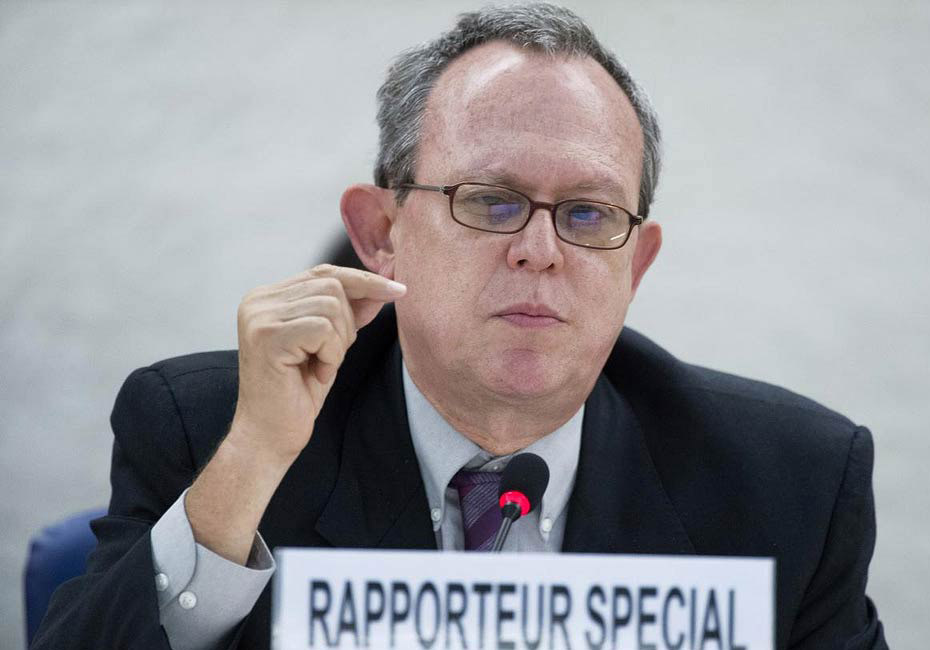
La CIJ condena acciones de intimidación en contra del Relator de las Naciones Unidas sobre Libertad de Expresión y del Instituto Centroamericano de Estudios para la Democracia Social (DEMOS).
El día jueves 1 de agosto, personas no identificadas ingresaron ilegalmente a las oficinas del Instituto DEMOS y a las oficinas del Relator Especial sobre Libertad de Expresión de la Organización de las Naciones Unidas, Sr. Frank Larue.
Un día antes, en su columna de opinión el Sr. Ricardo Méndez-Ruiz, Director de la Fundación contra el Terrorismo, escribió en contra del Sr. Larue, acusándolo falsamente de diferentes hechos criminales, supuestamente cometidos por él durante el conflicto armado interno.
Desde hace ya varios meses, en su calidad de Director de la Fundación contra el Terrorismo, el Sr. Méndez-Ruiz ha asumido una posición intimidatoria en contra de personas, organizaciones, defensores y defensoras de derechos humanos, misiones diplomáticas y dirigentes comunitarios, tratando así de afectar el trabajo que estas personas o instituciones realizan en favor de la justicia y el respeto de los derechos humanos.
La Fundación contra el Terrorismo, representada por el Sr. Ricardo Méndez-Ruiz anunció días atrás, diferentes acciones en contra de organizaciones no gubernamentales.
Es así como, en el mes de marzo del presente año, después de dicho anuncio, el Director de la Organización Centro para la Acción Legal Ambiental y Social de Guatemala (CALAS) y su asesor legal, sufrieron amenazas y serias intimidaciones.
Posteriormente, la organización Centro de Análisis Forense y Ciencias Aplicadas (CAFCA) fue acusada en el mes de julio de diferentes falsedades en una publicación anónima, claramente con el objeto de intimidar al personal que lleva a cabo acciones a favor de las víctimas del conflicto armado interno.
Por último, el 1 de agosto, las oficinas del Instituto DEMOS y del Relator Especial sobre Libertad de Expresión, también sufrieron un ingreso ilegal y sustracción de documentos.
La Comisión Internacional de Juristas, hondamente preocupada por estas amenazas, pide a las autoridades correspondientes del Ministerio de Gobernación y del Ministerio Público, que lleven a cabo una investigación rigurosa, para determinar quién está detrás de todos estos hechos violentos en contra de defensores y defensoras de derechos humanos.
Dicha investigación debería extenderse en contra de la Fundación contra el Terrorismo y su Director Sr. Méndez-Ruiz, con el objeto de identificar posibles vínculos con los hechos mencionados, sobre todo tomando en cuenta el contenido de múltiples publicaciones realizadas por la Fundación contra el Terrorismo en los últimos meses.
Asimismo, pide al Estado de Guatemala que brinde garantías y protección a defensores y defensoras de derechos humanos, organizaciones no gubernamentales, instituciones y dirigentes comunitarios que llevan a cabo actividades a favor del respeto de los derechos humanos.
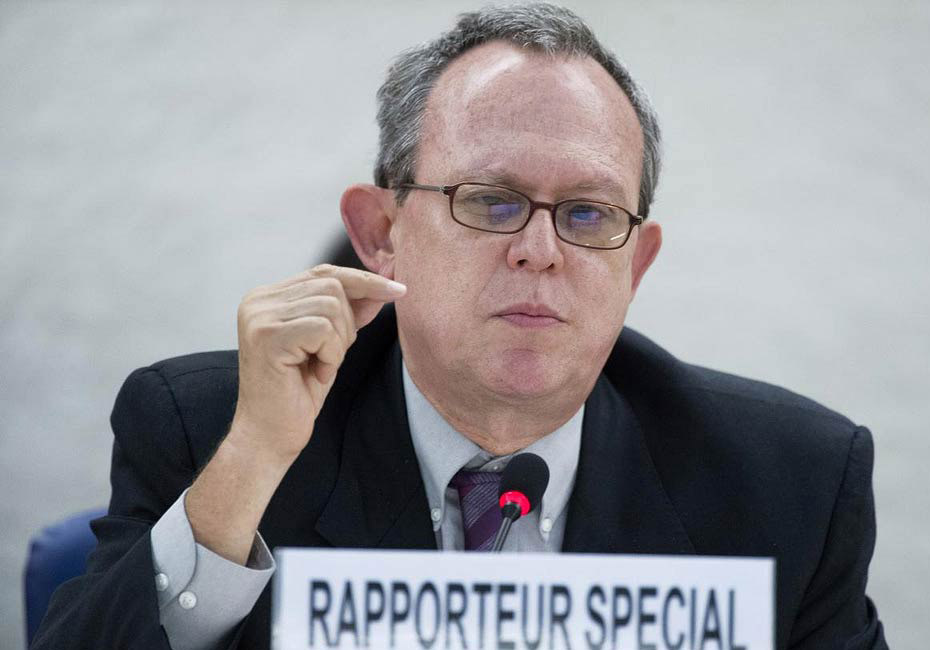
Dichas garantías deberían extenderse al trabajo que realiza el Sr. Relator Especial sobre Libertad de Expresión de la Organización de las Naciones Unidas Sr. Frank Larue.
Foto: UN /Jean-Marc Ferré