Jun 26, 2013 | News
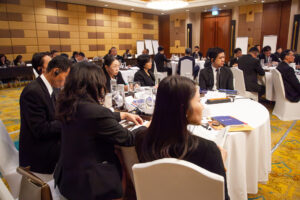
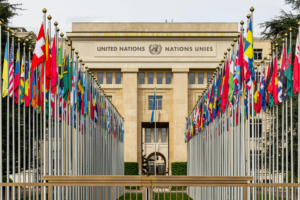
The ICJ condemns the attempted assassination of Justice Maqbool Baqir, a judge of the Sindh High Court, who also sits on the anti-terrorism court in Karachi, Pakistan.
A bomb blast injured Justice Maqbool Baqir and thirteen others and killed at least nine people.
“This is the second bombing targeting the Pakistani judiciary in under six months. The ICJ is extremely concerned that these attacks signal a renewed challenge to the ability of the Pakistani judiciary to function as an independent institution,” said Sheila Varadan, ICJ’s South Asia Legal Advisor.
According to local media sources, the Tehreek-e-Taliban Pakistan (TTP), an armed group operating in northwestern Pakistan, has claimed responsibility for the bombing, admitting that it specifically targeted Justice Maqbool Baqir for his ‘anti-shariah’ judgments and ‘ruling against the mujahideen’.
“Any physical attack on a judge constitutes a serious threat to the rule of law and the independence of the judiciary. If the TTP or another armed group is deliberately targeting judges, it could constitute a crime under international law,” Varadan added.
Under international standards, including the United Nations Basic Principles on the Independence of Judges, Pakistan is responsible for taking measures to ensure the protection of members of the judiciary from acts of violence or other threats to their safety.
Earlier in March 2013, the ICJ condemned the suicide bombing inside a Peshawar courthouse killing four people and injuring thirty others.
CONTACT:
Sheila Varadan, ICJ Legal Advisor, South Asia Programme (Bangkok), t: +66 857200723; email: sheila.varadan(a)icj.org

Jun 24, 2013
The ICJ issued today its Annual Report 2012 in a new format and design. It offers a concise summary of the work carried out by the ICJ over the last year.
This annual report does not contain an accounting of all the activities undertaken by the ICJ in 2012, the examples found in this report are emblematic of ICJ’s work and highlight some of the most important initiatives.
Download ICJ Annual Report 2012
Download ICJ Annual Report 2012 – Light version
Jun 24, 2013 | News
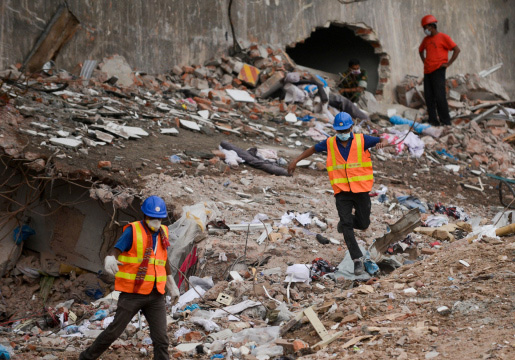
The recent Rana Plaza building disaster, in Bangladesh, could, and should, have been averted if the government had performed its obligation to adequately protect the workers, the ICJ said today.
“The Rana Plaza collapse, which killed 1,131 workers and injured close to 2,500 others, is the most recent in a long list of industrial disasters brought about by the government’s failure to regulate and monitor workplace conditions and sanction private entities violating the law,” said Sheila Varadan, ICJ Legal Advisor on South Asia. “To single out and focus solely on the role of multi-national companies does not reflect the full picture.”
“While the ICJ does not minimize the responsibility of private enterprises, unless the underlying systemic issues such as institutional weaknesses, corruption and lack of enforcement are addressed, such tragedies will continue to happen,” Varadan added.
Litigation is a vital tool to ensure accountability, remedy and reparations, where government agencies fail in their essential functions.
The Bangladesh Legal Aid and Services Trust (BLAST), a leading national human rights organization, has been petitioning the Supreme Court over the past decade, obtaining orders against government agencies and seeking compensation for victims and their families in work-related disasters.
“The government of Bangladesh must take active measures to ensure its regulatory framework is adequate and effective; its laws are rigorously enforced; and victims are adequately compensated,” Varadan also said. “Failing to do so not only violates Bangladeshi law but is also in breach of Bangladesh’s obligations to protect human rights under international law.”
CONTACT:
Sheila Varadan, ICJ Legal Advisor, South Asia Programme (Bangkok), t: +66 857200723; email: sheila.varadan(at)icj.org
Sam Zarifi, ICJ Asia-Pacific Regional Director, (Bangkok), t:+66 807819002; email: sam.zarifi(at)icj.org
Bangladesh-Rana Plaza-Public interest litigation-backgrounder-featured article-2013 (full text in pdf)
Bangladesh-WGBHR5-OralStatement-LegalSubmission-2013 (full statement to the Working Group on Business and Human Rights)
Jun 20, 2013
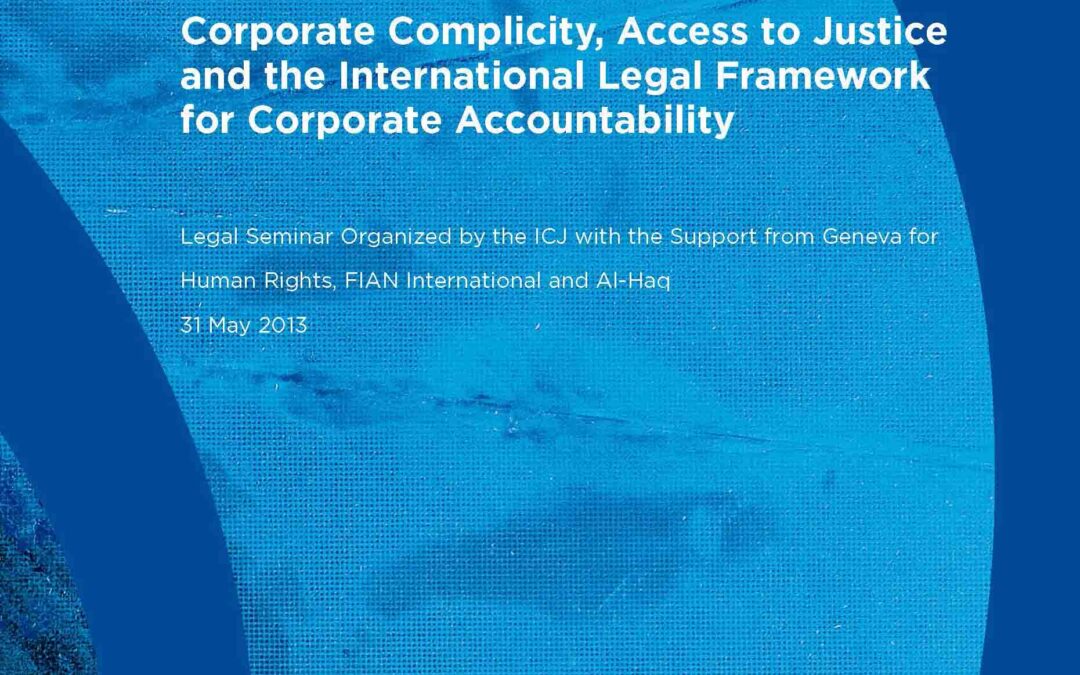
This is the Report of the Legal Seminar organized in Geneva by the ICJ with the support from Geneva for Human Rights, FIAN International and Al-Haq on 31 May 2013.
The seminar was convened to provide a space for in depth discussion of specific cases that illustrate many of the legal and political obstacles that victims of corporate human rights abuse face in their pursuit of justice.
It is one among several activities the ICJ is undertaking with a view to assessing the need for a new international instrument in the field of business and human rights.
The seminar was held under Chatham House rules.
Universal-Report Corporate Complicity Legal Seminar-publications-seminar report-2013 (full text in pdf)

Jun 20, 2013 | News
Today the ICJ launches two new innovative legal tools: the Sexual Orientation & Gender Identity UN Database and the Sexual Orientation & Gender Identity Legislative Database.
The UN Database gathers all the SOGI-related doctrine and jurisprudence of the UN human rights system in one searchable database.
It is the electronic version of the UN Compilations, which the ICJ has issued regularly since 2005.
The documents are organized by source (such as treaty body, special rapporteur or working group) and it is possible to search the database by source or by country, region or key word.
The Legislative Database is the result of a year-long pilot project in collaboration with the International Human Rights Program at the University of Toronto Faculty of Law.
Student researchers gathered and analyzed laws from twenty-four countries in all regions of the world. Each country is introduced with a legislative overview.
The laws themselves are LGBT-friendly or neutral with regard to sexual orientation and gender identity. It is searchable by country and topic.
The purpose was to provide the actual texts of laws as comparative examples for use in legislative reform efforts.
The ICJ is very pleased to announce the launch of these new resources to help activists and lawyers around the world advocate for LGBT human rights.
Both databases were created by HURIDOCS.
The hard copy version of the 2013 edition of the UN Compilation can be downloaded below:
SOGI UN Compilation electronic version – publications-2013 (full text in pdf)